
Outsourcing link building is when you hire external SEO specialists to handle backlink acquisition, including prospecting, outreach, negotiation, content creation, placement, and backlink monitoring. Companies typically outsource their link building needs to one of the following link building services: freelancers, agencies, or marketplaces.
Outsourcing link building for SEO typically saves time, money, and effort while providing faster search engine ranking results due to existing publisher relationships and team infrastructure.
If you do plan to look for external link providers, plan to budget $300 – $1,000 per link and anywhere from $1,500 – $5,000 for a managed link campaign, though prices can be much cheaper if you bypass agencies and use a link building marketplace instead.
And if you’re a large brand or enterprise and need premium links like digital PR, prices can range anywhere from $5,000 – $12,000+ per month for link building services.
This guide will explain everything you need to know about outsourcing your link acquisition based on our combined decades in the SEO industry, including pricing, how to do it, who should outsource, and why you should do it in the first place.
Ready? Let’s begin.
Outsourcing Link Building vs. In-House: How to Determine Which Is Right for You
Whether you should outsource link building or handle it in-house depends on your budget, available resources, SEO experience, and how many backlinks you need.
Building links in-house gives you complete control over your strategy, outreach, and quality standards, but hiring employees, purchasing SEO tools, and managing campaigns is expensive.
Outsourcing is generally faster, easier to scale, and more cost-effective, especially when you need 20+ quality backlinks per month.
If you’re a major brand with a dedicated SEO department and a big budget, keeping link building in-house makes sense. For most smaller businesses, we recommend outsourcing at least part of the process.
You can also take a hybrid approach, where you manage your strategy internally while purchasing placements through a marketplace (like PressWhizz).
LINK BUILDING STRATEGY
Salaries, software, training
Flexible per-link pricing or retainers
Full control
Depends on provider
Slower to get started
Faster with established networks
Requires additional staff
Easier to increase link volume
Must hire or develop
Access to experienced specialists
Managed internally
Requires provider vetting
Large SEO teams
Small to mid-sized businesses
How Much Does It Cost to Outsource Link Building?
Outsourcing link building typically costs anywhere from $50-$1,000+ per link, while monthly agency services can range from $2,000 to $12,000+ depending on the campaign.
Costs vary significantly depending on the type of backlinks you’re building, website authority, organic traffic, niche competitiveness, and whether you’re hiring an agency, freelancer, or buying links through a marketplace.
Link building pricing is one of the most hotly debated topics in SEO, and for good reason. You can ask 10 different people and get 10 different answers, and then everyone will just say “it depends” anyway at the end.
Let’s break down what you can expect to pay in 2026.
Link Building Costs by Link Type
The following are typical price ranges taken from industry pricing reports and publicly available service provider pricing pages. Keep in mind that you can often find significantly cheaper placements through marketplaces.
| Link Type | Typical Cost |
| Guest Posts | $50–$1,000 per link |
| Niche Edits | $150–$800 per link |
| Editorial Outreach | $150–$600 per link |
| Digital PR | $5,000–$25,000+ per campaign |
Generally speaking, links from websites with organic traffic, high authority, and relevant audiences cost more. Competitive niches like finance, SaaS, and iGaming also tend to command higher prices.
Link Building Costs by Service Provider
The price of outsourcing links depends heavily on which type of link building service provider you choose.
Are you choosing a freelancer? A marketplace? A small agency? A large one?
Your choice of provider changes the price of outsourcing significantly.
Again, these are broad industry estimates based on agency pricing pages, freelancer rates, and third-party reports.
| Service Type | Typical Cost |
| Link Marketplaces | $50–$500 per link |
| Freelancers | $500–$2,000 per month |
| Link Building Agencies | $2,000–$12,000+ per month |
Link building agencies generally charge the most because you’re also paying for outreach, content creation, strategy, reporting, and account management. Freelancers can be more affordable, although you’ll usually need to handle more of the campaign management yourself.
PressWhizz’s Link Building Pricing Report
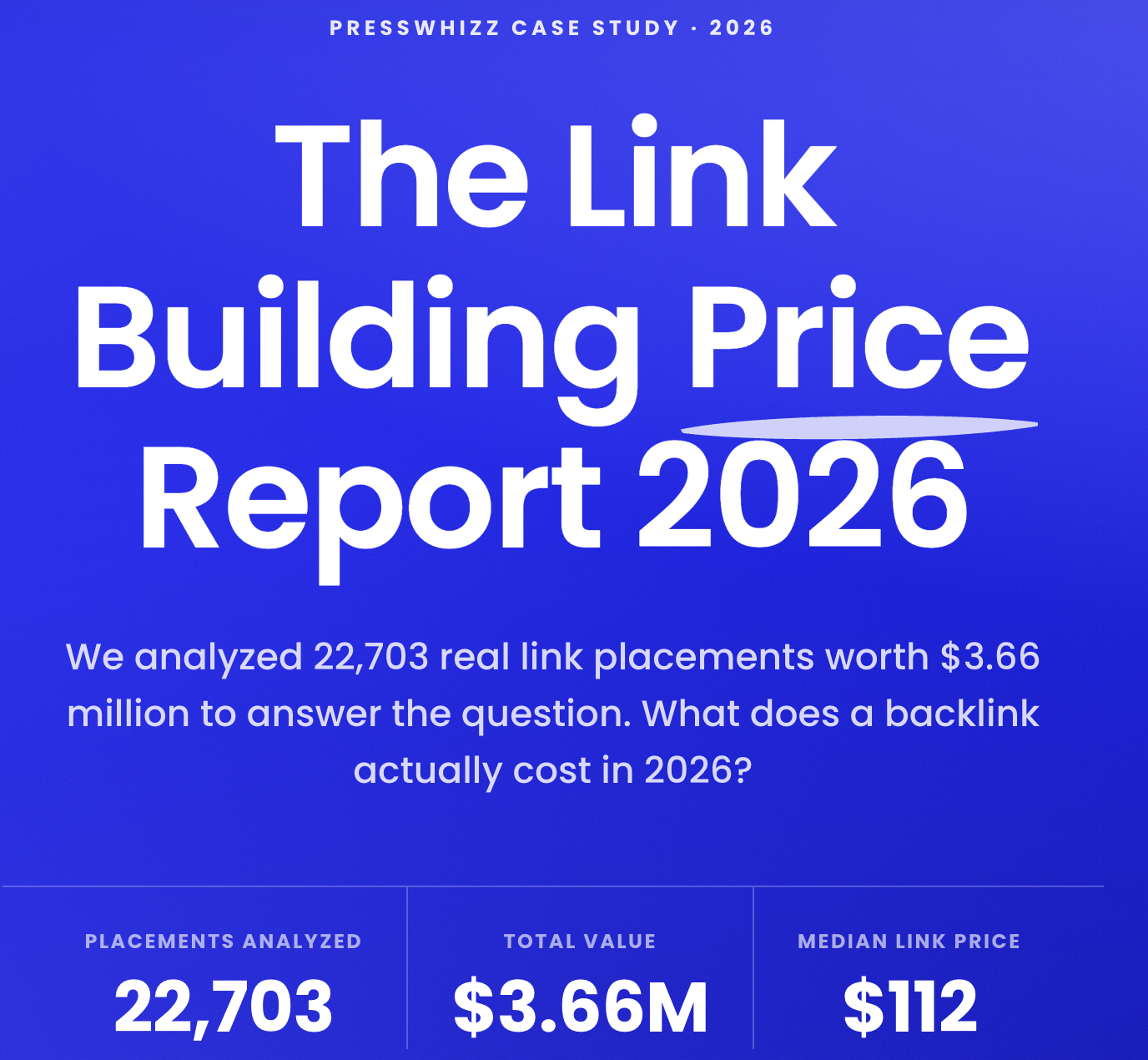
The truth about the SEO industry is that link building prices get heavily inflated by service providers. They build markup, service fees, content costs, and other factors into the price before quoting you (more on this in the next section).
The price of a link is actually much lower than most people think.
In our2026 Link Building Pricing Report, we analyzed 22,703 real link placements worth $3.66 million, and the results were surprisingly different from typical industry estimates.
Here’s what our analysis found:
- Median link price: $112
- Average link price: $161
- Average guest post price: $164
- Lowest recorded price: $33
That’s considerably cheaper than the $300-$500+ per link often quoted by agencies and service providers (for average quality links).
This is not just an opinion or me quoting you a link price. It’s data from real link placements that we’ve actually made over the past year or so.
On our link building marketplace, we actually have high-quality guest posts and niche edits available from just ~$30.
When to Outsource Link Building
There are a few situations when outsourcing link building makes sense and a few where it may be better to keep it in-house.
If you’re in one of the following situations, outsourcing is the better option.
You Want to Save Money
Outsourcing link building will actually save you money in the long run.
Hiring even one full-time link builder costs you salary, benefits, and tools. That could easily come out to $50,000-$100,000+ a year or more depending on where you hire from. A freelancer, marketplace, or small agency can get you SEO results for a fraction of that.
According to ZipRecruiter, the average salary of an in-house link builder is $150,000 per year. That’s mental. Glassdoor claims the average salary of a link building professional starts around $70,000. Either way, it’s a ton of money.
You’re in a Specialized Niche
If you’re in a specialized niche that requires unique industry knowledge or established relationships, it’s better to find an outsourced link building agency that knows your niche.
Some good examples include iGaming links, SaaS links, and the finance niche. In these industries, finding relevant websites is very challenging simply due to supply and competition.
A good example of this is our iGaming link building service. We’ve painstakingly built an inventory of hard-to-get casino and gaming links across dozens of geos that fit the casino niche:

It was NOT easy.
You Want to Scale Links Fast
Service providers have lists, relationships, and workflows to let you scale up links fast.
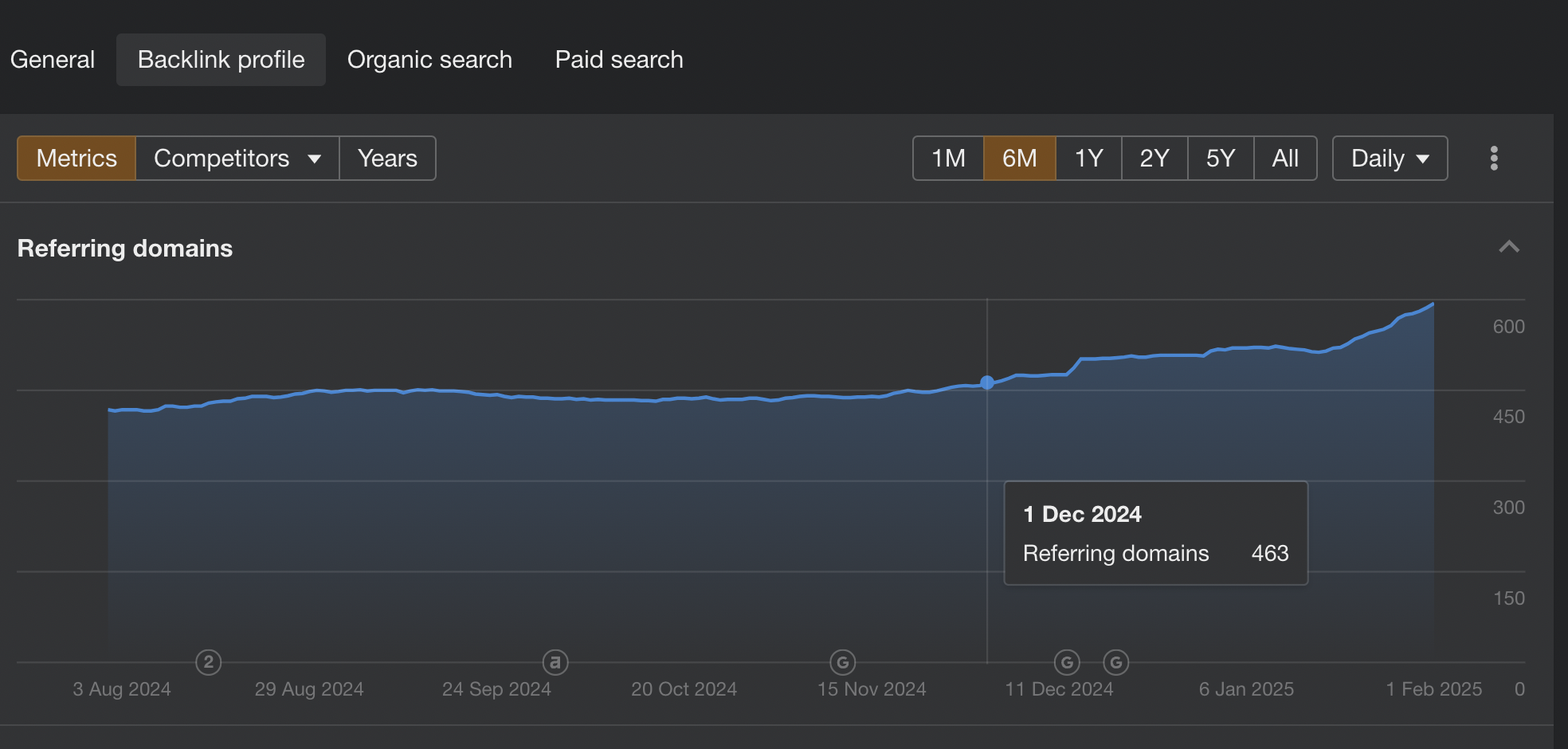
In the following image, you see how quickly we are able to scale up links for clients (~150 in a single month).
And all of these links are safe, high-quality referring domains.
Check out our guide on the best places to buy backlinks for our top picks for purchasing high-quality links.
You Don’t Have Time to Perform Outreach
If you don’t have at least 15 hours per week to dedicate to outreach, you should be paying someone else to do it for you.
Link outreach takes anywhere from 5 to 20 hours a week, depending on how aggressive your campaign is. Some SEOs claim they spend 30+ hours a week on prospecting, writing pitches, and following up, and that’s before any negotiation happens.
For enterprise link building, it could be 40+ hours per week!
When you outsource your link building to third-party service providers, you spend 0 hours a week on link building. That’s time you can focus on growing your business.
Here’s a great example from Reddit on how much time link building takes:
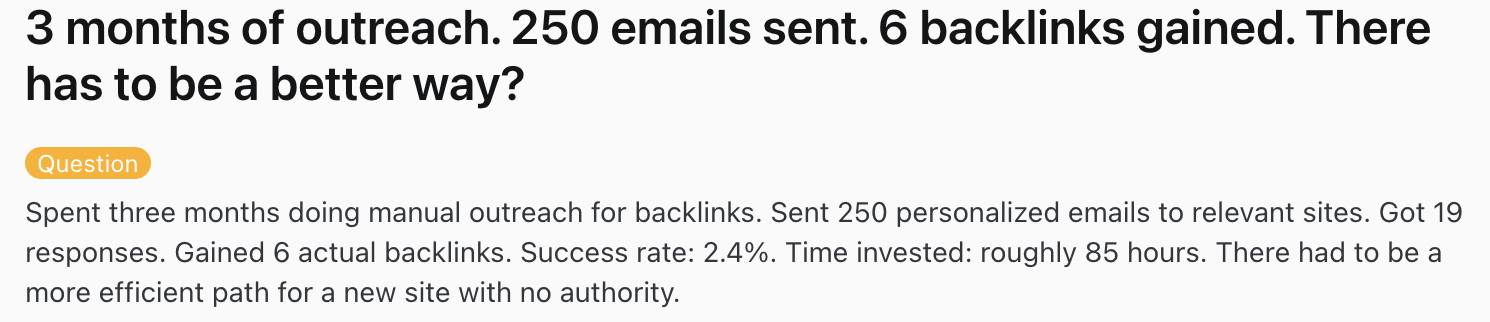
85 hours of work for 6 backlinks. That’s 14 hours PER link. You could buy those links in 5 minutes on a marketplace (and you wouldn’t have to write emails, either).
You Don’t Have Any Publisher Relationships
Link building at scale in 2026 requires relationships with the right publications, especially when you’re in niches like SaaS, iGaming, crypto, or healthcare. Good luck just emailing a site like Forbes or Healthline and begging for a link.
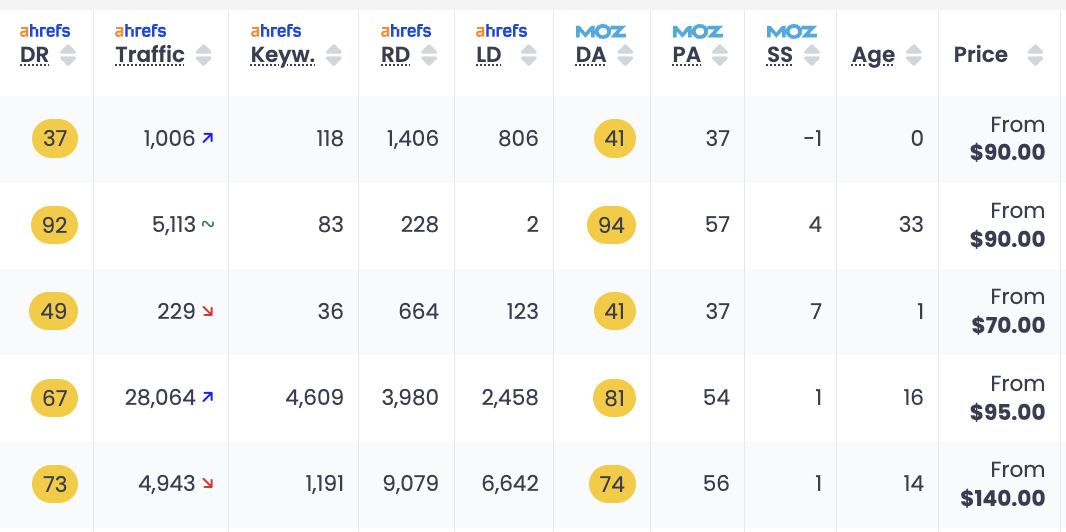
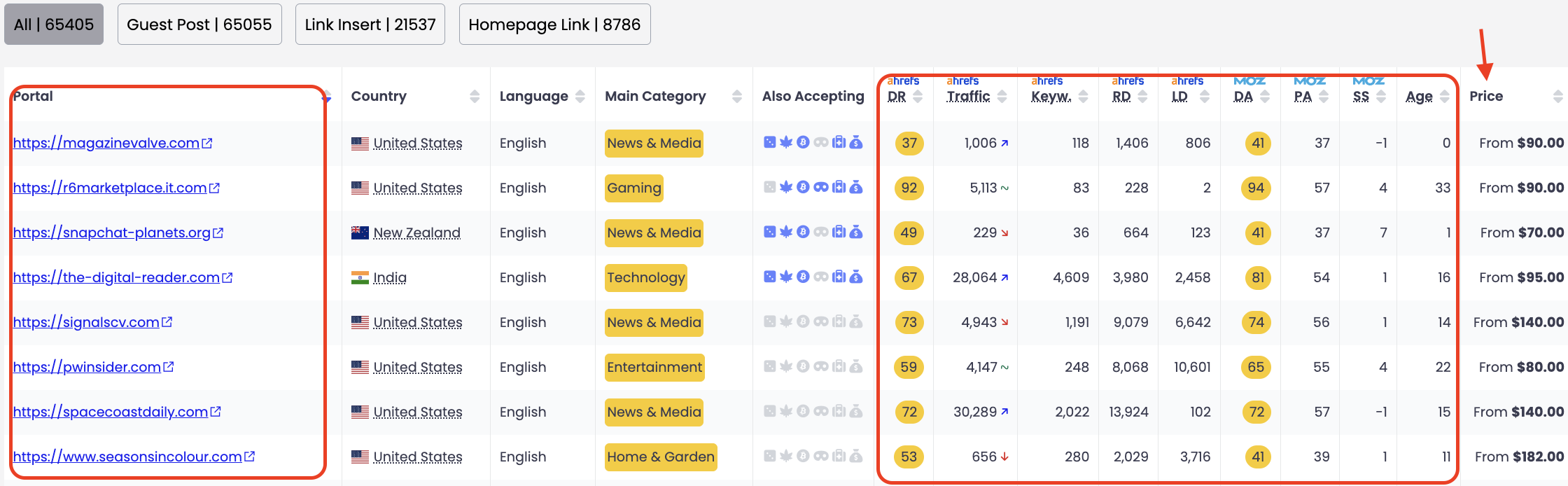
Marketplaces and agencies have spent years building relationships with high-authority publishers, which guarantees your links get placed and stay placed. For example, with PressWhizz, all you’d have to do is choose your country, sort by domain rating, and you can select the most authoritative websites to get links from.
Here’s a screenshot of some of the publications we can get you links with:
You Don’t Have SEO Knowledge
If you don’t know how to build links, you should not be building your own links.
It sounds obvious, but you’d be surprised at how many companies with no SEO experience think they can do this on their own.
Building links is not easy anymore. You need to understand relevance, DR, and a number of other SEO metrics to execute it properly.
If you’re struggling to build high-quality links, it could be a lack of internal knowledge. That’s a good sign it’s time to outsource to professionals.
An external service provider can create a link building strategy based on search engine results pages, determine how many links you need, handle outreach, get you placements at a discount, and track/manage everything for you.
You’ve Hit an SEO Ceiling
Sometimes you do everything right with your SEO, but your rankings just won’t budge.
This is a sign you need more high-quality backlinks to compete with the websites outranking you.
Building 5–10 valuable backlinks per month in-house is manageable for most SEO teams, but once you get to 20+ links per month (which may be necessary to compete for Page 1 rankings), things get much more difficult.
How to Outsource Link Building Step-by-Step
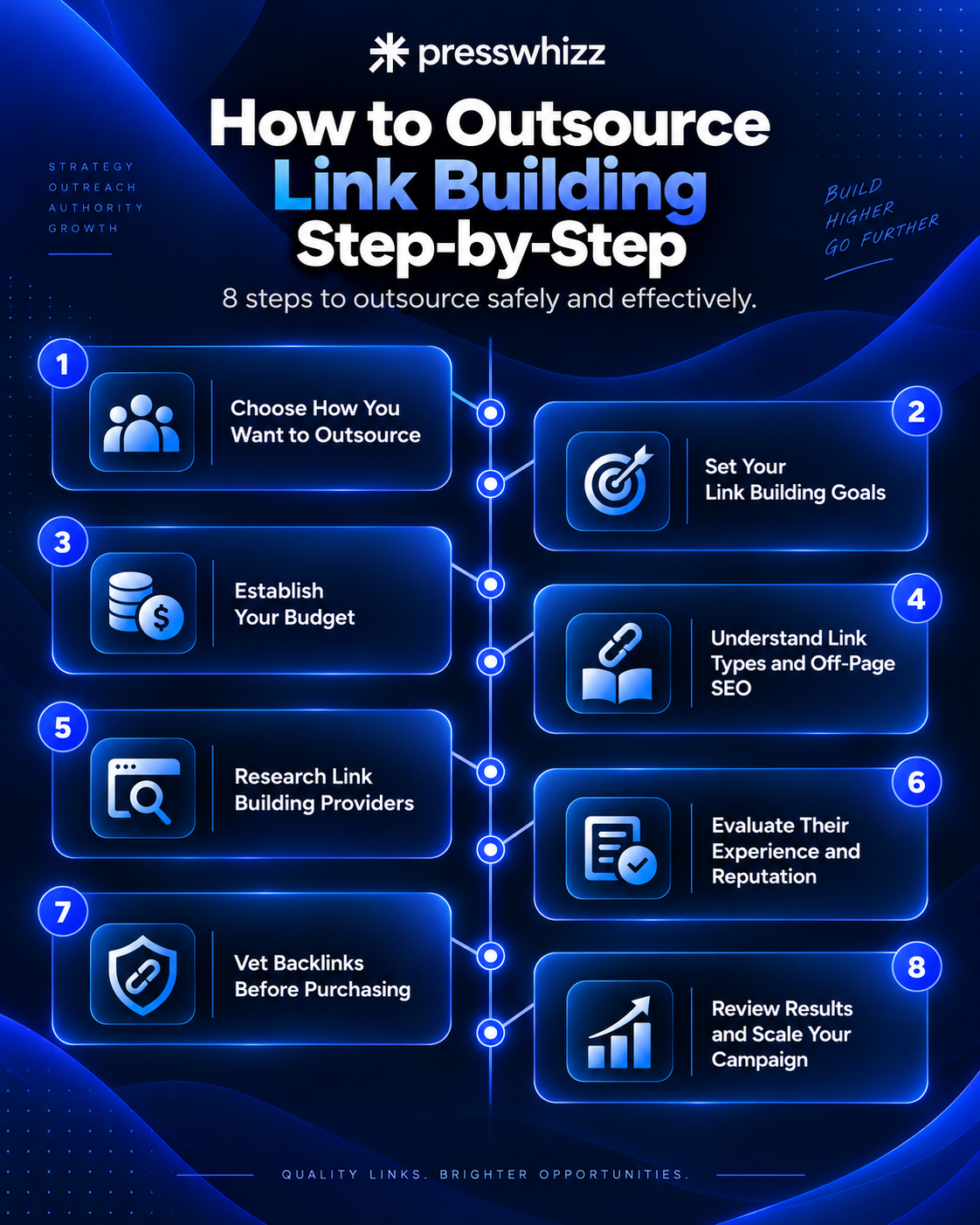
Hiring an external service provider to build backlinks to your website is not easy, and if done wrong, you risk wasting money and exposing your site to suppression or Google penalties.
Don’t worry, using a reputable provider will protect you from those risks. Here are the 8 steps you should follow to outsource your link building safely:
- Step 1: Choose how you want to outsource
- Step 2: Set your link building goals
- Step 3: Set your link building budget
- Step 4: Understand link types and off-page SEO
- Step 5: Research link building providers
- Step 6: Evaluate their services
- Step 7: Vet backlinks before purchasing
- Step 8: Review their work
Let’s break each step down into more detail now so you know exactly what to do.
Choose the Best Way to Outsource Link Building for Your Company
Your main options for link building in 2026 are marketplaces, freelancers, and agencies. They all have their advantages and drawbacks, so let’s cover the different options in more detail:
- Freelancers: These are independent link builders you hire directly, usually through platforms like Upwork or LinkedIn.
- Marketplaces: Link building marketplaces are platforms where you can browse and purchase links directly from a catalog of sites. You pick a site, pay, and get your link without any back-and-forth outreach or negotiation.
- Agencies: Agencies are dedicated firms that manage the entire process for you. You get a full team, established publisher relationships, and a system that’s been refined across dozens of clients.
We are biased, of course, but we think using a link building marketplace is the best option. You see everything you need in one dashboard: DR, traffic, pricing, etc. You choose the link you want, and our team handles the rest.
Set Link Building Goals
Before you start building links, define what success looks like for the campaign. Your link building KPIs should connect directly to the SEO goals of the pages you want to improve and the keywords you want to rank for.
Track metrics such as:
- Referring domains
- Link quality and topical relevance
- Target page rankings
- Organic traffic
- Leads, sales, or other conversions
- Link velocity
What are the right KPIs for link building? Well, that depends on your business and goals. Do you want to rank your service or product pages? Then, conversions or sales are probably the best metric to track.
If you’re a new website starting from scratch, it’s best to focus on rankings and organic traffic. But it all depends on your specific goals.
Tip: Start with the business goal, then work backward. If the goal is more revenue from a product or service page, track the rankings, organic traffic, and conversions from that page alongside the links you build to it.
Set Your Link Building Budget
Individual backlinks typically cost between $50 and $1,000+, while monthly agency retainers can range from $1,500 to $10,000+. Your budget will depend on your goals, niche, link quality requirements, and how much work you’re outsourcing.
Here are three common pricing models:
- Price per link: Budget $100-$500 for standard placements and $500+ for premium editorial links. But you could find more affordable options if you skip the middleman.
- Freelancers: Expect to pay $15 – $75 per hour depending on experience and location.
- Agency retainers: Smaller campaigns typically cost $1,500 – $4,000 per month, while larger campaigns can exceed $10,000.
We recommend starting with a manageable monthly budget and scaling as you see results.
Learn About Link Types and Off-Page SEO
Before talking to link vendors, make sure you know the different types of links and why links are important for SEO. You want to sound like you know the industry well.
Some of the most common link types you’ll see in this industry are digital PR backlinks, link exchanges, guest posts, niche edits, and resource page links.
Some of the most common link building methods include:
- Guest Posts: Guest posts are when you publish an article on another website with a contextual backlink to your site.
- Niche Edits: Niche edits, also called link insertions, are when you add a link to your site into an existing article on another website.
- Digital PR: This is when you earn editorial backlinks from news outlets, media publications, and industry websites through original research, expert commentary, or newsworthy stories.
- Link Exchanges: Link exchanges are when two websites agree to link to each other. You may hear this referred to as a link swap as well.
For more on this topic, check out our guide on the different types of backlinks.
Let’s quickly cover how backlinks work for SEO before going further. It’s important for you to understand what you’re getting into.
Backlinks are essentially votes of confidence from one website to another. Google’s original PageRank algorithm used links to help determine the importance of web pages based on the quantity and quality of links pointing to them.
And if you’re wondering whether or not link building is dead in 2026, it’s not.
According to Backlinko’s study, “We Analyzed 11.8 Million Google Search Results. Here’s What We Learned About SEO”, the #1 ranking page on Google has an average of 3.8 times more backlinks than pages ranking in positions #2–#10. So yes, links are still critical for better rankings.
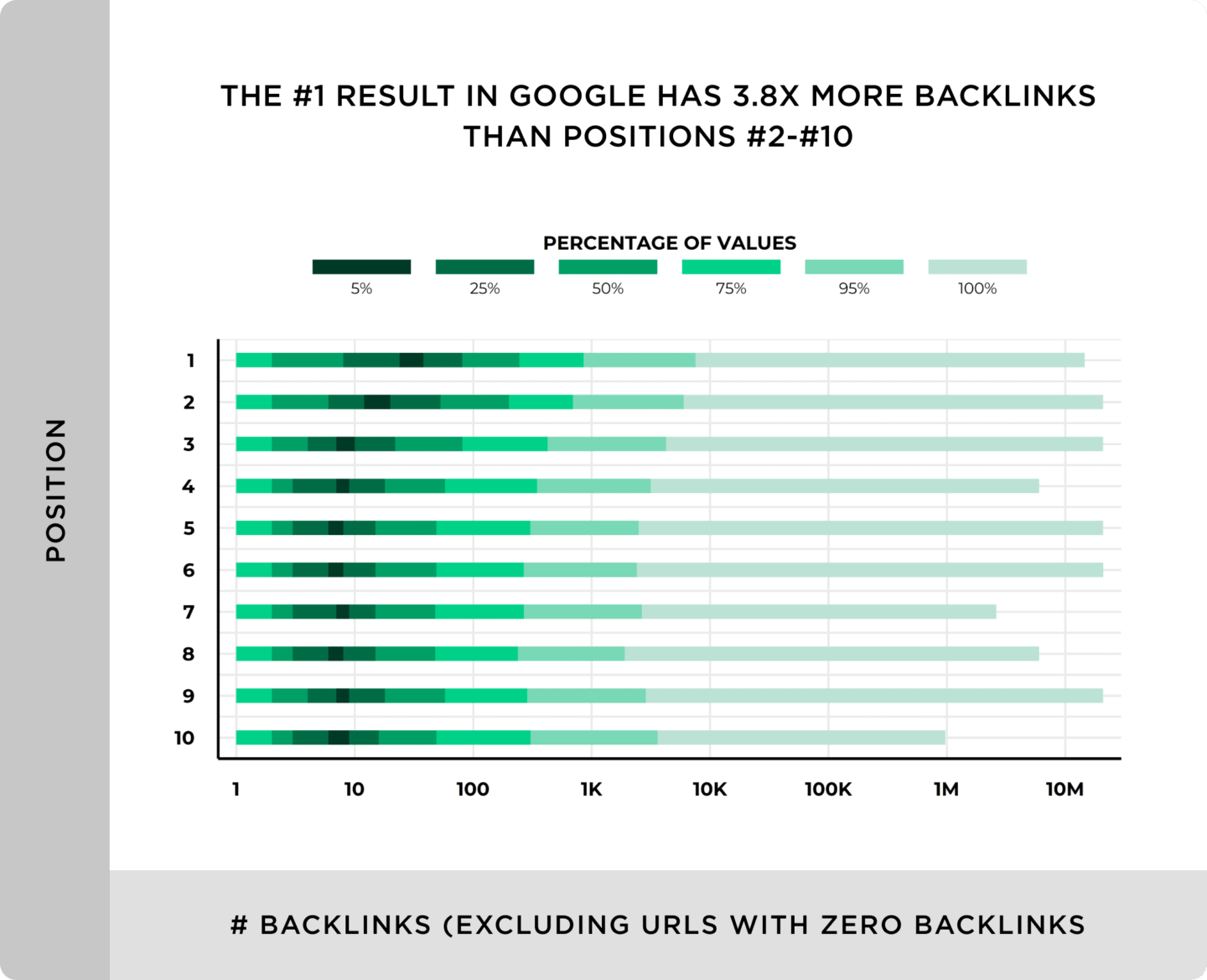
Source: backlinko.com/search-engine-ranking
Further Reading: Not sure which links you need? Read up on guest posts vs. niche edits to see which sites need which link type.
Research Link Building Service Providers
Start by researching link building agencies and service providers with a proven track record of delivering quality backlinks.
Here are the best ways to search for service providers:
- Google Search
- AI Tools
- Social Media
- Your Network
- Freelancer platforms like Upwork
- Review Platforms
Once you have a shortlist, compare their portfolios, industry experience, backlink quality, pricing, and case studies to identify the best fit.
Evaluate the Link Building Services
Once you’ve shortlisted a few providers, evaluate their experience, reputation, and the quality of their backlinks.
Here are several criteria to look for when evaluating link building services:
- Examples of Work: Start by requesting sample backlinks they’ve built for previous clients. Check the referring domains for relevance, organic traffic, authority, and content quality. If the site looks like a link farm, run.
- Customer Reviews: Look for reviews on Google, Trustpilot, Clutch, and SEO communities to gauge customer satisfaction and reliability.
- Case Studies: Review examples of successful campaigns, including improvements in organic traffic, keyword rankings, and referring domains.
- Client Testimonials: Look for feedback from businesses in your industry, particularly those with similar SEO goals and budgets.
- Link Building Methods: Ask how they acquire backlinks, vet websites, and maintain quality standards. If they can’t give you a clear answer, we suggest looking elsewhere.
Vet Links Before You Buy Them
Not all backlinks are created equal.
Some providers cut costs by placing links on low-quality websites or by publishing cheap guest posts that provide no SEO value.
We recommend checking the following before committing to a provider:
- Domain Rating (DR): Domain Rating is a third-party metric that quantifies the quality of a website’s backlink profile. Higher is generally better, but a site’s authority alone doesn’t tell the whole story. Still, you want authoritative links as often as possible.
- Domain Authority (DA): DA is another useful metric for evaluating website authority that’s similar to DR.
- Organic Traffic: Look for consistent traffic from relevant keywords. A website’s traffic isn’t a direct ranking factor in Google, but it can signify that a site has better ranking equity in Google’s eyes.
- Website Age: Established websites with a solid publishing history are generally preferable.
- Page Quality: Check whether your link will appear on a relevant, well-maintained page with actual traffic.
- Content Quality: Avoid poorly written guest posts created solely to house backlinks.
So, how do you find these metrics? You need to use a combination of Ahrefs and manual checking.
By the way, PressWhizz lets you check most of these metrics at a glance, which makes vetting potential placements much easier:
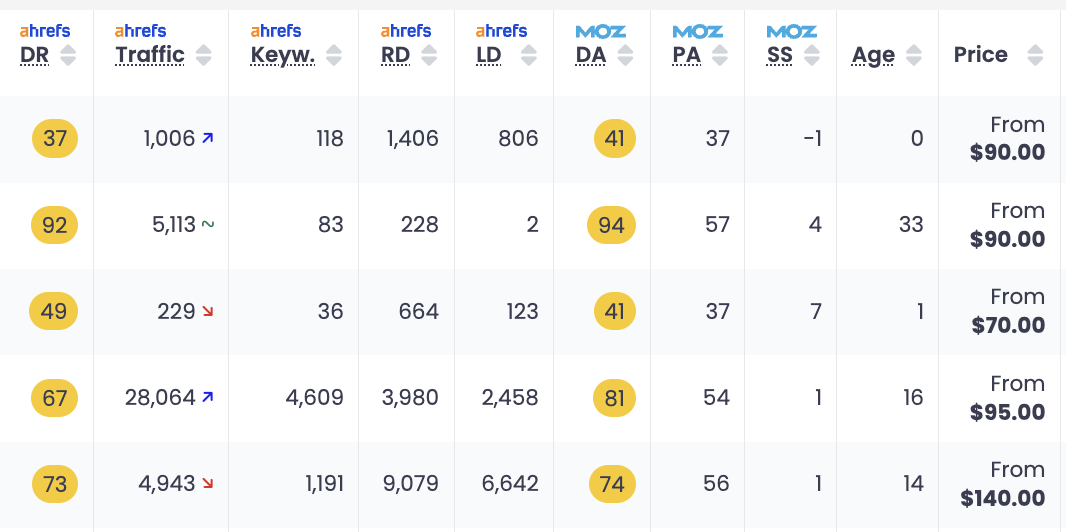
Note: You want to make sure you’re getting links from relevant sites. That’s essential for your website’s SEO these days. Links from irrelevant sites that don’t match your target audience will do very little for your SEO and won’t send valuable referral traffic.
Review Their Work
Regularly review the backlinks your provider delivers to ensure they meet your quality standards.
If something looks off, ask questions and request clarification. A reputable provider should be transparent about their work and willing to address your concerns.
You’ll also want to monitor the SEO impact of your campaign. Some important metrics include:
- Referring Domains: Track growth in unique websites linking to yours using Ahrefs or Semrush.
- Keyword Rankings: Monitor changes in rankings for your target keywords.
- Organic Traffic: Check whether your linked pages are gaining traffic over time.
How to Prepare Your Site for Outsourcing SEO Link Building
Getting your site ready for a link building campaign ensures you get the best results possible.
The first thing I recommend is auditing your existing backlink profile.
Why?
Auditing your link profile lets you better define your goals, budget, and target pages. It also lets you see if you have any existing issues that may be holding your website back. So when you do begin a link campaign, you’ll get the best results possible.
When auditing, analyze the following:
- Which websites already link to yours
- Where your strongest backlinks are coming from
- Which pages need more authority and backlinks
- Gaps in your backlink profile and opportunities for improvement
You can do this using Ahrefs or other link building tools like Semrush.
Here’s what to do…
Export your referring domains and backlinks. Start by clicking on your site’s backlink profile in Ahrefs:
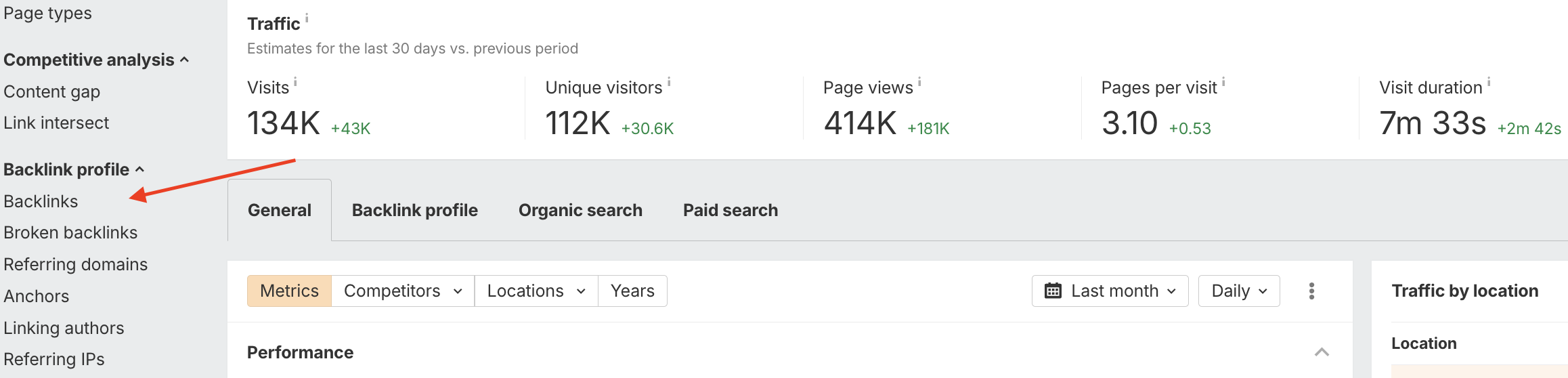
Then click Export in the next window:

Once you have that export file, upload the data to ChatGPT for an initial evaluation using this prompt:
My Website: [INSERT DOMAIN + UPLOAD BACKLINK DATA]
Competitor 1: [DOMAIN + BACKLINK DATA]
Competitor 2: [DOMAIN + BACKLINK DATA]
Competitor 3: [DOMAIN + BACKLINK DATA]
Analyze the following:
- Identify my 20 strongest backlinks based on authority, organic traffic, and relevance.
- Explain why they’re valuable and identify patterns among my best links.
- Flag spammy, irrelevant, or suspicious referring domains.
- Identify link farms, unnatural linking patterns, and potential risks.
- Calculate average and median referring domain DR/DA.
- Group referring domains by authority ranges (0–20, 21–40, 41–60, 61–80, 81–100).
- Evaluate overall backlink quality and organic traffic.
- Categorize anchors as branded, exact-match, partial-match, generic, or naked URLs.
- Calculate percentages and identify potential overoptimization.
- List the 10 pages with the most referring domains.
- Identify important pages with few backlinks and opportunities for improvement.
- Compare referring domains, authority, traffic, and backlink quality.
- Identify high-quality websites linking to competitors but not me.
- Highlight competitor pages attracting the most backlinks.
- Recommend 10 priority pages for link building.
- Suggest backlink types, target websites, and anchor text improvements.
- Establish monthly link acquisition targets and a 90-day action plan.
Present findings in tables with actual URLs, metrics, and actionable recommendations. Prioritize opportunities by SEO impact, cost, and difficulty.
Use only available data, flag missing metrics, and avoid automatically recommending disavowal.
Finish with a summary of my biggest weaknesses, competitor gaps, and five highest-priority actions.
The main takeaway from this audit should be finding patterns in domain authority, topical relevance, anchor text, and links pointing to your most important pages.
Once you’ve completed your audit, here’s what to do next:
- Set minimum link quality standards based on DR, organic traffic, topical relevance, and content quality.
- Decide which link building practices to avoid, including PBNs, link farms, and websites that sell excessive backlinks.
- Establish clear goals and KPIs, such as acquiring 20 new referring domains per month or improving rankings for target keywords.
- Review your existing anchor text distribution and plan a natural mix of branded, partial-match, and generic anchors.
- Set a realistic monthly budget and timeline based on your goals, competition, and the number of links you need.
- Agree on reporting frequency, communication channels, and how often you’ll review campaign performance with your provider.
Advantages of Outsourcing Link Building
Some of the main advantages of outsourcing link acquisition are immediate access to network connections, fast turnaround times, and lower costs. Here’s a bit more on each of these advantages:
- Scaling without risk: Outsourcing lets you ramp up your link building volume without risking building spammy links or getting Google penalties.
- Faster turnaround on link placements: When you outsource, you get more links, faster. Period. Service providers can build dozens or even hundreds of high-quality links in a short amount of time.
- Lower costs: A full-time in-house link builder will cost you $50,000 per year at minimum, and a senior-level employee could easily cost $150,000 a year before you factor in tools and training. Outsourcing gets you better results for a fraction of the price.
- Proven outreach systems and templates: Outsourced teams have already tested what works across hundreds of campaigns. If you’re using a marketplace, the publishers are already there waiting to place your links. No outreach needed.
- Frees up your internal team for other SEO tasks: Link building is time-consuming, and pulling your in-house team away from content, technical SEO, or strategy to do outreach is a major opportunity cost. Outsourcing keeps everyone focused on what they do best.
Disadvantages of Outsourcing Link Building
There are some drawbacks to hiring a third party to build links for you. Here are the 3 biggest disadvantages to outsourcing:
- Upfront costs for small businesses: It’s obvious, but paying for links or service providers does cost more than just you and a VA trolling for links, at least when you’re just starting out. There are plenty of places you can get free links as a new website, but the benefits fade after a while.
- Loss of control: This is the biggest downside when using freelancers or agencies. You need to rely on an outside party to get you your links, and that comes with some risks. That’s why you need a trusted link building service provider.
- Outsourcing comes with risks: Since service providers and agencies are under pressure to justify their prices, you run the risk of getting spammy links from low-quality freelancers or agencies. If you’re outsourcing, choose wisely.
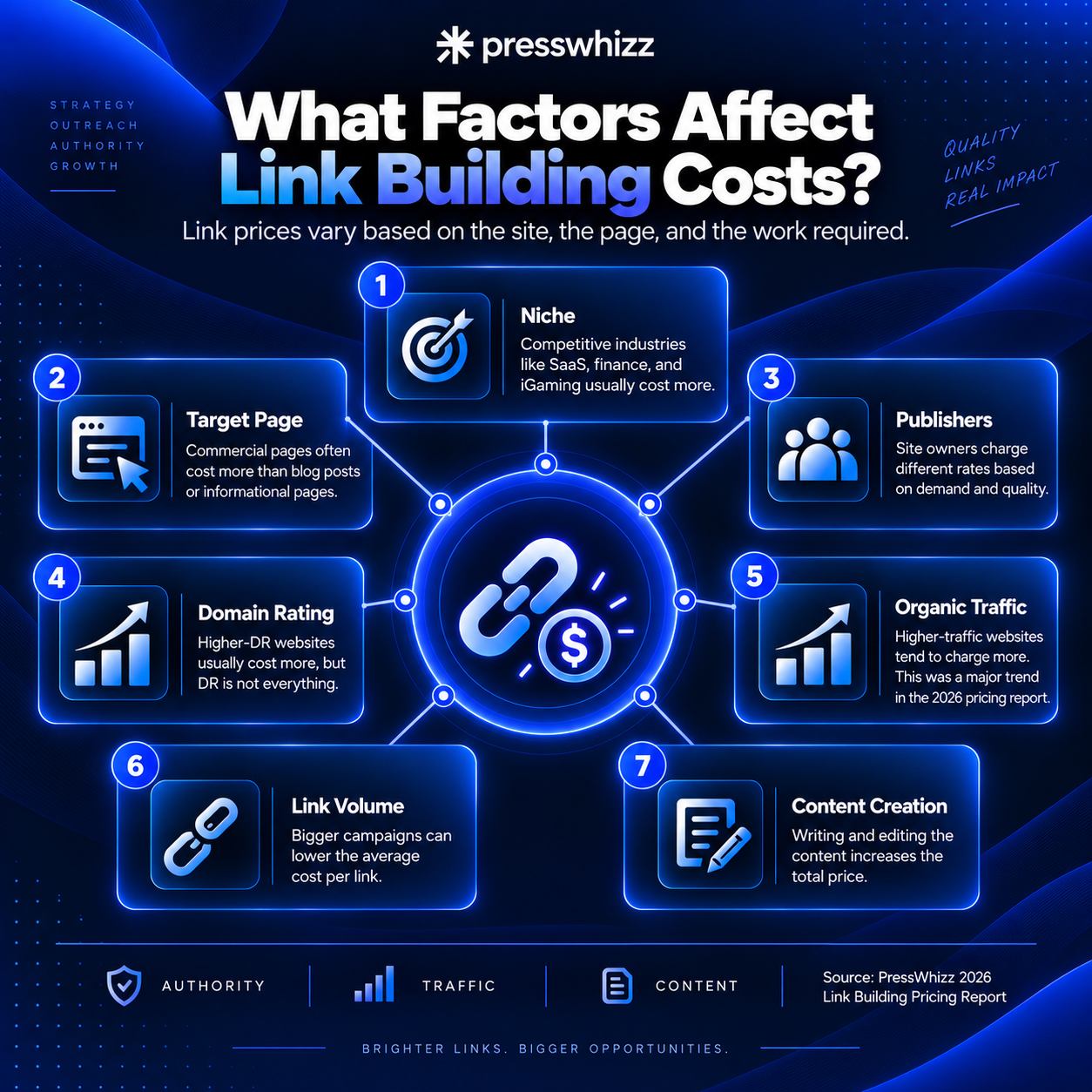
What Factors Affect Link Building Costs?
There are several factors that influence how much you’ll pay for backlinks, and understanding them can help you set a realistic budget and avoid overpaying.
Here are the most important factors that determine link pricing:
- Niche: Competitive industries like finance, SaaS, and iGaming generally have higher link building costs because relevant publishers are harder to find and demand is high. Less competitive niches tend to be more affordable.
- Target page: Building links to commercial pages, such as product and service pages, can be more expensive because publishers are often reluctant to link to promotional content. Informational articles and useful resources are generally easier to secure links for.
- Site owners/publishers: Every publisher sets their own rates, and prices can vary dramatically based on website quality, demand, and editorial standards. A link from a major industry publication could cost several times more than one from a smaller blog.
- Domain Rating (DR): In general, higher DR websites charge more for backlinks. However, DR alone doesn’t guarantee quality, so I wouldn’t recommend paying a premium based on DR alone. SEOs are very good at manipulating Domain Rating.
- Organic traffic: Websites with more organic traffic tend to charge higher prices. Our pricing report found that organic traffic was one of the strongest factors influencing backlink prices, particularly for sites receiving over 100,000 monthly visits.
- Link volume: Planning to build 20, 50, or even 100 links per month? Many providers offer bulk discounts, so your average cost per link may decrease as you scale your campaign.
- Content creation: Guest posts require someone to research, write, edit, and publish an article, which adds to the overall cost. Some providers include content in their pricing, while others charge separately.
Further Reading: Check out our guide on how to write guest posts that get accepted to learn the best SEO writing techniques for guest blogging.
Red Flags to Watch Out For When Outsourcing Link Building
There are plenty of reputable link building providers out there, but unfortunately, there are just as many questionable ones looking to make a quick profit. Choosing the wrong provider can leave you with low-quality backlinks, wasted budgets, and potentially even Google penalties.
Watch out for these warning signs before committing your budget:
- Promises of guaranteed Page 1 rankings or overnight results.
- No verifiable case studies, client reviews, or examples of previous work.
- Refusing to explain their link building methods or outreach process.
- Websites with little organic traffic or obvious signs of spam.
- Focusing entirely on DR or DA without considering link quality.
- Publishing thin, poorly written, or mass-produced content.
- Poor communication, vague reporting, or unanswered questions.
Final Thoughts
To outsource or not to outsource link building?
It’s a very complex and difficult question to answer for most businesses.
However, in my personal experience, companies get better results when they outsource link building efforts to professionals with industry experience and connections.
Hiring a third party to handle backlink acquisition typically results in the following:
- Faster SEO results
- Better overall search engine rankings
- Lower costs
- Enhanced efficiency
A good rule of thumb is this: If you’re spending more than 15 hours a week on prospecting, outreach, and negotiation, it’s probably better to outsource link building.
If there’s one key takeaway from this article, it should be that link building in-house is much more expensive and time-consuming than you think, and it normally produces worse results.
My advice? Think it over.
Run some numbers, reach out to service providers, talk to your team, and then make a decision. I think you’ll see that spending so much time and money on building links on your own isn’t worth it.
Whatever you choose, I wish you luck.
– Dusan Novakovic