
Welcome to PressWhizz’s in-depth guide on podcast link building.
If you’re here, you probably have a few questions:
- Is podcast link building worth it?
- Do podcast links actually pass SEO value?
- How do I find high-quality appearance opportunities without spending days on outreach?
- Which shows are actually worth my time and which aren’t?
If that’s you, this guide will help.
Our link building team here at PressWhizz has been building backlinks for decades, and we want to give you the cold, hard truth about podcast links:
Building links through podcast appearances is time-consuming but 100% worth it IF you appear on the right shows.
The keyword there is IF. IF you find a good show that links to guests, and has a good Domain Rating, traffic, and a relevant audience, then yes, podcast link building is an ultra-high-ROI link building strategy.
That’s why we created this guide. In it, we will teach you everything you need to know in order to acquire high-quality SEO backlinks via podcasting. We’ll cover:
- What podcast link building is
- How it works and WHY it still works
- The different types of podcast links you can acquire
- Our proprietary process for finding, evaluating, prioritizing, and acquiring links
This guide contains tips, analysis, a template, advanced Google search operators, screenshots, and a lot more. So grab a coffee, close your other tabs, and let’s get started.
What Is Podcast Link Building?
Podcast link building is a white hat link building strategy where you appear as a guest on industry-relevant podcasts to earn backlinks to your website and brand mentions. The reason podcast link building works for SEO is because podcast hosts often publish guest biographies, episode descriptions, and show notes that include links to their guests’ websites and other relevant resources. Those are all excellent opportunities for building high-quality, relevant backlinks.
From an SEO perspective, podcast link building can help you acquire backlinks from relevant referring domains, generate referral traffic, strengthen brand awareness, and build topical authority within your industry.
This isn’t just our opinion. According to a Databox article titled “9 Underutilized Marketing Channels for Small Businesses in 2024”, 13.56% of respondents believe podcasts still have significant potential as a marketing channel for small businesses.
Here’s an example of a podcast where 5 agency owners appeared, and they each got a link to their agency’s home page:

Now check out the backlinks to their sites and social profiles:
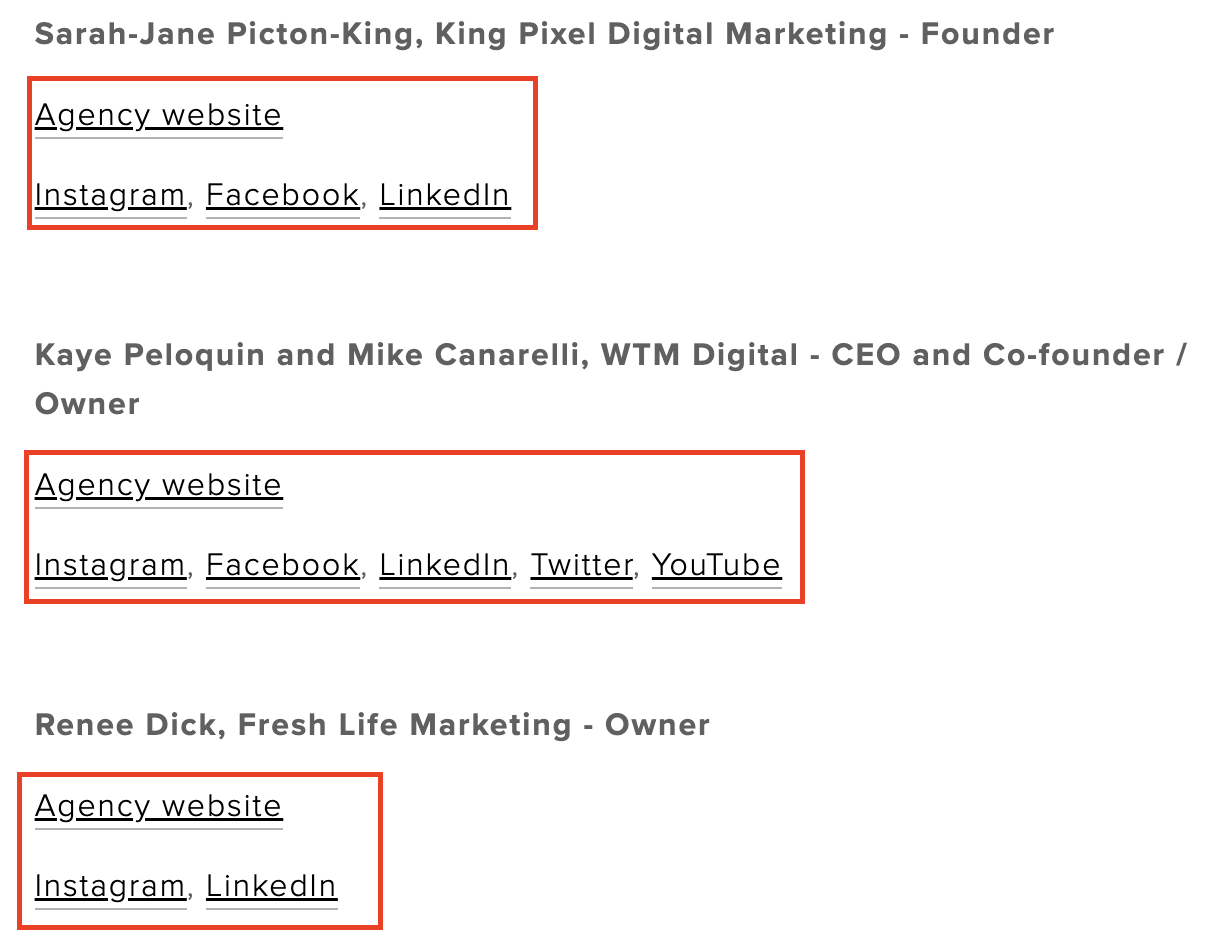
These agency founders generated a very high-quality and hard-to-replicate backlink to their profiles and business page just by talking for 30 or so minutes. Not bad.
Note: Podcast link building is just one tactic we recommend. There are other ways to build backlinks, such as link exchanges, guest posts, and niche edits, that you may want to explore.
Let’s get into how podcast link building works next.
How Does Podcast Link Building Work?
Podcast link building works by appearing as a guest on relevant podcasts or hosting your own show, then earning backlinks from the content published around each episode.
The process for building podcast links is quite simple:
- You reach out to related podcasts
- You appear on the show
- You get a link to your website or company’s site/socials in the description
- Others interested in the show may also link to it, which powers up those links and provides even more SEO value to your site.
By the way, if that last part sounds interesting, you’ll love our guide on tiered link building, where you power up links pointing to your site using links pointing to those links (confusing, huh?).
OK, back to podcasts.
There are three main ways podcast link building works:
- Appearing as a guest on relevant podcasts allows you to share your expertise and potentially earn backlinks when the episodes are published.
- Hosting your own podcast allows you to publish episode pages that guests and other websites may link back to.
- Podcast backlinks can come from hosting platforms, podcast directories, show notes, episode pages, transcripts, and third-party websites.
And, yes, podcasting is a bit time-consuming. It’s not as easy as just buying a backlink and calling it a day. But it 100% works.
One study of 13,504 podcast episodes from Letsmakeapodcast.com found that 79% of episodes featuring a guest’s name in the title included at least one external website link in their show notes, although those links didn’t necessarily point to the guest’s website.
Now, I follow HubSpot’s Marketing Against the Grain, and I was listening to their episode featuring Neil Patel. The show notes link to his LinkedIn profile (which I don’t care about for this), but they also link to his own podcast, Marketing School.
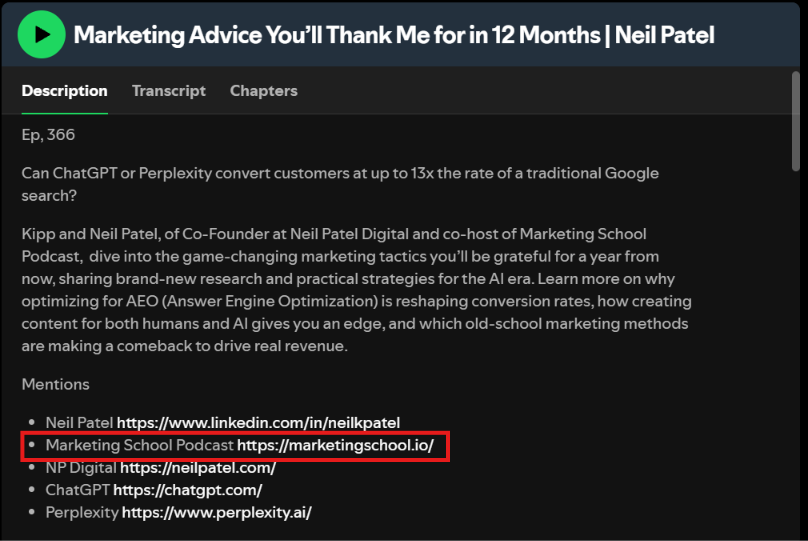
That caught my eye, so I ran it through Ahrefs, and wouldn’t you know it: 31k backlinks, 90% of them dofollow. Must be nice, Neil.
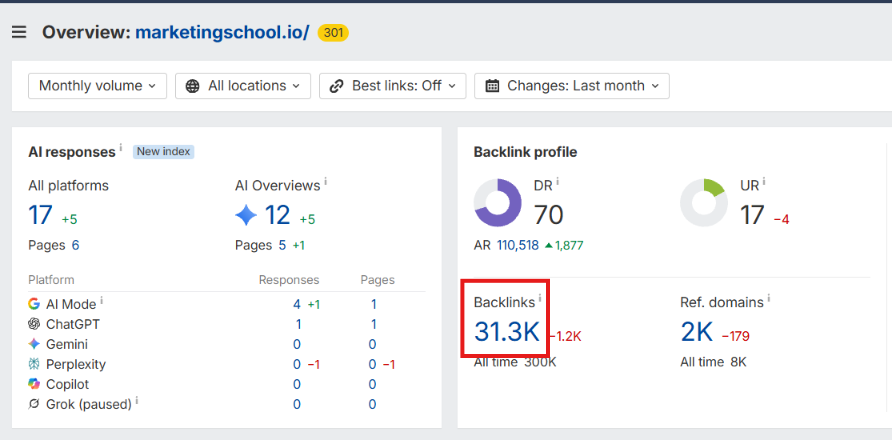
Now, I’m not saying that you should start your own podcast and expect thousands of backlinks. We aren’t all Neil Patel or a big, evil corporate giant like HubSpot. But it’s safe to say that being a guest on an established podcast builds quality links in large numbers.
Before we get into our proprietary process for building podcast links, I want to cover how getting links from these web shows improves your SEO. Let’s nerd out a bit on backlinks.
Why Does Podcast Link Building Improve SEO?
Podcast link building helps your SEO by building high-quality backlinks to your site, sending targeted referral traffic, reinforcing your entity, and increasing brand mentions. All of these benefits snowball into improving your brand’s visibility around the web.
Here’s more on how podcast backlinks can improve your search engine rankings:
You Earn High-Quality Backlinks
The biggest benefit of podcast link building is that you earn high-quality backlinks from relevant websites or directories, and backlinks are an important part of Google’s ranking systems. Backlinks are a top 3 ranking factor without a doubt and are even more important now with the advent of AI.
We know this because Google has a patent on it called “Method for Node Ranking in a Linked Database”:
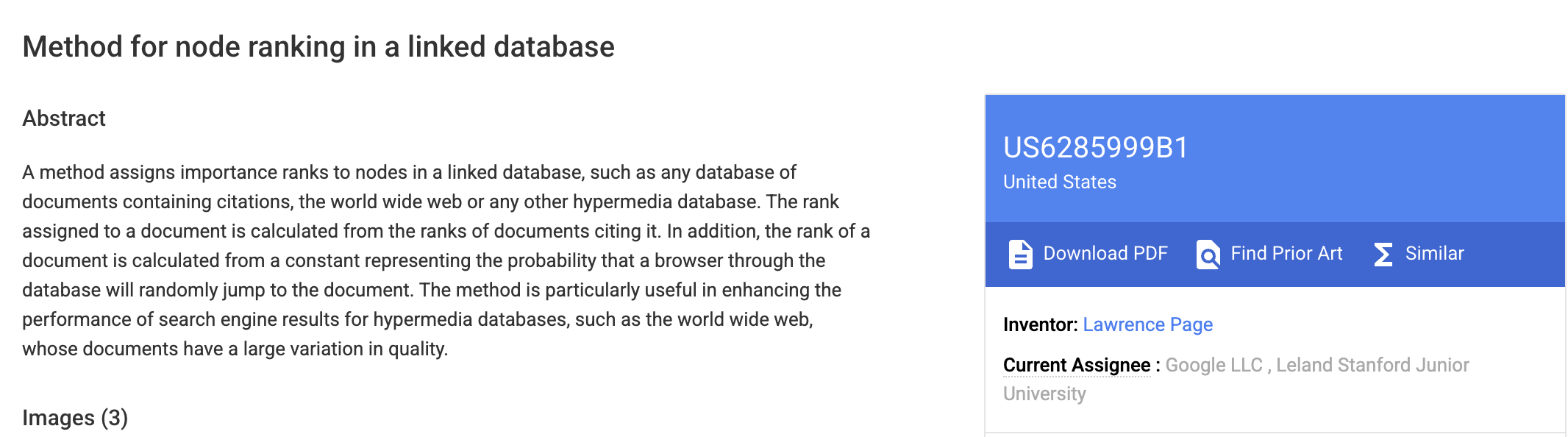
This is one of Google’s foundational patents, and PageRank, the system that evaluates pages based on how many other pages link to it, is still in use today.
And there’s research to back this up.
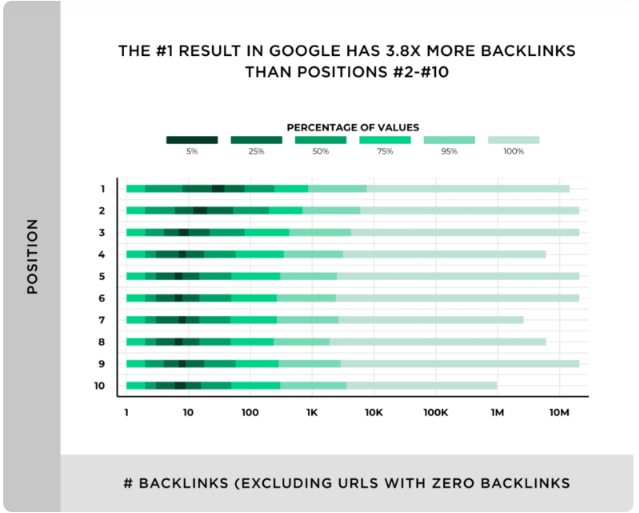
In its analysis of 11.8 million Google search results, Backlinko found that the number one result had an average of 3.8 times more backlinks than results ranking in positions 2-10.
But you can’t just spam random backlinks anymore. Google is too smart for that. Low-quality or toxic backlinks will destroy your website. So, you need high-quality, relevant links from real sites to boost your SEO. And that’s exactly what podcast links are: Links from legit websites within your industry (or close to it). Some with a high Domain Rating may even qualify as editorial links.
Podcast link building ticks several important boxes:
- Podcast backlinks are earned naturally when you contribute something valuable to an industry discussion.
- Appearing on industry-specific podcasts helps you earn relevant backlinks from websites covering topics related to your business.
- Being featured on established podcasts builds trust and credibility by associating your brand with respected hosts and publications.
- Podcast listeners can visit your website to learn more about your business, generating relevant referral traffic and potential leads.
- Podcast appearances reinforce your brand’s association with specific topics and areas of expertise across multiple websites.
Before we move on, I just want to cover dofollow vs. nofollow links to clear up some confusion.
Further Reading: We have an entire guide on why backlinks are important for SEO that goes into much more depth on this topic.
Dofollow vs. Nofollow Podcast Links
It’s time for another quick SEO lesson. You’ll probably hear SEO experts on Twitter say that nofollow backlinks are worthless. They’re not.
A dofollow backlink is a standard link that Google uses as a signal when evaluating the linked page (<a href=”https://presswhizz.com”>anchor text</a>). We use the metaphor “vote of confidence” in the industry. When another website uses a dofollow backlink, it essentially endorses your content and signals to Google that your website is a trusted source worth referencing.
And a nofollow backlink includes the rel=”nofollow” attribute in its HTML (<a href=”https://presswhizz.com” rel=”nofollow”>anchor text</a> )
Back in the good ole’ days of SEO, Google generally treated nofollow links as instructions not to use them for ranking purposes.
However, that changed in September 2019. Google announced that it would start treating nofollow as a hint rather than an absolute instruction to ignore a link. Basically, that means Google considers nofollow links alongside other signals when analyzing links and determining how to use them in its search systems.
My advice? Don’t dismiss a podcast opportunity simply because its website uses nofollow links. A relevant podcast with an engaged audience can be worth appearing on regardless of the link attribute.
Brand Mentions
Brand mentions are instances where another website, podcast, or publication names your business, with or without a link. For example, if a website mentions our name, “PressWhizz”, that’s a brand mention, and Google tracks these.
Google uses entity-understanding systems, including its Knowledge Graph, to identify businesses, people, and the relationships between them. When your brand appears across relevant websites alongside topics related to your industry, you’re giving search engines additional context about what your business does and what it’s known for.
See why podcasts can be so valuable for SEO? If dozens of pods in the SEO industry mention the name “PressWhizz”, that helps show Google that we are a link building marketplace and link building services provider in the SEO world.
This brings us to a concept called co-occurrence. It’s when your brand name repeatedly appears alongside specific keywords, topics, or other entities across different websites.
Let me show you a good example of co-occurrence in the wild.
Our very own Darko Brzica appeared on an episode of the Odys Podcast: The High Stakes Growth Show. The show notes skip the link to PressWhizz, but they do mention our brand (albeit misspelled…we will contact them).
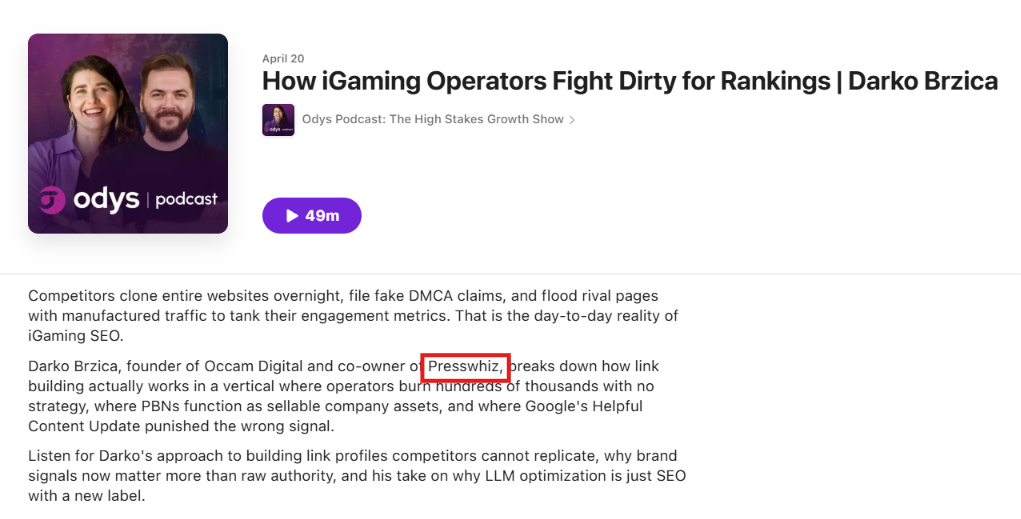
Now, look at the surrounding context. Link building, brand signals, SEO, traffic, engagement, metrics…
These are exactly the topics we want PressWhizz associated with.
The mention puts our brand alongside relevant industry terminology, which reinforces the connection between PressWhizz and the SEO and link building space.
Pro tip: Keep an eye on branded searches, too. Podcast appearances can introduce your brand to new audiences, and some of those listeners will search for your business by name.
Entity Reinforcement
Entity reinforcement is the process of strengthening the associations search engines and AI systems make between your brand, its expertise, and related topics, people, or organizations.
For example, if you appear on multiple SEO podcasts, their episode pages might mention:
- Your name and business.
- Your expertise in SEO and link building.
- Other recognized SEO professionals.
- Specific topics like backlinks, Google algorithms, and AI search.
These references provide additional context connecting your brand to the industry.
How does this help SEO?
Over time, entity reinforcement compounds. Every episode page that pairs our name with link building adds one more data point, and when enough independent sites repeat the same pairing, search engines treat it as an established fact about your brand.
The long-term goal is recognition as an entity in the Knowledge Graph we mentioned earlier (the system where Google stores what it knows about people, businesses, and topics, and how they connect).
Referral Traffic
Podcast backlinks can also generate valuable referral traffic from listeners interested in your business, which could bring in new customers, leads, and sales.
But there’s another benefit to interested referral traffic that most SEOs overlook: human engagement metrics.
I’ll explain…
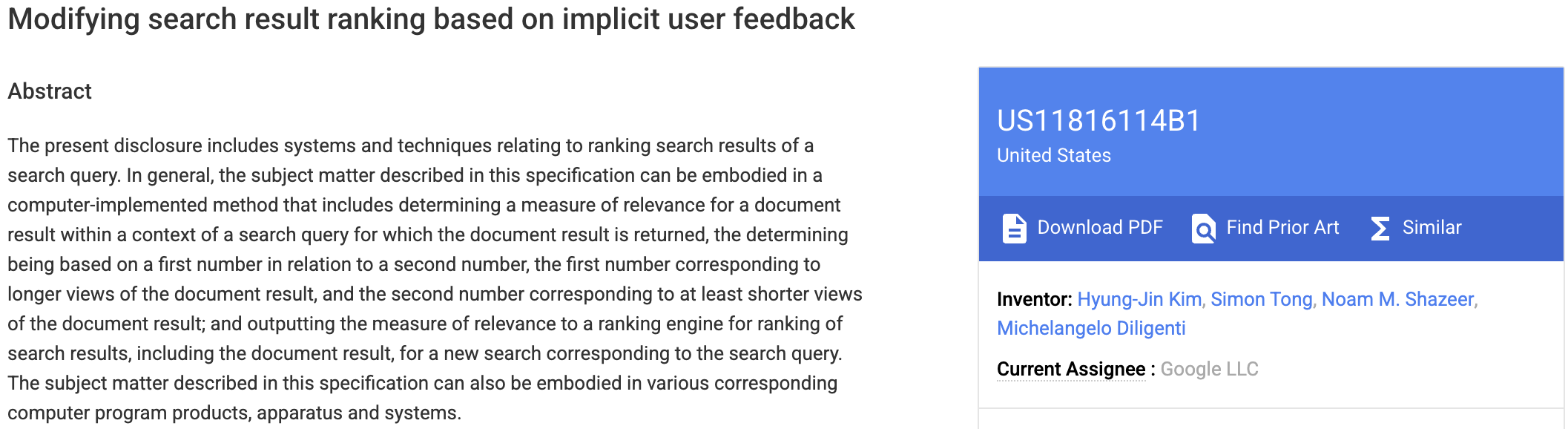
Referral traffic can have direct SEO benefits because Google uses human engagement signals, including search result clicks and how long users stay on pages, to evaluate search quality.
Google even has a patent called Modifying Search Result Ranking Based on Implicit User Feedback, which describes using click behavior and viewing duration to help determine search rankings. Here’s that patent:
Say someone discovers your business through a podcast, clicks the backlink in the episode description, and spends several minutes exploring your website. They might also search Google for your brand later, visit your website again, or recommend your content to someone else.
These interactions can lead to branded searches, organic search clicks, and additional backlinks that strengthen your SEO over time.
Secondary Backlinks
One last thing…
Podcast episodes can attract backlinks of their own. Journalists, bloggers, other businesses in the industry, and random people link to pods all the time. Someone might find an interesting episode and reference it in a blog post, article, or resource page and link to the episode in the process.
These secondary backlinks can strengthen the podcast’s authority and increase the value of the original link pointing to your website. That’s the tiered link building reference I made earlier, by the way.
How to Build Backlinks Through Podcasts
OK, now the part that you’ve been waiting for. We are going to cover how to build podcast backlinks step-by-step using the same proprietary process our link building team uses here at PressWhizz.
- You can build backlinks through podcasts using this process:
- Find Relevant Podcasts in Your Niche
- Qualify Podcasts by Relevance, Website Quality, and Link Opportunities
- Pitch Podcast Hosts with a Valuable Topic
- Prepare for the Interview and Provide Relevant Resources
- Secure Backlinks in Show Notes and Episode Pages
- Promote Your Appearance to Earn Additional Backlinks
- Measure Your Podcast Link Building Results
Let me walk you through this entire process from start to finish now, including tips, screenshots, templates, and more.
1. Find Relevant Podcasts in Your Niche
Start by building a list of podcasts that cover your industry and regularly feature guests.
You don’t need to reinvent the wheel here. Your competitors have probably already done some of the prospecting for you, so I’d start by looking at their existing podcast backlinks. This is SEO 101: Find what your competitors are doing and do it better.
Reverse-Engineer Competitors’ Podcast Backlinks
Pull your top competitors into Ahrefs or Semrush and open their referring domains or backlink reports. If we were your competitor, you could just throw PressWhizz into Site Explorer and click Backlinks on the left-hand side:
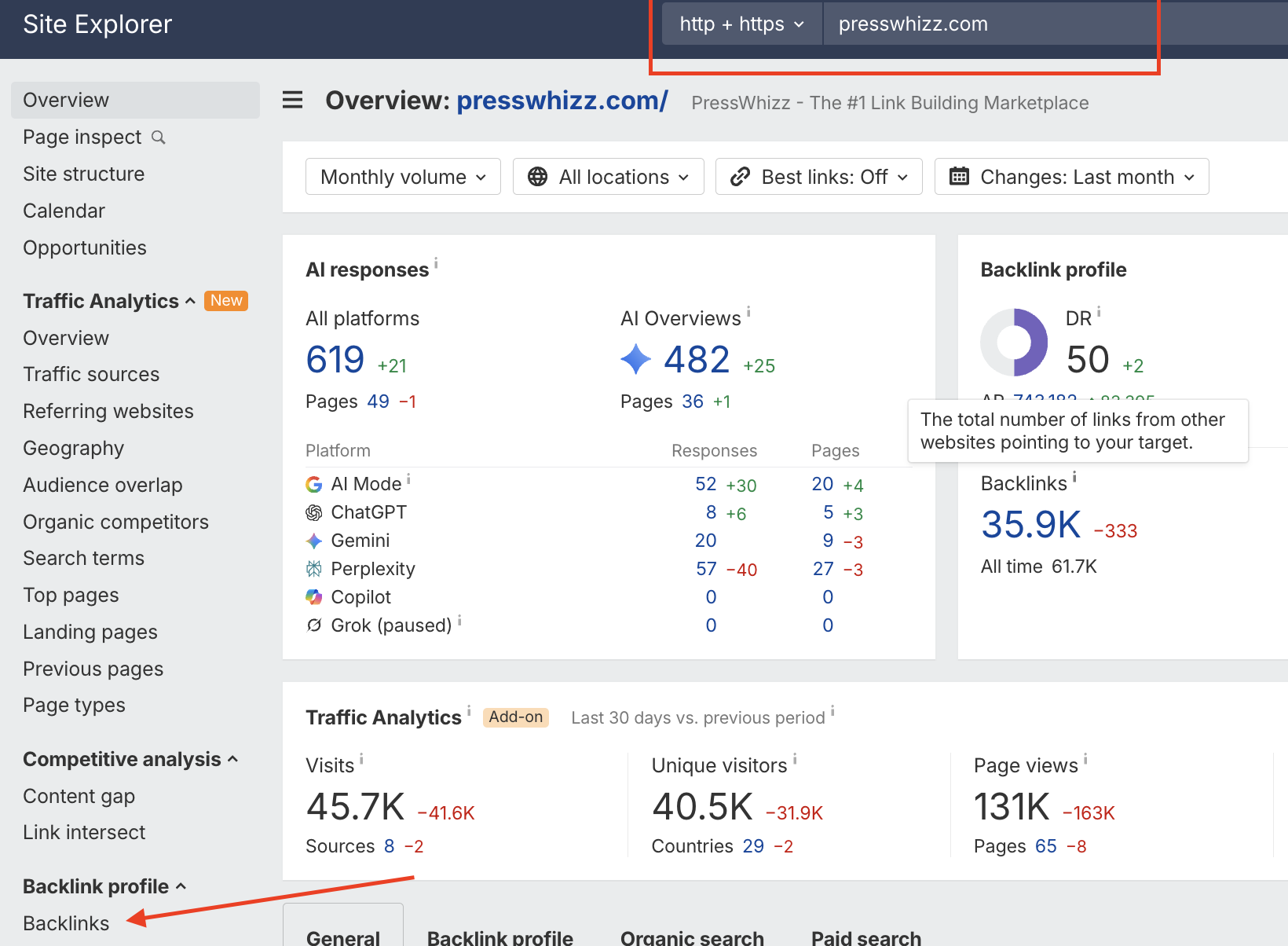
Once you have the backlinks report, filter the referring pages using terms like podcast, episode, show notes, and interview:

That should give you a good list of podcasts to reach out to. If you want to search several competitors at once, do link intersect analysis.
Look for podcast websites that have featured your competitors and linked to their websites. You can do this by clicking All Tools in the top left, then clicking Competitive Analysis in the drop-down menu:
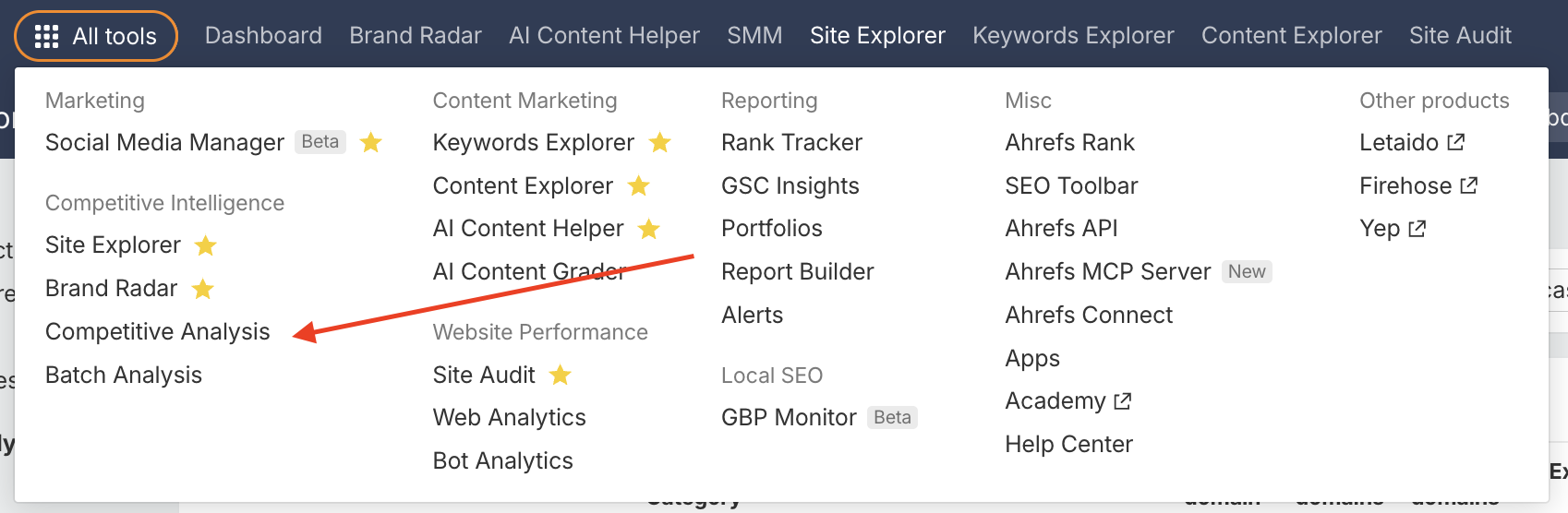
Once you do that, repeat the same process as above. Throw in your competitors, see all of their backlinks, filter by “podcast”, and you’ve got a list of your highest-ROI targets.
Use Google Search Operators
Google search operators are the fastest and easiest way to uncover podcasts actively featuring guests in your industry.
Try the following searches to find relevant shows and interview opportunities:
- “your niche” “podcast” “guest” to find relevant interview opportunities.
- “your niche” “podcast” “show notes” to discover websites publishing episodes.
- intitle:podcast “your industry” to uncover niche-specific shows.
- “competitor name” “podcast” to find podcasts featuring people in your industry.
Our advice? Don’t just look at the first few results. Dig through the SERPs and build a decent list of potential shows.
Search Podcast Directories and Discovery Tools
Podcast directories are one of the best places to find potential shows to be a guest on. They’re useful for finding niche-specific shows, researching their audiences, and uncovering potential guest opportunities.
When I want to expand my podcast prospect list beyond Google searches and competitor research, these are the tools I turn to:
- Rephonic: A good starting point for discovering podcasts by niche and getting insights into their audience demographics.
- Listen Notes: Use its search engine to find episodes featuring your competitors, industry experts, or topics related to your business.
- Spotify and Apple Podcasts: Browse relevant categories, explore recommended shows, and see which podcasts consistently publish interviews.
- YouTube: Don’t ignore video podcasts. Search for industry interviews and guest appearances, then check whether the shows publish episodes on their own websites.
OK, now you should have your list of podcast targets. Now, let’s qualify them using some simple SEO metrics.
2. Qualify Podcasts by Relevance, Website Quality, and Link Opportunities
Next up, let’s take that list of podcasts and begin qualifying them.
You want to focus your outreach on podcasts that offer the best potential ROI, so you don’t waste time pitching shows with little SEO value, small audiences, or no opportunities to earn backlinks.
Start by exporting the available data from Ahrefs, including Domain Rating (DR), organic traffic, and referring domains, into a spreadsheet. You can also add estimated podcast downloads, audience size, and other engagement metrics where available.
Then assign each podcast a score from 1 to 5, with 5 being the highest for podcasts that tick all the boxes for relevance, authority, traffic, audience engagement, and backlink opportunities.
Here are the six criteria I’d use to qualify each podcast:
- Guest backlinks: Does the podcast publish episode pages and link to guests’ websites?
- Topical relevance: Does the podcast cover your niche and attract an audience relevant to your business?
- Website authority: Does it have a strong DR and a healthy backlink profile?
- Organic traffic: Does its website attract consistent organic traffic, and do its episode pages rank?
- Podcast popularity: Does it have an engaged audience based on available listener data, downloads, views, reviews, and social engagement?
- Link quality: Are guest links followed, placed naturally within the content, and published on indexable pages?
Once you have a list of the highest-ROI podcasts, it’s time to pitch…the right way.
Further Reading: Check out our guide on Domain Rating vs. Domain Authority for more info on how to use these third-party metrics.
3. Pitch Podcast Hosts with a Valuable Topic
Found a podcast worth appearing on? Now you need to convince the host to have you on.
And no, sending a generic email saying you’re an SEO expert looking for podcast opportunities isn’t going to cut it.
You need a topic worth discussing, and you need to not sound like every other piece of AI slop that lands in their inbox.
Here’s what to do…
Start by researching the podcast’s previous episodes. Look at the last 10 or so and identify the subjects they cover, the guests they invite, and the questions they haven’t addressed yet.
You can use AI to speed things up, but make sure that you actually ask it to do the right things. Putting everything into GPT and saying “pick a topic” won’t cut it.
Feed ChatGPT the podcast’s episode titles, descriptions, and transcripts, then ask it to:
- Identify recurring topics and themes.
- Find subjects their audience would likely be interested in but haven’t covered in depth.
- Suggest interview angles that build on previous episodes without repeating them.
- Develop 3-5 potential episode topics based on your expertise.
Now, let’s talk about the pitch.
I hate those robotic outreach emails that start with something like, “I noticed your amazing podcast while sipping my $25 smoothie bowl in Bali.”
No, you didn’t. You’re building links for your website. Everyone knows the game these days.
You don’t need to pretend you’ve been a lifelong listener, either. Just show that you’ve done your homework, explain why your topic would interest their audience, and make it easy for them to say yes.
Here’s an email I’d send:
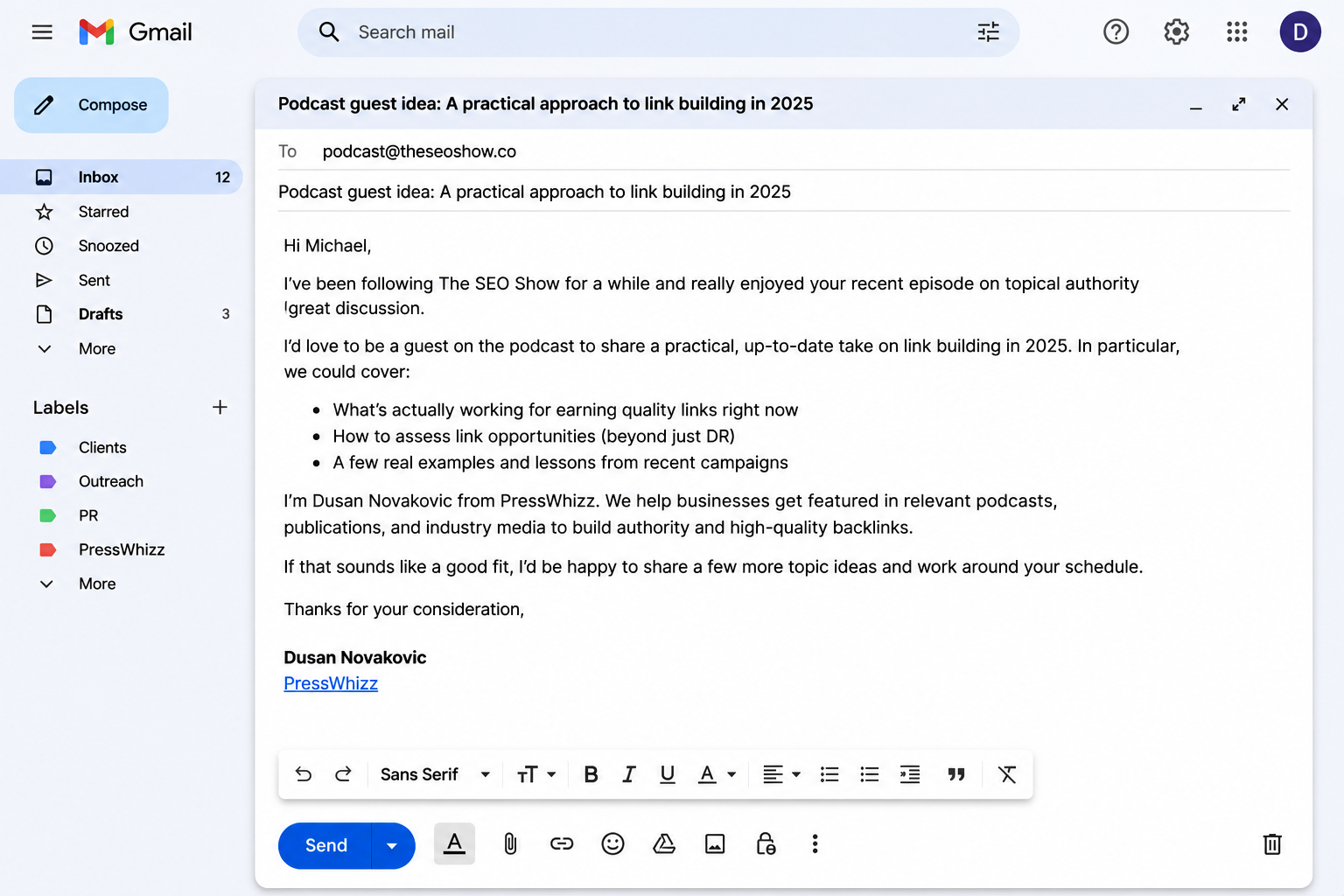
Want to use the same approach? Take this template and adapt it for your own outreach:
Hi [First Name],
I’ve been looking through your recent episodes and noticed you’ve covered several topics around [relevant subject].
I’d love to suggest a topic that I think would resonate with your audience: [Your proposed episode topic].
I’m [Your Name] from [Company], where we specialize in [your area of expertise].
I’d be happy to come on the show and discuss:
- [Talking point 1]
- [Talking point 2]
- [Talking point 3]
- [Talking point 4]
Would you be open to having me on as a guest?
Happy to send over a few alternative topics if you’d prefer something different.
Thanks for your consideration,
[Your Name]
[Company]
[Website URL]
Be honest. If you were a podcast host, would you rather receive an email like this or a generic invitation from someone who clearly hasn’t researched your show?
Exactly. Take five minutes to personalize your pitch. It can make all the difference.
4. Prepare for the Interview and Provide Relevant Resources
This one is relatively simple. After all that work getting booked, you don’t want to show up unprepared.
Research the host, listen to a few of their recent episodes, and prepare some talking points so you know what you want to cover. You don’t need to script every answer, but you should have a few useful insights, examples, and stories ready to go.
Also, send the host any resources you’re planning to reference during the interview. This could include your website, relevant blog posts, tools, case studies, or guides you’ve mentioned.
5. Secure Backlinks in Show Notes and Episode Pages
You’ve done the interview, shared your expertise, and now it’s time to make sure you actually get the backlink.
Once the episode is recorded, follow up with the host and confirm that they’ll include your website in the show notes or guest bio.
Make their job easier by sending:
- The exact URL you want them to link to.
- Your preferred anchor text (usually your name or brand).
- A short guest bio they can use alongside the link.
Don’t assume the host will automatically include everything. Once the episode goes live, check the page yourself and make sure the link is there, points to the correct URL, and works.
6. Promote Your Appearance to Earn Additional Backlinks
Don’t stop once the episode goes live. Your podcast appearance is another piece of content you can promote, and the more people who discover it, the more opportunities you have to earn additional backlinks.
I like to start by sharing the episode across my social media profiles. Tag the host, mention any guests who joined you, and give people a reason to listen. You can also include it in your email newsletter, add it to your website’s press or media section, and share it in relevant industry communities.
Think beyond your own channels, too.
If you discussed a useful study, shared original insights, or mentioned a particular resource, reach out to relevant bloggers and publishers who might find the episode worth referencing.
7. Measure Your Podcast Link Building Results
It’s time to see if your podcast appearance actually delivered backlinks.
Why?
You measure backlinks acquired because podcast appearances mean absolutely ZERO if they aren’t translating into better SEO rankings. Tracking the number and quality of those links tells you which placements were worth chasing (and chasing again), what your cost per link looks like, and whether the campaign is actually delivering ROI or just burning time and money.
I recommend tracking a few key metrics to measure the SEO impact of your podcast link building efforts:
- Backlinks acquired: Use Ahrefs or Semrush to monitor new backlinks pointing to your website from podcast websites. Check whether each link is dofollow or nofollow, and make sure it points to the correct page. Make sure to set the dates for after the episode has been published and track links you’ve earned since the episode as well as links pointing to that episode’s page.
- Referring domains: Track the number of unique podcast websites linking to you. Ten links from one podcast website aren’t the same as links from ten different podcast websites.
- Backlink quality: Look at each referring website’s topical relevance, organic traffic, backlink profile, and the placement of your link.
- Referral traffic: Check Google Analytics to see how many visitors are reaching your website through podcast episode pages. Look at which episodes send the most traffic and whether those visitors explore other pages, sign up, or become leads.
- Brand visibility: Monitor branded search impressions, branded search volume, and clicks from your branded keywords in Google Search Console, along with new brand mentions across the web. These metrics can help you understand whether your podcast appearances are increasing awareness of your business, even when they don’t result in a backlink.
Make sure to keep an eye on your links to ensure your links stay live. If they’re taken down, engage in link reclamation to get them back.
As a bonus tip, keep all that information in one spreadsheet, with the podcast name, episode URL, backlink URL, link attribute, referring domain, and referral traffic. It’ll look a little something like this:
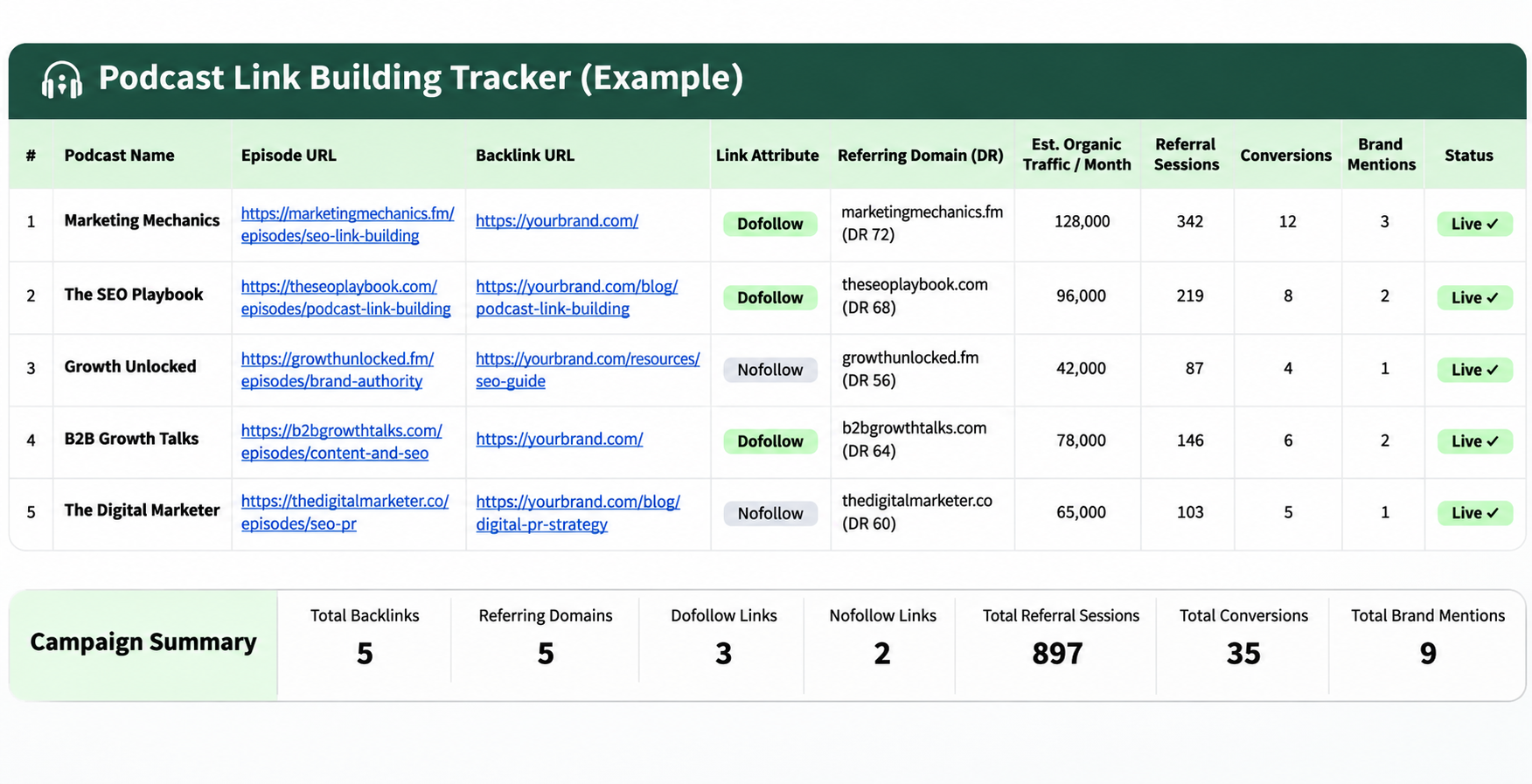
You’ll see which appearances deliver the strongest results and where to focus your next outreach efforts.
Further Reading: Check out our guide on the best link building tools for more info on which tools to use during your link acquisition campaigns.
Types of Podcast Backlinks
Podcast backlinks can show up in a few different places on an episode page, including show notes, transcripts, and resources.
Here’s a bit more on each of those link types before we go.
Show Notes and Episode Page Links
Show notes links are the ones you’ll see most often. The host publishes an episode page with a summary, a guest bio, and a list of resources, and your link usually lands in the bio or the “links mentioned” list.
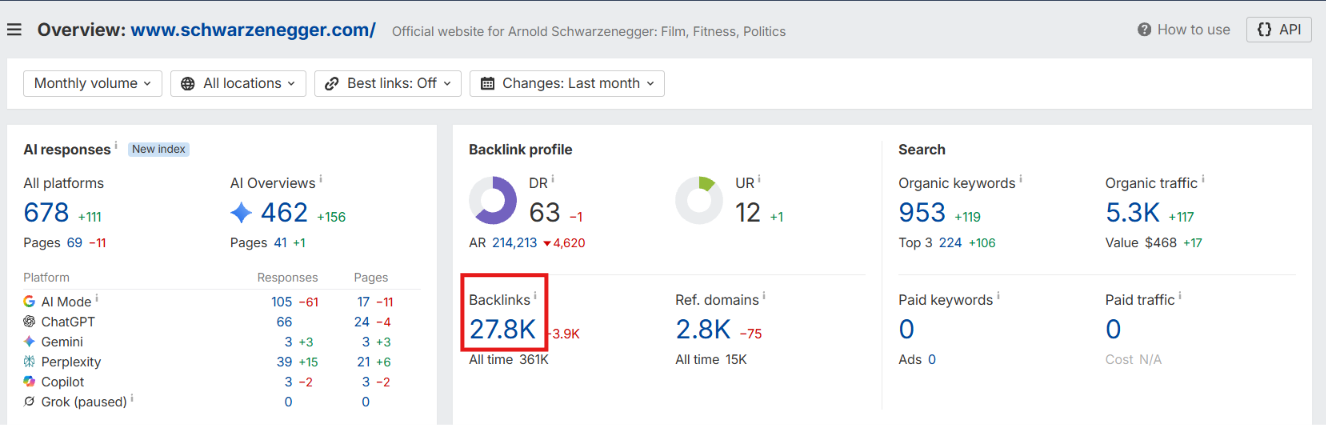
Below are the show notes for Arnold Schwarzenegger’s appearance on People I (Mostly) Admire. His name links to his website with a short bio right beside it. It’s not like he needs the link, but it’s a clear-cut example.
I checked the site for fun, and it has almost 28k backlinks, 83% of which are do-follow, as you can see in the screenshot below.
Contextual Links from Transcripts and Resources
Resource lists are another opportunity to pick up backlinks from podcast appearances, and one you can influence during the recording itself. Hosts often include links to books, articles and tools mentioned throughout the episode, so deliberately referencing your own guides, resources or products gives you a better chance of securing a link in the show notes.
Podcasts that publish transcripts offer another opportunity, as those same mentions can be turned into contextual links within the transcript itself.
Let me illustrate with an example from Radiolab. In the Spotify description for their “Math Vs Machine” episode, the guest mentioned a book, Big Math, and the podcast listed it under “Episode Citations” with a link, which is what you want.
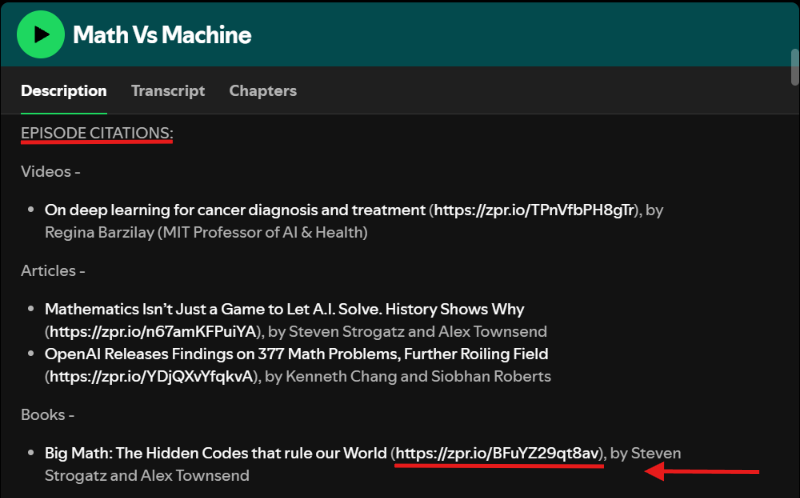
I chose this example to demonstrate another point: Every link in the list runs through a redirect. You can see that each URL starts with zpr.io, a link shortener, which sends the reader on to the real destination.
Which begs the question: do redirects kill link value?
Google’s Gary Illyes said in 2016 that redirects no longer lose PageRank, and John Mueller has called the idea that 302 redirects don’t pass PageRank a myth. The link still counts (thankfully…).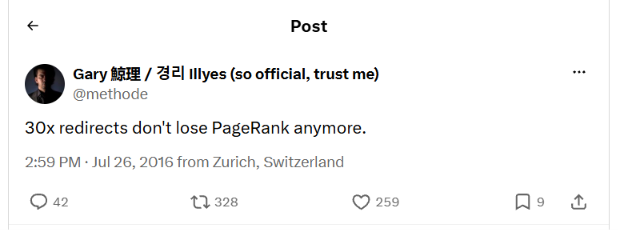
Pro tip: Send the host your final URL and ask them to paste it as is. If they use a shortener anyway, paste one of its links into a redirect checker and look at the status code before you count the link.
Homepage Links vs. Relevant Deep-Page Links
Personally, I’d prioritize homepage links for newer domains. Most podcast hosts naturally link there anyway, making it an easy way to build branded backlinks and consolidate PageRank.
Your internal linking structure then distributes that equity to category pages, service pages and supporting content.
Once you’ve built a decent foundation of referring domains, start targeting deep links to commercially valuable pages. There’s no magic threshold, though. If a relevant deep-link opportunity comes along early, take it.
Contextual relevance is key. If you’re discussing SEO for early-stage businesses, linking to a startup link building guide makes perfect sense. It’s useful to listeners and directs link equity towards a topically relevant page.
In the end, don’t obsess over homepage-to-deep-link ratios. Just build authority, distribute PageRank intelligently, and prioritize links that help your money pages rank.
Podcast Link Building Best Practices and Mistakes to Avoid
Before you hop into a podcaster’s guest seat, I want to leave you with a few final pieces of advice that we’ve learned over the years helping our clients build high-quality links via podcasting.
Here are the best practices for link building through podcasts, plus the mistakes to avoid (unless you like dead links and wasted afternoons).
Prioritize Relevance Over Domain Authority
Domain Authority/Rating vs. relevance is one of the most hotly debated topics in SEO. Obviously, you want both. But if you have to choose between one or the other, take relevance. A DR 35 show that covers your exact niche usually does more for you than a DR 70 general business show, because the listeners are your buyers and the page around your link talks about your topic.
Use Natural Anchor Text and Relevant Landing Pages
Exact-match and branded anchors both work for podcast backlinks, provided they fit naturally into the surrounding content. Most hosts will link your name or business in the guest bio, so branded anchors will likely make up the majority of your podcast links anyway.
I’d avoid forcing exact-match anchors where they don’t belong. Instead, look for opportunities in show notes or resource lists where descriptive, keyword-rich anchors make sense. For example, linking the phrase “link building strategies for startups” to a relevant guide is far more natural than forcing that anchor into a guest biography.
The destination matters just as much. Make sure the landing page matches the anchor text and episode topic, giving Google clear contextual signals while sending listeners somewhere genuinely useful.
Avoid Low-Quality Shows and Manipulative Placements
If your goal is to build links through podcasts, skip any show that has one of these problems:
- No website of its own, only directory listings (a link needs a page to live on)
- Episode pages that name guests without linking them
- A feed of AI-generated episodes with no reviews, no social presence, and no real audience
- A “guest spot” that sells links in bulk with no real interview
Skip the flat-fee gigs that push your link into dozens of podcast directories, too. Those listings come from an RSS feed with no conversation or editorial context behind them.
My takeaway: pick fewer shows, confirm each one has a real website and real listeners, and (I’m beating a dead horse here) ask for the link before you record.
Final Thoughts
Podcast backlinks are some of the highest quality links you can build in the search engine optimization industry. Links from relevant shows within your niche provide SEO benefits, referral traffic, entity reinforcement, and greater brand awareness, all for free.
When we work with clients, we always recommend they appear on relevant podcasts in order to solidify their brand and raise awareness. Many of them build dozens of high-quality links with a single 30-60 minute episode. This is potentially thousands (or tens of thousands) of dollars worth of backlinks.
The main takeaway I want you to get from this article is this:
Going on podcasts is worth it ONLY when you properly qualify them. Make sure they have a real audience, that they have traffic, and that the website has at least a decent DR or DA.
If it helps, use a link building checklist to keep track of the sites you pitch to.
And always ensure that you get a natural link to your website and socials in the description and transcript.
As always, I wish you luck.
– Dusan Novakovic