

Thinking about selling links on your website?
In this guide, our team will provide expert analysis on the risks of selling links, show you how to do it properly so you avoid penalties, and provide our firsthand experience on how much you can earn selling links to other websites.
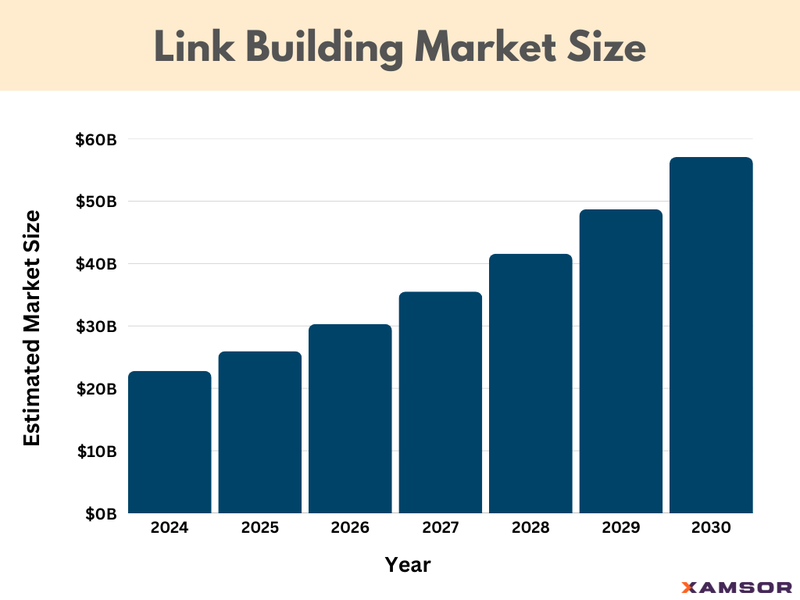
Buying and selling links is technically against Google’s search engine guidelines. However, the paid links market is worth approximately $30 billion, according to Xamsor.com’s SEO market research.
Our own data, the PressWhizz Link Pricing Report for 2026, shows that we’ve facilitated $3.66 million worth of link placements in recent times.
The truth is that there’s a thriving market for buying and selling links, and many bloggers, small publishers, and SEO professionals make five or even six figures per month solely from selling links on their websites. And it’s typically more lucrative than running ads and more stable than affiliate income.
But you also need to be careful. You need to know how to do it properly so you avoid manual penalties or algorithmic devaluation. Google is incredibly sophisticated, with several algorithms and automated systems for detecting abuse. For example, SpamBrain is a sophisticated machine learning system that detects outbound link patterns, context, and spammy anchor text profiles.
Don’t worry, it’s not as scary as it sounds. Read this guide and you’ll learn everything you need to know to sell links safely and maximize passive income.
Is Selling Backlinks Dangerous for SEO?
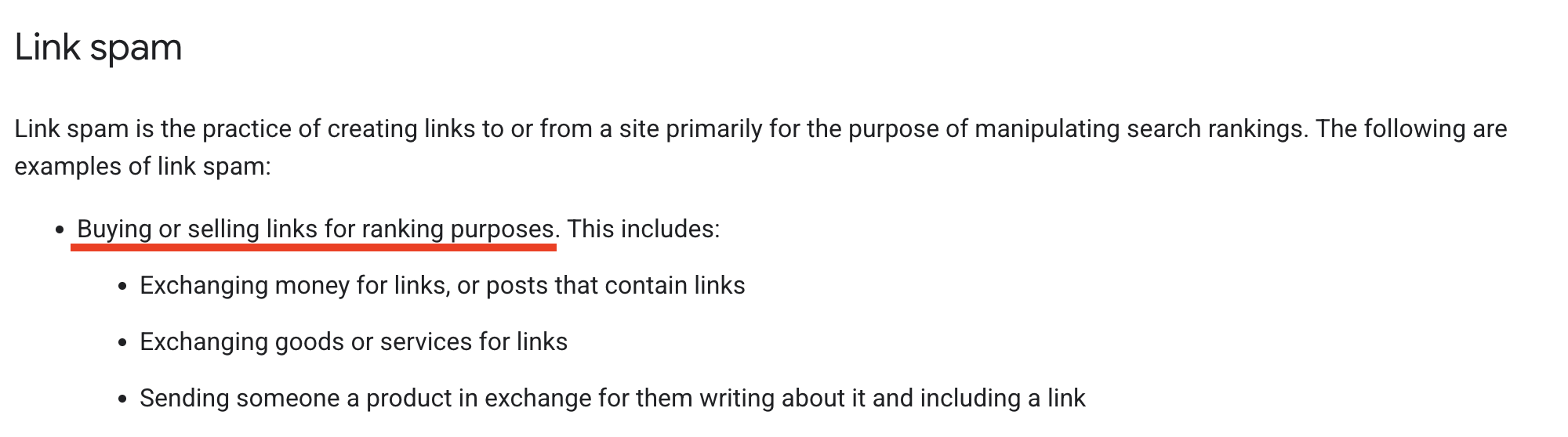
Yes, selling backlinks can be dangerous for SEO if you do it improperly. According to Google, “buying or selling links for ranking purposes” qualifies as link spam, which goes against its guidelines and can result in algorithmic suppression or even manual penalties.
But we all know that selling links, whether guest posts, edits, or sponsored content, is commonplace, and many websites make tens of thousands per month from selling links.
At PressWhizz, we’ve facilitated tens of thousands of link placements without issue. So, clearly, it’s OK to offer links when done properly.
We’ll get back to that in a bit.
Here is Google’s stance on buying or selling links to manipulate search engine rankings:
However, Google adds that selling links is “a normal part of the economy,” and that you actually can do it as long as you tell them about it:

So, officially, in a perfect white hat link building world (which doesn’t exist), you can only buy and sell backlinks if they have a nofollow or sponsored qualifier.
But in the real world, everyone buys backlinks.
And the vast majority are dofollow links without “sponsored” tags. According to data reported by the SEO platform Xamsor, buying and selling backlinks is a $30+ billion a year industry, and it’s expected to double over the next few years.
And at PressWhizz, we’ve facilitated nearly 23,000 link sales.
Why would SEOs be spending so much money on backlinks if they don’t work?
The Truth About Buying and Selling Links
The truth is that Google can’t reliably identify every paid link on the web. Instead, it relies on algorithms, machine learning systems, and spam detection signals to identify manipulative link patterns at scale. Rather than reviewing individual placements, Google looks for footprints associated with link schemes, such as unnatural anchor text profiles, irrelevant links, and suspicious outbound linking behavior.
So, Google does what it normally does and tries to maintain search quality. It doesn’t want to wake up and see the SERPs dominated by sites using link farms, low quality PBNs, hacked links, etc., like back in the 2010s. Instead of policing every link individually, its algorithms look for blatant manipulation and obvious footprints.
You can read more about those in our guide, “What are Spam Links?”. While you’re at it, you should analyze your own link profile for low quality links and learn how to disavow links safely. This will improve your site’s health and help you command higher prices when you sell links.
If your links are high quality, niche relevant, and from what appear to be normal websites, Google is less likely to see them as spam. And that would be accurate. Quality links and content, whether organic or paid, improve the user experience and the web as a whole, which is something Google loves.
So, even if you are technically violating Google’s policies by selling a link, your SEO will likely improve.
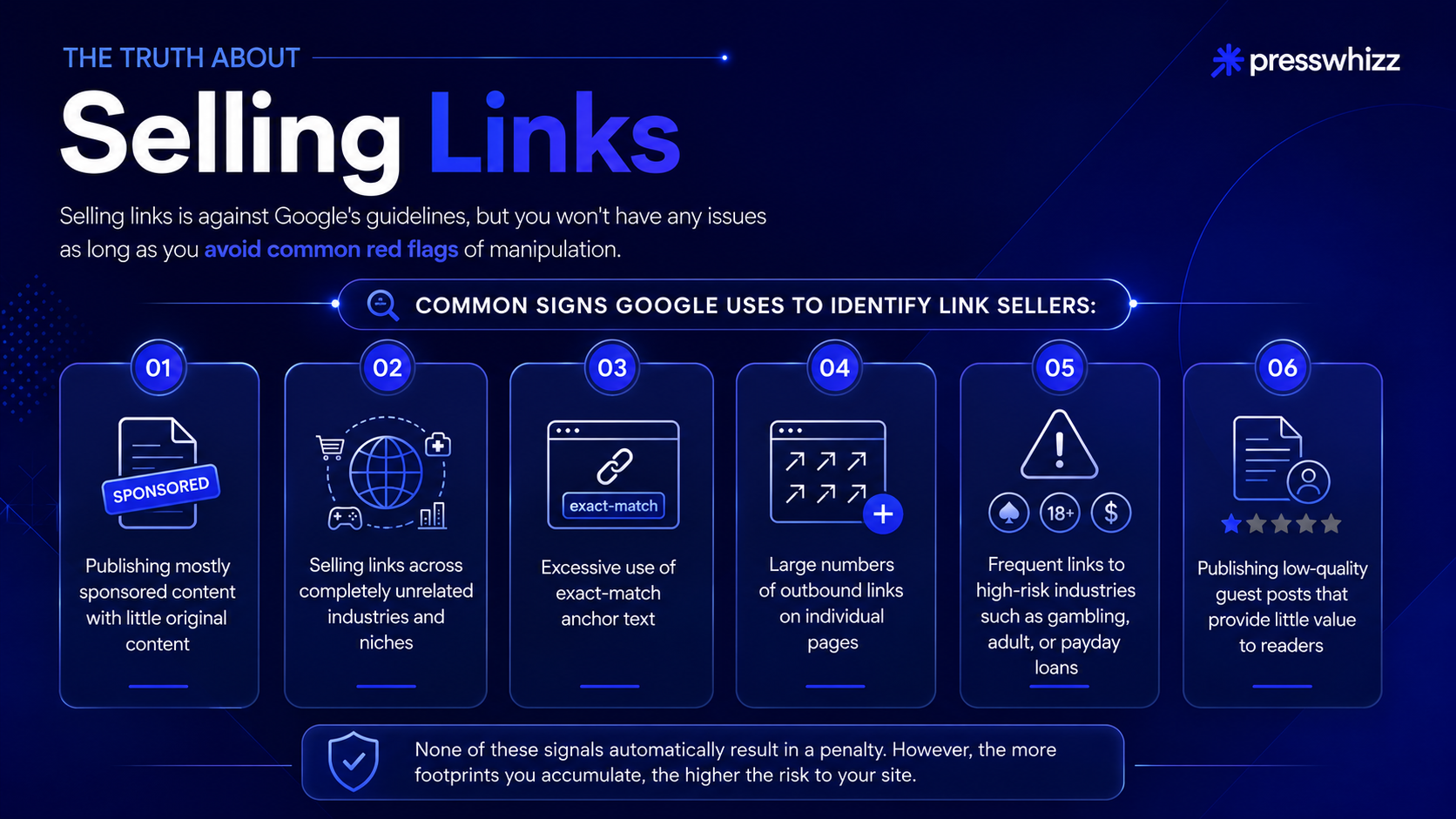
Just make sure to avoid some of the most blatantly manipulative signs of link selling. Google actually identifies link sellers using these common warning signs:
- Publishing mostly sponsored content with little original content
- Selling links across completely unrelated industries and niches
- Excessive use of exact-match anchor text
- Large numbers of outbound links on individual pages
- Frequent links to high-risk industries such as gambling, adult, or payday loans
- Publishing low-quality guest posts that provide little value to readers
None of these signals automatically result in a penalty. However, the more footprints you accumulate, the easier it becomes for Google’s systems to classify your website as part of a link scheme rather than a legitimate publisher.
Think of It This Way: Highways have speed limits. But you know that everyone drives faster than that. It’s expected. The traffic police can’t evaluate every single driver. So they set up traps to catch people doing double the speed limit. Google is the same. If the speed limit is 55 mph and you drive 70, you’re fine. Just don’t drive 100 mph. With buying/selling links, just don’t abuse the system and you’ll be OK.
The Risks of Selling Backlinks
The primary risks of selling backlinks are algorithmic devaluation, manual penalties, and hurting your brand’s reputation.
Here’s more on the risks of selling backlinks the wrong way:
- Manual penalties: This is about the worst thing that can happen to a website. Google can remove your pages from the SERPs and collapse your search rankings overnight. For many spammy sites, the damage is permanent.
- Loss of trust: Flooding your site with irrelevant sponsored content damages your authority and makes you look like spam to readers.
- Ranking declines: Low quality outbound links can dilute topical relevance, making you appear less authoritative to Google. This can reduce your SERP rankings and make your site overall less valuable.
- Poor user experience: Readers don’t want articles that feel like one giant advertisement.
- Reputation damage: Once agencies and buyers view your website as a spam source, it becomes difficult to attract quality link buying clients.
Let us say something quickly:
We know these risks sound scary, but you don’t need to be afraid of selling links. As long as you operate like a real business and partner with reputable buyers, you’ll be fine.
How to Sell Backlinks Safely
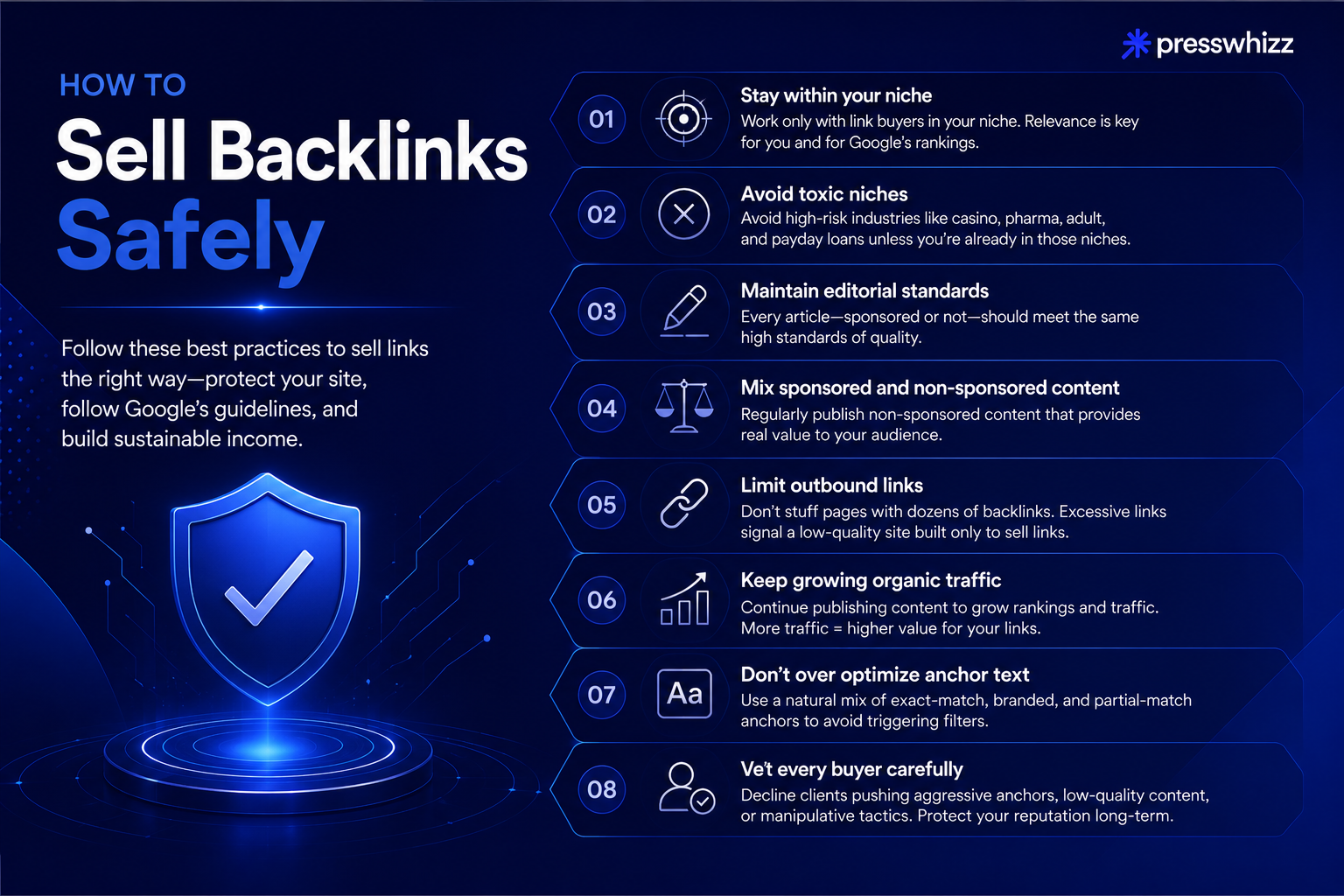
The safest way to sell links ethically is to add rel=“nofollow” or rel=“sponsored” tags to every paid link. This guarantees that you don’t violate Google’s link spam policies. But you won’t have issues selling dofollow links if you stay within your niche, avoid link spam, and continue publishing quality original content.
Here are our best tips on how to sell links safely:
- Stay within your niche: Google is increasingly relying on high quality backlinks from relevant publications for determining search engine rankings (among other things, of course). And this goes both ways. You should only work with potential link buyers within your niche.
- Avoid toxic niches: Unless you’re already in those niches, I’d avoid casino, pharma, adult, and payday loan clients. We cover this in more detail in our Toxic Backlinks Guide.
- Maintain editorial standards: Every article should maintain the same high standards of quality, whether it’s sponsored or not.
- Mix sponsored and non-sponsored content: Don’t let your blog turn into a link farm. Ensure that you regularly publish non-sponsored content that provides value to your audience.
- Limit outbound links: Pages stuffed with dozens of backlinks send signals to Google that you are a low quality site that exists solely to sell links. Again, don’t abuse the system.
- Keep growing organic traffic: Your goal should be to look and operate like a real website with real organic traffic. So, don’t rely solely on selling links for income. Continue to publish content to grow your rankings and traffic. This will also lead to higher prices for your links, since organic traffic is the main driving force in link pricing.
- Don’t over optimize anchor text: Exact-match anchors everywhere are one of the oldest footprints in SEO. Make sure to naturally mix exact-match, branded, and partial match anchor texts to avoid triggering filters.
- Vet every buyer carefully: If a client is pushing aggressive anchors, low-quality content, or obviously manipulative tactics, it’s often better to decline the placement than risk your site’s long-term reputation. Stick to high quality content only from vetted site owners or SEO operators.
What Kind of Links Can You Sell?
The most common types of links that website owners sell are guest posts, niche edits, and sponsored posts.
Let’s cover each in more detail so you build a strategy that maximizes your revenue while keeping you safe from Google penalties.
Guest Posts
Guest posts are articles that businesses write for your website in exchange for backlinks. When someone posts an article on your site and gets a link from you, it passes PageRank to their site and boosts their rankings.
Guest posts are by far the most common type of link that people buy and sell.
They are the OGs of the link selling game. They’ve been around since the Stone Age of the internet, and according to a survey by Ahrefs titled “Guest Blogging for SEO: Everything You Need to Know,” nearly half of SEOs still use them as their go-to link building strategy.
In case you’re new to guest posting, here’s how it works:
A client pays you to write a new article on your site that contains a backlink to their website. For example, let’s say you run a travel blog. A luggage company approaches you about publishing an article on travel essentials. You charge $300 for the placement and another $100 to write the article.
In our link building pricing report, PressWhizz found that the average guest post sells for $160, and you can easily charge more if you offer to create the content too.
With guest posting, everyone wins. The buyer gets a relevant backlink, you get paid, and your readers get a fresh piece of content that matches their interests.
Here’s an example of a guest post link from a recent design blog’s post on “Unique college grad gifts”:
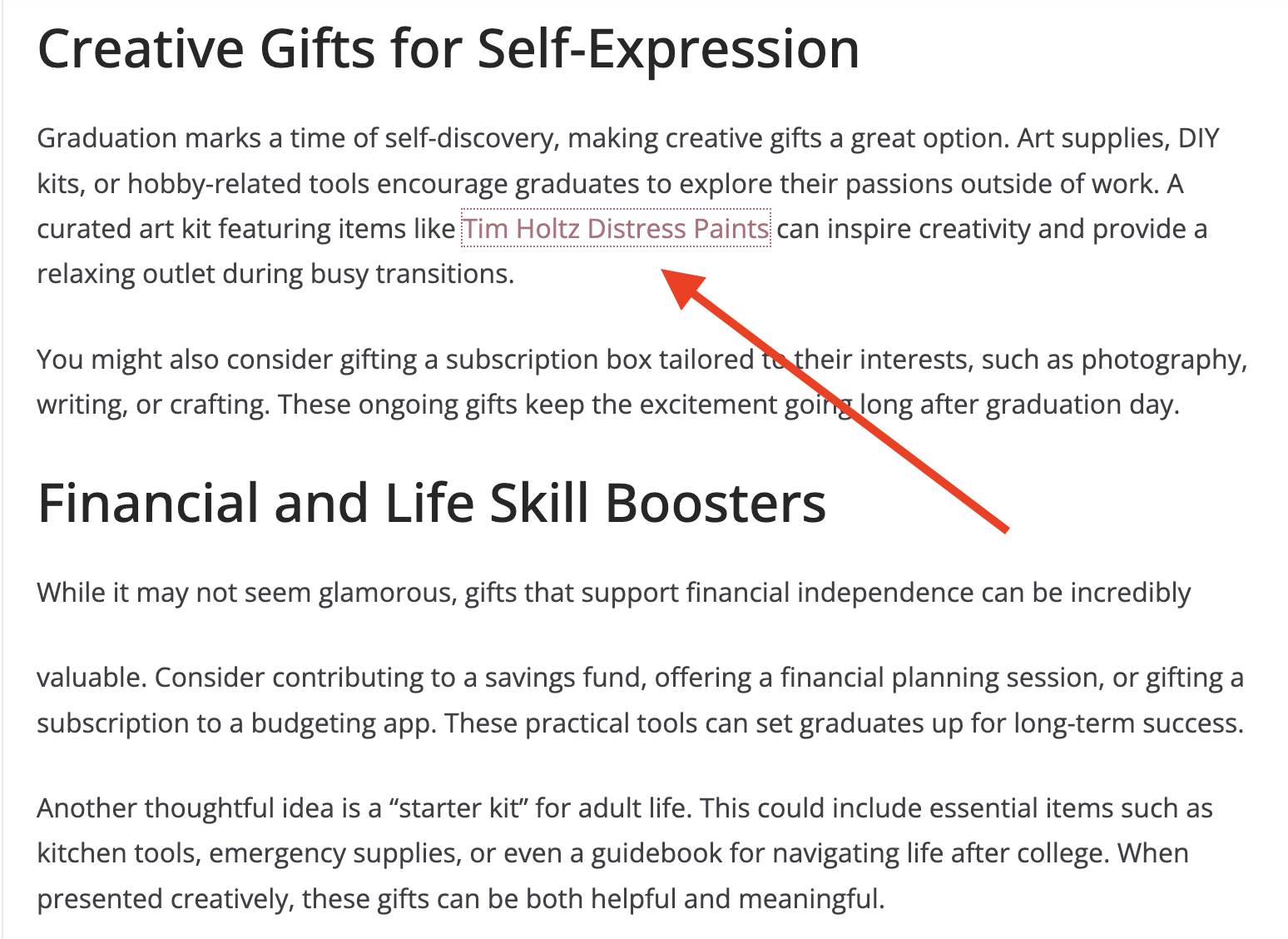
Typically, guest posts look like any other post on your site because they’re supposed to fit in naturally with your homegrown content. However, many sites label guest posts as paid contributions for the sake of transparency.
Niche Edits
Niche edits, also called link insertions, are when you insert a backlink to an article that’s already live on your site.
These are easier to manage than guest posts because you don’t need to publish new content. You just add a link to an existing page.
This is easy money for sellers, and link buyers love it because they get a link on a page that already has authority and traffic.
Here’s a quick example:
A lawn care blog published an original article about regrowing grass that gets 2,000 visitors per month. They advertise a niche edit in that article and sell a link to a company that sells grass seed. That company selling grass seed just gets a link to their website inserted into that page. That’s it.
Note: If you’re curious about niche edits vs. guest posts, read our guide. Niche edits normally provide quicker SEO value because the pages are already ranking for organic keywords and are usually getting organic traffic. However, guest posts are still more popular because they are a long term strategy that gives the customer full editorial control. Neither is better than the other. They just serve different purposes.
Sponsored Posts
Sponsored posts are similar to guest posts, but they usually advertise a brand or product directly.
Instead of publishing an article designed around a keyword (e.g., how to choose a safe crypto wallet) and dropping a link into the text, a sponsored post promotes a specific company, product, or service (e.g., why TrustWallet is the safest crypto wallet).
Sponsored content usually covers reviews, product launches, interviews, and company news. This also qualifies as digital PR, as many businesses pay to get editorial links on major news and media outlets, like Forbes, Yahoo, and USA Today.
Digital PR is a huge part of link selling, but we don’t have time to go into it in this article. We created a separate Guide to PR Backlinks, which we highly recommend reading after you’ve got a handle on the basics of selling backlinks.
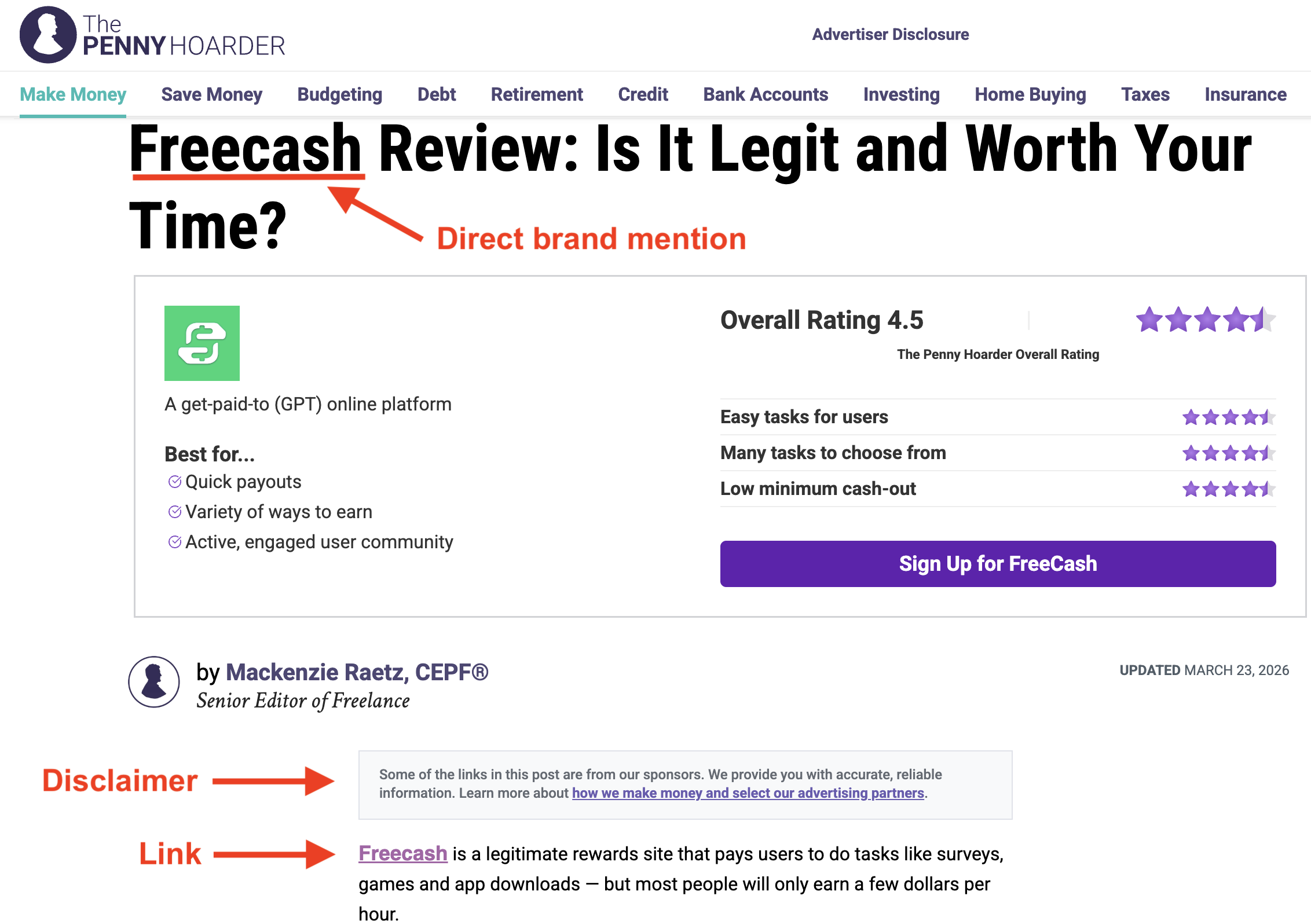
Anyway, back to sponsored posts. Here’s an example of one from The Penny Hoarder blog.
Notice that the content is written by The Penny Hoarder, and the post includes a sponsored content disclaimer. This is a transparency move to assure readers that even though the content is obviously sponsored, they should still trust it.
A Note on Dofollow vs. Nofollow Links
We want to be clear here about dofollow and nofollow links, because link sellers offer both options, and they are very different products.
Here are the key differences between nofollow and dofollow links that link sellers need to know:
- Dofollow links: These links pass authority (aka link juice) and are what most buyers are looking for. They provide SEO value by increasing a site’s authority.
- Nofollow links: Nofollow links tell search engines not to pass authority. They include Google’s recommended rel=“nofollow” or rel=“sponsored” tags on paid placements. Nofollow placements still provide value if they pass referral traffic.
Many sponsored posts on major websites use nofollow or sponsored links. If a site has enough traffic, companies are happy to pay for those links because they’re buying referral traffic, brand awareness, and exposure to a targeted audience. Now that Google is evolving, there’s more emphasis on brand mentions, entity reinforcement, and entity association (when your brand is associated with relevant brands and entities within a niche ecosystem). So, whether nofollow or dofollow, PR links still provide tons of SEO value.
How Much Can You Earn Selling Links?
In our experience, a single link can earn you from $80 to $1500. But there’s no universal pricing model. Some niche bloggers make 5 figures per month just from selling links, but it all depends on several factors, such as how many links you sell, how much traffic you have, your niche, and your site’s Domain Rating or Domain Authority.
Massive sites like TechCrunch and HubSpot can charge $2000+, and link sellers on Fiverr might sell for pennies (don’t buy or sell those).
The amount you can earn from backlinks depends on factors like:
- Organic traffic
- Domain Rating (DR)
- Country
- Niche
- Brand recognition
- Existing search engine rankings
According to our Link Pricing Report, there are several tiers of links:
- Budget: $100 or less.
- Mid-Market: $100 – $250.
- Premium: $250+.
Take a look at how different signals, such as traffic and DR, affect the rates of links on the PressWhizz backlink marketplace:
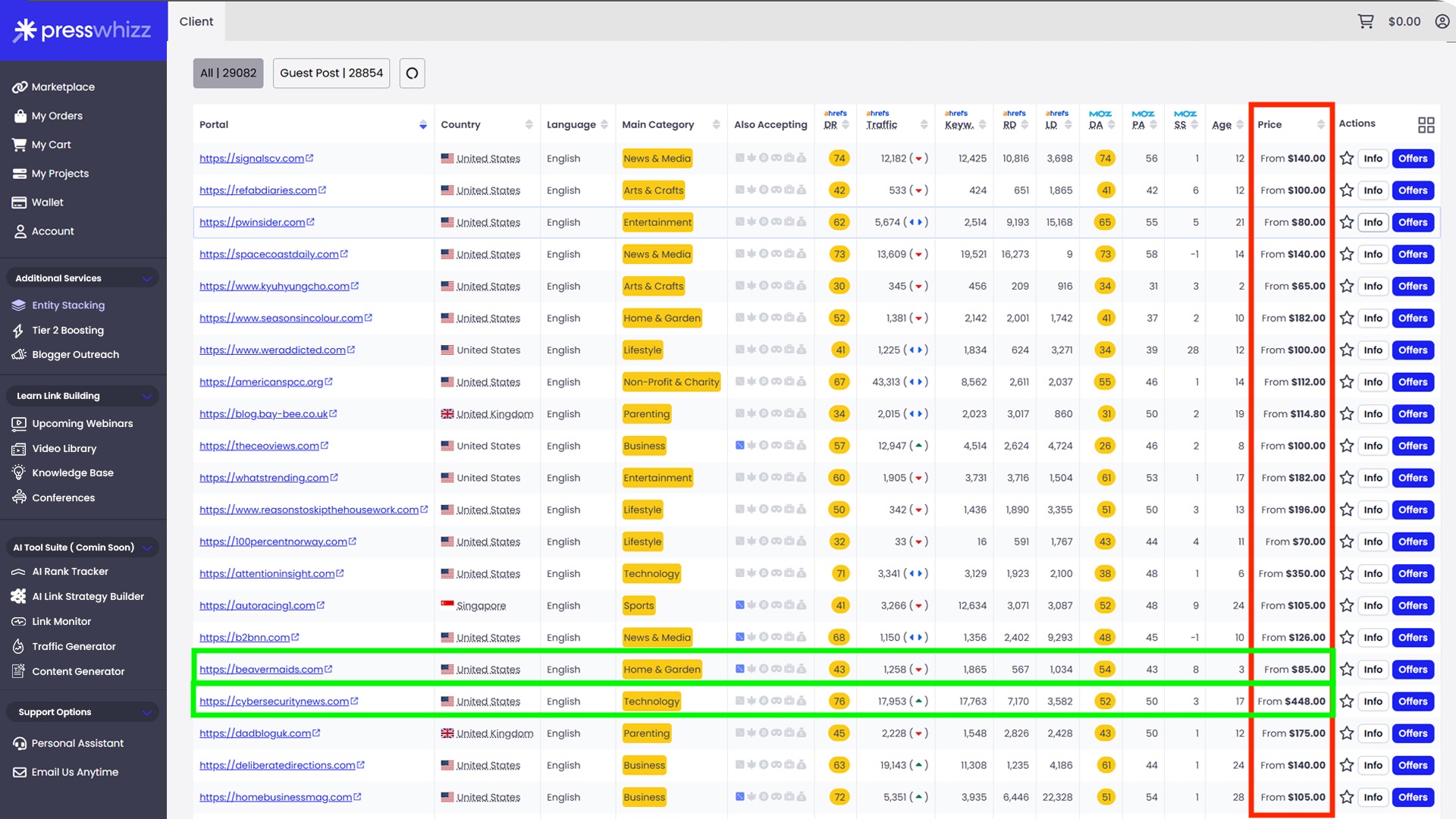
Notice that Cyber Security News charges almost $450 for a placement because it has strong traffic, good keyword coverage, and high brand recognition.
But look at Beaver Maids directly above it. It’s a much younger site with relatively low traffic, yet it still charges around $85 per link.
The point I’m trying to make is that you don’t need to be Forbes to make money. Even smaller sites can generate income if they have quality content and operate in a niche with demand.
Really, the amount you can earn often comes down to how you sell backlinks, which we will get to now.
The Best Ways to Sell Backlinks
The best way to sell backlinks is to get your site in front of as many agencies, brands, and SEO professionals as possible.
Backlink prices don’t exist in their own special economic space. They’re dictated by supply and demand, just like anything else. That means the easier you are to find, the more opportunities you’ll get.
That’s why we think link marketplaces are the best way to sell backlinks. As the founder of PressWhizz, we are a little biased, but for businesses without in-house link acquisition teams, marketplaces make the most logical sense. They deliver high quality clients at scale and require little to no effort on your part.
But more on that in a moment.
Here are the best ways to promote and sell backlinks.
Create a Sponsorship Page
A “Sponsorship” page (or “Advertise With Us” page) is a dedicated page on your site for businesses looking for links. This is definitely not all you should do to sell backlinks, but it’s a base you need to cover.
As your site grows, brands will find you via social media or SERP research. When they navigate to your site, your Sponsorship page will act as a sales pitch for your placements.
Now, you need to be careful here and avoid advertising outright that you sell dofollow links. In fact, don’t mention links at all, and don’t list any services or rates. That should all be done in private communication.
Your page should present your site’s most impressive metrics. Remember, this is a sales pitch and not a service listing. Here’s how People Inc., the parent company of loads of successful blogs, does it:
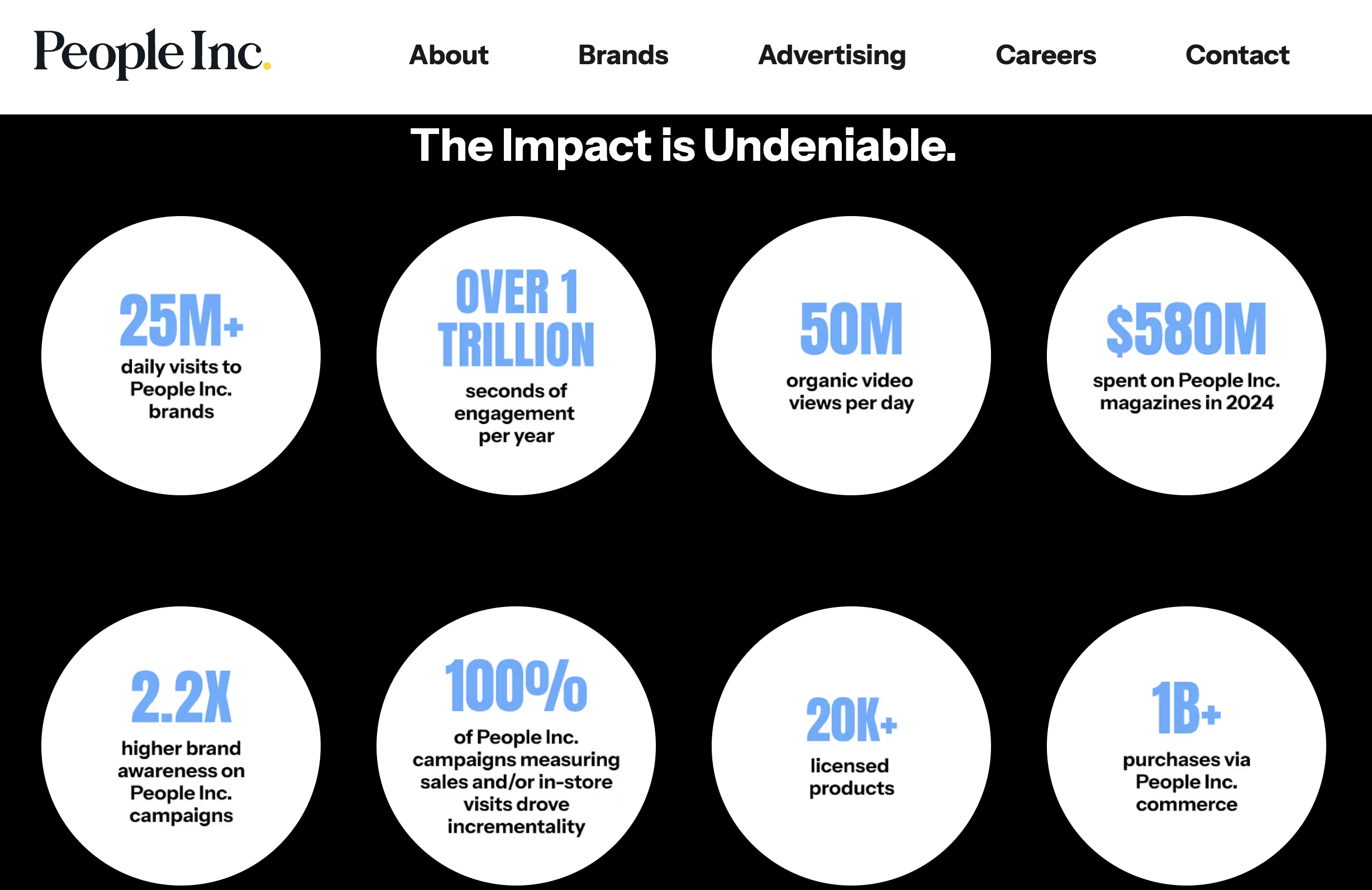
When you pitch your brand’s strengths, potential customers will want to work with you. You’ll be able to convert more leads and charge higher rates.
Again, this requires clients to find you, which is the hard part!
But some brands inevitably will find you this way, so you want to make their sales journey as frictionless as possible. You’d be surprised at how many SEOs and business owners Google “niche” + “write for us” or “niche” + “sponsored posts”. It’s extremely common.
Partner With Agencies
Partnering with an SEO agency to provide links for their clients is our second favorite way of selling links at scale.
SEO agencies buy links all day, every day. Most of them are managing dozens or hundreds of clients, so they’re constantly looking for reliable publishers. The problem with that is it takes countless hours of agonizing outreach, pitching, negotiation, and management. If they can just buy links from you (and get good results consistently), you’ll have a high-paying customer for a long time.
And unlike individual businesses, agencies come back again and again. I’ve seen link sellers with just a dozen or so sites build six-figure businesses from a handful of agency relationships.
How do you get into the agency game? Start by searching for SEO and link building agencies in your niche, and then reach out.
On Google, search:
- “[niche] SEO agency”
- “[niche] Link building agency”
- “Digital marketing agency for [niche]”
- “Content marketing agency for [niche]”
Look for agencies with good social visibility on LinkedIn, X, and Facebook, and look for their contact information. Create a video for them, a pitch deck, or a presentation and explain how your site works, pricing, and what you envision the working relationship to look like.
If an agency is interested, set your rates and send them clear content quality guidelines. Enforce these with an iron fist. Some SEO agencies will deliver low quality content and try to push your rates down, which can damage your site’s reputation.
That’s why we recommend treating agencies like business partners instead of customers. Deliver high quality placements and insist that they deliver links that protect and improve your digital assets.
Use Link Building Marketplaces
Getting listed on link building marketplaces is the best way to sell your links to high value clients. Obviously, we are a bit biased here. But hear us out…
Agencies, brands, and SEOs go to these marketplaces to browse link placements and buy them quickly without needing to reach out or negotiate with site owners (which is awful).
Marketplaces allow you to list your website, set your prices, and start receiving orders without doing any outreach. We basically do 100% of the work for you, and you gain exposure to thousands of potential buyers.
We vastly prefer marketplaces to SEO agency partnerships because marketplaces:
- Don’t inflate prices: Marketplaces charge a transparent fee, while agencies often upsell your links at rates you aren’t aware of.
- Have an incentive to see you succeed: They want your site to remain valuable for years, so they try to partner you with high quality clients instead of spammers.
- Want you to sell for the highest price possible: The more money you make, the more they make. Agencies, alternatively, want your prices to be low so they can earn more on markup.
- Reward quality publishers: If you create quality content and your site metrics improve, marketplaces will rank you higher and recommend higher rates.
Marketplaces also handle much of the annoying stuff, like order management, communication, and payment processing. It really doesn’t get easier to generate passive income from selling links.
Pro Tip: You can also perform some competitor backlink analysis and check both outbound and inbound links for sites in your niche. If you notice sites in your niche all link out to the same websites, those are prime candidates for contacting. This typically indicates an active link building campaign. This is one of our favorite uses for AI in link building. Just use Ahrefs to analyze competitor link profiles, throw the CSV into AI, and ask it to find intersect opportunities.
Is Your Website Ready to Sell Links?
Before you start selling backlinks, ask yourself the following questions:
- ✅ Does the site receive genuine organic traffic?
- ✅ Is the content focused on a clear niche or topic?
- ✅ Do you publish original content on a regular basis?
- ✅ Does the site have a clean backlink profile?
- ✅ Are readers likely to trust recommendations published on the site?
- ✅ Can you maintain quality standards as demand increases?
What Are the Benefits of Selling Backlinks?
Once your site starts building authority, selling backlinks is one of the easiest ways to generate income while naturally growing your site.
Here are some of the biggest benefits of selling backlinks:
- Generate revenue quickly: Once your site has traffic and authority, you can start earning money immediately without creating new products or services.
- Funds your site’s growth: Earning money from your site as quickly as possible can provide you with more resources to invest in your business.
- Mostly passive income: Selling links, especially via link marketplaces, creates a mostly passive revenue stream on top of work you’re already doing.
- More stable than affiliate marketing: Affiliate commissions get cut all the time, and Google is constantly updating its algorithm and smashing affiliates into the dust. Link demand is growing by billions of dollars every year.
- High profit margins: There are very few costs involved with selling links. Most of the revenue goes directly into your pocket.
- Can reduce content pressure: Instead of having to produce every article yourself, your customers can share the load with guest posts and sponsored posts.
- You don’t need massive traffic: Even sites with 1000 visitors per month can generate hundreds or thousands of dollars per month selling links.
- Diversifies your revenue: Relying on one source of income is always risky. Link sales complement display ads, affiliate commissions, sponsorships, and digital products.
Examples of Successful Sites Selling Backlinks
Loads of SEOs make a good living just by building sites and selling links. There’s an entire shadow industry behind it.
If you know how to build a website and get traffic, you can turn that into major link revenue.
Forbes Business Council is a good example. Businesses pay an annual fee to contribute content and get juicy Forbes DR 94 links.
Forbes can claim that these are “contributors” to their prestigious “finance media outlet”, which allows them to skirt Google’s “selling links bad” guidelines.
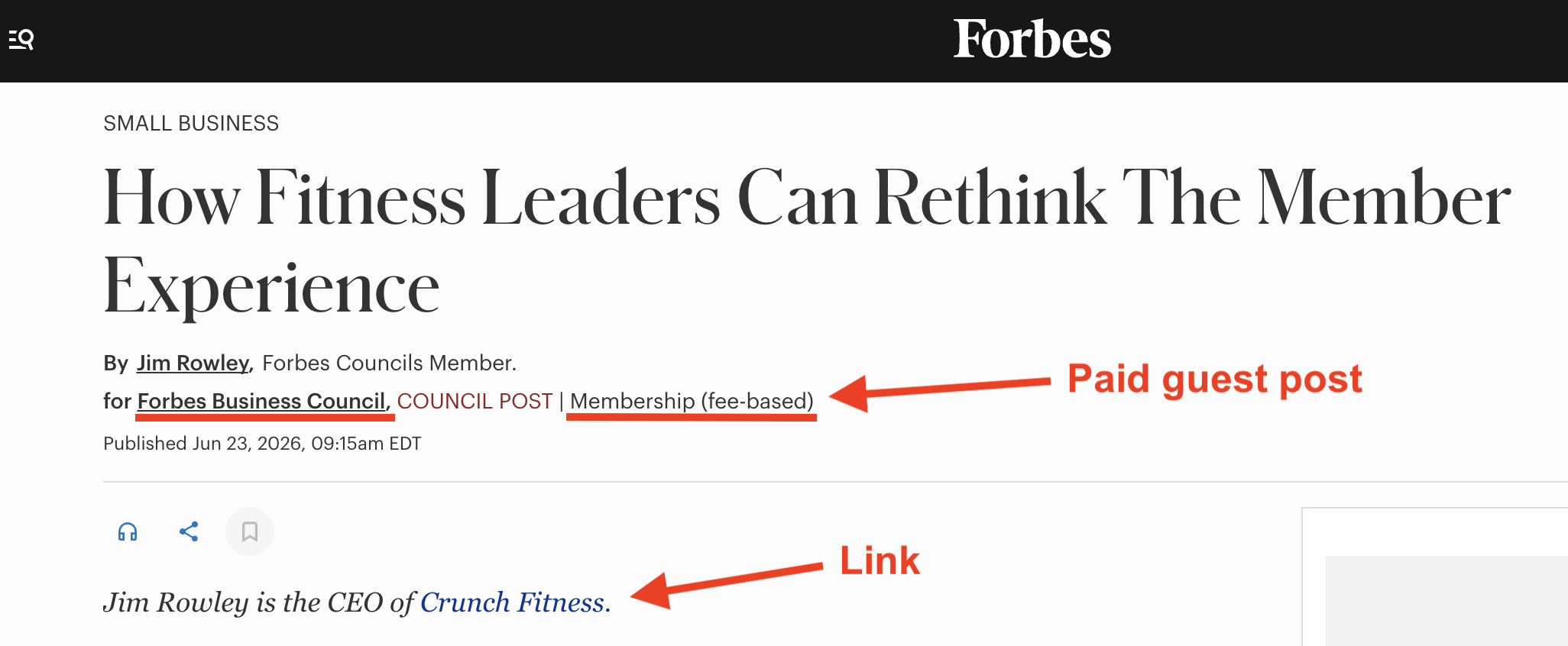
But you’re not Forbes, so you’re probably wondering how much smaller sites and blogs can make selling links.
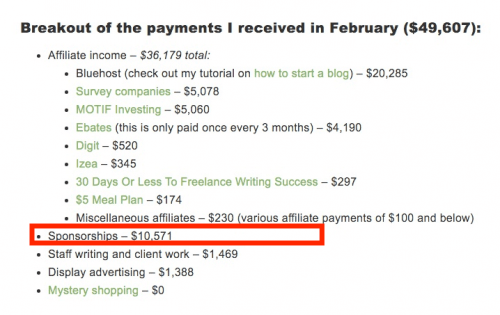
Honestly? The sky is the limit. I’ve seen independently run blogs pull in 5 figures a month. Take a look at the financial freedom blog, Making Sense of Cents. This blogger publishes monthly income reports, and in one month, they earned over $10,000 from sponsorships (aka link sales).
Here’s another good example from a small cooking blog called Kenna’s Cooks. McKenna, the blogger, posted this income report at the end of 2024.
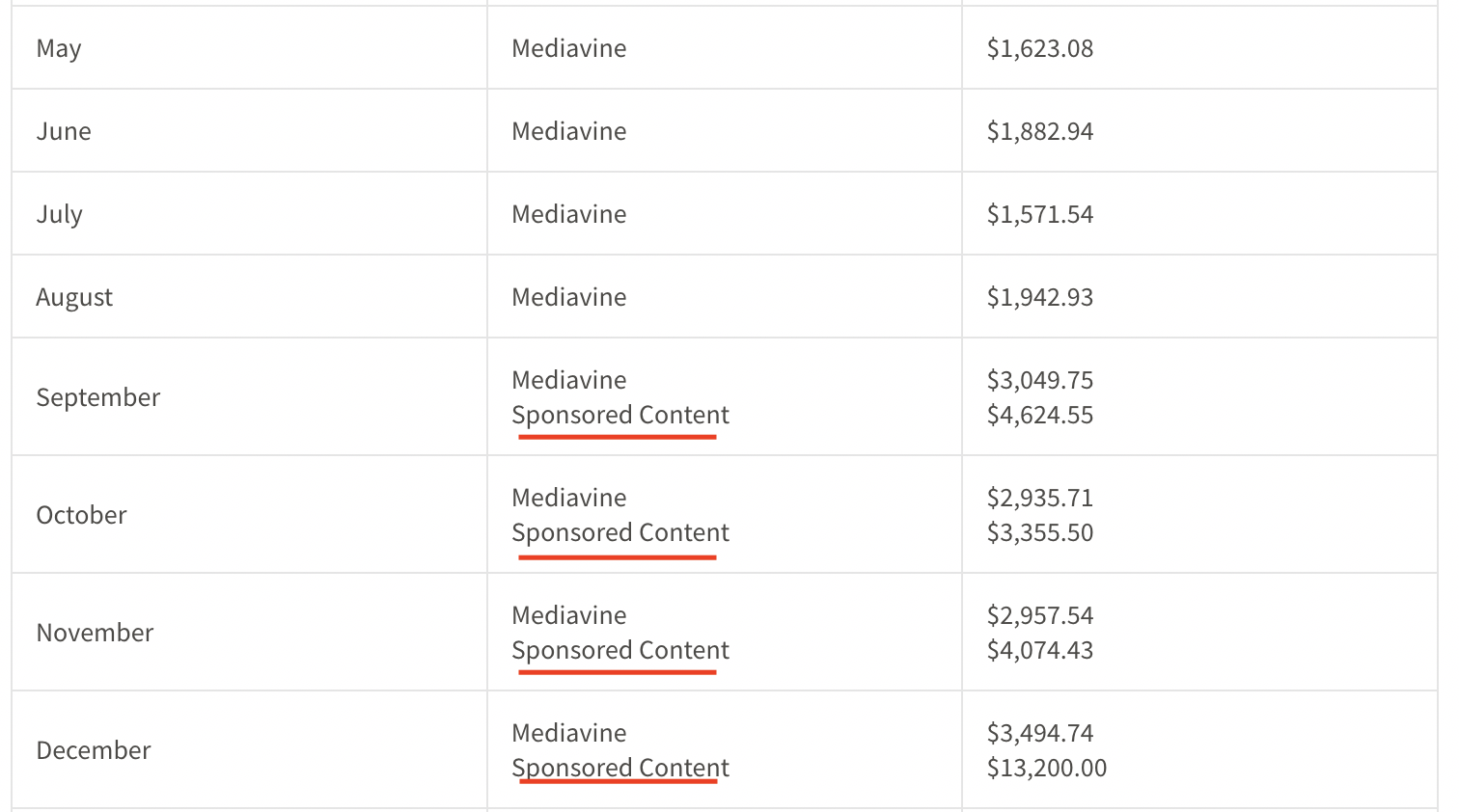
She was making decent money with Mediavine ads, but once she started selling links and sponsorships, her income blew up.
This is a great example of the income potential of selling links, because although Kenna’s Cooks blog is just a DR 34 site, it manages to generate serious income.
Final Thoughts
Selling links can be incredibly lucrative, but you need to be careful.
It’s one of the best ways to monetize your site and earn five figures in passive income or more. Some sites make six figures per month just from selling links.
But you need to do it the right way. You can’t start blasting outbound links, spamming exact-match anchors, or linking to sites across multiple different niches right away. Google will catch you, and they will destroy you.
Our advice? Stay within your niche, maintain editorial standards, and continue publishing original content.
Don’t get greedy.
Ironically, your biggest challenge probably won’t be avoiding Google. Your biggest challenge will be finding active buyers.
That’s why we generally recommend either joining a reputable link marketplace or building relationships with SEO agencies. Both options put your website in front of businesses that are already actively purchasing backlinks, which is far easier than trying to generate demand yourself.
Whatever route you choose, we wish you the best of luck.
– Dusan Novakovic