


Welcome to PressWhizz’s complete guide to link insertions for 2026 and beyond.
Link inserts are a popular SEO link building method where you add your link to existing web pages on relevant websites that already have traffic and rankings. This helps you increase your organic traffic and rankings relatively quickly compared to other forms of link building, like guest posting or digital PR.
But link insertions are one of the most misunderstood search engine optimization strategies in the entire industry. In my experience, SEOs usually:
- Choose the wrong sites to insert their links into
- Fail at email outreach
- Rely too heavily on Domain Rating or Domain Authority
- Build too many insertions too quickly
- Abuse anchor texts and get their sites penalized
That’s why we’ve created this guide. We’ve overseen tens of thousands of link placements here at PressWhizz, including more than 10,000 successful link insertions.
In this guide, we’ll cover what link inserts are, why they’re still valuable for SEO, and how to find high-ROI insert opportunities using a combination of prospecting tactics, tools, competitive analysis, and automated outreach.
By the end of this article, you’ll know how to:
- Build inserts the right way
- Find the best link building opportunities
- Write outreach emails that convert
- Build a prospects list properly using AI
- Choose the right anchor text
And much more.
Let’s begin.
What Are Link Insertions?
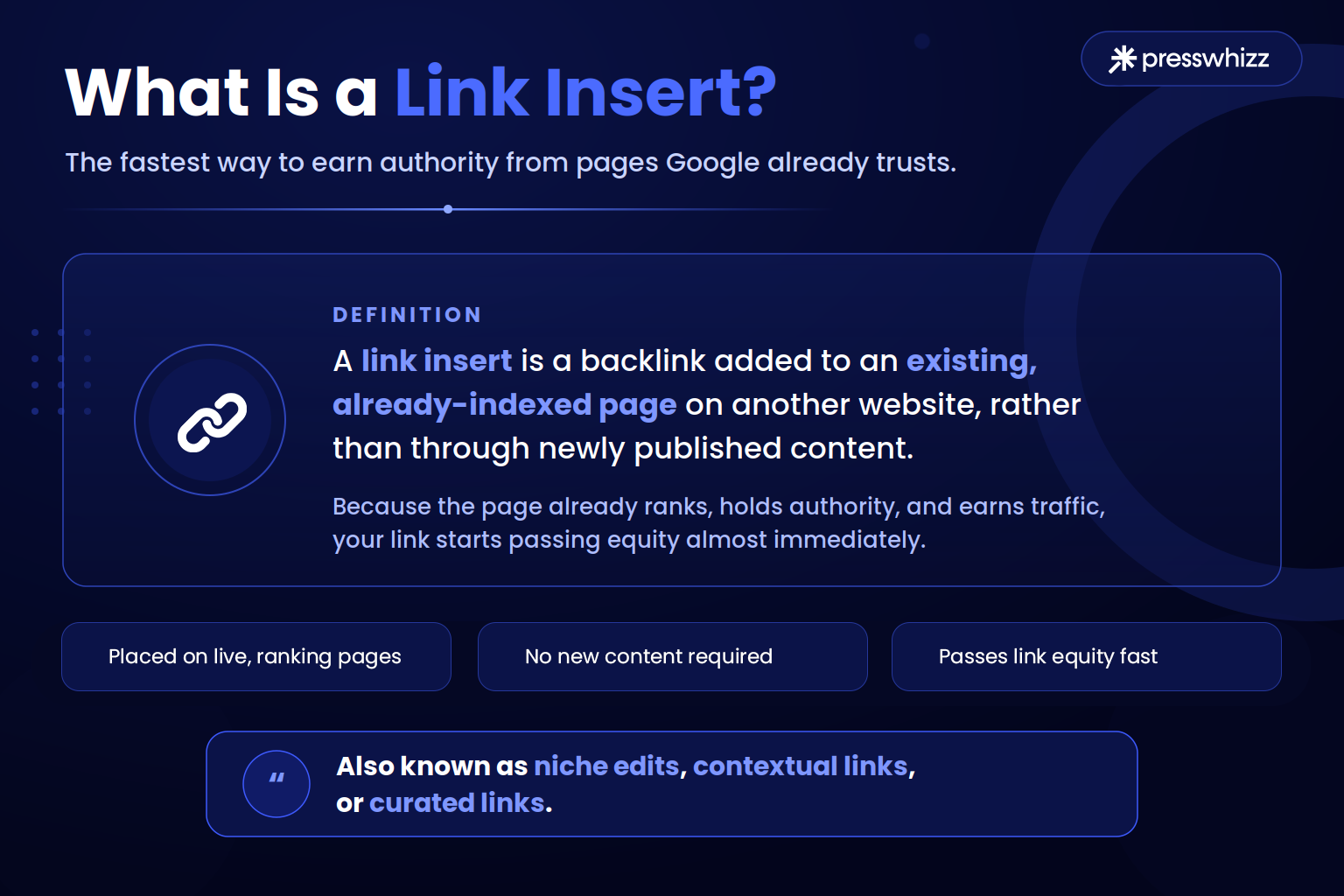
Link insertions, or contextual links, are backlinks added to existing pages on another website rather than through newly published content.
They are an extremely common link building technique in the SEO industry. According to uSERP.io on their page The State of Backlinks for SEO in 2025: What 800+ SEOs Think About Link Building, link inserts are used about 10% of the time when building links.
So, why do SEOs use link inserts instead of other forms of link building, like guest posts or digital PR?
The main reason is speed.
With link inserts, you place your link within an article that is already indexed, ranking in search results, and attracting traffic. And because these pages often have established authority and existing backlinks, they can pass link equity much faster than newly created pages. If you were to write a guest post, you’d have to wait and hope that the page indexes, ranks for keywords, and gets traffic. Not with link insertions.
It’s common to see a measurable SEO boost to your search rankings quickly from inserts on niche relevant pages (sometimes within days).
Here at PressWhizz, we divide link inserts into several different categories:
- Blog article inserts
- Roundup article inserts (e.g., “the 5 best tools for x”)
- Resource page inserts
Let’s show you an example of a link insert first before getting to whether or not they still work in 2026.
An Example of a Link Insertion
Imagine you were a men’s supplement brand selling protein powder. If you were looking to build links, then you’d naturally want your brand to be mentioned in roundup articles like “best protein powder for men” or “best protein powder for building muscle”. You know, articles like that.
In this case, you’d look for the roundup articles ranking for your target keyword, create a list, and begin reaching out to them asking for your product to be added into their list.
Here’s a good example:
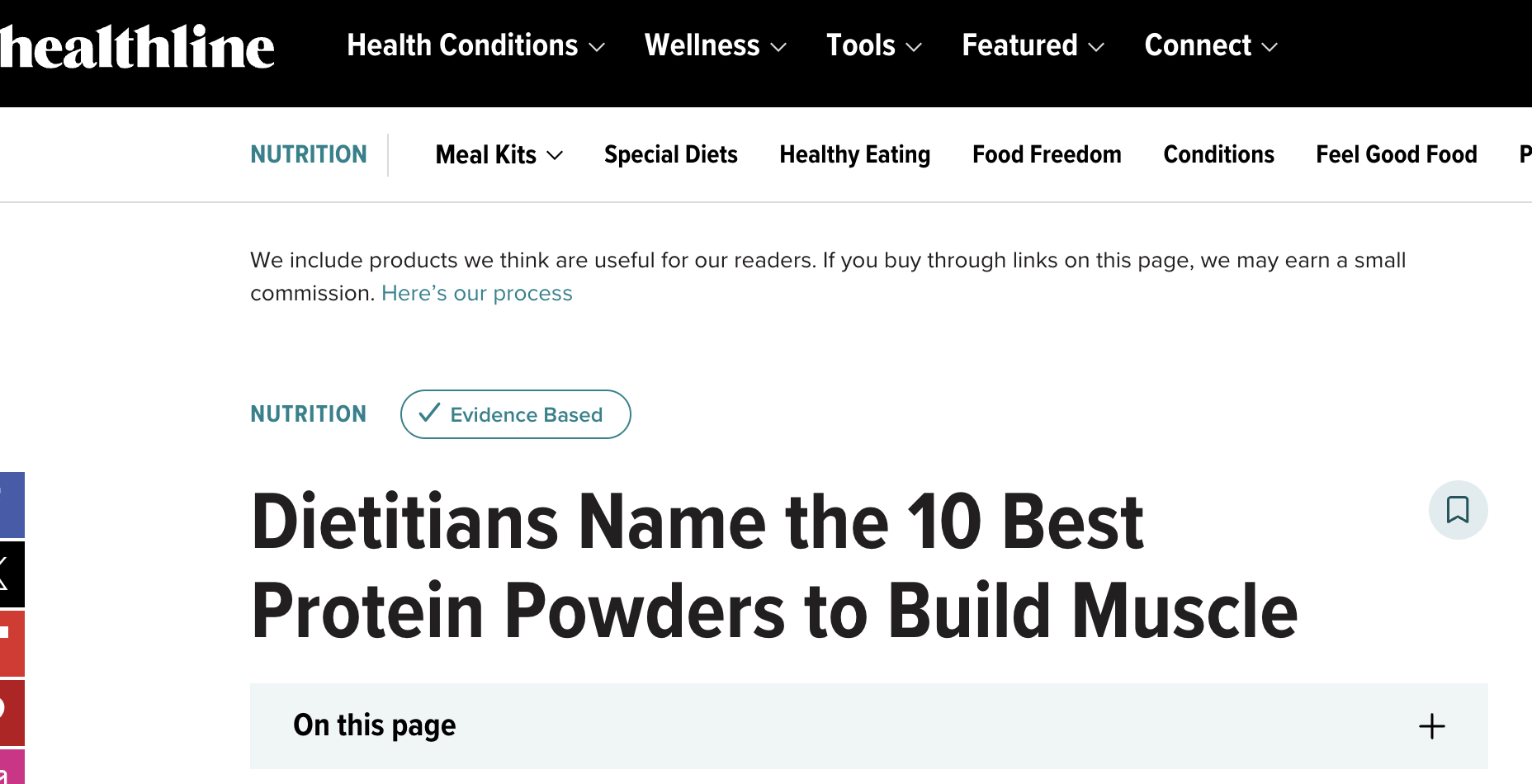
Now, getting into Healthline won’t be easy. But there are plenty of articles ranking in the top 20 that could send a lot of ranking equity (and targeted traffic) to your website. Like this one:
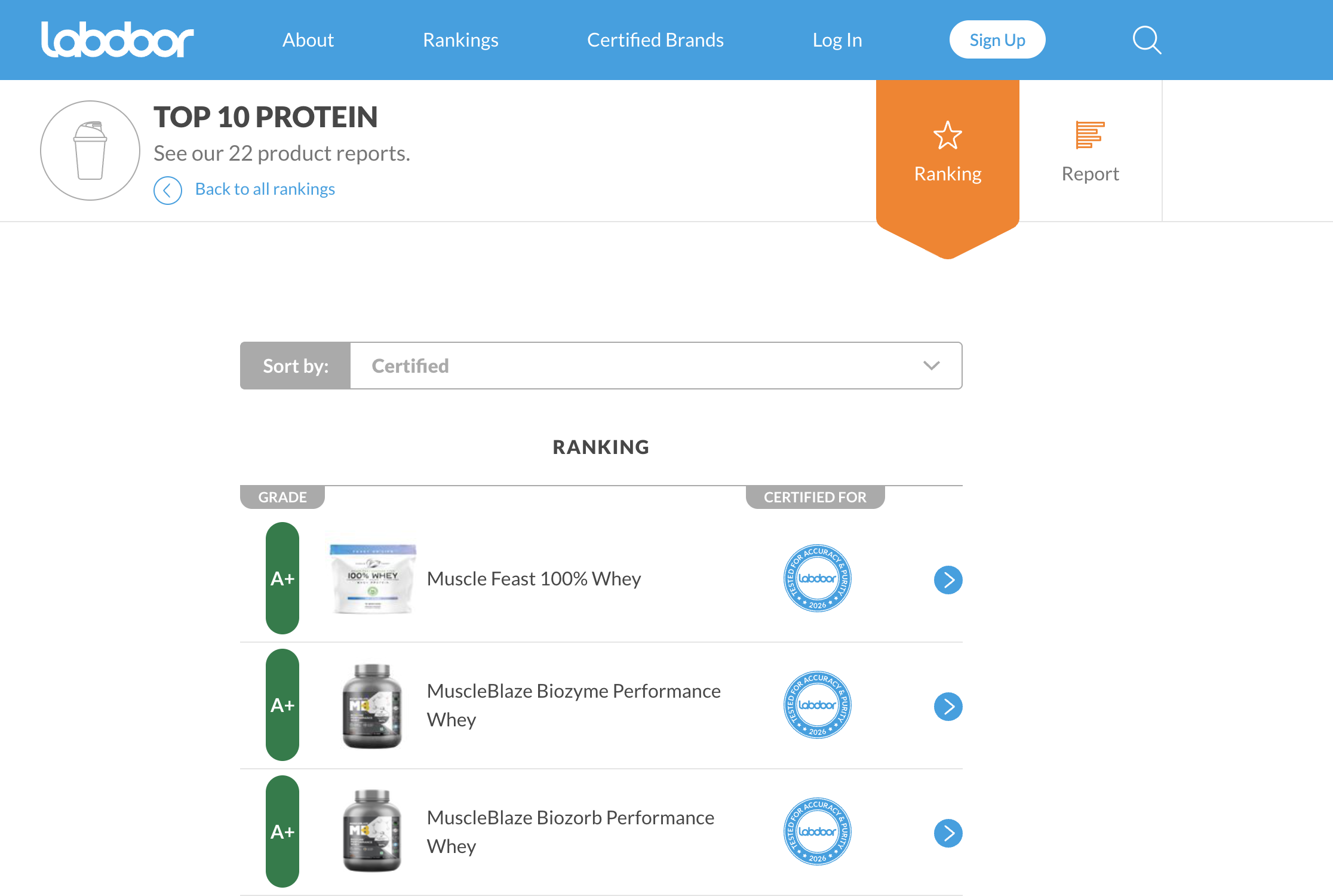
If you wanted to insert a backlink to your site in this roundup, you’d contact the site owner, ask to get your product listed in this roundup, negotiate terms, and choose your anchor text. That’s it. Much more on this later.
Do Link Insertions Work for SEO?
Yes, link inserts absolutely work for SEO if you choose the right source pages. They pass authority and referral traffic quickly, which helps improve your search engine rankings with less effort than a traditional guest post or PR piece.
One study by thewebsiteflip.com found that 72% of websites using link insertions reported increased traffic.
Link insertions are still one of the most effective link building tactics because they leverage pages that are already indexed, ranking, and trusted by Google. Links from sites like these typically do not suffer from Google updates.
We understand that you might be worried about buying links. After all, it’s against Google’s guidelines. But you have nothing to worry about. Buying and selling links is a multi-billion dollar business. Most websites do it and the vast majority face no problems from Google.
Google does discourage links intended solely to manipulate rankings, which means low quality link schemes, spammy placements, and excessive use of paid backlinks do create risk.
However, Google doesn’t have a ranking factor called “link insertion.” It evaluates the quality of the link itself, including its relevance, placement, context, and the authority of the page linking to you.
In simpler terms: If the link is high quality, it will improve your SEO and Google won’t notice. But if you break the rules in a noticeable way at scale, you may face penalties or algorithmic suppression.
Here’s a great example of link inserts working quite quickly from Vasco’s SEO Tips YouTube Channel:
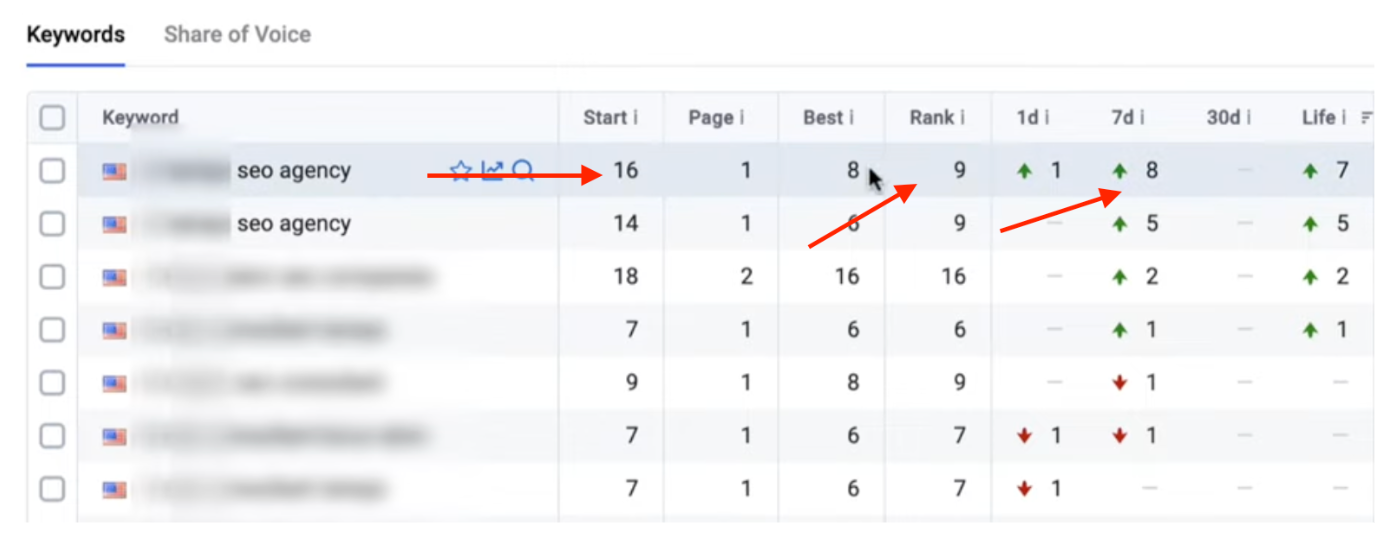
After building niche-relevant inserts, this SEO agency went from Page 2 to Page 1 for multiple high value keywords. In the above image, you can see where the agency started and where they ended up after just one week.
Why Link Inserts Work for SEO
- Faster authority transfer: An existing article already has backlinks, rankings, and trust signals, which allows it to pass link equity much faster than newly published content.
- Immediate indexing: Since the page is already indexed, search engines can discover and crawl your new backlink quickly.
- Less content overhead: Link inserts require far less time and effort than creating guest posts from scratch, since you don’t have to create new pieces of content.
- Relevant referral traffic: Links placed on highly relevant pages can send engaged visitors directly to your website.
- Natural link profile diversification: High quality backlinks like link insertions help diversify your backlink profile by combining contextual links with guest posts, digital PR, and other acquisition strategies.
What Makes a High Quality Link Insertion?
A high quality link insertion comes from a page that is topically relevant, receives real organic traffic, has good baseline metrics like Domain Authority, and has earned backlinks from trustworthy websites.
We’ve overseen thousands of link insertions here at PressWhizz, and we know what the difference is between a high quality insert and one that is a waste of money.
Here’s what makes a high quality link insert candidate:
Domain Authority
Domain-level metrics such as Domain Rating (DR) and Domain Authority (DA) can be useful indicators, but they shouldn’t be the deciding factor. The reason I start with this one is because it’s probably what’s most familiar to you.
Yes, Domain Rating and Domain Authority are good to have, but if the site isn’t relevant or the page you insert your link into doesn’t rank for keywords or get any relevant traffic, then inserting links on them won’t help you.
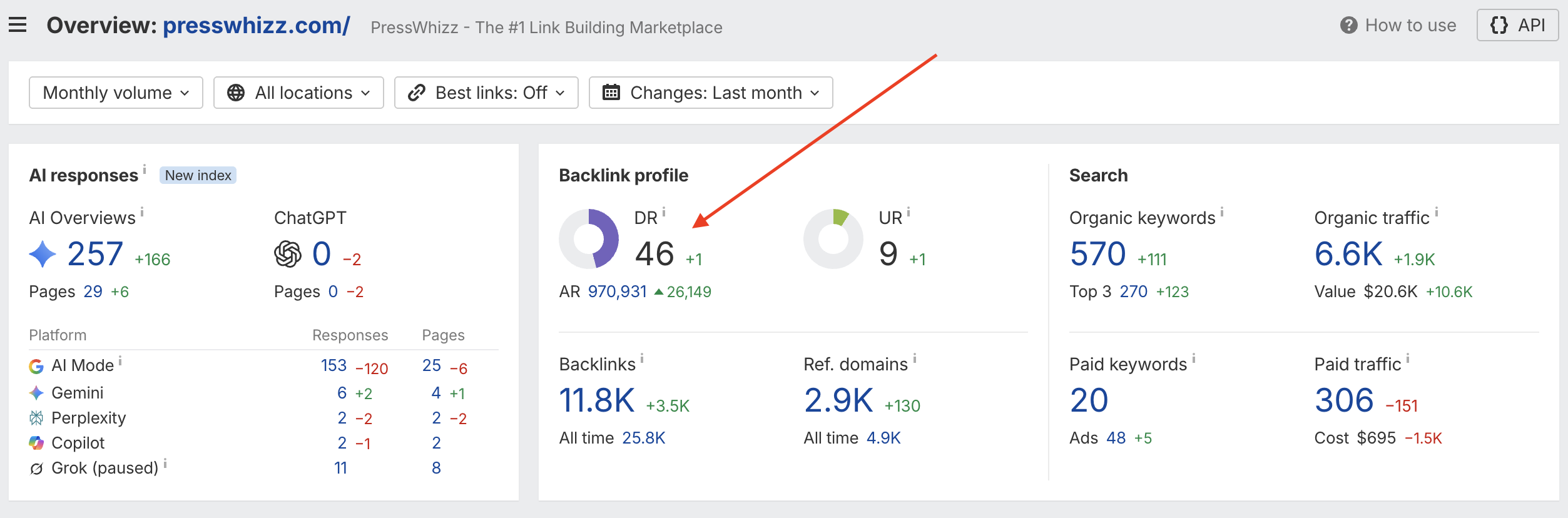
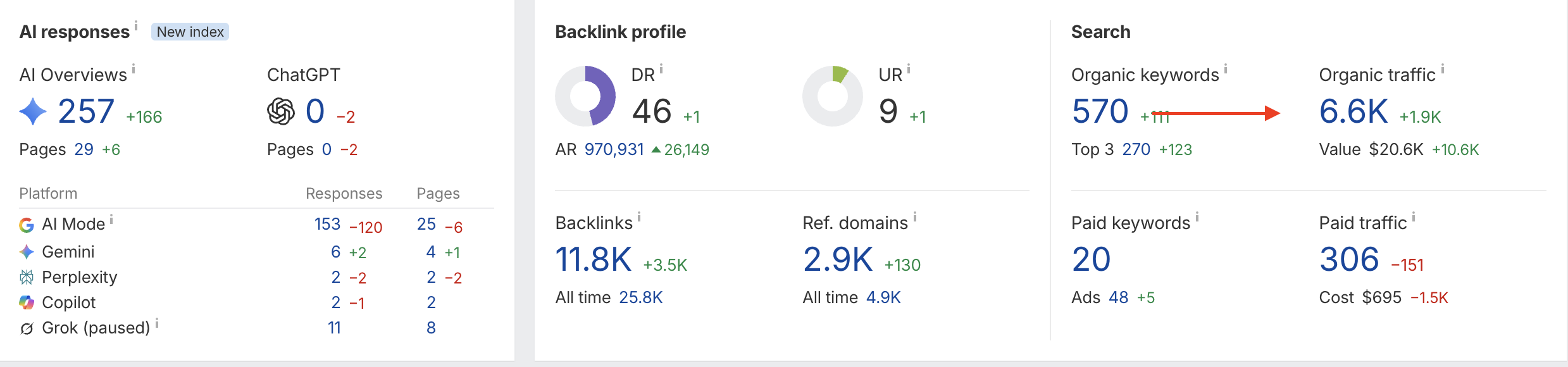
What matters more is actually organic traffic…
Organic Traffic
Look for pages and domains that attract real visitors. Traffic is often a strong signal that Google trusts the website and that users actually engage with its content. While no single metric guarantees a great placement, websites with consistent organic traffic, healthy backlink profiles, and stable rankings tend to deliver the best long-term results.
Topical Relevance
Relevance has always been one of the most important components of link quality.
A backlink from a highly relevant page within your industry will almost always outperform a random placement on a larger website with no topical connection to your business. Google’s algorithms have become sophisticated at understanding entities, relationships, and subject matter expertise, which means context matters more than ever.
The closer the relationship between the linking page and your destination page, the more valuable the insertion is.
Link Placement
Not all link placements carry the same value.
In my experience, links positioned naturally within the body tend to perform better than those buried at the bottom of an article or hidden inside author bios. Ideally, your link should appear in a section where it genuinely supports the reader and adds context to the discussion.
Search engines are incredibly sophisticated now, and they evaluate the surrounding text, user engagement, and overall content structure when determining the value of a link.
A well-placed contextual link often looks more editorial and trustworthy. When negotiating placements, I generally prefer links that appear in the first half of an article, provided they fit naturally within the content. I’ll cover this more in the negotiating section of this article.
Natural Editorial Fit
A high quality insertion should read as though it’s meant to be there.
If the paragraph has clearly been rewritten to squeeze in a commercial keyword, that’s usually a warning sign. The best link insertions improve the article itself by making it more useful, more complete, or more informative. If a reader wouldn’t question why the link exists, you’ve probably found a strong editorial fit.
How Much Do Link Insertions Cost?
The average price of a link insertion in 2026 is just $112, according to PressWhizz’s Link Building Pricing Report. This study is based on our analysis of nearly 23,000 link placements worth more than $3,000,000 on our own marketplace, so it’s not based on speculation or opinion.
Other studies claim that the average price of a link insertion is around $179 and can range anywhere from $60 to $200+. Some placements can even go for $1,000 or more.
Pricing can vary widely depending on your niche, the number of placements available, the quality of the linking page, and a number of other factors.
Another major factor that affects pricing is how you get your link. Are you reaching out directly? Are you using an agency? Are you using a link building marketplace?
Using an agency will drastically increase your prices since the agency will provide valuable services, such as analysis, link building strategy, and outreach.
Our link pricing report found that links were typically available in the following tiers:
- Budget: Budget links are available for under $100, but we advise you to exercise caution if a link is available for less than $40.
- Mid-Range: This is the largest group of links. You’d be surprised at how many high quality contextual link placements are available in this tier. Typically, these links are available for anywhere from $100 – $200.
- Premium: These are the highest tier links, and they typically come from high-DR publishers. You may also hear them referred to as editorial links. Expect to pay anywhere from $200 – $600 and beyond.
If you want the true cost of a link insert, I suggest you go straight to the source and check out our marketplace. Again, this is not opinion or conjecture. It’s the exact price a real publisher charges to insert your link onto their site. Go to our marketplace, click the “link inserts” filter, and see the prices for yourself:
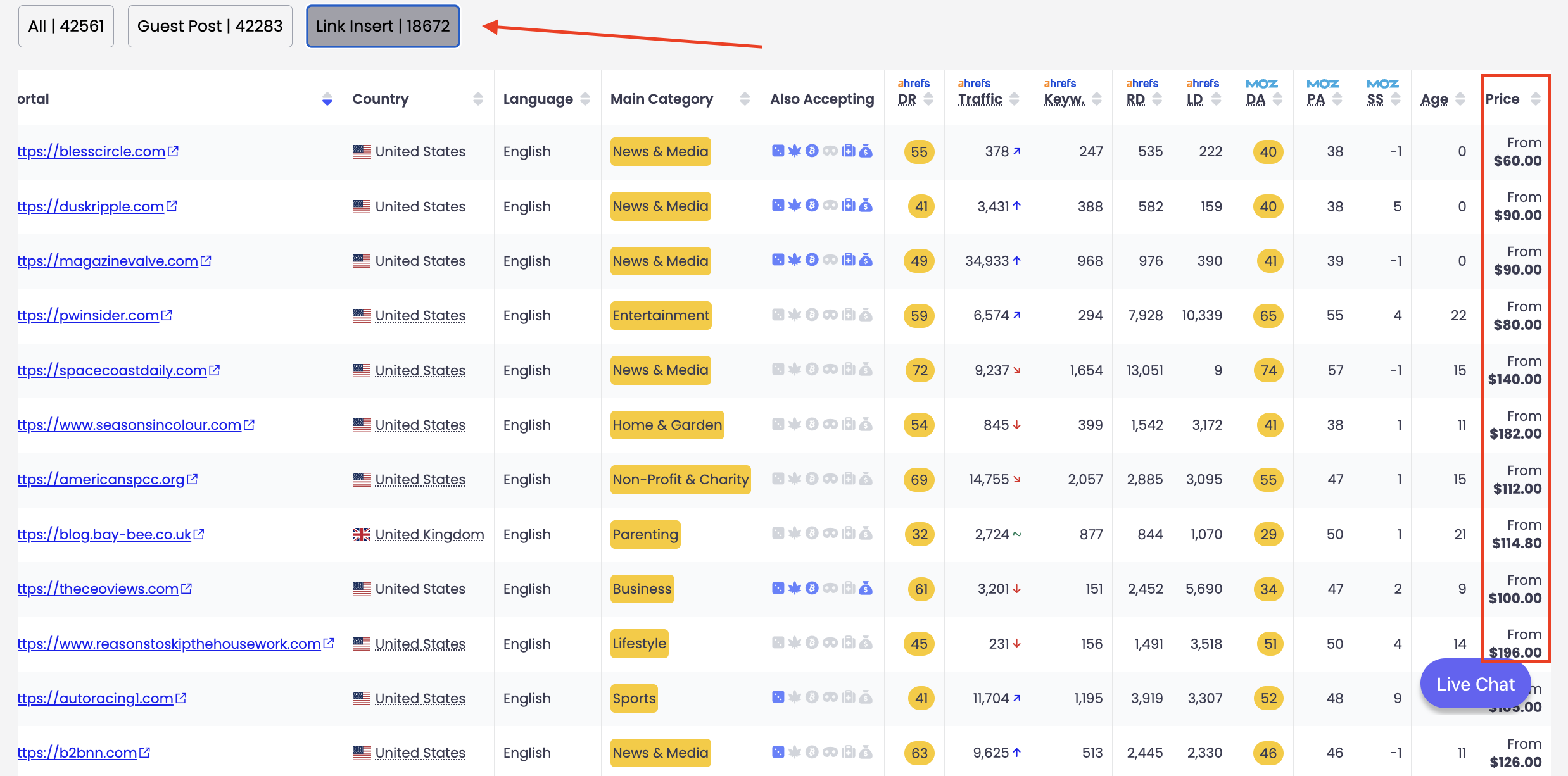
NOTE: No, you don’t have to worry about paid link insertions hurting your SEO IF the links are high quality. As always, when you buy backlinks, the question is not whether it’s allowed. It’s whether or not the link is high quality and you aren’t abusing the system.
How to Find Link Insertion Opportunities
In this section, I’m going to walk you through how we find link insertion opportunities for our own link building clients. This is a battle-tested process that has worked time and again for our clients in some of the most competitive niches like iGaming, crypto, and finance.
Let’s cover each of the steps one-by-one in greater depth:
Set Link Building Goals
Before you start building lists of websites and sending outreach emails, you need to understand what you’re actually trying to accomplish. The best link insertion opportunities depend entirely on your objectives, because different goals require different pages, publishers, and strategies.
Some of the most common link building goals include:
- Improve Rankings: If your goal is to increase rankings, focus on pages that already have momentum and are sitting just outside the top positions.
- Build Authority: Some campaigns are less about individual rankings and more about strengthening your overall authority within a niche. In this case, you want to focus on strengthening your entity. When building authority, focus on high quality digital PR backlinks.
- Support Revenue Pages: Your highest priority pages should almost always be the ones that generate revenue for your business. Product pages, service pages, category pages, and commercial landing pages often produce the best return on investment from link building efforts.
- Close Competitor Gaps: This is a very simple goal and a great place to start if you aren’t sure what you need to be doing. All you need to do is conduct competitor link analysis, find the gaps, and reach out to those publications. I’ll cover that below.
Before launching a campaign, ask yourself the following questions:
- ☐ Am I trying to improve rankings?
- ☐ Am I supporting a revenue-generating page?
- ☐ Am I building topical authority?
- ☐ Am I trying to close a competitor gap?
- ☐ Do I want referral traffic as well as SEO value?
- ☐ Is this page important enough to justify outreach costs?
Choose Target Pages
Now that you’ve established your link building goals, it’s time to identify the pages that deserve additional authority.
Start by reviewing your goals and deciding what type of pages best support them. For example, if you’re trying to improve rankings, look for pages that are already performing reasonably well but need an extra push to reach the first page. If your focus is revenue, prioritize product pages, service pages, categories, and other commercial assets.
Next, audit your website to identify pages with ranking potential, commercial value, or opportunities to strengthen topical authority.
I suggest you prioritize the following:
- Current rankings and keyword positions
- Organic traffic trends and growth potential
- Conversion rates and business value
- Existing backlink profiles and link gaps
- Opportunities where additional link equity is most likely to move the needle
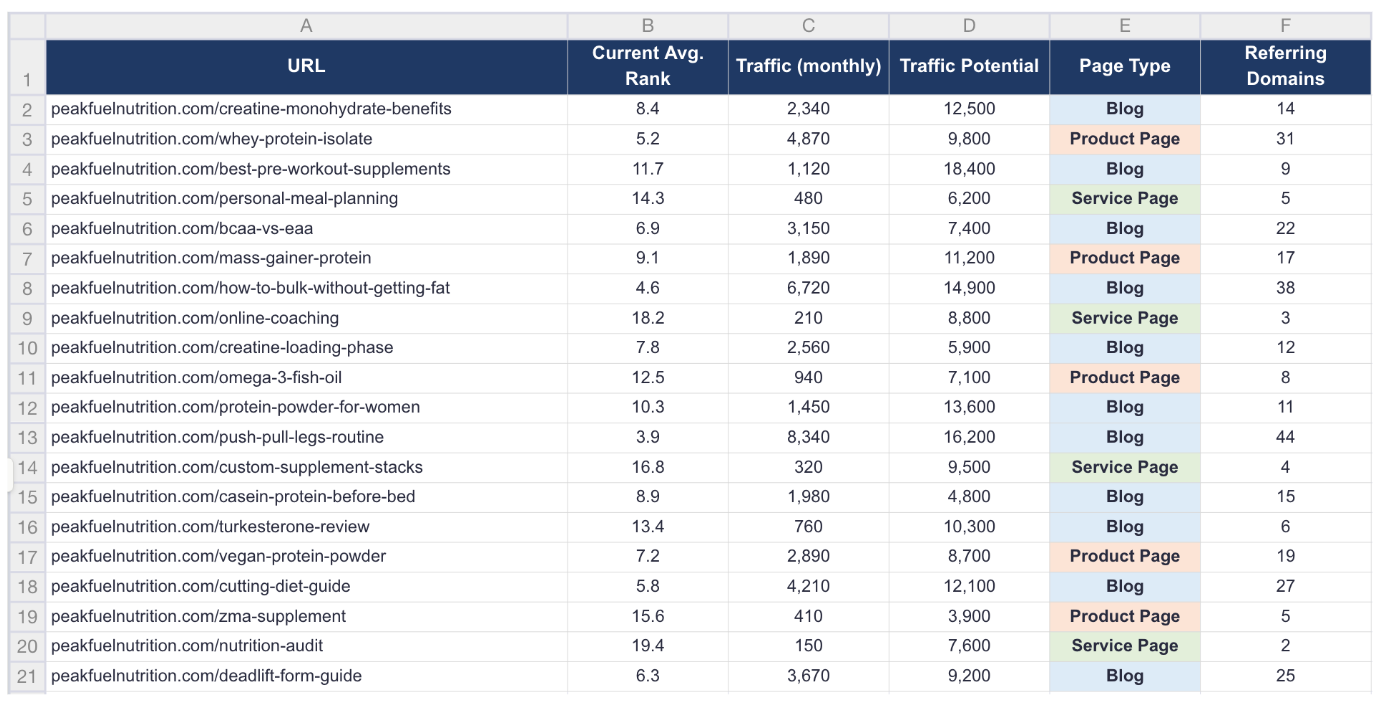
Once you’ve done that, create a shortlist of target URLs. This is now your link insertion master list. You can categorize them however you like, but I prefer focusing on current ranking, page type, goal, and traffic growth potential.
Here’s what that spreadsheet would look like:
Competitor Backlink Analysis
One of the fastest ways to find link insertion opportunities is to reverse engineer what is already working for your competitors.
Your competitors have already done a lot of the hard work for you. They’ve already done the outreach and built links with websites in your niche. You can thank them later. Now is the time to use their link profile against them.
Their backlink profiles show you which websites are already willing to link to businesses like yours.
This is why competitor backlink analysis should be one of your first prospecting steps. Instead of guessing which sites might be worth contacting, you can use tools like Ahrefs to find websites that already link to your competitors and start there.
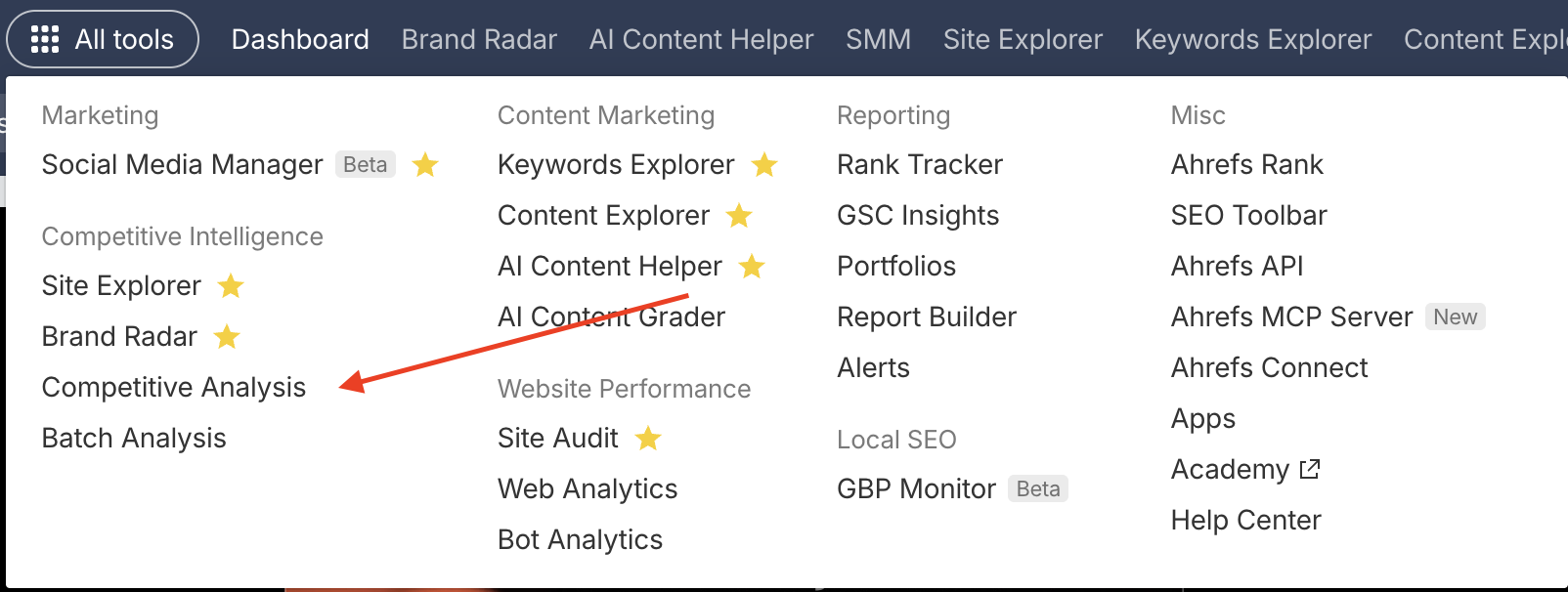
To do this in Ahrefs, follow these steps…
Click All Tools and choose Competitive Analysis:
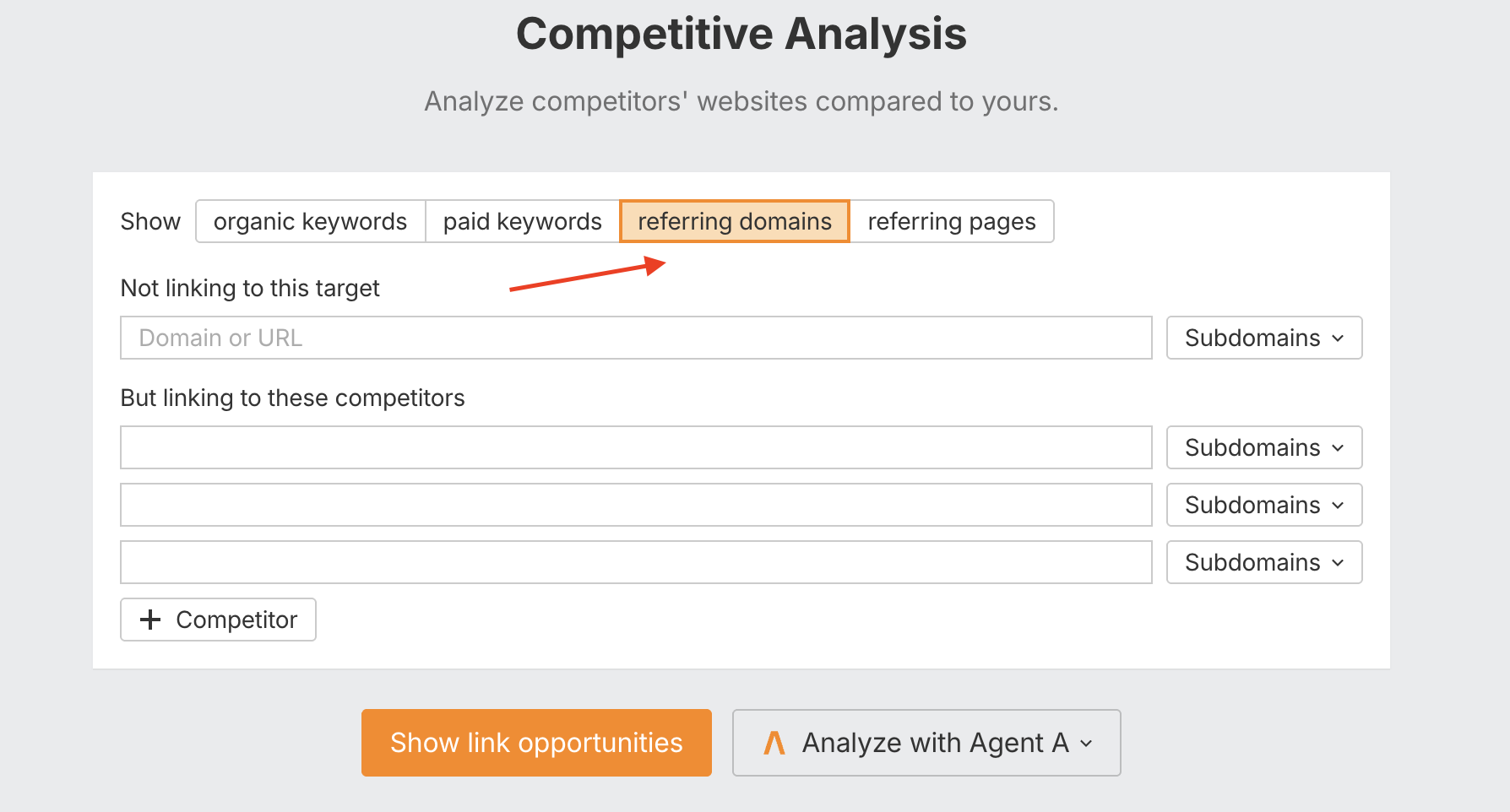
Select Referring Domains:
Add your site along with 3–5 competing domains:
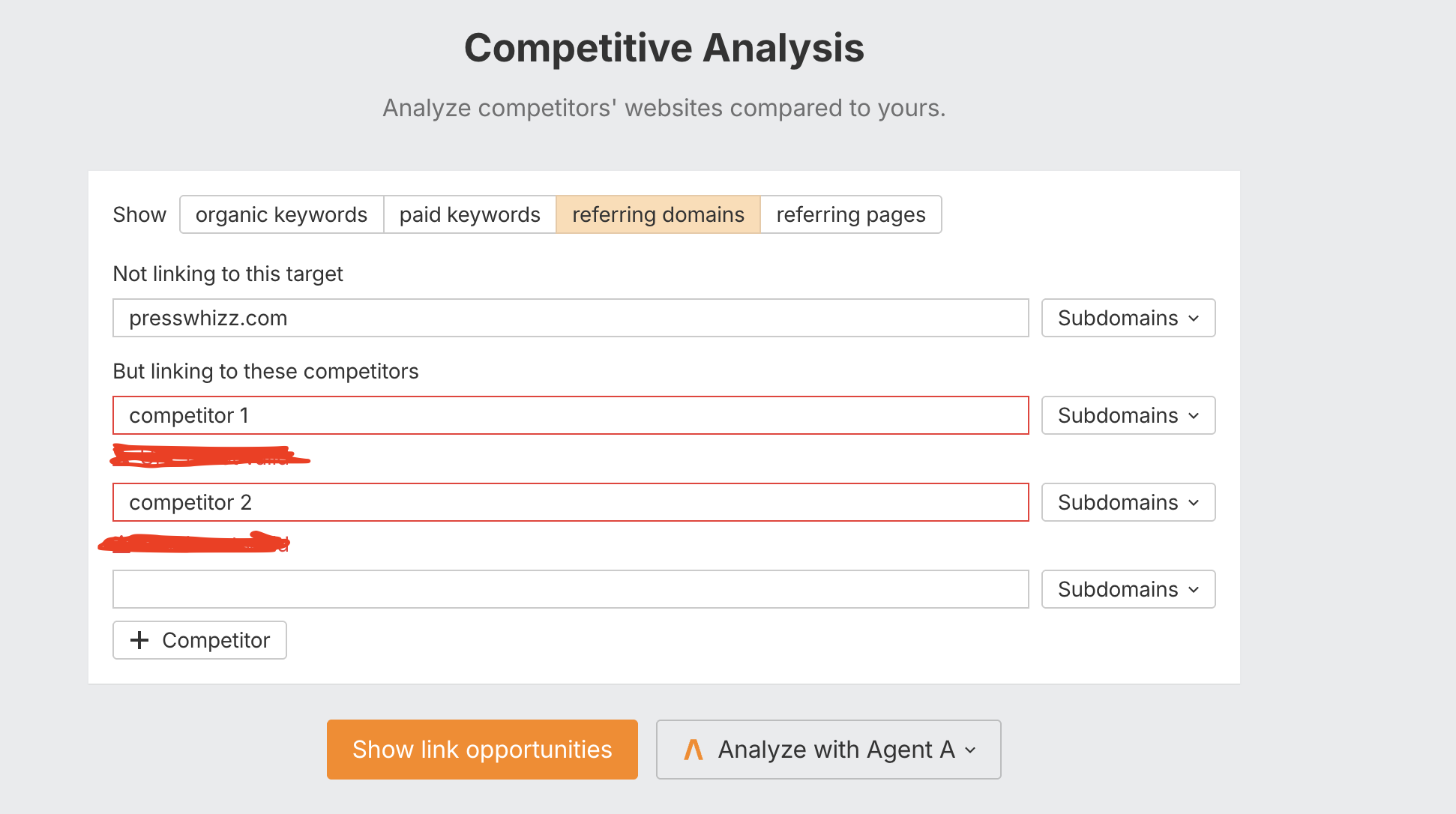
Now, you just need to run the report to see websites linking to your competitors but not to you. These will be your primary link building targets.
My advice is to filter by relevance, DR, organic traffic, and dofollow links and then export the best opportunities into a spreadsheet. But the two primary factors you must pay attention to are traffic and intersect:
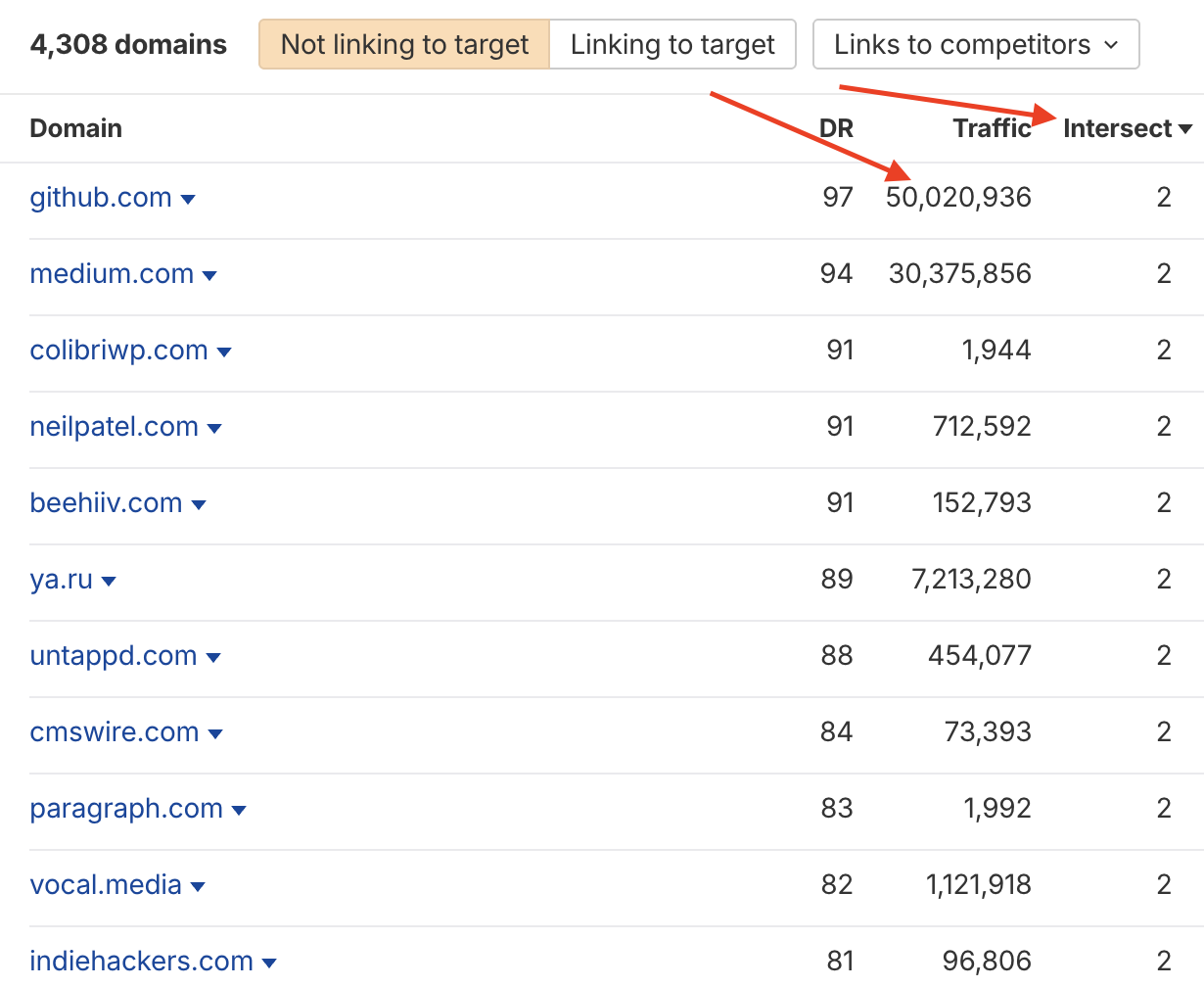
If a domain links to both of your competitors and has a lot of organic traffic, that is a must-acquire link.
You can use a mix of AI and manual “labor” to review each target manually and prioritize sites that are likely to accept link insertions.
Search Google for Link Partners
Competitor analysis is one of the best ways to uncover opportunities, but sometimes you need to go out and find entirely new prospects yourself. That’s when it’s time to start Googling.
Start by brainstorming a list of keywords related to your target pages (make sure you have your list handy). Then use search operators (like site search) to uncover websites that are already ranking for those keywords and may be open to adding another relevant resource.
For example, if you’re trying to build links to a page about link building tools, you might search for:
- intitle:”link building tools”
- inurl:”link building tools”
- intitle:”best link building tools”
- intitle:”SEO tools”
- inurl:”resources”
- intitle:”best SEO software”
Your goal is to find pages where it makes sense to link to your target page AND that have organic traffic and relevant keyword rankings. I didn’t say this would be easy.
As you identify prospects, add them to a spreadsheet and record key metrics to help prioritize your outreach efforts later. Useful columns include:
- Domain Rating (DR)
- Organic traffic
- Referring domains
- Estimated traffic to the target page
- Number of outbound links
- Contact information
- Link type (resource page, blog article, listicle, guest post, etc.)
- Relevance score
- Priority level
Say I wanted to build link inserts for our free web 2.0 list blog. I’d find a website ranking for a web 2.0-related keyword that’s not a competitor of ours. Then, I’d throw them into Ahrefs to see their top-level metrics:
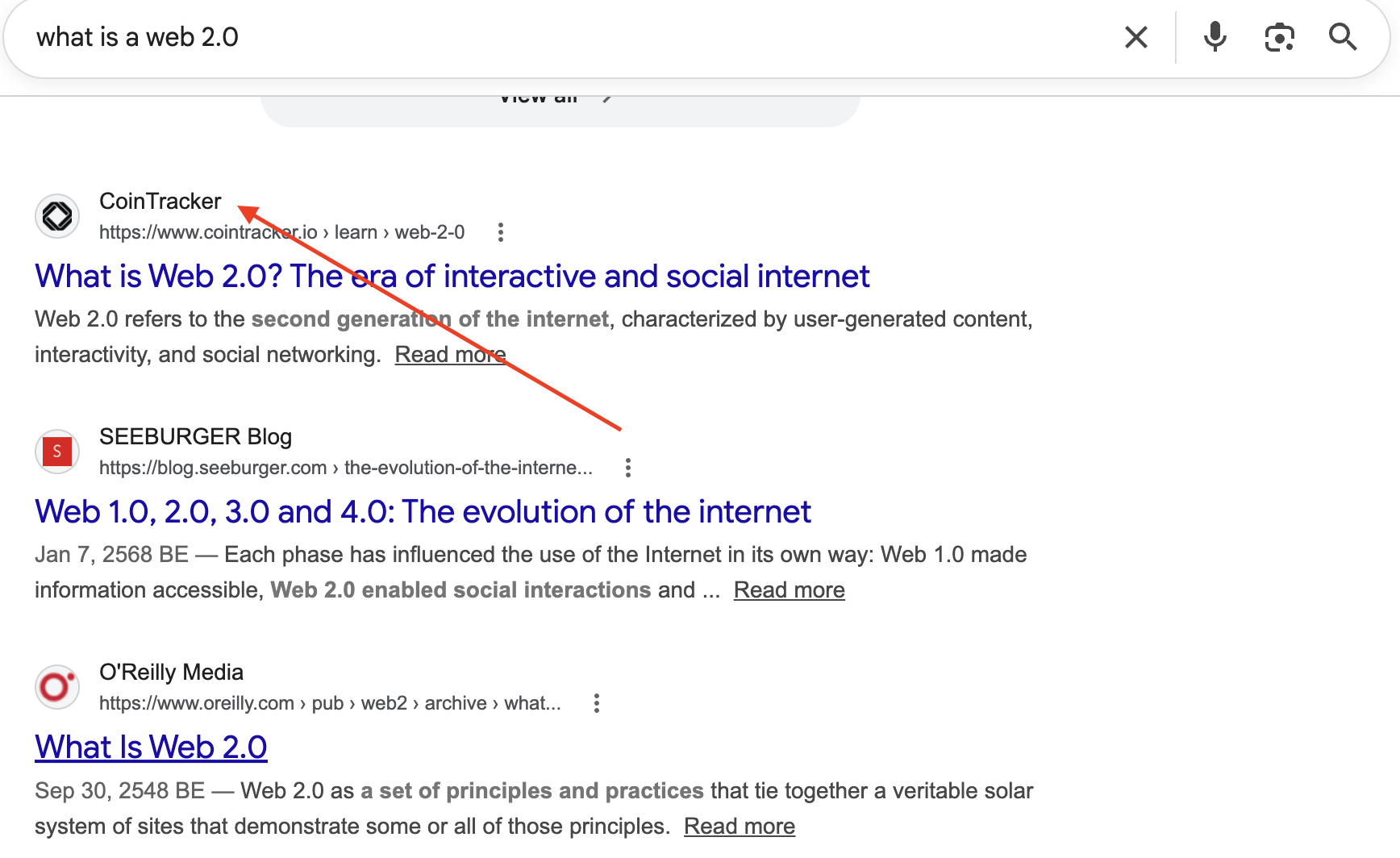
As you can see here, it’s not bad:
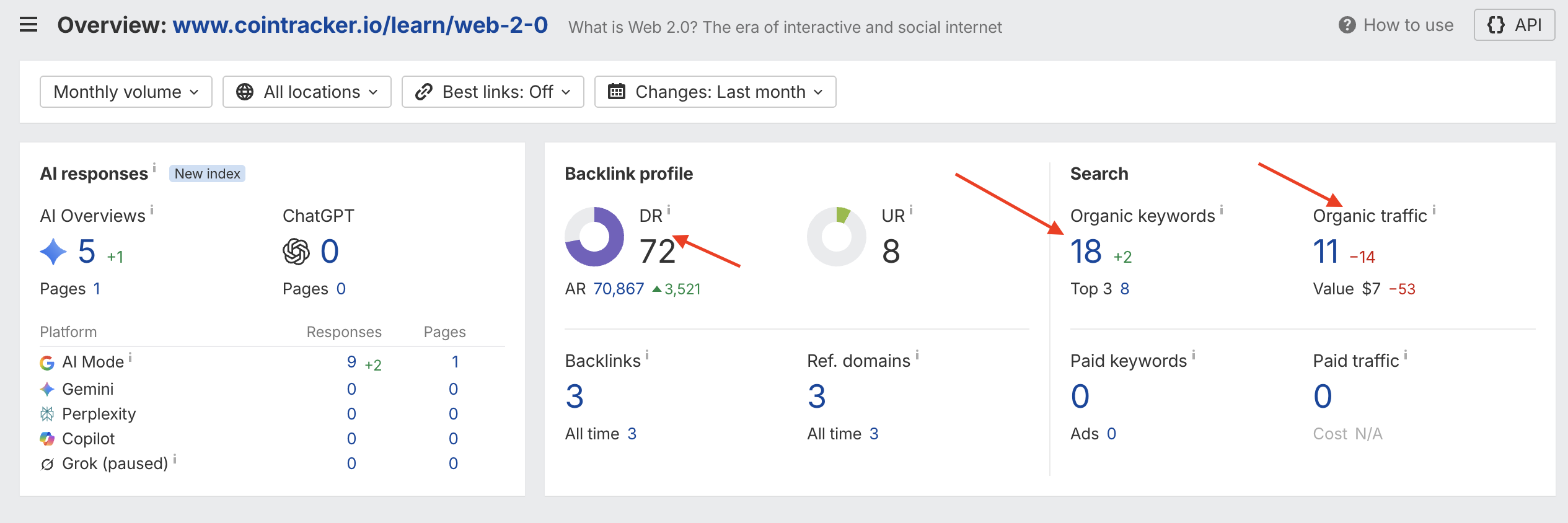
It’s a high authority site, the page ranks for 18 organic keywords, and it has at least some real organic traffic (plus 3 referring domains). This is a solid opportunity for inserting my link.
Pro Tip: Here’s another tip for finding high probability link opportunities: broken link building. Broken link building can be an effective way to secure niche edits on sites that are otherwise difficult to access. Instead of pitching a new placement outright, identify dead external links on relevant pages and offer your content as a suitable replacement. Website owners are often more receptive to fixing existing issues than adding entirely new links, which can lead to higher placement rates and lower acquisition costs.
Begin Outreach
At this point, you should have a vetted list of websites that are relevant, authoritative, and likely to accept link insertions. The next step is finding the right person to contact and writing a pitch that gets a response.
According to Backlinko on their page We Analyzed 12 Million Outreach Emails. Here’s What We Learned, only 8.5% of outreach emails get a response, but personalizing subject lines increases response rates by more than 30%.
We aren’t there yet, though…
Start by looking for contact information on the website itself. Many publishers have dedicated contact pages, contributor pages, or editorial email addresses. If that doesn’t work, tools like Hunter, Apollo, and LinkedIn can help you identify website owners, editors, content managers, and marketing contacts.
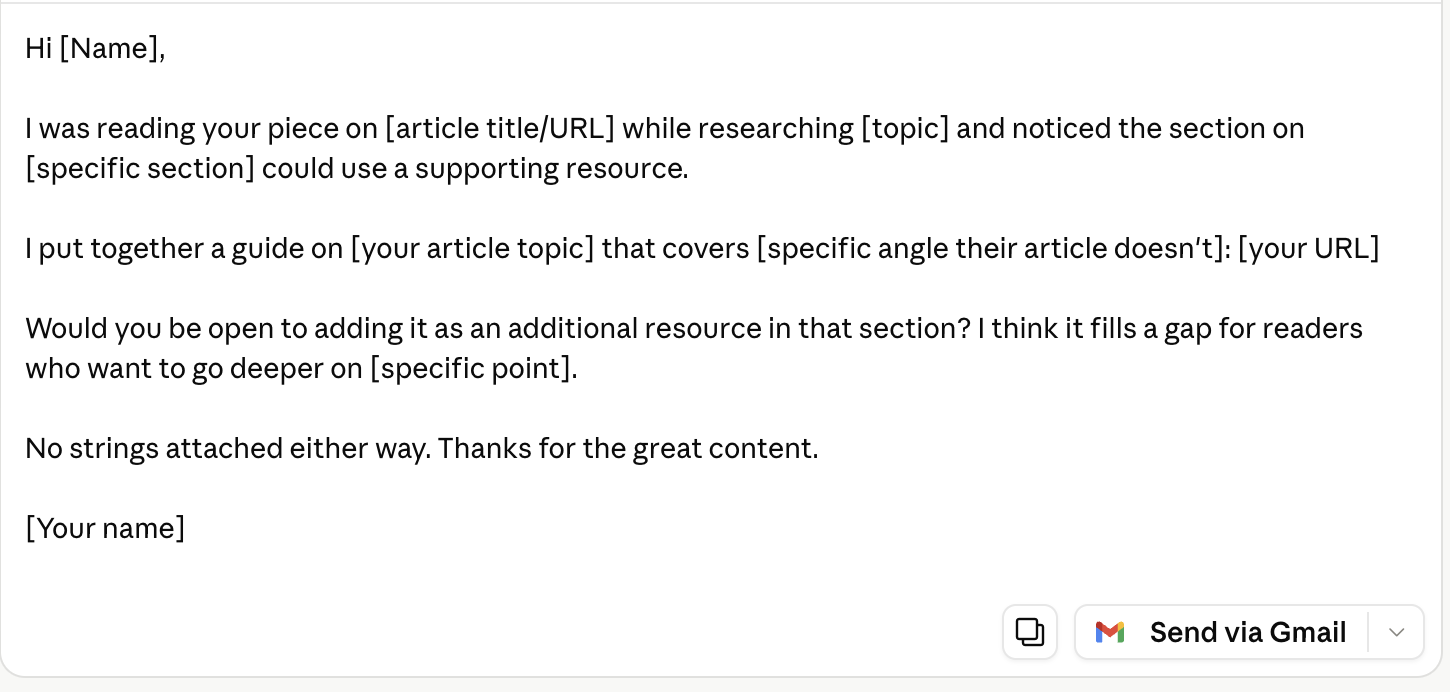
When reaching out, keep your emails short and personalized. Mention the article you’re interested in, explain why your content would add value, and ask whether they’d be open to including it as an additional resource. Avoid generic outreach templates that look like they’ve been blasted out to hundreds of websites.
A simple outreach email usually includes:
- A personalized introduction
- The specific page you’re targeting
- A brief explanation of why your content is relevant
- A clear ask
- An offer to compensate them if you’re pursuing paid placements
Here’s how that link building outreach email would look in reality:
As your campaigns scale, I recommend using AI for link building to help speed the process up.
Tools like Pitchbox combined with AI can analyze target pages, generate personalized opening lines, summarize existing content, and suggest relevant placement angles automatically. This allows you to maintain personalization while reaching significantly more prospects without sacrificing quality. We’ve saved dozens, if not hundreds, of hours of manual work using AI automations.
Negotiate Terms
Website owners are becoming increasingly aware of the value of selling links, so be prepared to haggle. And yes, it’s very rare to get free links these days. You will have to buy backlinks in most cases.
Most publishers understand what their placements are worth, particularly on pages with established rankings and traffic, so expect them to make a hard offer and stand their ground. Rather than focusing solely on price, it is usually more effective to negotiate additional value as part of the agreement.
Terms worth negotiating include:
- Pricing: This is obvious. How much will it cost? Try to get a bulk discount for buying multiple inserts at once.
- Placement Position: Securing links higher within the content where they are more likely to attract attention and clicks.
- Link Attributes: Confirming that links remain dofollow, indexable, and free from sponsored or nofollow tags.
- Turnaround Time: Agreeing on clear publishing deadlines, particularly for time-sensitive campaigns.
BONUS: Tools
I want to provide our must-have link building tools. With these tools, you’ll find the absolute best prospects and decrease your workload exponentially. The best link building tools include:
- Ahrefs: If this tool didn’t exist, we wouldn’t be in business. Use it for competitor backlink analysis, link gap reports, referring domains, traffic analysis, and prospect discovery. You’ll live inside Ahrefs Site Explorer, trust me.
- Google Search: Use it for manual prospecting using search operators such as intitle: and inurl:.
- Hunter.io: the best tool for finding email addresses for publishers and site owners.
- BuzzStream: BuzzStream is best for managing outreach campaigns, relationships, and prospect databases.
- Pitchbox: One of the best automation tools out there. Use it for automating outreach at scale for larger link building campaigns.
- ChatGPT / AI Tools: Good for categorizing prospects, identifying patterns, scoring opportunities, and finding intersecting sites from exported backlink data.
How to Vet Sites Before You Pitch
Next up, I want to show you how to vet websites before you start pitching them.
In my experience, this is where most SEOs get things wrong. They pull up a website, see a DR70 badge, and immediately assume it’s a great opportunity. But link insertions don’t work that way. You’re not buying a domain. You’re acquiring a link on specific pages or on blog posts.
The best link builders think at the page level first and the domain level second. Before reaching out, there are a handful of factors I always review to determine whether a placement is actually worth your time or not. They are:
- DR: Domain Rating isn’t everything, but it does give you a quick indication of the overall authority and trust of the referring domain.
- Organic Traffic: Traffic helps determine whether the site is actually ranking and attracting visitors from search, rather than just carrying inflated metrics.
- Referring Domains: RDs show how many unique websites are linking to the page or domain, which helps us assess the strength of its backlink profile.
- Keyword Rankings: This goes without saying. If a page is ranking for valuable keywords in your niche, it’s a good target (all other things being equal, of course).
And of course, let’s add a couple of red flags here to protect yourself from wasting time and money. Here are some signs you should avoid building a link with a target blog page:
- Traffic Collapse: A site that has lost a significant amount of organic traffic over the last 6–12 months can indicate penalties, poor maintenance, or declining value.
- Spammy Link Profile: An unusually high number of low-quality referring domains, spammy links, or obvious automated link building is a very bad sign.
- Pages With Too Many Outbound Links: Pages stuffed with outbound links, especially to gambling, crypto, pharma, or other commercial niches, often signal that the page is too open for business. Google may also devalue your link if there are too many outbound links from that page.
- Thin or AI-Spun Content: Poorly written articles, templated content, or pages created purely to host links are generally low value assets.
- No Ranking Keywords: Sites showing respectable DR but ranking for very few keywords are very volatile and most likely manipulated by SEOs to inflate their metrics. Avoid.
I know this is a lot of work.
That’s why so many companies choose to use link insertion services rather than doing things in house. The decision to outsource link building vs. keeping it in house usually comes down to budget and goals. Can you build 15 links per month yourself? Do you have the budget to outsource? Think about these things before committing to building a team.
Choosing the Right Placement and Anchor Text for Your Inserts
One more important piece of business is getting the anchor text for your inserts correct. It might not seem like a big deal, but spamming anchor text could lead to complete algorithmic suppression or even manual Google penalties.
Don’t worry, it’s not too complicated.
Ideally, the anchor should describe the destination page clearly while fitting naturally into the surrounding content.
I recommend that you always look at the existing anchor profile of the target page, the competitiveness of the SERP, and the level of optimization already in place before deciding on an anchor. In most cases, a balanced mix of branded, partial-match, and generic anchors tends to produce the most sustainable search engine results.
Your options for anchor text are as follows:
- Brand Anchors: Branded anchors with your company name strengthen entity signals, diversify the backlink profile, and represent the lowest-risk anchor type.
- Partial-Match Anchors: Partial-match anchors incorporate a variation of the target keyword without using the exact phrase.
- URL Anchors: These use the naked URL or domain name as the anchor text. They are quite rare in my experience.
- Generic Anchors: Generic anchors use non-descriptive phrases such as learn more, visit the site, or this resource. While they pass limited keyword relevance, they contribute to a more balanced profile.
- Exact-Match Anchors: Exact-match anchors use the precise keyword being targeted. These can be effective for reinforcing topical relevance but should be deployed selectively, particularly on commercial landing pages.
Pro Tip: You can be aggressive with exact-match anchors so long as you don’t abuse the system. If you want to rank for “best protein powder for men”, then just make your anchor text that exact longtail phrase. If you build 100 links with the same anchors, that will be a problem. But just a few exact-match anchors won’t cause any issues.
Link Insertions and AI
One last thing I’d like to leave you with is the importance of building targeted link inserts for improving AI visibility (since AI is such a big buzzword these days).
Link building is no longer solely about improving rankings in traditional search results. As AI-powered search experiences continue to expand, earning citations within AI-generated answers is becoming an increasingly valuable source of visibility. AI visibility is even measurable in Google Search Console now!
Large language models rely heavily on third-party validation when determining which sources to reference. In fact, an analysis of more than 167,000 AI citations found that 85.7% originated from third-party websites rather than the brands’ own properties, according to a study published on arxiv.org entitled How Large Language Models Source Brand Reputation Across Languages and Markets.
I can’t stress to you enough how important link building is for AI visibility. Securing placements on relevant, authoritative websites helps establish credibility, strengthen entity associations, and increase the number of trusted sources mentioning your brand. Over time, these repeated references contribute to a stronger digital footprint, which will make it more likely that AI systems will reference your business when generating answers.
In simpler terms: You must build links on niche-relevant, authoritative websites.
Pro Tip: Search LLMs and Google AI overviews to find out which sites are already being cited. That’s a great place to start building a link prospects sheet.
Final Thoughts
Link insertions are one of the most valuable types of links you can build in SEO. If you build links on relevant, high-authority websites that are already ranking for keywords within your industry, you will:
- Boost rankings
- Increase your own website’s authority
- Drive targeted referral traffic
- And increase AI visibility
And it will usually produce ROI much more quickly than a typical guest post.
However, it must be done properly. If you’re just reaching out to random websites and basing your prospects list on DR, you will waste time and money while opening your business to Google penalties.
The vast majority of SEOs complaining on social media that “link building is dead” are just doing it wrong. Or worse, following industry best practices from 2016 that no longer work.
If you follow the advice I’ve given you in this article, I am certain you will improve your SEO, ROI, and business revenue.
Just make sure to do the following:
- Target relevant pages
- Make sure those pages have organic rankings and some traffic
- Use natural anchor text and don’t abuse the system
- Create link insertion outreach emails that are direct and genuine
- Use AI tools to automate tedious tasks
And when vetting websites, make sure that the rankings and traffic are real. SEOs are incredibly skilled at faking traffic and manipulating Domain Rating and other metrics.
As always, I wish you luck with your link building efforts.
– Dusan Novakovic