

I’ve spoken to countless SEOs: site owners, agency people, freelancers, etc. And I myself have been building links for nearly 20 years now (I’m still young, though).
We all say the same thing: eCommerce link building is not easy.
Here are the main challenges of link building for eCommerce sites that everyone in SEO complains about:
- Seasonal changes
- Shopify clones all selling the same garbage
- Amazon, Walmart, eBay, and other billion dollar megacorps stealing all of your customers
But like all things in life, there is still plenty of room to survive (and even thrive) IF you build links the right way.
I’ve seen it firsthand. When you build an ROI based, long term campaign, you get results for many years to come and can compete with the Bezos and Sam Walton types (even if you are building links to a small eCom site).
You can also generate steadily growing capital from organic traffic and revenue growth relatively quickly.
And while your competitors are out there begging mommy bloggers for a backlink to their keto diabetic dog friendly bowl product page, you’ll be building high quality links quickly and stealing high ROI keywords.
So let’s burn the fluff, toss out the generic “create great content” nonsense, and learn how to build backlinks for eCommerce. Today, we’re diving into real, battle tested tactics for building links that increase rankings, revenue, and brand equity in 2026.
What is eCommerce Link Building?
eCommerce link building is the process of getting other websites to link back to your online store. But you probably know that already.
The goal of increasing the number of referring domains to your eCom store is to boost your store’s authority in Google’s eyes so your product and category pages rank higher.
But it’s not quite the same as regular link building.
Most SEO content targets informational pages like blogs and guides, which are easy to link to because people naturally share them. eCommerce link building has to point at commercial pages like product pages, category pages, and collection pages. Those are a much harder sell because nobody’s bookmarking your category page for fun.
That changes your whole approach and opens the door to tactics most blogs never need to think about.
Some common tactics include:
- Supplier and manufacturer links
- Product PR
- Affiliate programs
- Where to buy pages
- Coupon codes and discounts
You don’t get those in “normal SEO”. Again, much more on this later on in this big article I’ve written for you. Let’s get into why eCom link acquisition is so difficult but so, so, worth it.
Why Link Building for eCommerce Is Brutal
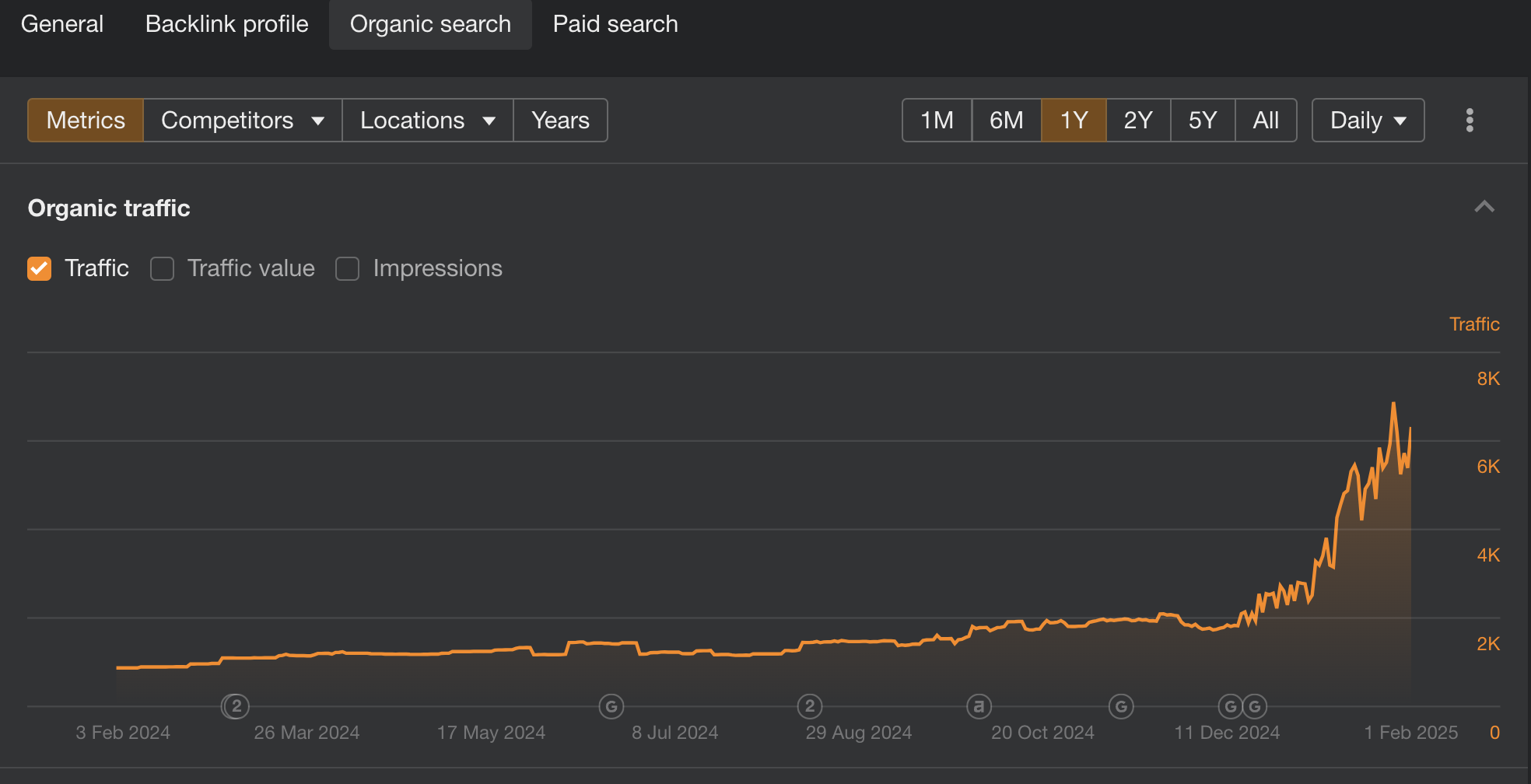
eCommerce SEO is brutal because it’s ultra competitive and it’s completely different from “normal SEO”. Think about it…why would anyone link to your product page other than to recommend your product? There aren’t many reasons. You’ve got to think smarter.
Here’s the truth most SEOs don’t want to hear.
Most niches are boring, site owners and bloggers don’t work for free, and product pages are transactional. That complicates things a bit.
Nobody is searching for “Feider FRT-75BS125 Compact Rear-Collect Ride-On Mower with Manual Drive & Briggs Engine” (yes, that’s a real product) organically.
And most content created by eCommerce brands is either irrelevant to their core topic or just regurgitated from news sites through syndication feeds, which does nothing for SEO.
I’m not saying you shouldn’t optimize your product pages. You 100% should.
However, you don’t really need to build links to them often. And, like I said before, there’s rarely a natural reason for anyone to link to your category page for “black leather wallets”, which is usually the page you actually need to rank.
But… if you can pull it off, you’re going to dominate, because nobody else is doing it right (and massive sites don’t care enough). It’s literally a cheat code.
Google still treats links as the backbone of trust and authority, which are the most important algorithmic signals. So, if you’re getting better links, you’ll have better rankings.
I’m about to show you the best link building process for SEO, but first, let’s get to what you need to do before building links to your online store.
Lay the Foundations Before Building New eCom Links
Before you blast out 300 outreach emails or try to buy a DR70 link off a random BHW thread, do this:
1. Audit Your Site for Link Targets
Before you build a single link, you need to know exactly where those links are going and why. Trust me, sending links to the wrong pages is one of the fastest ways to waste your budget.
Please, for the love of Google, devise a linking strategy. Most SEOs just spray and pray and think “get links anywhere you can“.
Don’t be a statistic.
Ask yourself:
- Which pages do I actually want to rank?
- Which of those pages already have decent links?
- Which ones are converting?
Pro Tip: Most of your links should point to your homepage, content pages and blog posts. Spreading links too thin across every page on your site dilutes authority instead of concentrating it where it actually moves the needle.
Concentrate sending authority to:
- Category pages (money pages)
- Resource hubs / guides (linkable assets)
- Comparison posts (affiliate style)
- Brand story / about pages (great for PR driven links)
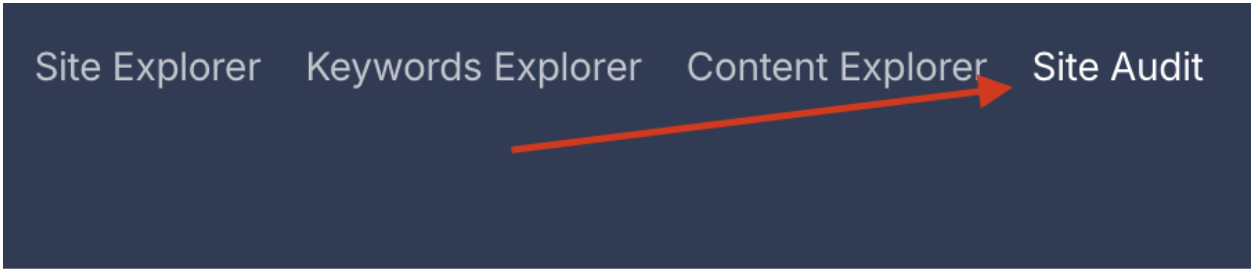
All you need to use is the Ahrefs Site Audit feature:
Then, add a project:
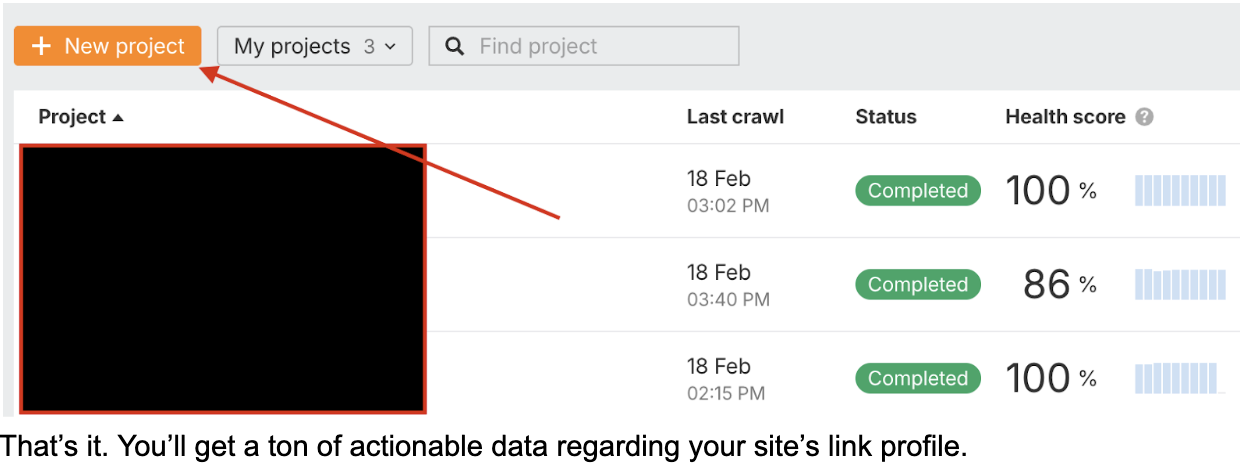
That’s it. You’ll get a ton of actionable data regarding your site’s link profile.
2. Clean Your Internal Link Profile
After you audit, I recommend getting your own house in order next. If your current link profile is low quality, it will undermine your external link campaign.
Before building external links, identify and fix internal issues, such as:
- Are key pages orphaned?
- Are you linking too aggressively with exact match anchors?
- Do 404 pages still have internal links pointing to them?
I recommend using Screaming Frog (or a similar crawler) alongside Ahrefs and GSC to clean it up. In my experience, this step alone can move the needle on pages that have been stuck for months.
3. Build Your Entity Stacking
This is the SEO start that every site should have on day one. You need to be a brand that Google recognizes.
You can’t expect to rank product or category pages (or attract links to them) if your brand doesn’t exist as a known entity in Google’s knowledge graph. And no, slapping your NAP (Name, Address & Phone Number) in the footer isn’t enough.
So I recommend you start entity stacking ASAP. By the way, entity stacking is the practice of building a network of branded profiles, citations, and mentions across authoritative platforms to help Google understand and verify your brand as a legitimate, trustworthy entity.
I know a great link marketplace called PressWhizz (full disclosure, this is the PressWhizz blog and I am the owner) that offers an entity stacking service.

You can also do this yourself, no problems.
You just need to flood the web with consistent, structured mentions of your brand across platforms Google uses for entity recognition. That means:
- Google Business Profile, TrustPilot, Reddit etc
- Facebook, Instagram, LinkedIn, Pinterest, X etc
- Crunchbase, Product Hunt, AngelList (if relevant)
- About.me, Gravatar, Medium, Slideshare, YouTube, or anything that builds a digital fingerprint
I recommend that you fill these profiles with consistent branding, logos, bios, links to your homepage and category pages, and use Schema markup on your actual site (Org, LocalBusiness, Product, Breadcrumb, etc.).
The goal is to show Google, “We’re a real brand with consistent data across the web that proves we exist and is trustworthy to customers.”
Pro Tip: Link all these profiles back to each other in a loop. That’s the “stack” in entity stacking. Interlink your profiles, then embed them on your site subtly (in bios, blog footers, etc.).
The goal here is to create a tightly knit trust signal cluster that Google can follow and reward. Once that foundation is in place, every link you build starts passing more weight. Your brand gets indexed faster, content ranks more easily, and your backlink profile stops raising red flags every time you go after a guest post.
And if you want an even more detailed breakdown, you can watch my video on it below:
How to Pick The Right eCom Links
In eCommerce, the type of link you build matters more than just the fact that you got one. A link from a DR90 travel site pointing to your protein powder collection is less valuable than a DR40 niche fitness blog that your customers actually read.
Most SEOs get this completely wrong. They just start chasing links en masse without thinking about the relevance of a particular link. This is going to be a huge advantage for you.
Here’s the core question you need to ask:
“Will this link send relevance, trust, and SEO equity to a commercially valuable page on my site without looking forced?”
If the answer’s no? Skip it.
You’re not building links for some agency case study. You’re building links to rank product and category pages, aka, where the money is.
Before you pick a link, ask yourself what you’re actually promoting.
Here’s how to stack link targets in eCommerce:
- Category Pages: These are your real money makers, and they’re usually ignored by SEOs. Example: /collections/mens-leather-wallets
- Supporting Content: Guides, comparison pages, or resource hubs. For example, “How to Choose the Right Wallet Style for Everyday Use”
- Brand Pages / PR Pages: Some examples include your “about us” page, CSR initiatives, and innovation pages. These are great for link bait and authority.
- Product Pages: Get links to product pages only if they are evergreen and internal link heavy. Seasonal or disposable products? Forget it.
I recommend that you ruthlessly judge every site you pitch to.
After years and years of link building for eCommerce, here’s what you should look for before committing time to pitching for a link:
- Topical Relevance: Is their audience even remotely aligned with yours?
- Actual Traffic: DR means nothing if the site’s dead. Use Ahrefs or Similarweb.
- Indexability: Is the post they’ll place your link in even indexed?
- Link Type: Is the link dofollow, contextual, and ideally surrounded by related content?
- Outbound Link Profile: If they’re linking to 15 other brands, it’s a link farm. Next, please.
Here’s a quick summary that should make it easier to remember:

Now it’s time to actually build some links! There are certain strategies that have evolved over time to work best for eComm sites. And here they are.
8 Link Building Strategies for eCommerce
I started my career building my family businesses’ eCommerce sites. And one of the ways I outranked multi billion dollar corporations nearly 15 years ago was learning link building as quickly as I could.
I learned a lot about acquiring links, outranking competitors, and evaluating potential partnerships during that time.
These are 8 eCom link building tips built up over nearly 17 years of studying SERPs, Google’s algorithm, and what works best (right now) for brands at any level. I’m going to start with one of my favorite ways to get cheap reciprocal links at scale:
#1) The “Product Ego Bait” Strategy
The ego baiting strategy is when you mention a website’s product, then show them they’ve been featured and ask politely for a link. Everyone’s an egomaniac, so this will work.
Everyone loves to be featured, especially when you’re giving them praise.
I recommend building linkable assets, like:
- “10 Influencers Killing It in the Sustainable Fashion Space”
- “7 Tools We Use to Ship Faster Than Amazon”
- “The 5 Best Foodie Instagram Accounts Every Vegan Brand Should Follow”
Then, reach out and let them know they’ve been featured! You’d be surprised at how many of these folks check DMs daily, especially if you can get influencers in the 2k – 200k range.
Many will link to you. Some will share. A few will even ask to collaborate and affiliate.
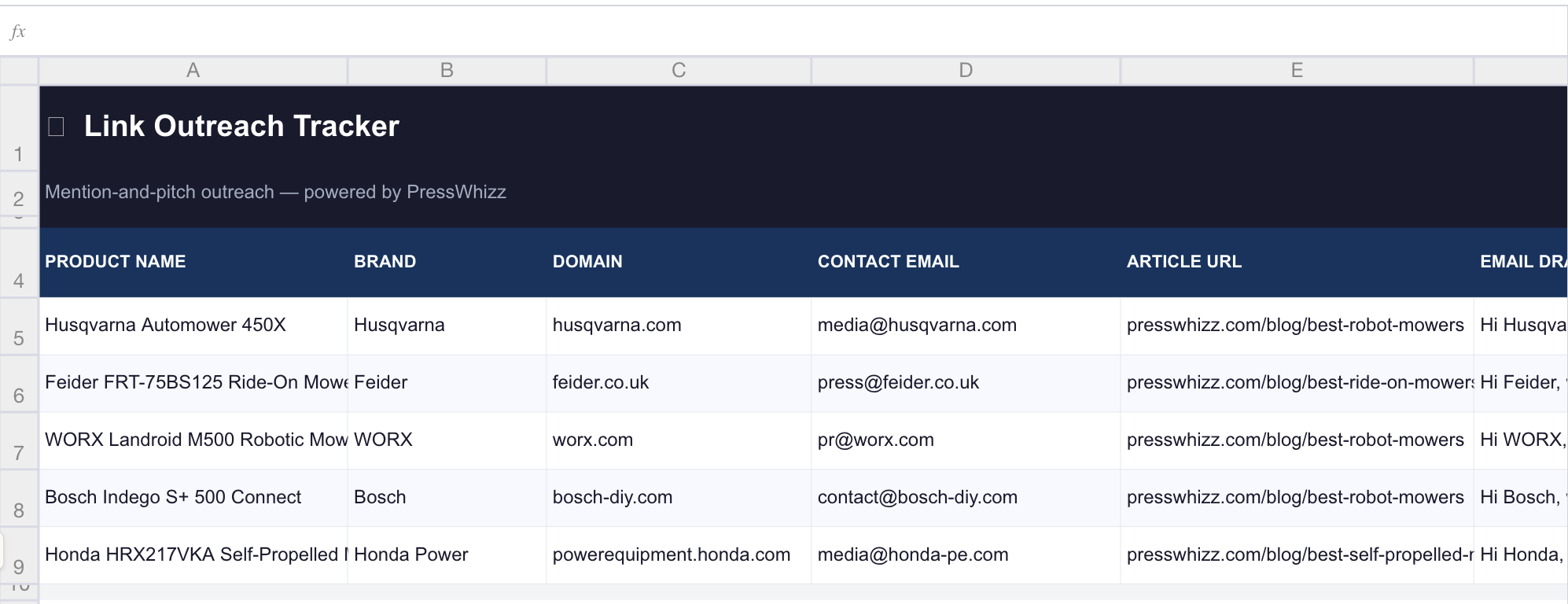
You can automate 80% of this process with ChatGPT deep research + Sheets formulas these days! This is the workflow I’d use:
- Build the Target List: Use GPT Deep Research to pull a list of popular products in your niche and dump them into a Google Sheet with columns for product name, brand name, brand website, and article URL once it’s live.
- Find Contact Emails: Use Hunter.io or Apollo with a Zapier or Make automation.
- Write the Articles: You can build an automated system to write the content. It won’t be amazing, but it’ll do the job.
- Generate Outreach Emails: Use GPT via Apps Script to auto generate a personalized outreach email for each brand, pulling the product name, brand name, and article URL into a prompt that writes a short casual pitch.
- Send at Scale: Push the generated emails into Instantly, Smartlead, or Lemlist and let them handle sending, follow ups, and reply tracking automatically
Here’s what my outreach spreadsheet would look like:
#2) Guest Posting with Commercial Intent
Yes, guest posting still works if you do it like a real person and not some spammer. And if you’re on a budget, there are plenty of free guest posting websites, like Medium, where you can start generating quality back links quickly.
I’m going to walk you through how I would do it if I were building an eCom site in 2026.
I’d recommend you focus on analyzing and vetting sites first. Don’t pay that much attention to metrics. Instead, you should be truffle hunting to find the perfect match of relevancy, authority, and quality.
Here’s how you find the perfect links for your eCom store:
- Write value first content that fits the niche but sneak in links to category pages via internal links from your tutorials, guides, blog posts and content resources.
- Target sites with real traffic in your niche, not just DR.
- Pitch angles like:
- “How We Went from 50 to 5,000 Orders in 6 Months”
- “Why [Niche] Is Broken and How We’re Fixing It”
- “Tools Every [X Audience] Needs in 2026”
#3) Steal Your Competitors’ Links
You want the easiest way to shortcut your link building campaign?
Let your competitors do the hard work for you.
If someone’s already linked to a competing store, there’s a high probability they’ll link to you.
That’s especially true if:
- You’ve got better branding
- Your UX doesn’t look like it was built on GeoCities
- You give them something actually worth linking to
I’m going to walk you step-by-step on how to do this, so you can’t screw it up.
Fire up Ahrefs and enter a competitor’s domain (one with decent visibility in your niche).
Then, head to the Backlinks report and filter by:
- Dofollow links
- DR40+ (you can go lower if it’s a hyper niche site)
- Referring domains only (we don’t care about every page, just the source)
- Contextual content links (filter out nav, sidebar, and footer noise)
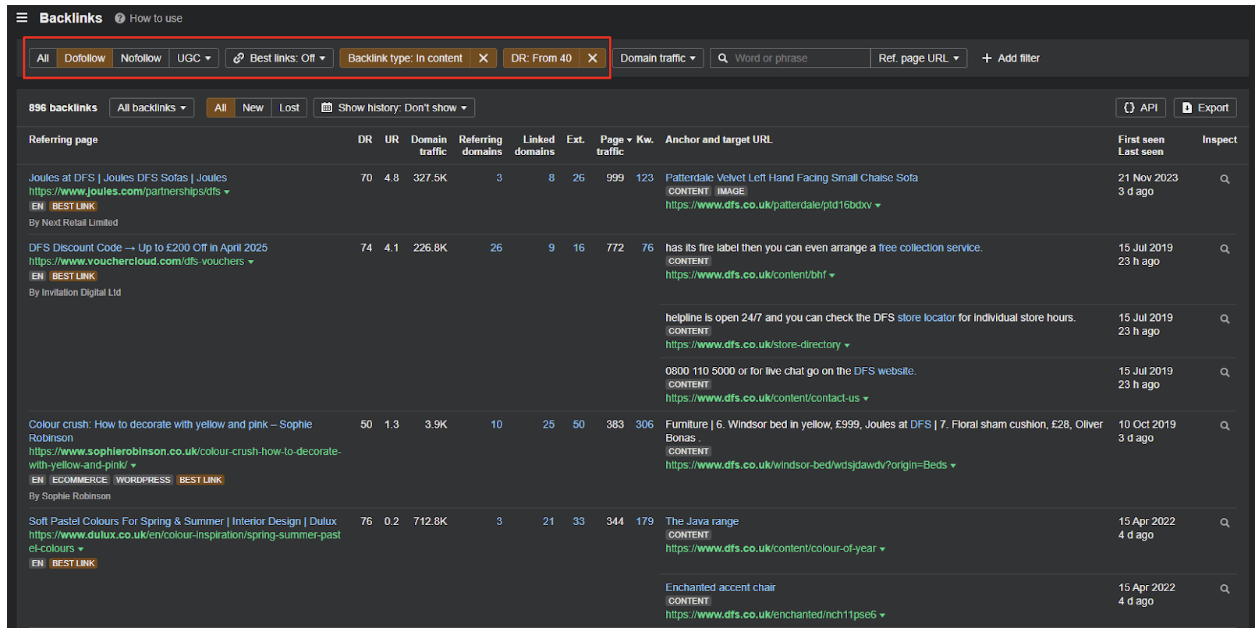
Now, export those domains and analyze why they linked to this competitor’s site.
Was it a single product review or product roundup? A buying guide? A niche blog that reviewed something? Did they get added to a best brands list somewhere?
Once you know the context, reverse engineer the pitch and offer something better. If they linked to your competitor as part of a roundup or guide, send yours and offer a stronger CTA or a better visual. If it’s an affiliate blog, pitch your own affiliate program. You get the idea.
Another cool thing you can do is, if it’s an older post, offer to replace a broken or outdated link with something fresher, faster loading, or better designed.
This is the classic skyscraper technique but with a commercial twist.
This method helps you steal visibility, authority, and traffic share from your direct competitors.
While they’re off wasting budget on PR campaigns that land 3 links a quarter, you’re swooping in on hundreds of contextual links they already won and flipping them to your brand. Read my full guide on competitor link analysis here for more on how to do this.
#4) Manufacturer / Supplier Link Roundups
Obtaining links from manufacturer or supplier websites is one of the lowest hanging fruits in all of eCom SEO.
Most eCommerce stores resell or white label products, which means there’s a link building opportunity sitting right in front of them that almost nobody uses. You could easily land DR 60+, relevant links from this tactic without paying a dime.
So this is what you do:
- Reach out to the brands you sell
- Ask to be added to their “Where to Buy” or “Stockists” page
It’s really as easy as that! And most people completely skip it. But I’ve gotten some insanely high DR, one way links over and over again for brands using this method.
#5) Coupon Code & Voucher Sites (But Not the Junky Ones)
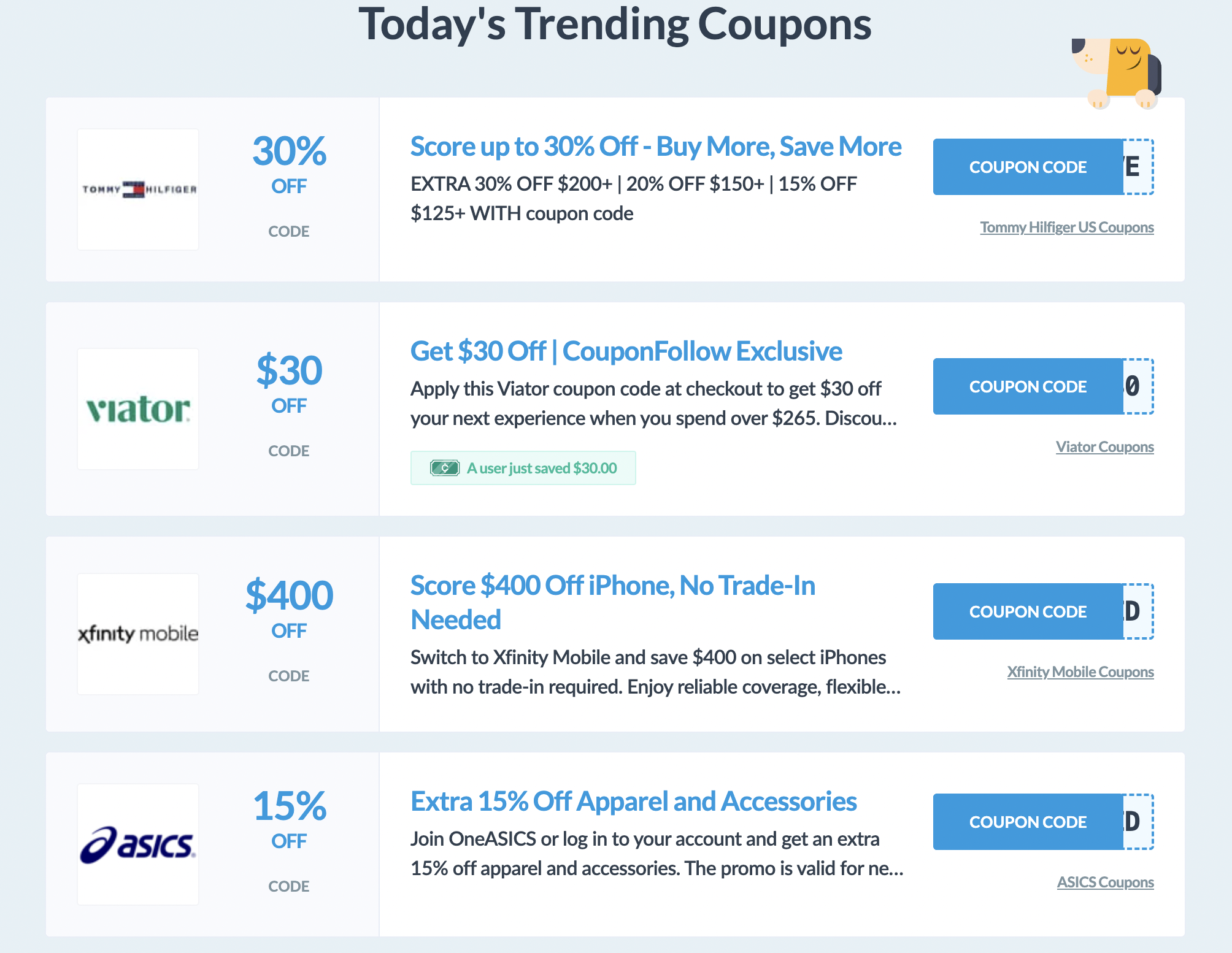
Don’t ignore these, some of them have serious DR, traffic and can play well into the entity stacking strategy we talked about earlier. I’m not talking about the spammy directories that list every brand under the sun with zero editorial standards. The ones worth going after are established coupon platforms with real traffic, clean link profiles, and an actual audience that uses them.
Here are some examples of coupon or voucher sites that I recommend in the US:
- RetailMeNot
- CouponFollow
- TechBargains
- and niche specific ones
And please make sure the links are on indexable pages.
Even nofollow ones have CTR and brand benefit value if they drive traffic.
#6) Claim Unlinked Brand Mentions
If someone mentions your brand on their website, there’s 0 reason NOT to link to you. It’s an easy way to build a link. And here’s the thing: People WILL mention your brand without linking, and your old links will die off for any number of reasons. So you’ve got to get on this link building technique immediately.
Here are a few tools you can use to find:
- Ahrefs Alerts
- BrandMentions.com
- Google Alerts
Like always, I recommend Ahrefs. Use their Content Explorer tool (combined with another tool like Screaming Frog) to find unlinked brand mentions.
And when you find these links, reach out to the site owner and tell them to link to your site immediately. It’s 10x easier than cold guest post pitching, and the link will almost certainly be more relevant. Here’s what I’d say:
“Hey, thanks for the shout out. Would you mind linking to us so your readers can find the product directly?”
Please, don’t be cheeky and write some cringe line like “I just happened to find your site and…”. Yeah sure, you just happened to be 500 pages deep on a blog post from 3 years ago with your company’s brand mentioned on it. That’s believable.
And if you are losing link equity, then check out my guide on link reclamation.
#7) Community & Local Link Plays
Doing some real world link building is still a wildly underused link play. And I’d argue it’s one of the highest ROI link building strategies available to eCommerce brands right now. The links you get from these plays are genuinely hard to replicate, which means your competitors are unlikely to catch up even if they figure out what you’re doing.
Try these real world link building plays:
- Sponsor a local event or niche community
- Create scholarship or grant programs for students in your vertical
- Offer product donations to charities or nonprofits (especially niche aligned ones)
You’re not doing this for karma points. You’re doing it for .edu, .org, and local news links.
#8) Affiliate Programs for Free Links on Autopilot
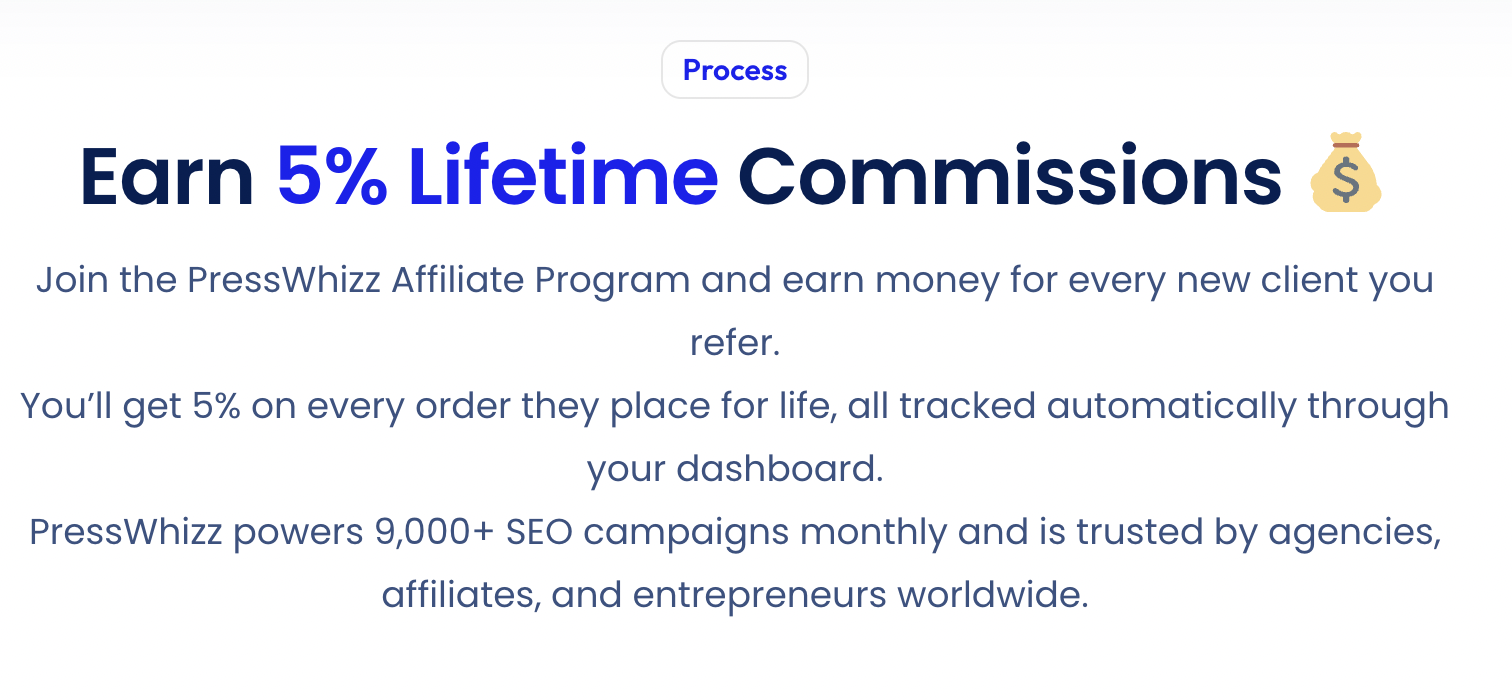
Affiliate programs are another criminally underused link building strategy by eCommerce SEOs who still think of affiliate link building like it’s some scammy 2012 CPA campaign.
Here’s why they’re basically free links on autopilot (they seriously are so easy to get)…
Every affiliate who signs up wants to promote your product. They’re incentivized to drive traffic, and in order to do that, they need to link to you. That means you’re getting blog posts with contextual links, review videos with links in the description, and tutorials with CTAs pointing to your collections. You’ll also get comparison articles where you come out on top, and that’s all without paying anything upfront.
They make money by linking to you, so there’s no reason for them not to do it. And you don’t have to pay.
Now imagine scaling that. I love building systems, so here’s what I would do…
Set up an affiliate onboarding funnel that includes a “How to Promote Us” guide. In this guide, add anchor suggestions, content ideas, banners and product mockups, keyword ideas, and your top converting landing pages. Then, get them to link to:
- Blog posts with contextual links
- Review videos with links in the description
- Tutorials with CTAs to your collections
- Comparison articles against your competitors (with you as the winner, of course)
If I were you, I’d offer a bonus or tiered commission for affiliates who drive SEO content rather than just PPC. That one small incentive can land you hundreds of contextually placed backlinks from relevant, content rich blogs that you never had to pitch.
Pro Tip: You don’t need a link building service for your eCom site if you use these tips. However, buying links from a vetted marketplace could drastically decrease your workload and improve your SEO. I recommend you at least try it. I’ve got an entire guide on the best places to buy backlinks you can read. But obviously, I recommend PressWhizz. With PressWhizz, you can enter in your competitor’s backlinks, see who links to them, and purchase those links all within a matter of minutes…no outreach needed.
Check this out. Imagine if you were an online shop selling hiking backpacks. You could put in your main competitor and see who links to them in seconds. In this case, it’s Alpkit.com. Enter that domain, and PressWhizz shows you link partners who have already linked to your competitors:
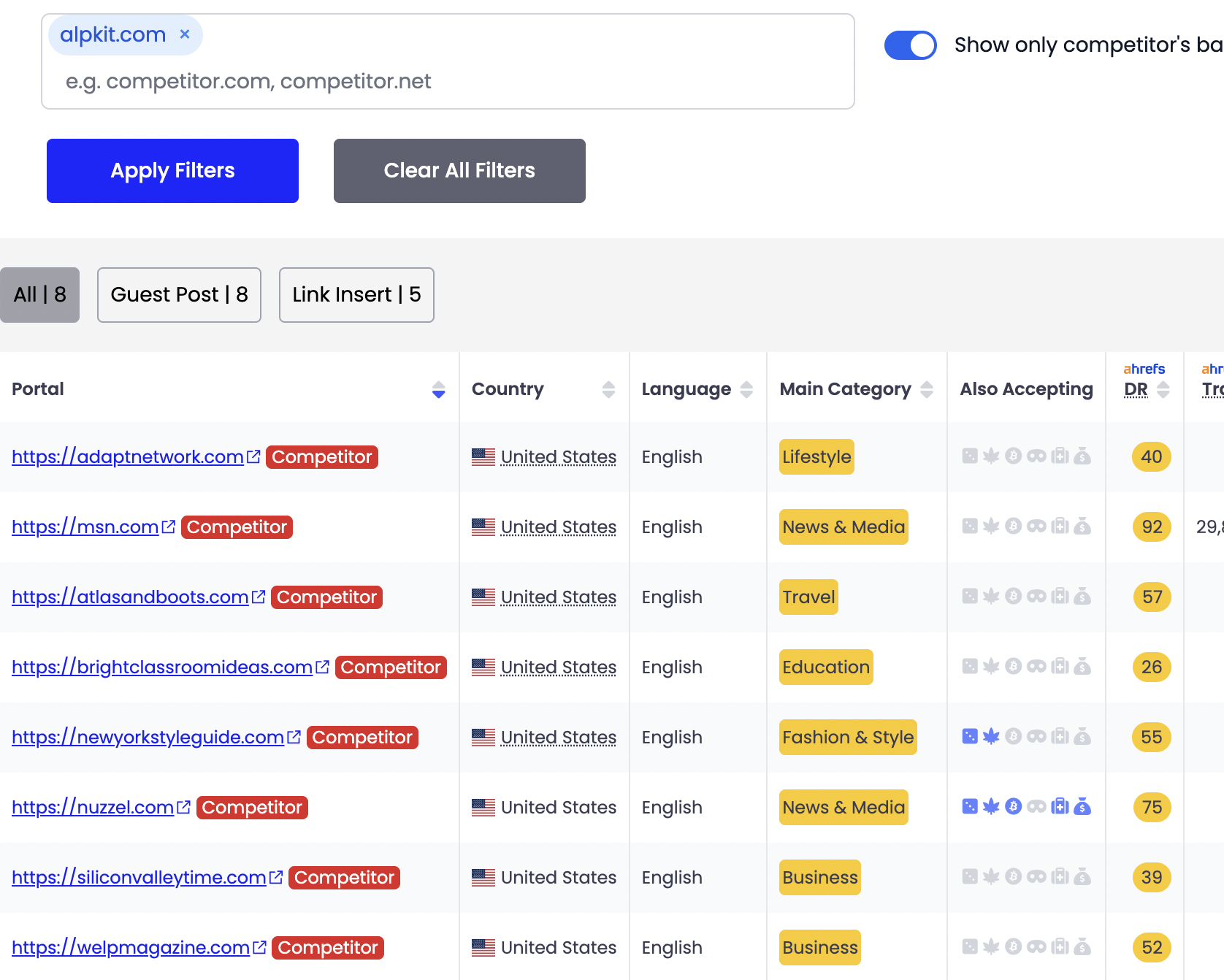
This would save you countless hours of reverse engineering competitors and God knows how much outreach, all while guaranteeing that you get a link from these blogs.
Scaling the Machine: How to Do This at Volume
My top tips for scaling your content machine are to automate prospecting, use personalized templates, and track everything.
I told you I loved systems, didn’t I? So let’s build you one that scales this to six figures worth of links and beyond. Here’s a stupidly simple game plan that no one can get wrong:
Automate Prospecting
This should be priority number one, and it’s not close. Manual prospecting is the single biggest time sink in any link building operation, and it’s also the most replaceable with automation. I’ve seen teams cut prospecting time by 80% or more just by setting up the right workflow once and letting it run.
Here’s how to scale this to the moon with very little manual effort.
Use tools like Ahrefs, SEMrush, and Hunter.io to export qualified prospect lists automatically based on set criteria.
Then, pair those with a SERP API feeding into Google Sheets and a Make or Zapier workflow to handle the data cleaning and deduplication. Once you’re done with that, plug GPT in via Apps Script to score and prioritize each prospect based on DR, relevance, and traffic. What used to take a full day now runs overnight without anyone touching it. You should check out my guide on using ChatGPT for link building to get a more in-depth explanation of how to do this.
Here are a few other things I would do:
- Use Ahrefs + Google Sheets + GPT to scrape link targets
- Build prospect lists by niche + keyword footprint
- Assign intent tiers (e.g. high value media vs mid tier blogs vs web 2.0 websites)
Use Personalized Templates
Use in-depth, personalized templates without any spammy lines, hollow compliments, or anything that sounds like it came from a bulk outreach tool. People who run high quality websites get dozens of pitches a week, and they can spot a templated email in the first sentence. The moment it feels generic, they’re done with you. I personally hate this as well. Just tell me what you want and let’s do business.
Every template should have:
- One specific compliment
- A clear CTA
- 30 second max read time
Just get on with it, mate. No one cares about your 5-paragraph life story.
Track Everything
Tracking is vital to the success of your link building campaigns. Without it, you have no idea what’s actually working. It actually goes even deeper than that. Without tracking, you have no idea who your best link partners are, which links are a waste of money, and who you should re-negotiate or do more business with.
I recommend building a single source of truth in Airtable or Notion (you can probably just use OpenClaw to make it now) that every prospect flows through. Build it once, set up the right views and filters, and it runs your entire operation without you having to hold anything in your head.
- Site
- DR
- Contact
- Link target
- Status
- Result
Now THIS is the type of workflow I like. Build it once. Use it forever.
Calculate ROI
One last thing (I know you are tired of hearing me talk at this point).
But I urge you to keep track of which links are bringing in the most value using an ROI modeling system. When you reach “scale”, the hard numbers start to matter a lot more than before.
Think about it this way: Saving $1 on a liter of gasoline means nothing for one trip, but if you’re traveling 100,000 miles a year, that $1 could amount to tens of thousands of dollars in savings.
My team and I pride ourselves on getting every cent of value we can, and I urge you to do the same.
Here’s how you can calculate ROI on your link building campaigns:
How to Calculate ROI on eCommerce Link Building
Step 1: Pick a Target Keyword
Start with the keyword you want to rank for. Let’s say you sell protein powder and you’re targeting “buy whey protein online.” According to Ahrefs, that keyword gets around 8,000 searches a month.
Step 2: Estimate Your Traffic Using CTR by Position
Where you rank determines how many of those 8,000 searches actually reach your site. Here are the average click-through rates by Google position, according to a Backlinko study of 4 million search results:
- Position 1: 27.6%
- Position 2: 15.8%
- Position 3: 11%
- Position 4: 8%
- Position 5: 7.2%
By the way, you can find that study at Backlinko.com/google-ctr-stats.
So if your realistic goal is to rank in position 3, take your search volume (8,000) and multiply it by 11%. That gives you roughly 880 visitors per month.
Step 3: Apply Your Conversion Rate
Now that we know how many people are coming to the page, we need to figure out how many will actually buy. The average eCommerce conversion rate sits between 1% and 4%, with most stores landing around 2% to 3%. If you already know your store’s conversion rate, use that number instead. It’ll be more accurate.
Using 2.5% on 880 visitors gives you 22 sales per month.
Step 4: Multiply by Your AOV
AOV stands for average order value. It’s simply the average amount a customer spends per order. If your AOV is $60, then 22 sales x $60 = $1,320 in monthly revenue from that one page.
Step 5: Factor in Your Margin
If your margin on that product is 40%, then your actual monthly profit from that page is $528.
Step 6: Set Your Link Budget
Now figure out what you’re willing to spend on links to rank for this keyword. A decent link from a relevant site typically costs anywhere from $100 to $500 depending on the site’s authority and niche.
Let’s say you need 10 links to rank and each costs $200. That’s a $2,000 total link spend.
Step 7: Calculate Your Payback Period
This is the simple part. Divide your total link cost by your monthly profit.
$2,000 divided by $528 = 3.8 months to break even.
After that, every month is pure profit, assuming your rankings hold.
Here’s what the full example looks like pulled together: 8,000 monthly searches, ranking at position 3 (11% CTR) equals 880 visitors. At 2.5% conversion and a $60 AOV, that’s $1,320 in revenue. At a 40% margin, you’re making $528 a month. Spend $2,000 on links and you’ve paid it back in under 4 months.
Final Thoughts
There you have it.
You now know all of my best eCom link building tips, and you know how to build a link building machine.
I just want to leave you with this…
We all know that Google is getting pickier with every update. The algorithm is rewarding authority, authenticity, and entity validation more and more with each update. Campaigns built on spammy plug-and-play tactics are no longer working, and even when they do, they have a short lifespan.
If you’re building links in eCommerce in 2026 the same way people were in 2015, you’re setting your site up to flatline the second Google pushes an update.
While your competition is still working from some checklist they downloaded off of the Warrior Forum in 2015 and buying spammy links from Fiverr, you’ve got a blueprint that’s going to take your game to the next level.
I urge you to get started on this immediately. Here’s your blueprint:
- Lay the foundations first: Fix your internal structure, build entity authority, and prep your site to actually receive and benefit from backlinks.
- Be strategic about what pages get links: Aim for ROI heavy pages like categories and evergreen content assets.
- Execute tactics that scale and compound: Focus on affiliate driven links, competitor sniping, ego baiting, and roundups that attract links without cold outreach.
Other than that, I advise you to track everything.
Refine ruthlessly. Scale what works. Cut what doesn’t.
If you treat SEO like a long term investment, you will dominate.
Now go build some links.
