
If you’re reading this, you’re probably at the point where your startup is past the “idea stage,” and you’re ready to start building links. That’s a great decision. Start up link building is 100% essential for ranking in Google and getting traffic from LLMs to your website.
Most startup owners (or their employees) who come to my link building agency tell me roughly the same thing: “Our website is live, and the landing pages look great. We’ve done everything by the book, but we’re just not ranking in Google. What’s going on?”
Welcome to the startup SEO struggle.
Let me give you a hard truth: Your startup won’t rank without backlinks. Full stop.
If Google doesn’t trust your domain, it won’t rank you. And what builds trust faster than anything else? High quality link building for startups.
You need links from authoritative, relevant sites that Google already trusts. If you’re struggling to rank in Google, then it’s most likely because it now relies heavily on entity signals, brand mentions, contextual relevance, and repeated citations from trustworthy sources.
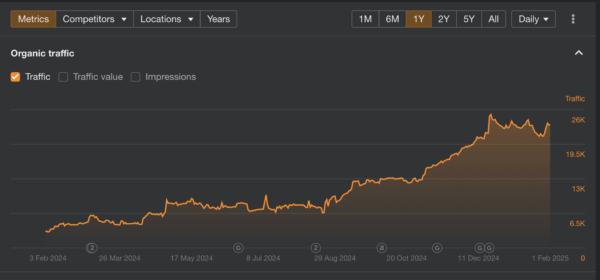
The good news is that most startups do link building completely wrong, so if you do it right, you’ll be rewarded with the lion’s share of Google traffic and LLM mentions. Like this client of ours was:
In this guide, I’m going to cover everything I’ve learned about link building for new businesses in my 15+ years in the SEO world.
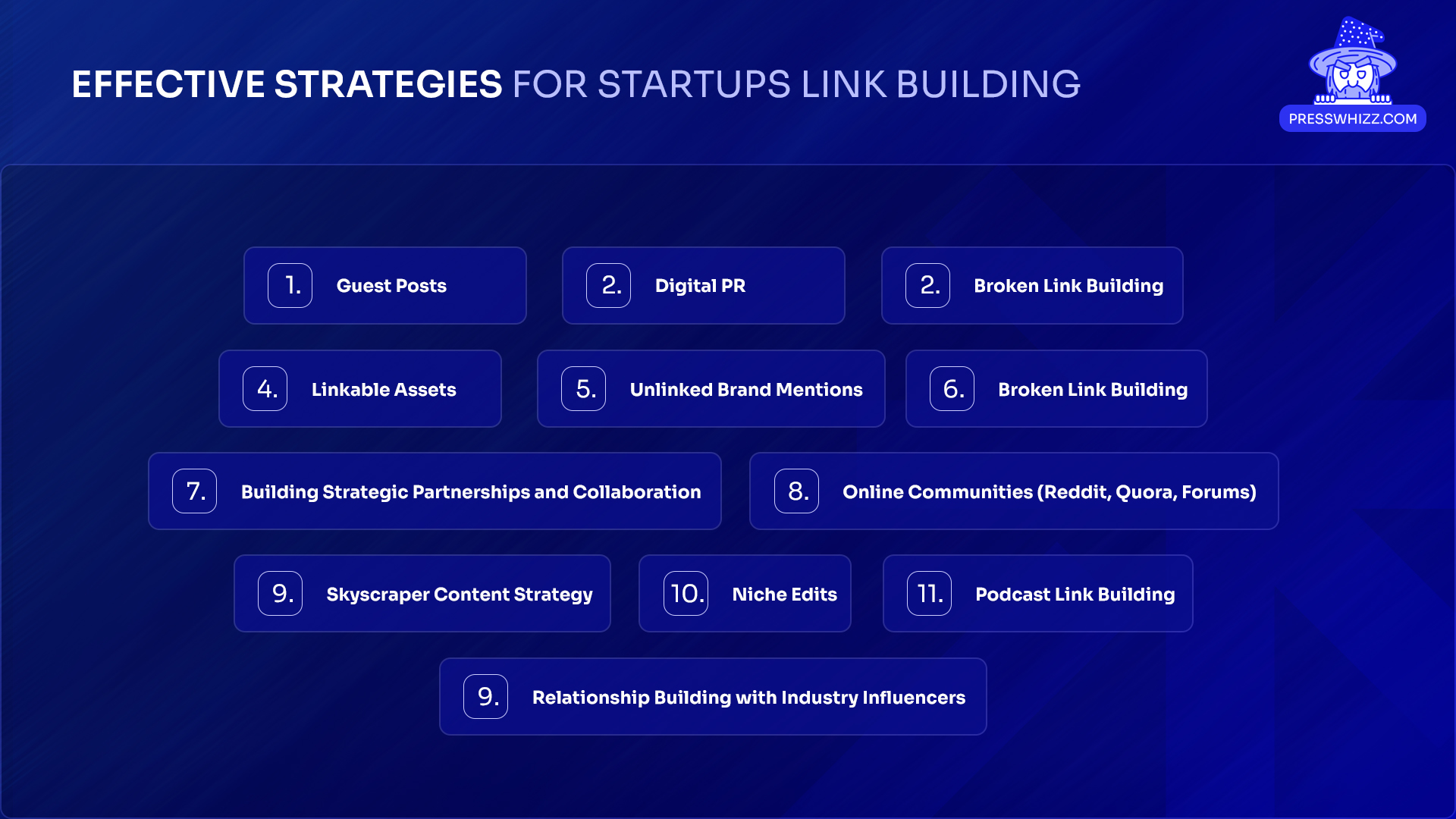
I’ll cover my top link building strategies for startups, and below that, I’ll provide a complete guide on everything about link building for new businesses that you need to know to succeed. I’ll even give you a basic plan so you can set realistic expectations.
Guest Posts
Guest posts are one of the most reliable link building tactics for startups because they help build authority, trust, and visibility at the same time. Since you can build high quality links on relevant publications at faster speeds, guest posting helps you compete against older, more established competitors.
Guest posting will cover all of the most important quality link factors new businesses need simultaneously:
- Control over anchor text
- Industry relevancy
- Quality referral traffic
- Builds brand awareness
- Establishes your credibility before you have the brand recognition of competitors
- You “borrow trust” from the high authority websites you publish on
The key is focusing on quality and relevance over volume. A handful of links from trusted, niche relevant websites will usually outperform dozens of low quality placements. Startups should prioritise websites that already rank in their industry, have real organic traffic, and publish genuinely useful content.
From a technical side, use natural branded anchors, link to your site’s homepage, and, if possible, include real founder bios in the author section.
Pro tip: To get your first guest posts, use my list of the top 100 free guest posting sites for 2026.
Digital PR
Digital PR is a link building strategy where you secure editorial coverage on high authority websites like online newspapers, blogs, and major media websites, such as AP News or Reuters. It’s one of the best ways for new companies to accelerate rankings in Google search results because placements on high authority pages boost your authority, trust, and brand visibility.
For startups, digital PR solves all three of your biggest SEO problems (lack of backlinks, brand awareness, and entity validation) at once.
Google relies heavily on trust and authority signals (probably too much), and as a new business, you have none of those things. But if you publish a press release on USA Today, you’re essentially “borrowing” authority from them while building brand recognition.
And it’s 100% safe. Google is practically in love with major media outlets. If you get published on The New York Times, MSN, Yahoo, etc., it looks editorially placed. It’s a white hat link building technique that is safe and effective.
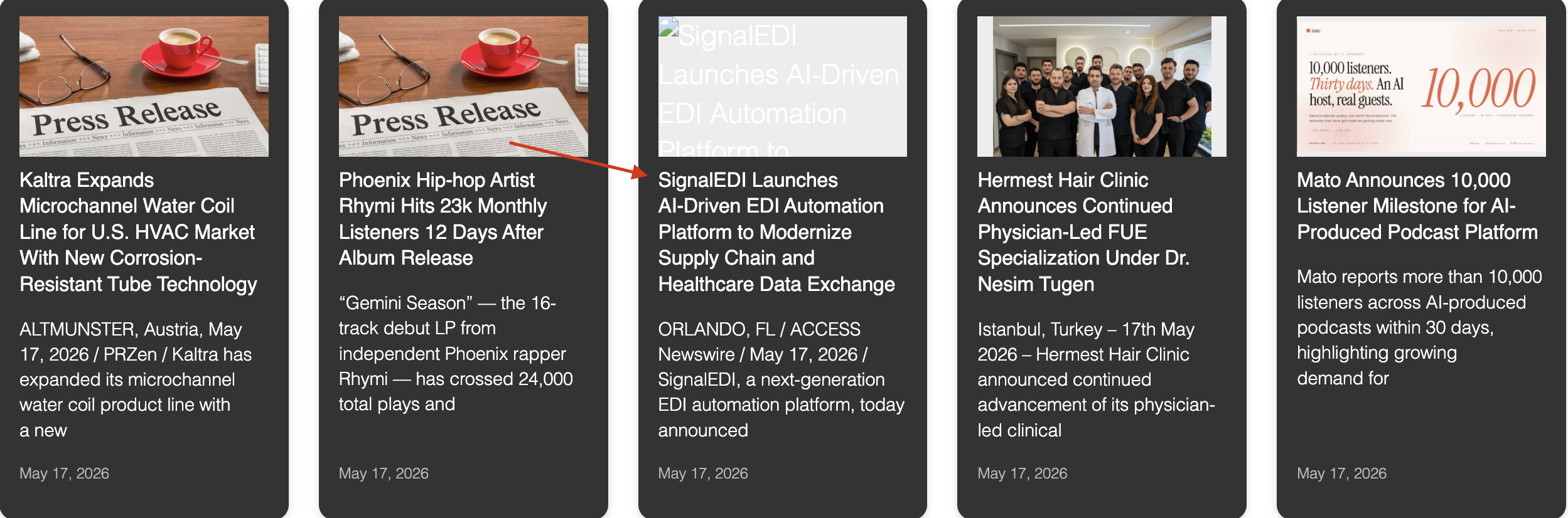
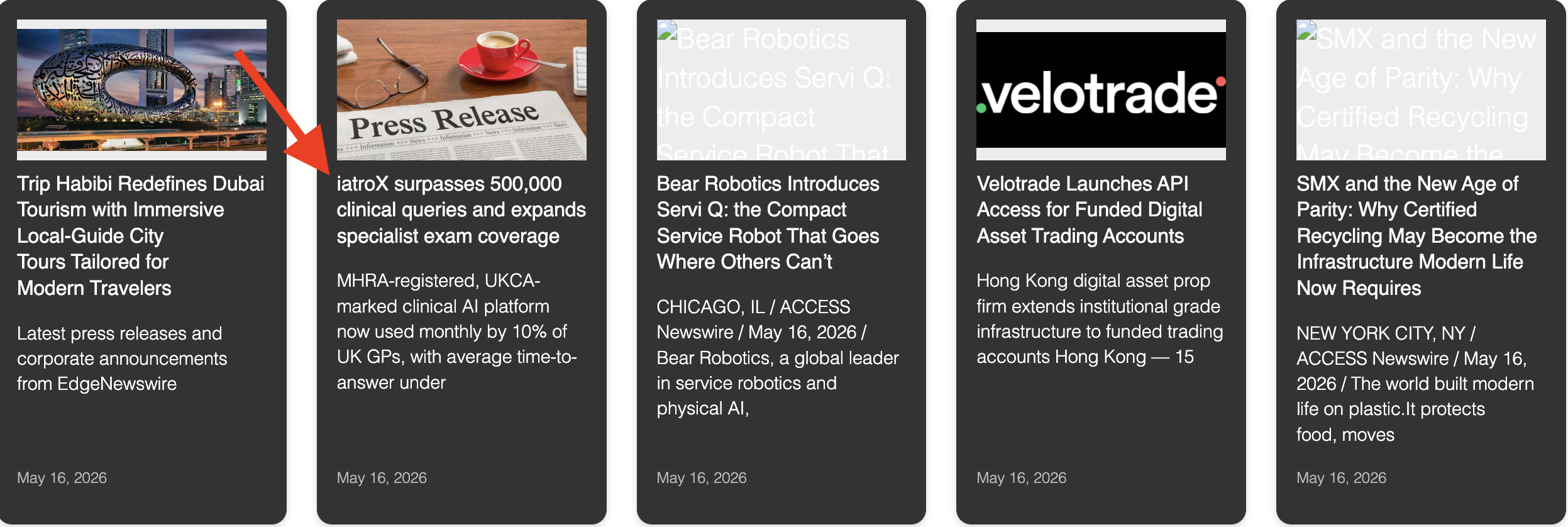
The vast majority of startups start link building campaigns with press releases on high authority news outlets. Here’s a good example of an AI startup using a USA Today press release for authority building:
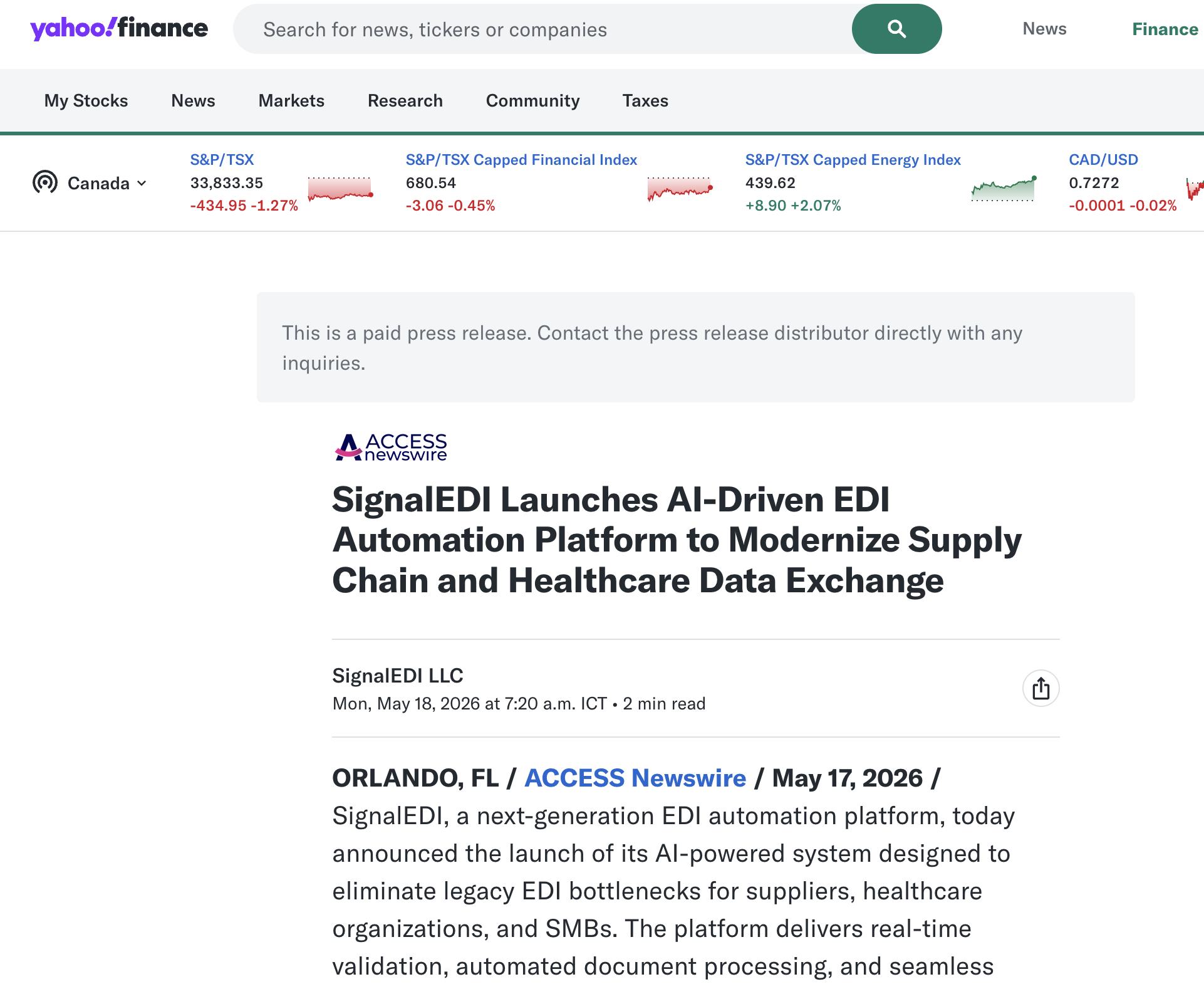
And here they are again on Yahoo! Finance Canada:
White hat SEO wisdom says to find a newsworthy angle and pitch that to online media outlets. That’s totally fine by me. Say you’re an eBikes startup, you could do original research on the safest cities for cyclists, or create a report comparing e-bike theft rates by metro area. Those are the types of stories journalists want because they’re topical and controversial.
But, in reality, that’s not 100% necessary. Money talks. Note how Signal EDI just mentions new features. Other companies just announce milestones or funding. It doesn’t have to be anything groundbreaking.
Here’s another example from USA Today where a startup founded in 2025 simply announces a company milestone:
Broken Link Building
Broken link building is when you find dead links on relevant websites and suggest your content as a replacement. It’s one of the oldest white hat link building tactics in SEO, but it still works surprisingly well when done properly because you’re genuinely helping improve the page instead of just begging for a backlink.
This is one of the lowest hanging fruits in link building. There’s no reason for a website not to do it (you’re helping improve their UX and their SEO). The only problem is getting a hold of them.
First, you need to find 404 pages with backlink opportunities. To do that:
- Open Ahrefs and go to Site Explorer
- Enter a competitor’s domain
- Click “Broken Backlinks” in the left sidebar
- Filter by dofollow (and I usually set DR to 30-100, for startup link building)
- Export the results
Here’s a quick example of an ebike competitor’s broken backlink profile:
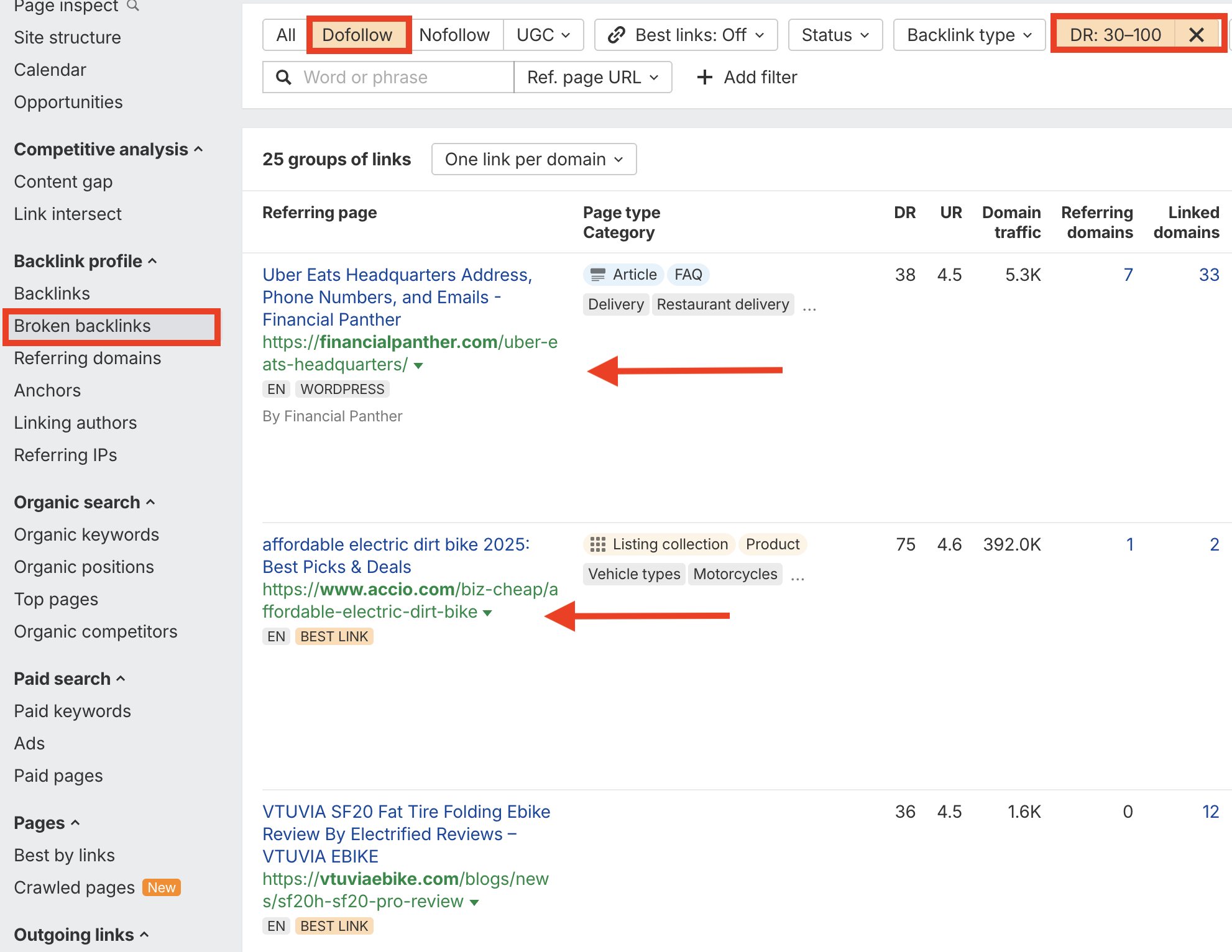
These links are pointing to my competitor’s dead pages, so they’d probably be easy for me to pick up.
Next, paste the dead URLs into the Wayback Machine to see the page content. Then, build a better version of that page. Easy.
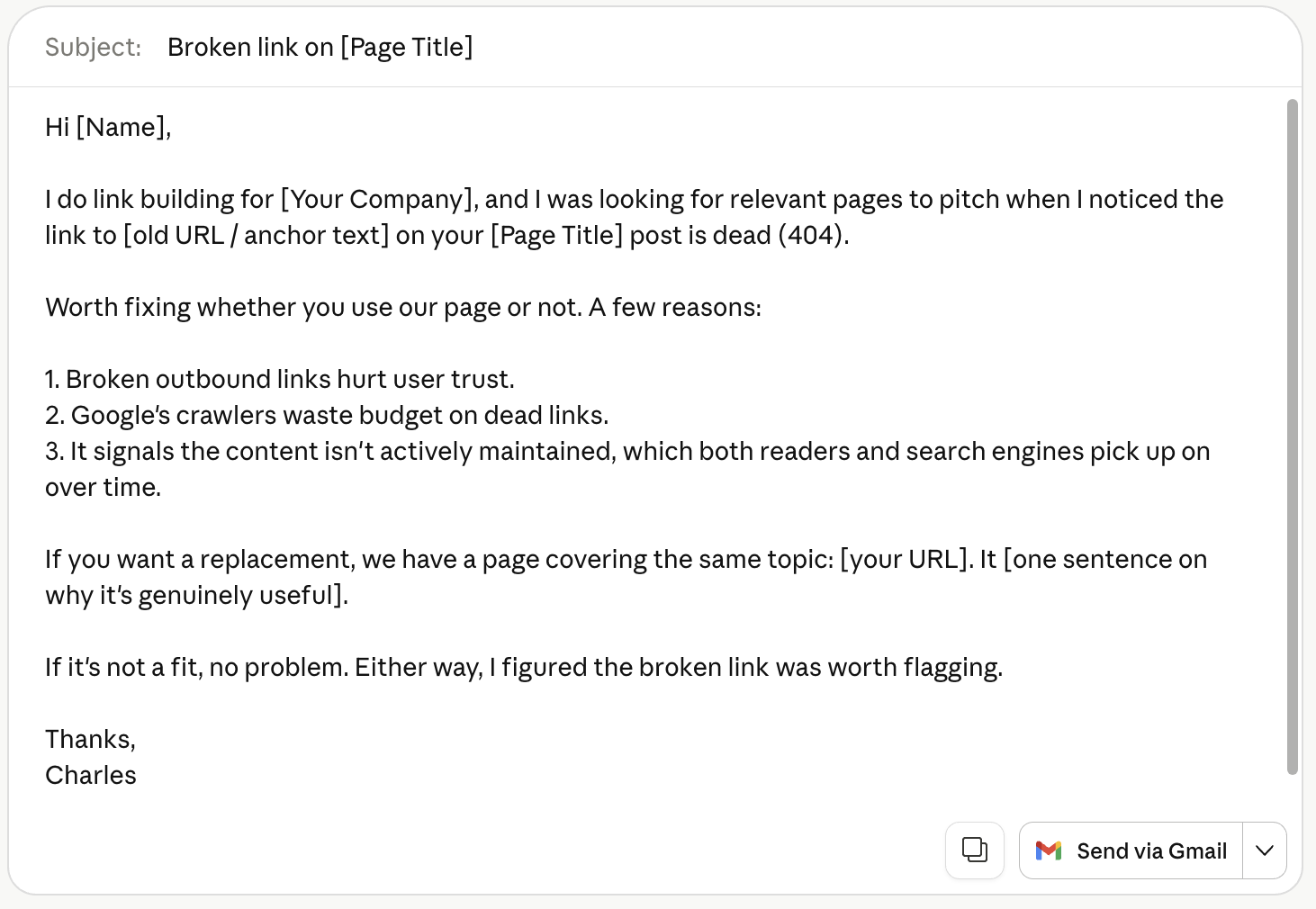
Here’s a quick email template I’d use to reach out to the website (try to find them on social media or see if they display their email):
Resource Page Link Building
Resources pages are an excellent link building opportunity for startups, especially SaaS or AI related companies. I’ve seen new businesses build multiple high authority links for free just from getting their business inserted into existing resources pages.
By the way, resource pages are curated lists of tools, guides, templates, etc., for a specific audience or industry. Everyone from universities to SaaS blogs maintains resource pages linking out to useful content. Seriously, they’re everywhere once you start looking.
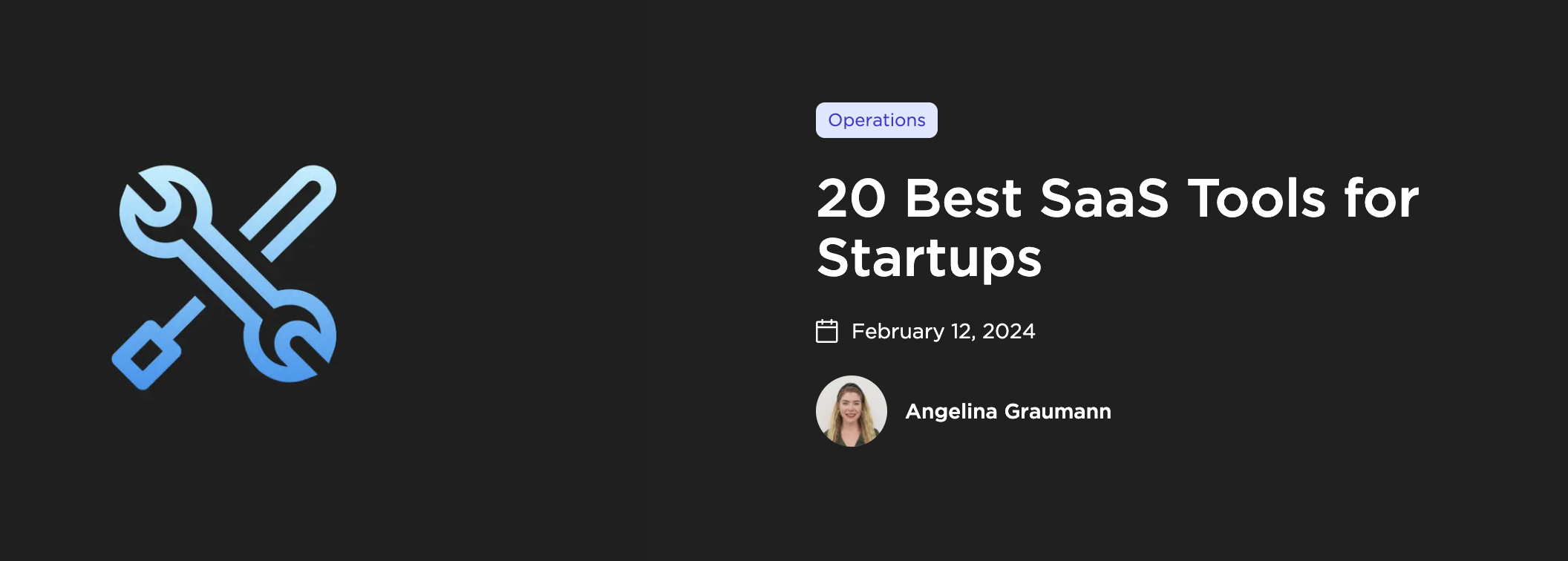
Here’s one I found for saas tools simply by searching “SaaS startup resources”:
And here is an entire website dedicated to listing resources for startups where you could easily get your tool listed (if you were in this niche):
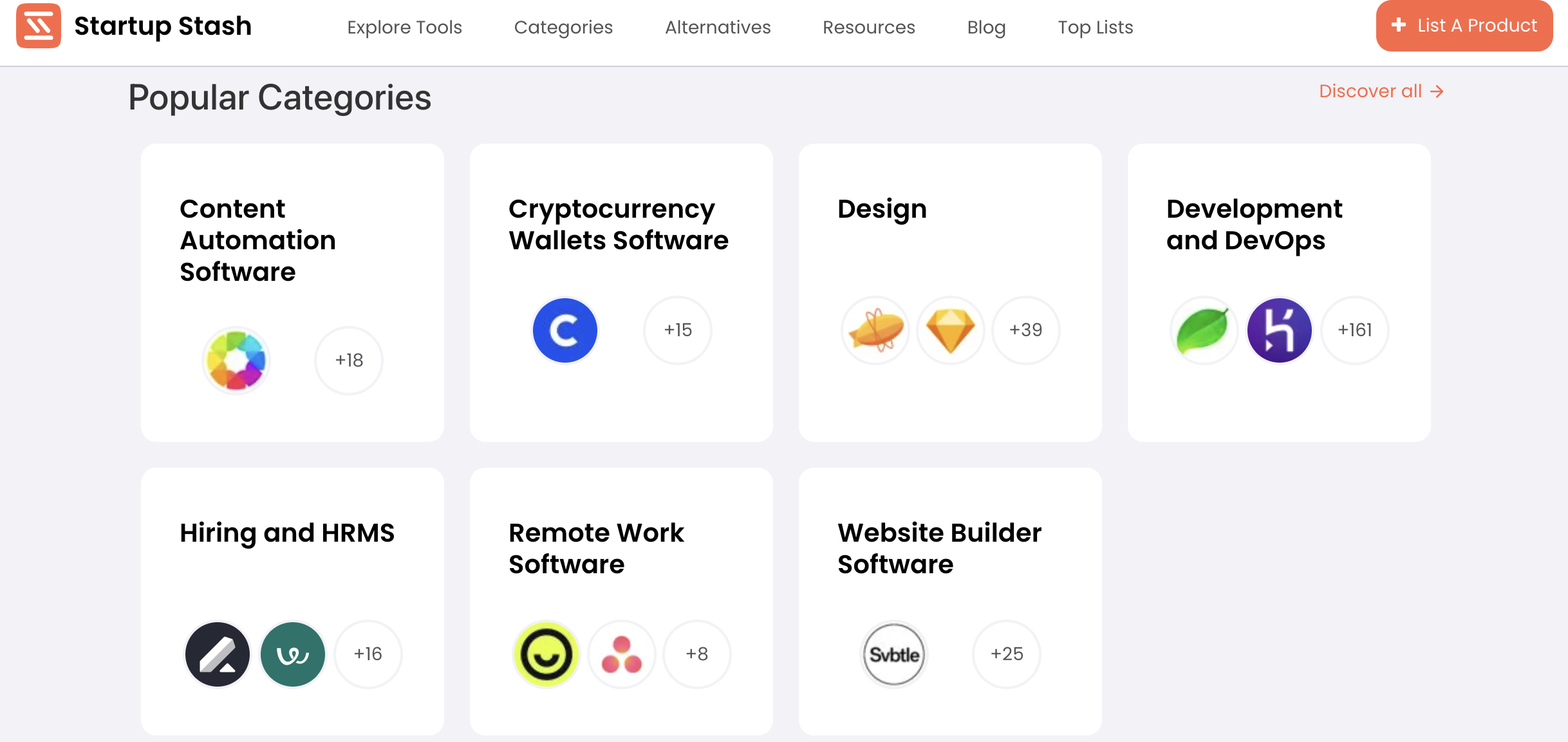
This is a pretty easy way to score relevant, high authority backlinks that reinforce your brand trust.
Getting on these pages is incredibly important for startups because:
- Google understands that a curated resource page is often a genuine editorial recommendation instead of a spammy SEO placement.
- Resource pages tend to sit on aged domains with strong authority (like schools, nonprofits, and niche industry blogs).
- Resource page links help reinforce topical relevance, which startups desperately need.
Resource pages (or directory pages like the one I shared above) aren’t hard to get listed on, but it does take effort. To get listed on most resource pages, you obviously need to have a viable business that’s genuinely helpful. Other resource pages like “best tools for x” or “free resources for students” might require you to make free tools or offer discounts to students.
To find resource pages in your niche, use Google search operators like:
- intitle:resources + your keyword
- inurl:links + your keyword
- “helpful resources” + your industry
Send a brief message to the site owner pitching your asset. If it’s good enough, site owners will be happy to add your link because it will improve their resource list.
Linkable Assets
Linkable assets, also known as link bait, are high quality pieces of content that naturally attract backlinks. Creating linkable assets is another white hat link building technique where you provide something that’s genuinely valuable to a user, and in return, the web links back to you.
Common examples of linkable assets include:
- Original research
- Statistics pages
- Free tools
- Calculators
- Templates
- Benchmark studies
- Founder-led explainers
(You might notice that these are similar to the suggestions in the resource page section above. That’s because linkable assets also make great resources.)
A good example of a linkable asset in action is my post on 50+ link building statistics that has generated 35 high quality backlinks for our business:
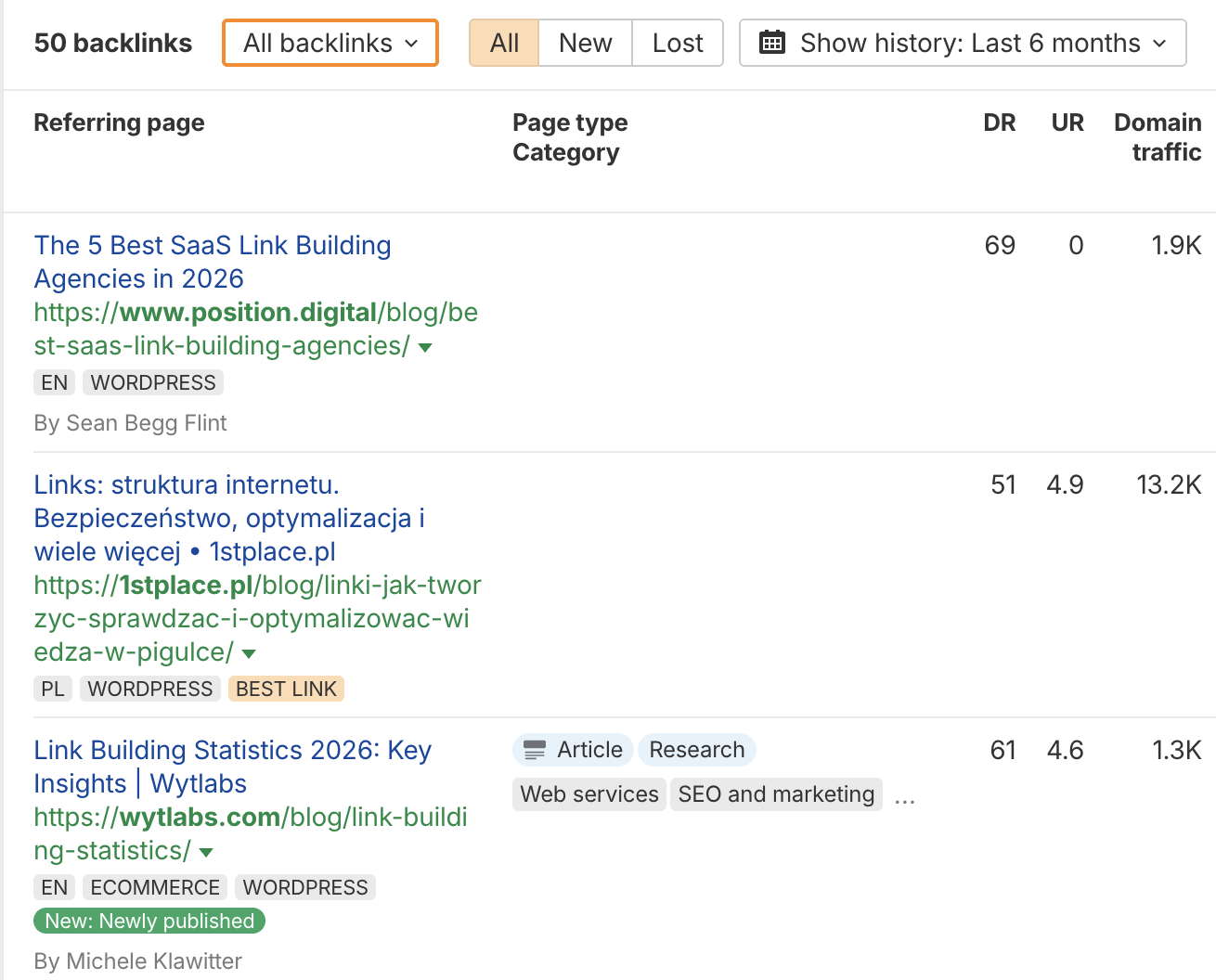
Do a little back of the napkin math here, and you’ll see just how insanely valuable linkable assets are to a startup, especially if you’re cash strapped. How much would 50 genuine backlinks have cost us? It could easily have been $15,000+. By the way, yes you should buy backlinks. Don’t listen to white hat SEOs.
Instead, I wrote one awesome statistic post, and it’s catching fire.
If you’re just starting out and there’s awareness of your product (or the problem it solves), I recommend you start by creating industry reports, practical guides, and statistics pages.
Here’s a great example from HubSpot on how to do Facebook marketing:
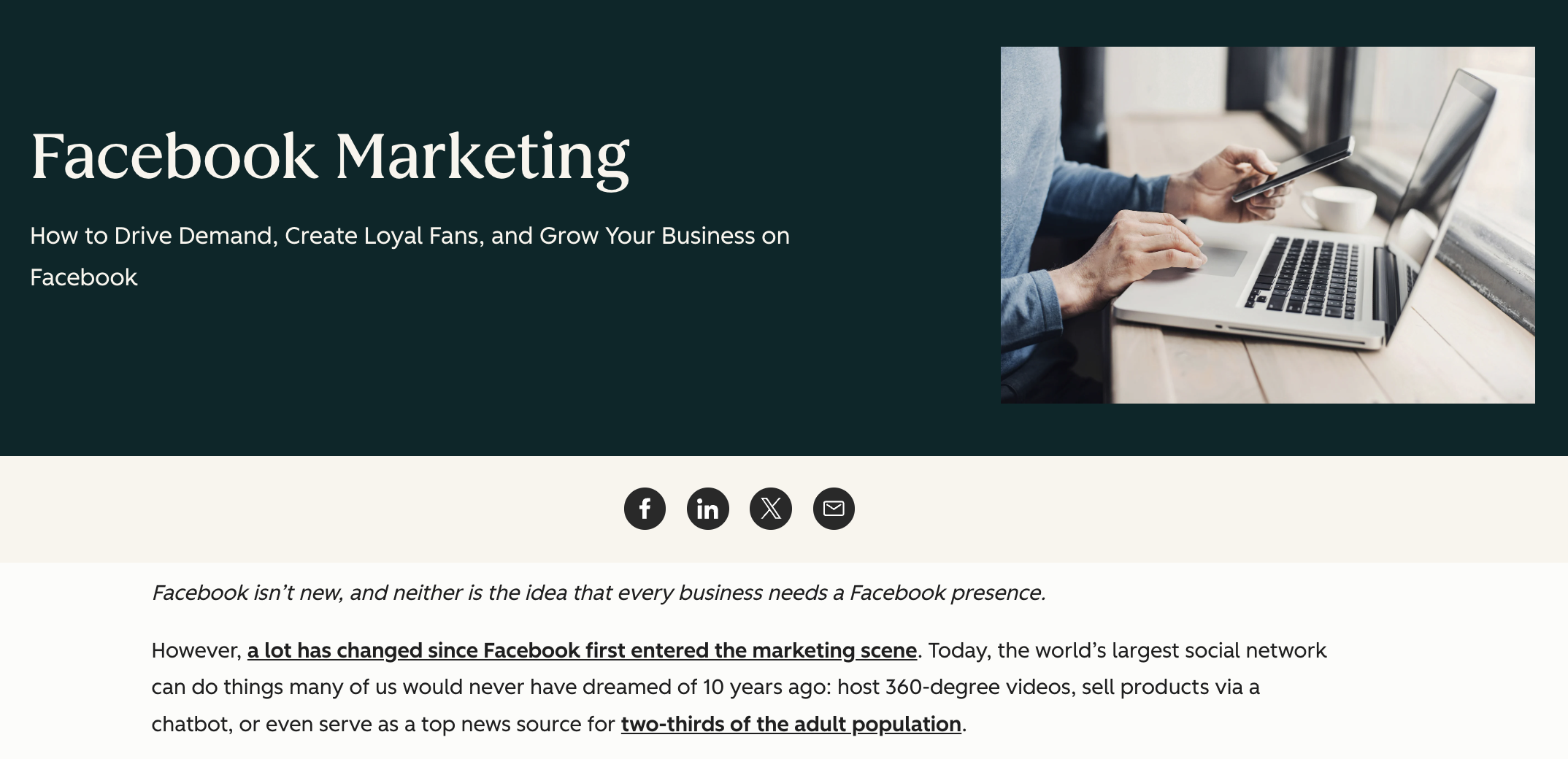
This is both a lead magnet that helps get customers AND a link magnet that attracts high quality links.
This guide has generated nearly 300 high quality links (DR, traffic, English language, etc.) for HubSpot:
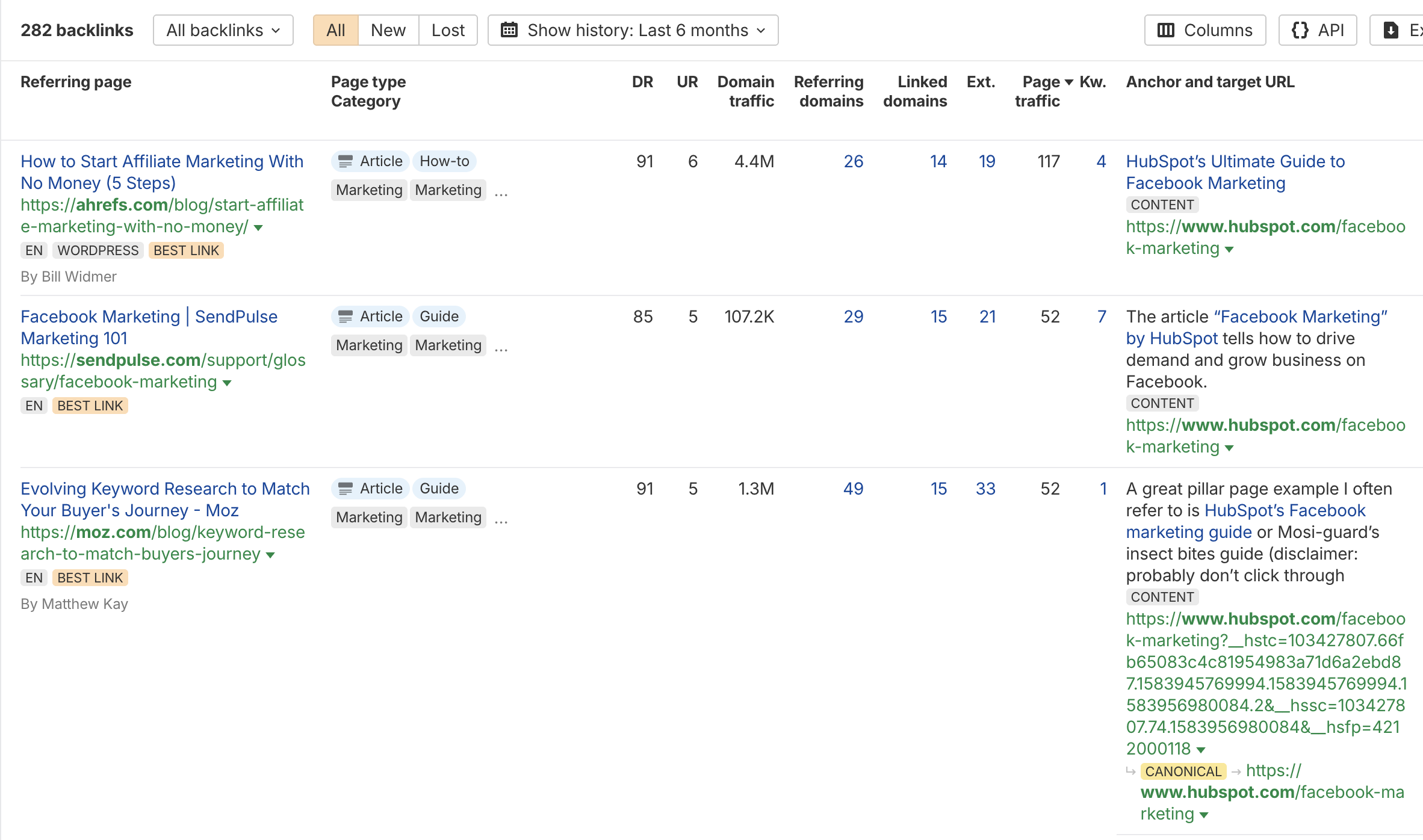
And now with the rise of AI, creating linkable assets is more important than ever because AI search systems prioritise authoritative and widely cited sources. So, your tools will act as something of a validation layer for LLMs. The more unique, authoritative content that you produce that others link to, the better.
Unlinked Brand Mentions
Unlinked brand mentions are when a website mentions your startup, founders, or product without linking back to your site. This is one of the easiest link building strategies for new businesses because the site owner (or writer) already knows who you are and thought you were worth mentioning.
Of course, if you are a brand new business, then nobody knows about you. But if you’ve been around for a while, chances are there’s some chatter out there about your company. These are very easy link opportunities.
All you have to do is send a message asking them to link back to your homepage. It’s that easy. And it almost always works.
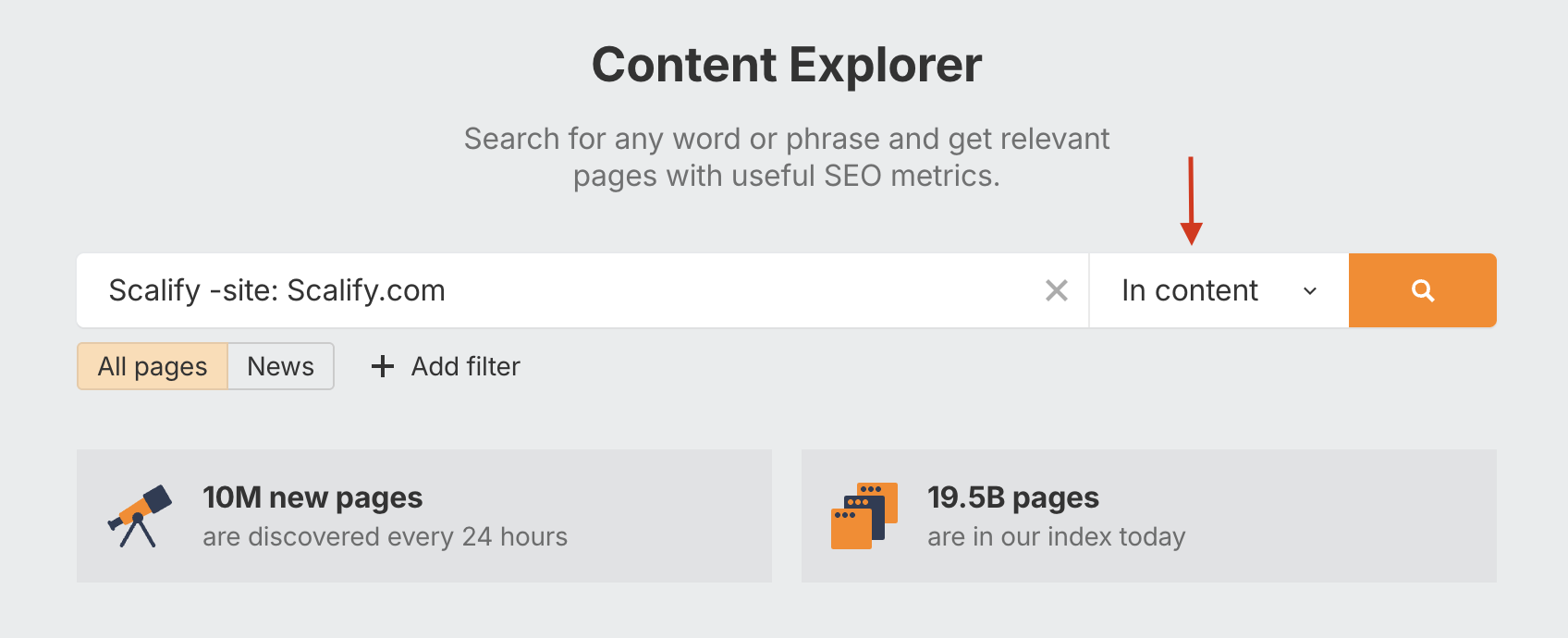
To find unlinked brand mentions, throw your site into Ahrefs’ Content Explorer, add “-site:yourdomain.com” to exclude your website, and make sure the dropdown menu is turned to “In Content.” I’m going to use a random AI startup I found as an example:
When the results pop up, make sure to add your domain into where it says “highlight unlinked”:
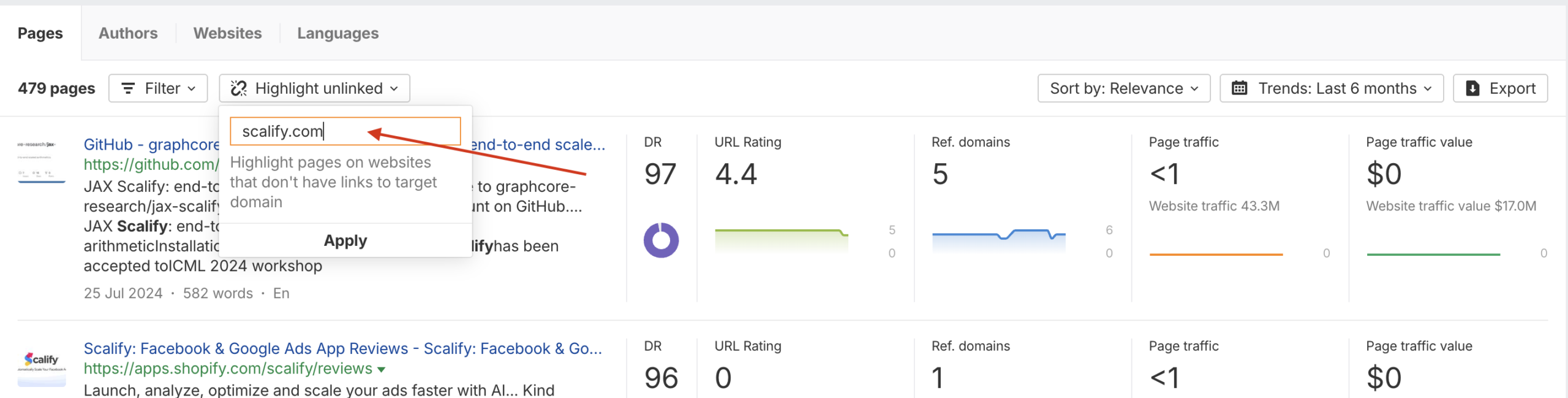
Boom, all of the results there will be easy link opportunities.
Pro Tip: Make sure to exclude subdomains and even filter out certain websites like G2.com or GitHub. They tend to make the page listings pretty noisy.
Building Strategic Partnerships and Collaborations (Vendor/Supplier Link Building)
Strategic partnership link building is when your startup earns backlinks through real business relationships instead of pure SEO outreach. You may also hear it referred to as vendor or supplier link building.
It’s one of the highest converting forms of link building there is. Why wouldn’t an existing business partner want to link to your site?
Do your suppliers link to your site? Your manufacturer? What about your marketing agency?
These are another piece of low hanging link fruit that most startups never even think about. By the way, this is also one of the best white hat eCommerce link building strategies in existence.
Remember, in the beginning stages of building your website’s online presence, any high quality link helps a lot.
Here’s an example of an AI startup, Tines.com, linking out to its tech partners:
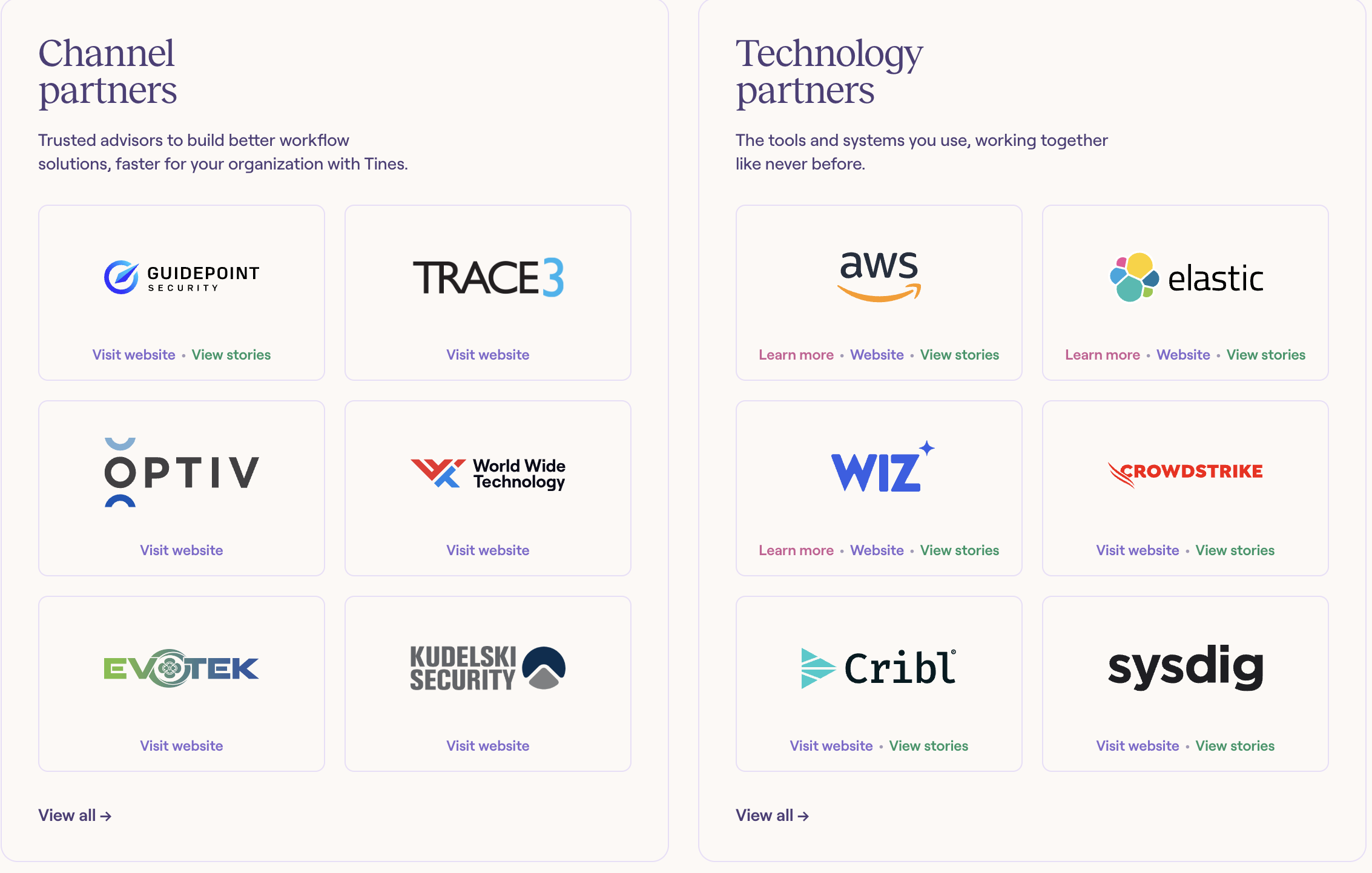
These are all free and easy links.
Partnership links also send referral traffic because the audiences already overlap.
To build partner links, make a list of all the business relationships your startup has. Then reach out. Even the SaaS tools you use are worth contacting.
Online Communities (Reddit, Quora, Forums)
Links and mentions on Reddit, Quora, or Facebook groups are an underutilized link building technique that could help you rank higher in Google and gain more AI citations.
LLMs like Chat-GPT, Claude, Gemini, and others are leaning heavily into entity validation, real world discussion (which is ironically bot driven), and brand trust reinforcement.
Instead of thinking about things in terms of just backlinks and DR (which are still important) like an old school SEO, you need to think:
- Do people talk about my brand?
- Is this business repeatedly referenced in trusted communities?
- Does my brand show up in Reddit threads that rank for my keywords?
We also know from leaks that Google’s algorithms lean heavily on user generated content, brand references, and trust propagation.
TL;DR: You need to appear in online communities if you want to dominate your niche.
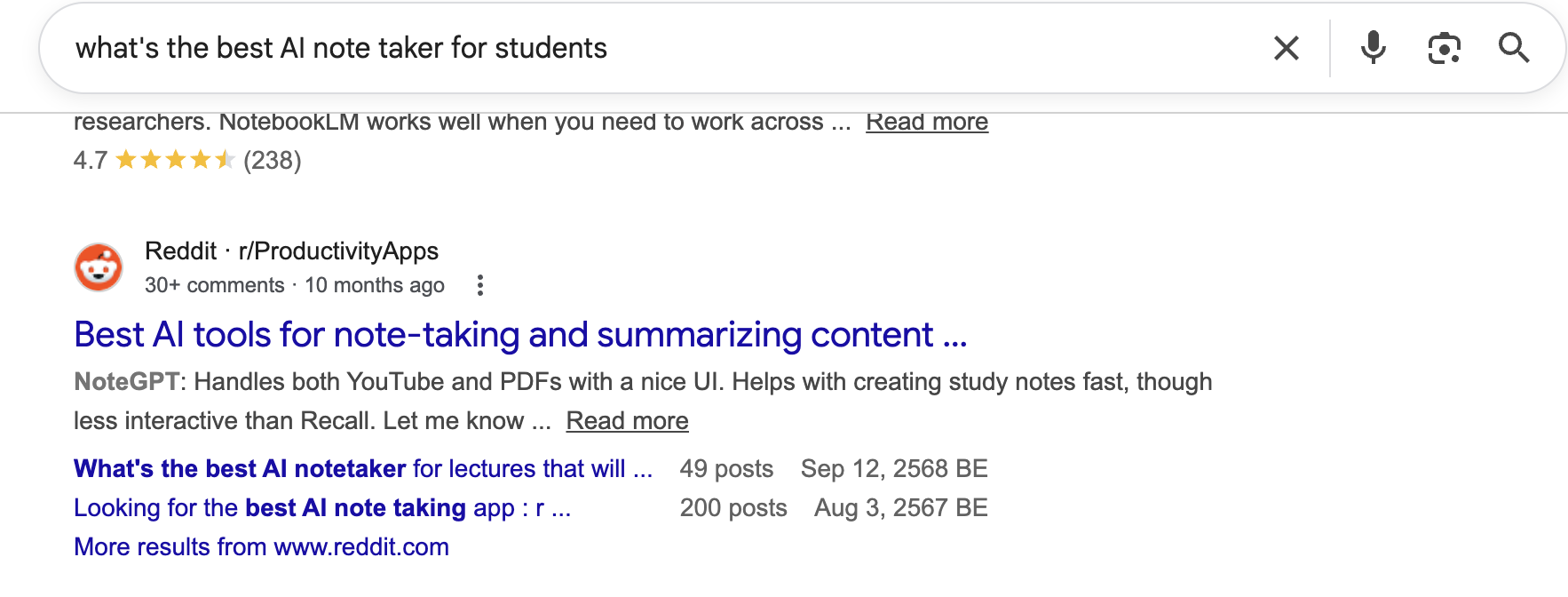
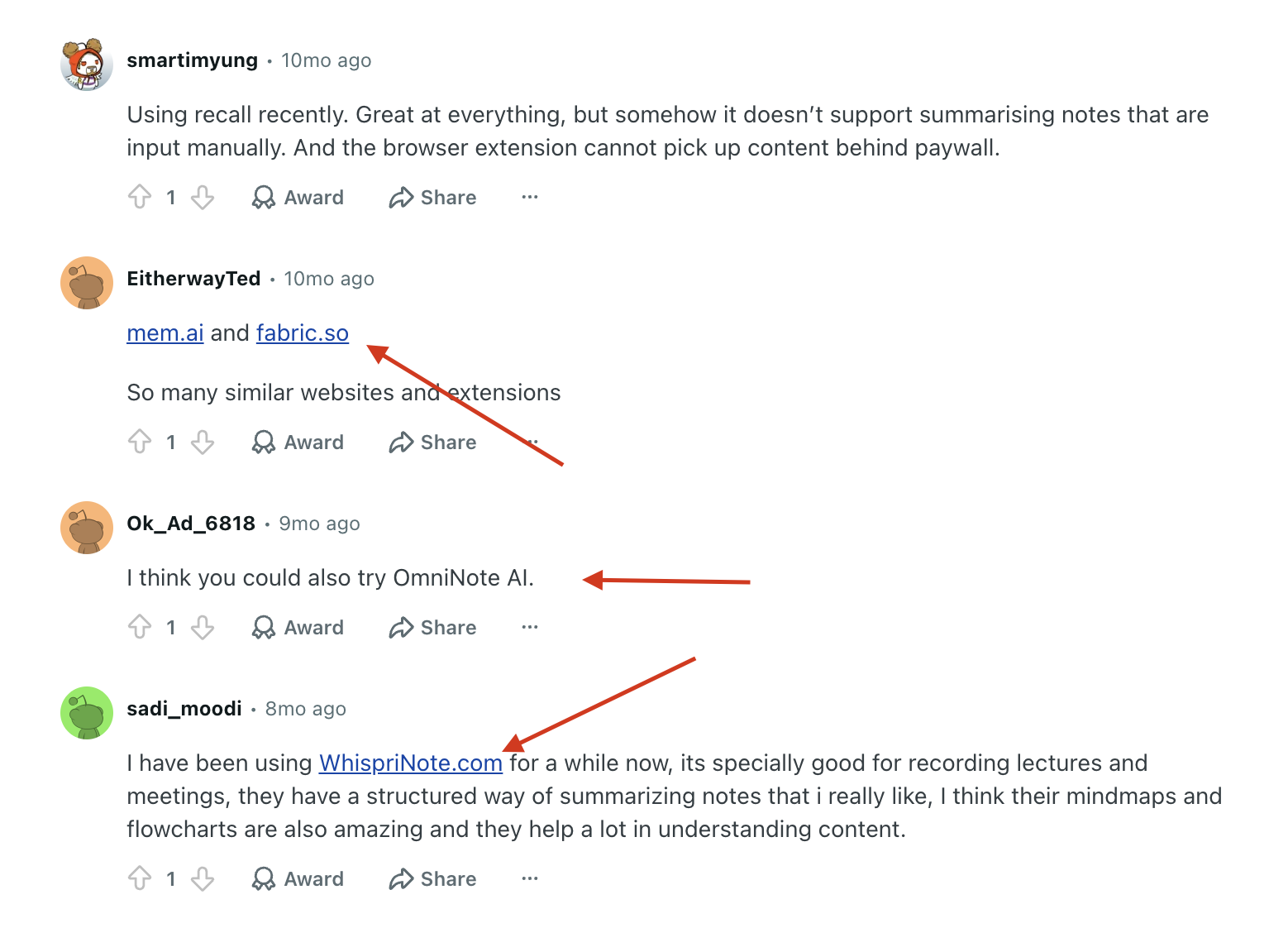
Just take a look at SERPs these days. Reddit threads are on nearly every SERP, especially tech-related ones. Here’s one where a Reddit thread appears in the top 5 for “best AI note taker for students”:
And now look at these “real human discussion comments” where the top brands are all fighting to get mentioned:
All recent data backs this up, by the way.
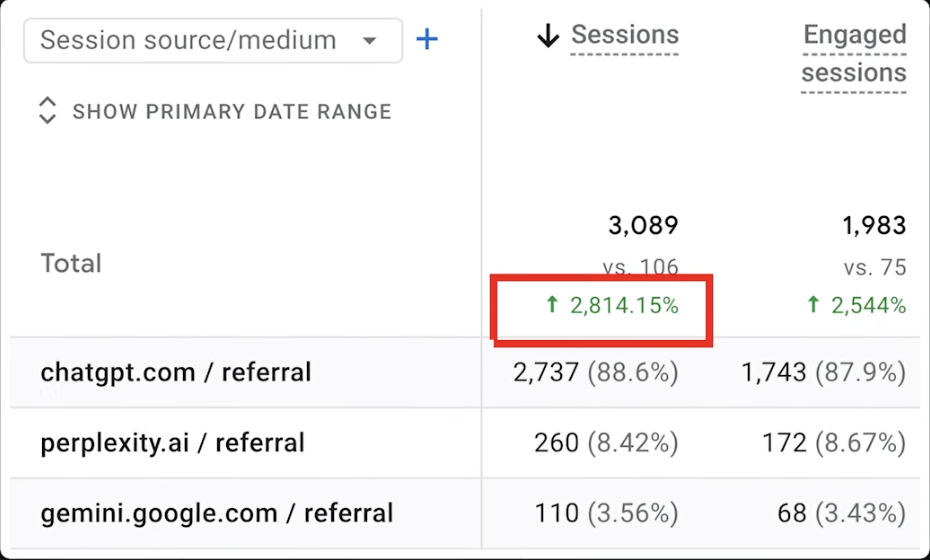
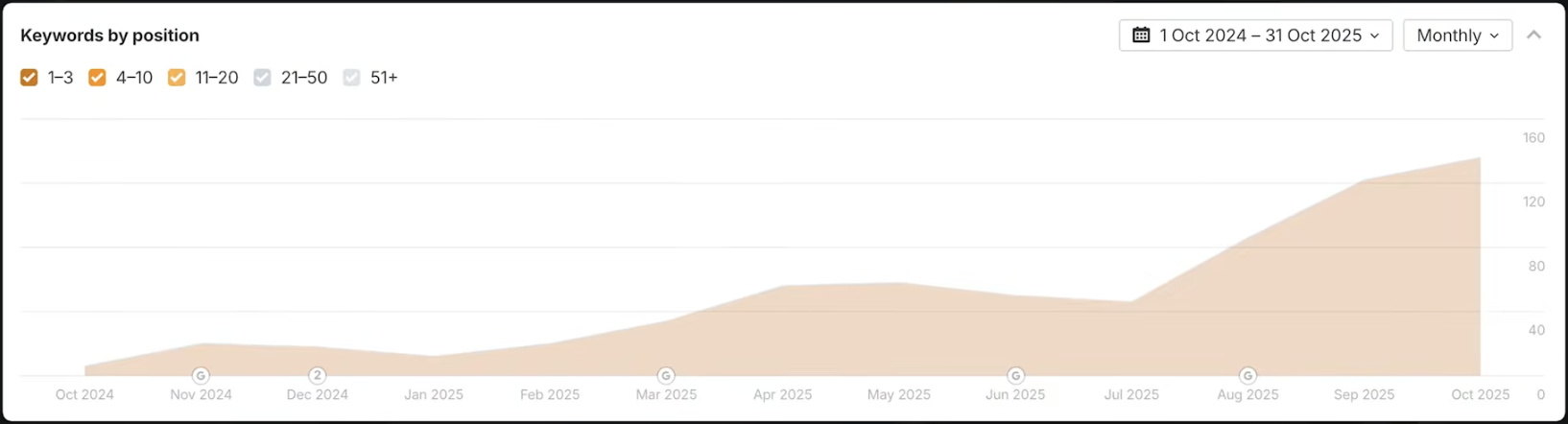
In a case study, Matt Diggity of The Search Initiative found that engaging on Reddit, over the course of a year, resulted in a nearly 3000% boost in AI referral traffic and visibility for more than 130 keywords inside AI Overviews.
The best way to engage is to set up a discreet business profile and use it to provide value to the community with original content and expert opinion. Your goal is to become an asset to the community and earn participants’ trust.
Use your brand and role within your company as evidence of your credibility and expertise (instead of as a pitch). When users trust you, they’ll start to explore your company and spread the word.
Skyscraper Content Strategy
The skyscraper technique is a link building strategy where you find content already attracting backlinks in your niche, create something better, and then promote your improved version to the websites linking to the original page.
This is a classic white hat link building tactic, and because it’s based on creating high quality content, it will safely generate high quality backlinks (if the site owner responds and wants to link to you instead).
The process is simple: Find what’s generating backlinks, make a spreadsheet of your competitor’s most successful content, make something better, and reach out to the sites linking to them to try and steal it away.
To make your article better, your content needs to add things like:
- New information
- Original insights
- Better (recent) data
- Firsthand experience
- A stronger or new angle
Let’s look at an example for an ebike startup.
When I reverse engineered my competitor, I found that this article had generated a decent amount of links for them:
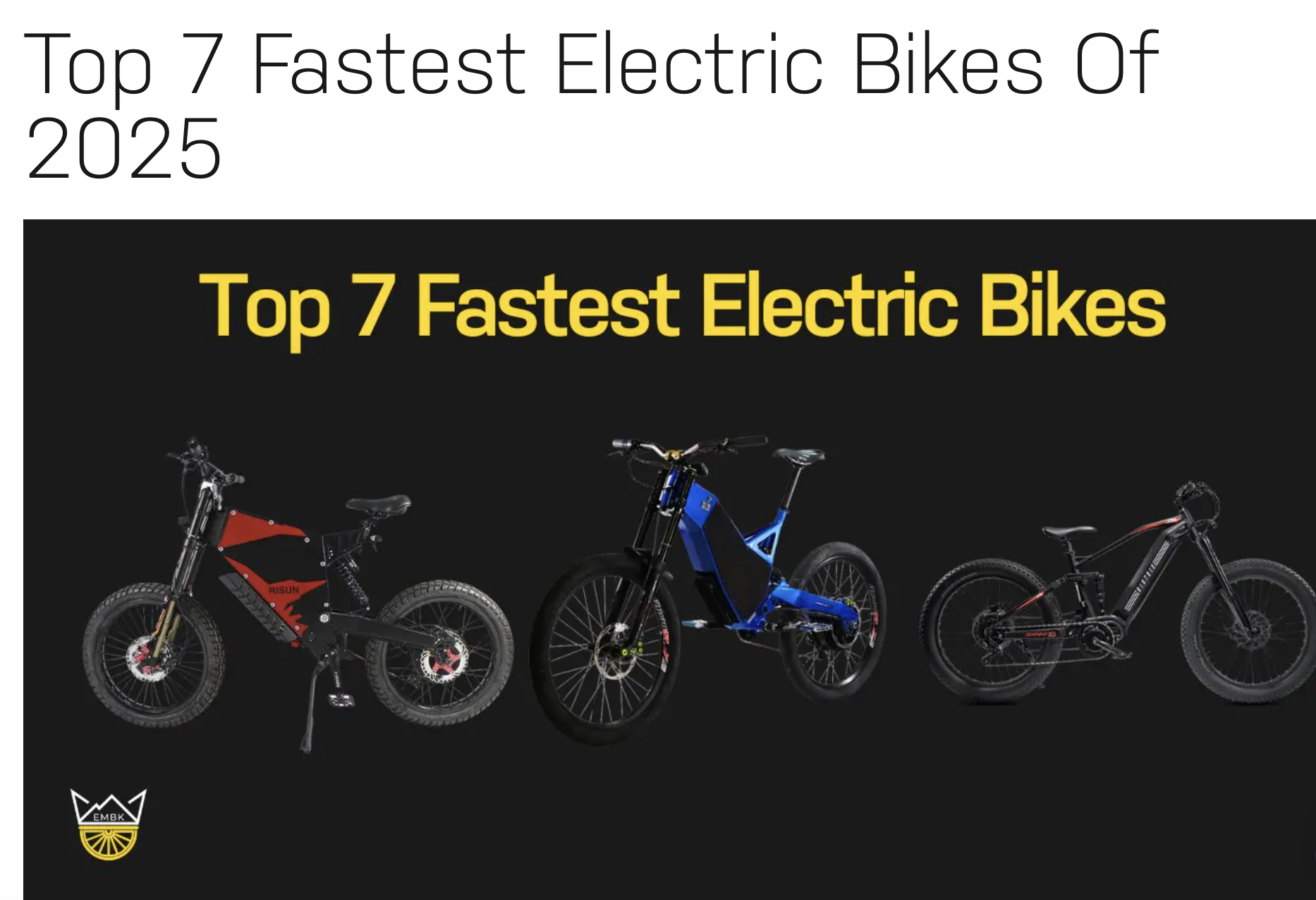
This is a great candidate for our skyscraper strategy. It’s still got “2025” in the title. That means it probably hasn’t been updated with recent data.
Once you’ve got the idea for the content, go find whoever has linked to the page in Ahrefs Site Explorer. Out of 22 referring pages, there are a few easy opportunities for links:
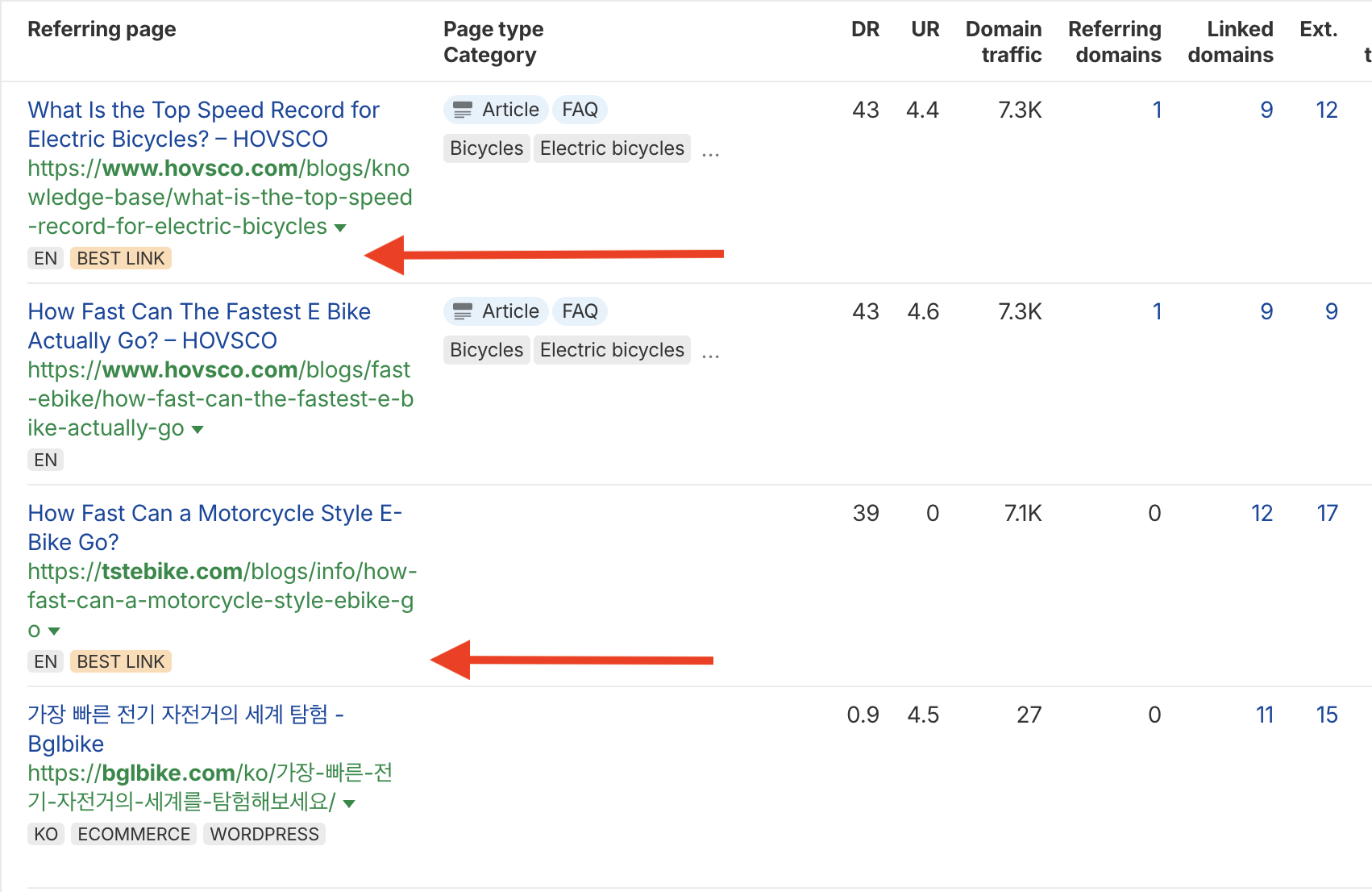
I would export these to a spreadsheet, find their contact information, and reach out to them saying, “Hey, you’re linking to an outdated eBike post. Link to my better version instead!”
Niche Edits
Niche edits (also called link insertions) are when your link gets inserted into an existing article instead of being placed in newly published content. Instead of writing an entirely new article and hoping it ranks so it sends link juice, niche link insertion adds a link to your site onto pages that already have traffic and rankings.
Say you’re a medical AI startup. You could look for an article on AI in nursing, then contact the site owner and ask them to add a sentence about your tool and link to your page.
Niche edits are hands down one of the most effective link building strategies when done properly. The biggest advantage is the historical trust transfer. An aged indexed page has significantly more crawl frequency, semantic trust, existing rankings, and engagement than a new page. That means it’s going to pass significantly more value than a fresh guest post.
For startups, especially in the SaaS or AI space, where there’s a heavy occurrence of “best tools” or “best software for x” keywords, you need to understand how Google maps entities, brands, and tools based on repeated contextual association.
If you’re a new AI tool and there are dozens of “best AI tools for x” posts ranking in your niche AND your brand is NOT in those listings, you aren’t going to rank as well as competitors who are.
How do you get into them? Niche insertions.
The niche edit process usually looks like this:
- Find existing articles in your niche discussing topics related to your startup.
- Identify places where your content could genuinely improve the article as a citation or resource.
- Build relationships with site owners and editors.
- Use branded or natural anchors instead of hammering exact match keywords.
Podcast Link Building
Podcast link building is exactly what it sounds like. You appear on a podcast, and you get a link from that podcast. Simple.
When the podcaster promotes the episode, you’ll get brand mentions across socials and communities, and you’ll likely get referral traffic from listeners too. Oh, and it’s free and super easy.
If you couldn’t tell, I love podcast link building. I’ve done 50+ podcasts, and I’m not planning on stopping anytime soon.
To get on podcasts, start by searching your industry + podcast on Google. You can also search on Apple Podcasts, Spotify, and other podcast libraries.
Find some podcasts that fit your niche, and write concise pitches to hosts explaining what you can bring to their listeners.
Podcasters are constantly looking for new topics and interviewees, so it isn’t hard to claim a spot.
Charles’ Advice: Before appearing on a podcast, listen to a few episodes so you understand the host’s style and the general tone of the show. I once dropped a bunch of F bombs on a podcast and later learned the host was mortified.
Relationship Building with Industry Influencers
Last up, I want to just add one more link building tip that’s probably best suited for startups with funding: Influencer link building.
Influencer link building is a great way to increase rankings and AI citations, because SEO today is about getting repeated mentions and co-citations across trusted sources. What that means is you need people to keep talking about your brand…all the time. Industry influencers are like megaphones and create “mention snowballs,” which work like this…an influencer mentions you, that turns into a Reddit thread, there’s an X discussion on it, and it may even get mentioned in newsletters and blogs.
That’s great for a budding new business.
When I say “influencers,” I’m not talking about paying Instagram influencers to hold your product for 15 seconds. I’m talking about building connections with respected people in your industry, like:
- Analysts
- Journalists
- Niche creators
- Consultants
- Association leaders
- Event organizers
- Newsletter writers
- Podcast hosts
Focus on being useful. Give away value for free, offer to help others, and become a resource in your industry.
Attending in person events whenever you can is a must. I run my businesses online, but most partners and influential people I’ve worked with over the years I’ve met face-to-face.
Charles’ Advice: Podcast link building is a great way to develop relationships with industry influencers.
The Complete Guide to Startup Link Building
(What is it?, In House vs. Outsourced, And a Basic Plan to Follow)
Now that you know the best link building strategies for startups, I want to do a deep dive into important advice you’ll need to succeed with SEO these days.
In this section, I’ll cover the benefits of link building for startups, in house vs. outsourcing your link acquisition, how to prepare your company for it, and a basic plan.
What Are the Benefits of Link Building for Startups?
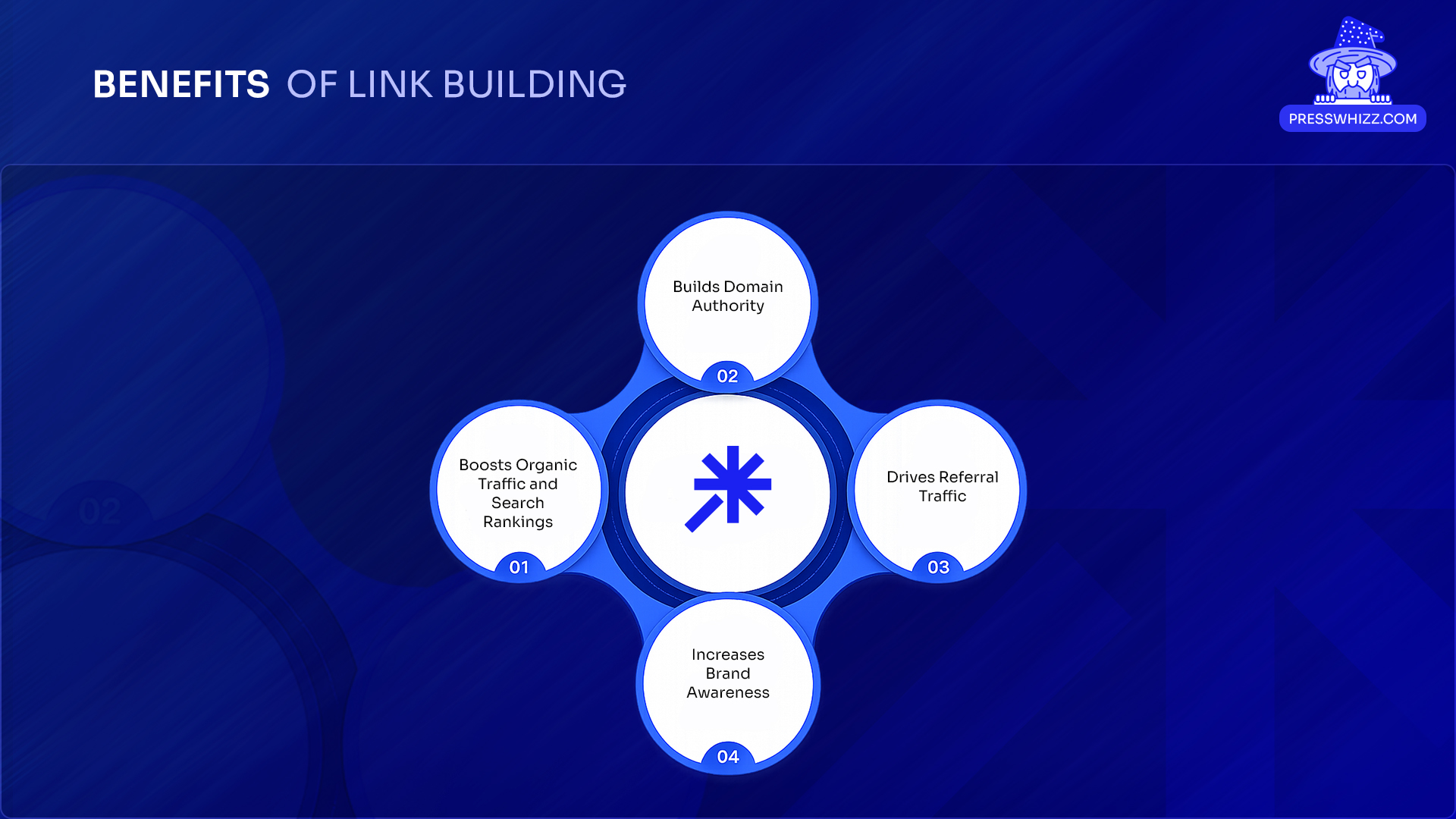
The benefits of link building for startups include more organic traffic, higher domain authority, and increased overall brand awareness.
When you build links properly (which most startups don’t), these benefits stack across organic traffic, referral traffic, branded search, AI visibility, and overall trust with Google.
Here’s more on the benefits of start up link building:
Boosts Organic Traffic and Search Rankings
Why are links important for SEO? Because they have proven to boost traffic and rankings. Links are still the #1 ranking factor in Google search. I know from DOJ testimony, algorithm leaks, and decades of firsthand testing that companies that build high quality links outrank those that don’t.
According to a groundbreaking study published by FirstPageSage entitled “How Many Backlinks Does A Website Need to Rank on Google?”, new websites need at least 100 links to reach the first page of Google, and, in some niches, you may need 1,000+ links to get into the top 3. For more on this, see my article on link building for new websites.
And, according to a Backlinko study, the #1 result in Google has 3.8x more backlinks than results 2-10. Translation: You need high quality backlinks to rank in Google. End of story.
The data is clear: If your startup actively builds strong links from relevant sites in your niche, Google is more likely to crawl your pages faster, index them, and rank them for valuable keywords.
Google itself openly says it primarily discovers pages through links, and its algorithm still uses backlinks to evaluate trust, authority, and relevance.
You can create “quality” content all you want, but without backlinks, no one will ever see it.
Think about it from Google’s perspective. If two startups publish similar content, but one has links and mentions from trusted industry websites while the other has zero authority signals at all, which one looks more legit?
Pro tip: If you’re completely new to backlinks, I recommend reading my beginner guide, “What Are Backlinks and Why Are They Important for SEO?” and then coming back here to learn about developing a strong link building strategy for your startup.
Builds Domain Authority
Domain authority is a general term we use to describe a site’s trust and authority compared to similar websites. It’s also a third party metric by the SEO company Moz (known as DA), but don’t worry about that for now.
When your startup consistently gets mentioned and linked to by relevant, trustworthy websites, your site’s authority increases. Think of it like having a good reputation. If everyone is talking about you (linking to you), Google trusts you more.
When you develop domain authority, Google treats your company like a legitimate entity instead of just another random site with 12 blog posts and no reputation.
You also get some serious perks for having high authority beyond just rankings. Google will crawl and rank your pages faster, PR outreach becomes easier, and you start to build organic (free) backlinks at a higher velocity because your business shows up higher on the SERP (Google search results page), which earns you more links.
Drives Referral Traffic
One of the biggest benefits of link building for new businesses is that you get targeted referral traffic, and if those visitors interact with your site (click other links, spend time on page, etc.), that sends positive signals to Google that you are a high quality result for queries in your industry.
Let me explain how this works quickly before moving on…
Google has a foundational search algorithm known as Navboost that measures user interaction data, such as click-through rates, clicks, and dwell time. If users spend more time on your site, click your links, and download your lead magnets, that tells Google, “People like this business. Boost their rankings.”
By the way, Google patently denied the existence of Navboost for YEARS. They claimed it was “too noisy” and “too easy to game”…as if link building weren’t also easy to game if you know what you’re doing.
Since you’re a new business, you probably won’t have much incoming traffic, meaning Google won’t have much data on whether people like your site or not. Building links on relevant websites will bring you that traffic and give Google the data it needs to rate your site.
This is becoming even more important with AI search. Google’s AI Overviews and tools like ChatGPT cite external websites directly inside answers, which creates entirely new traffic sources beyond traditional search rankings.
By link building for AI search, you can skip the Google SEO queue, in a sense, and drive massive referral traffic before you even rank (more on that later).
Link Building Increases Brand Awareness
Every time your company gets mentioned, more people become familiar with your brand (welcome to Business 101, everybody). Beyond just word of mouth, this creates something known as branded search, which is another major Google ranking factor.
Essentially, branded search is just the volume of people searching for your company directly. For example, a major website like Healthline has 100,000+ branded searches per month in the US alone:
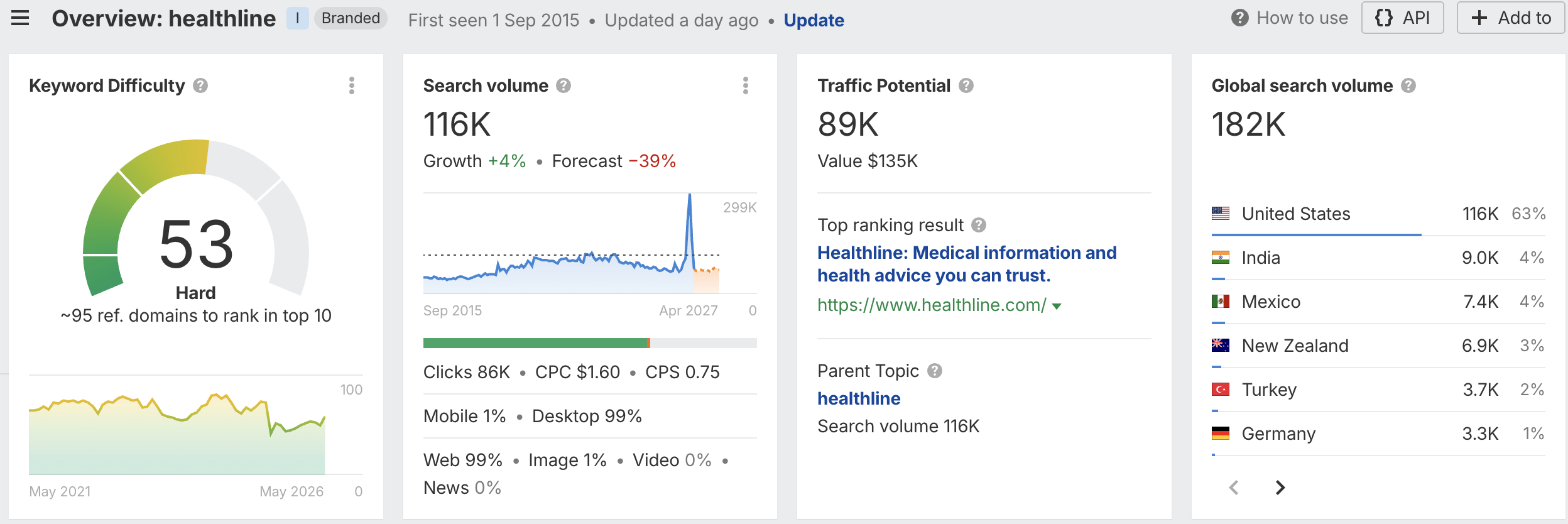
Google trusts brands that people actively search for by name. It’s one of the ways the search engine tells that you’re a real business and not just an “SEO site.”
Some top SEOs even claim it’s the strongest trust signal in modern SEO.
I’m not just guessing here. Google literally has a patent on this, known as “Ranking Search Results Based On Entity Metrics,” which is listed at patents.google.com:
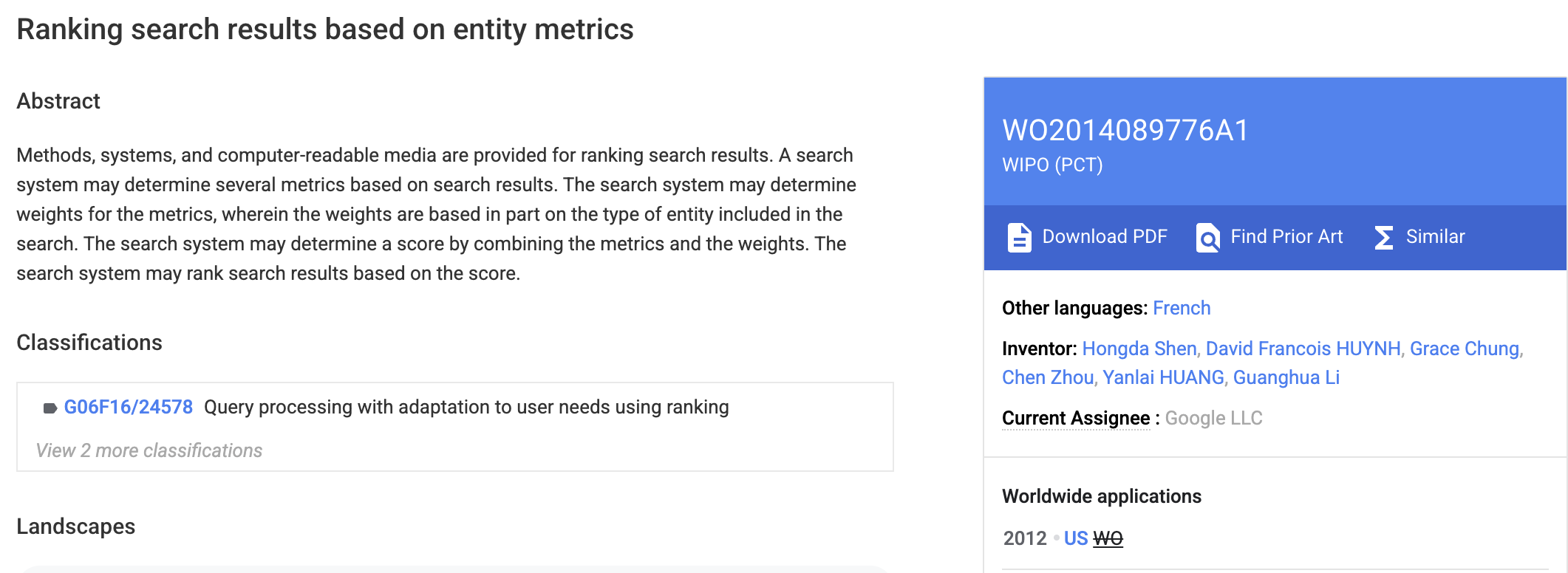
I won’t waste your entire day explaining how this works. All you need to know is that it takes into account a mixture of links and branded search volume to rank websites.
If you’re building links right, branded searches can create a feedback loop that churns out more branded searches and spikes authority.
Better links lead to more visibility. More visibility leads to more branded searches, mentions, and referrals. Those signals then reinforce trust with Google and make future PR, outreach, and SEO much easier.
And so on.
Charles’ Advice: Most startups cut corners and build links slowly, but I urge you to see the big picture here and recognize how building high quality links creates a snowball effect that can exponentially increase rankings and help you dominate your competitors.
But it’s important not to immediately jump in and start building links. Let’s get to what to do before you start building links first…
What to Do Before You Start Building Links
Before you start building links, you need to make sure your site is ready to absorb and benefit from the link equity, and that you’ve got a solid plan in place. Think of this like building a solid foundation for a house (I know, I hate this cliche too). This process includes auditing your website, reinforcing your brand’s entity, and developing both a content and link strategy.
In my experience, most startups do things the opposite way: Build links first. Fix problems later.
That strategy is going to waste your budget, tank your rankings, and let your competition get ahead of you.
Here’s what you need to do before you start link building.
Audit your website
Before you build links, do a technical SEO audit of your site. You want to make sure that:
- Google can crawl and index your pages properly
- Your site works well on mobile
- Core Web Vitals are decent
- HTTPS is configured correctly
- Important landing pages render properly
Establish entity clarity
Google and AI systems need to understand who your company is, who is behind it, and whether the rest of the internet describes your business consistently.
To establish entity clarity, you need to:
- Add proper Organization or Local Business schema
- Make sure your branding is consistent everywhere
- Connect your site to your social profiles, Crunchbase page, founder profiles, and other entity references using sameAs markup
Founder visibility is an important part of this too. Google understands founders as entities, and it often trusts people before it trusts anonymous startup brands.
So, founders must appear consistently across their website, socials, podcasts, company about pages, etc. And, all of those profiles should clearly connect back to the startup.
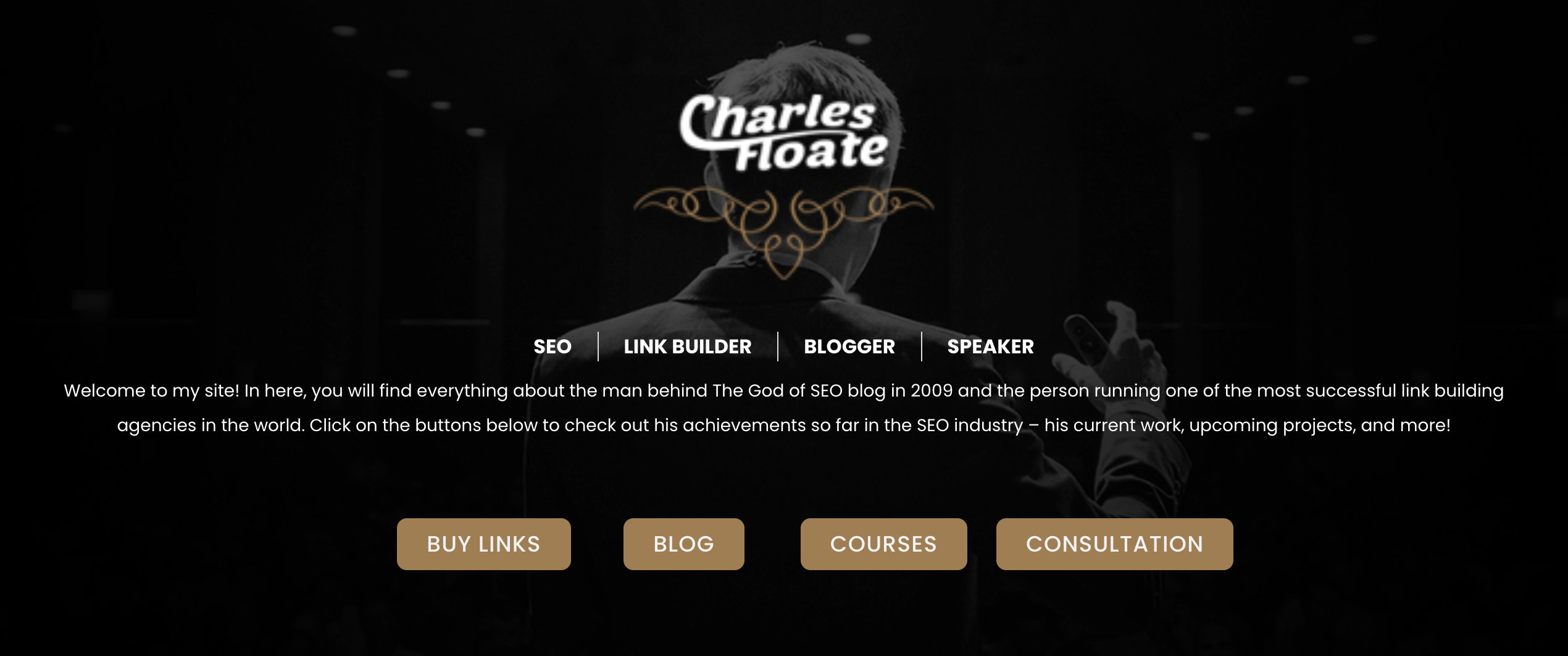
This is one reason I recommend all founders have their own website. You can see mine, charlesfloate.com, as an example:
I recommend that you study the pages currently dominating your target keywords and figure out why Google trusts them more than you.
Start with Ahrefs and analyze:
- Referring domains
- Anchor text distribution
- Link velocity
- Homepage vs inner page links
- Top linked pages
But don’t stop at backlinks.
Visit the pages themselves and study:
- Search intent alignment
- Content depth
- Internal linking
- UX and layout
- Media usage
- Entity signals
- Citations and trust elements
Remember: Your backlinks are only as strong as the pages they point to.
I’ve seen startups spend thousands on link building and see almost no movement, only to discover the real issue was:
- weak positioning
- shallow content
- poor intent alignment
- weak internal linking
- lack of topical authority
In other words, what looked like a link problem was actually a page quality problem.
The better your foundation, the less link equity you need to rank.
Develop a Content Strategy
Your business needs a good content strategy, because links don’t magically create rankings (though they are extremely important). Links amplify the rankings of high quality pages that deserve to rank.
High quality links help your pages rank initially. But once real humans land on the page, other factors come into play, such as:
- Did this satisfy intent?
- How long did people stay on the page?
- Did users bounce?
- Did someone bounce and go to a competitor and dwell there (pogo sticking)
- Does this page provide more than competitors?
Google does not rank your pages in isolation. It compares you to those who are already ranking. If your competitors have measurably better content, they’re going to win in the long run.
If your startup only publishes generic “Top 10 Tips” blog posts written by AI, nobody is going to care enough to reference you.
My advice is to start by creating a topical map, and then creating content around:
- Founder expertise
- Original research
- Product led content
- In depth guides
- Industry statistics
- Local data
- Genuinely helpful educational resources
These are also examples of linkable assets, which I’ll talk more about below.
Have a link building strategy
Before you start spending cash on links, PR, and content, make sure you have a real plan. I’ve seen startups waste tens of thousands of dollars of funding building the wrong types of links to the wrong pages.
Asking around for backlinks and sending cold emails is not a viable link building strategy for startups. Nor is buying random directory links or paying someone $30 on Fiverr for 700 DR 70+ links.
I can’t stress enough how important it is to optimize your link building strategy not only to improve rankings but to avoid manual penalties or algorithmic suppression.
For example, a homepage usually needs more branded and entity focused links, while commercial pages often need highly relevant contextual links. If you aren’t building the right type of links, you’ll leave a lot of ranking equity on the table. And if you build aggressive exact match anchors too early, especially on a new domain, you increase the chances of triggering spam filters.
You need an expert driven link building strategy if you’re hoping to compete. The article you’re reading now will help you define that strategy, but you also need to take into account your competition, your goals, link velocity, budget, and a number of other factors to succeed. If your site is freshly minted, check out my link building strategy for new websites.
At minimum, I recommend you determine:
- Which pages actually need authority
- What keywords those pages target
- What anchor text ratios look natural
- Link velocity
- Which competitors you’re trying to beat
OK, enough of me rambling about benefits, planning, and Google. It’s time to get into my top link building tactics for start ups.
In House vs. Outsourcing: Which Approach Makes Sense for Your Startup
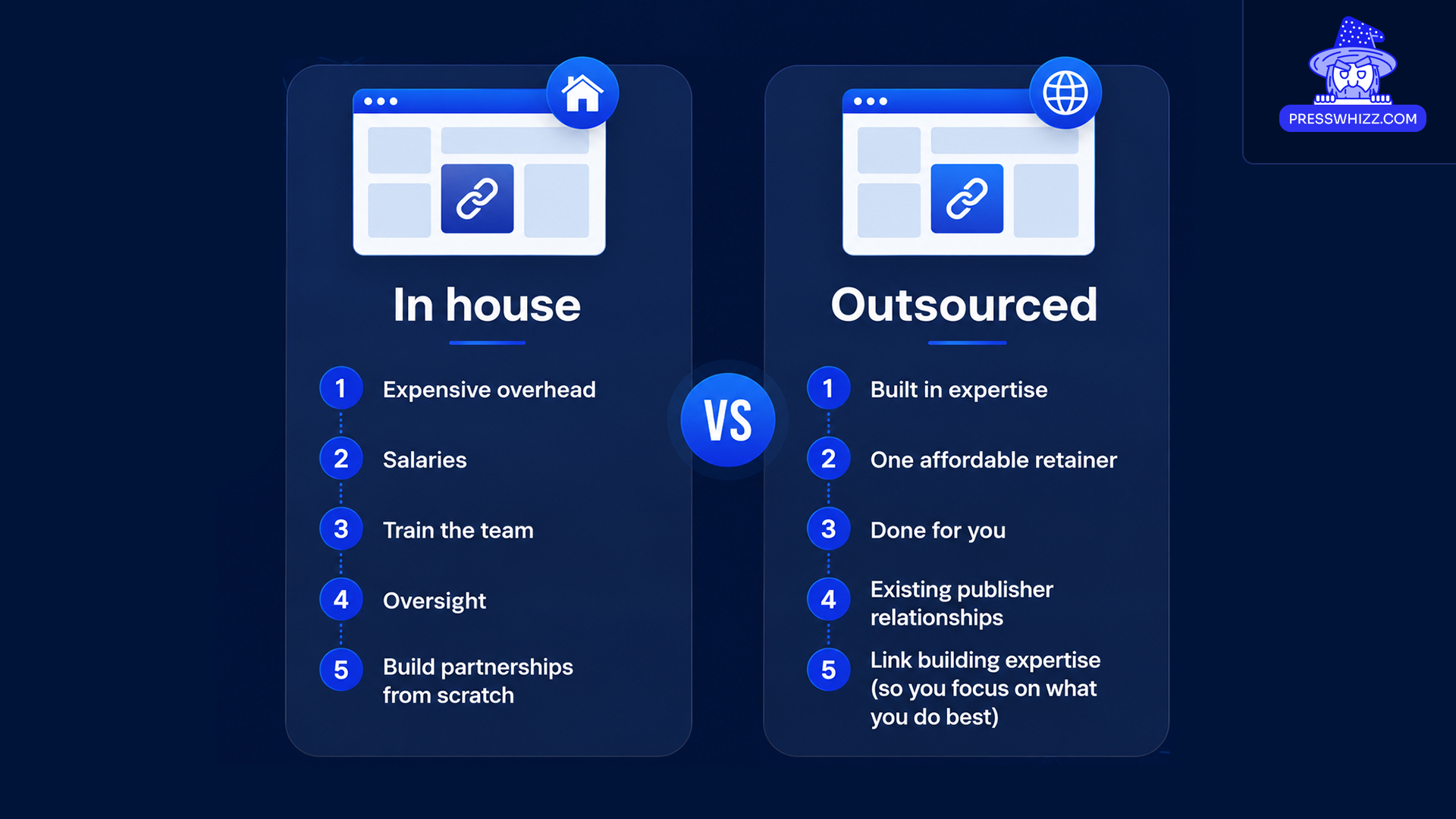
In my experience, most startups massively underestimate how expensive and time consuming link building can be. Many founders assume that bringing SEO in house will be cheaper in the long run. Personally, I’ve found the opposite to be true.
And you have to understand that the decision between in house vs outsourcing isn’t just about price alone. You need to think about quality, scalability, and control as well.
There’s a lot to take in here, so let’s take a quick look at each option.
In House Link Building
In house link building can absolutely give startups an edge because nobody understands the product, customer pain points, positioning, and industry landscape better than the internal team. Founders and early employees naturally create more authentic partnerships, better angles, and stronger relationship driven links than most outsourced vendors ever will.
The problem is that founders massively underestimate how operationally expensive link building becomes once you move beyond “sending a few outreach emails.”
A proper in house operation usually means:
- a dedicated outreach hire ($50k–$90k/year)
- SEO leadership or strategy oversight ($80k–$150k/year)
- content support ($20k–$80k/year depending on scale)
- tools and databases ($500–$2,000/month)
- publisher costs and placements ($3k–$20k+/month)
- management overhead
- training and SOP development
Even a relatively lean in house link building setup can easily cost a startup $120k–$250k/year before it’s operating efficiently.
Pros of in house link building:
- Stronger understanding of the product and the customer
- Easier access to founder expertise and internal data
- Better alignment with brand voice and positioning
- Faster communication internally
- More control over strategy and execution
Cons of in house link building:
- Extremely time consuming
- Hard to scale consistently
- Requires specialized SEO and outreach skills
- Difficult for small startup teams to maintain momentum
- Relationship building takes years
Agency Link Building
Outsourced link building solves a lot of the problems that keeping things in house causes.
Experienced agencies already have outreach systems, publisher relationships, and dedicated teams.
Plus, you need to factor in something else for startups: Delaying growth. Outsourcing link building to a link building service speeds up rankings and helps you get ahead of the competition. Building a proper in house SEO team could take 6 months or more. Startup culture is cutthroat. You probably don’t have 6 months.
Delaying growth could potentially cost you millions in future organic revenue. That’s why I always recommend outsourcing.
Outsourced link building pros:
- Access to experienced link builders and PR specialists
- Faster campaign execution
- Existing publisher and media relationships
- Scalable outreach systems already in place
- Frees founders and marketers to focus on growth
Outsourced link building cons:
- Quality varies massively between agencies
- Spammy vendors can damage rankings and reputation
- Generic agencies often misunderstand the niche
In House or Outsourcing: Which Should You Choose?
Full disclaimer: As the founder of a link building agency, I’m slightly biased here. However, I’ll give you the facts as someone who’s built millions of links in house and with loads of agencies since 2007.
If you work with even a half decent link building team, your ROI is going to be much higher than doing link building yourself.
Professional link building agencies have processes, expertise, and connections that your in house team won’t have. Plus, they do backlink management, which is one of the most important parts of link building (and something most startups ignore).
Agencies actively monitor your backlink profile, track anchor text distribution, identify toxic or low quality links, manage link velocity, and way more. Most startups are so focused on “getting more links” that they completely ignore the health and structure of the backlink profile itself.
That’s why, for the vast majority of startups, I recommend outsourcing to a link building agency.
A link building agency will help your startup:
- Develop a link building strategy around the big picture of promoting entity reinforcement and increasing market visibility across Google + AI systems
- Keep up with Google and AI updates (which happen almost daily) to maintain a lean and relevant strategy
- Pursue multiple strategies at once
- Manage your backlink profile
- Identify patterns quickly and pivot or scale
- Deliver results in weeks (as opposed to months for in house teams)
- Work with your team on placement and execution
- Find the best places to buy backlinks, so you don’t risk penalties
What Types of Links Should Startups Build?
Here’s a quick checklist of the types of links all startups should build to improve search engine rankings, grow referral traffic, and boost AI visibility:
- Editorial links: Editorial links are links from relevant blogs, news sites, industry publications, and resource pages. They exist because your content, startup, or expertise deserves to be referenced.
- Foundational links: As a new business, you need to build foundational trust with Google first. Foundational links include citations and entity profiles like Crunchbase, LinkedIn, Product Hunt, business directories, founder websites, and social profiles. They help establish trust and legitimacy across Google and AI systems.
- Commercial page links: These links point directly to high value product, service, or category pages.
- Partnership links: Links earned through real business relationships like integrations, vendors, agencies, affiliates, and sponsors.
- Linkable asset links: These links come from original research, calculators, templates, statistics pages, and tools that people naturally want to reference.
- Podcast and event links: Mentions and backlinks from podcast episodes, webinars, conference pages, and interviews.
- Reclaimed links: Earn these links by converting unlinked brand mentions into proper attributed links back to your website.
- Internal links: Yes, internal links count as link building. Links between pages on your own website help search engines understand your content structure and discover new pages.
- Sponsored links: Paid placements used for exposure, partnerships, and visibility. Just don’t build your entire SEO strategy around obviously paid spam links because Google is much better at detecting these placements now.
Timeline and Realistic Expectations for Startup Link Building
The last thing I want to share with you before we go is a rough link building plan so you can set realistic expectations.
One of the biggest mistakes I see startups making with link building is treating it like paid ads and expecting immediate ROI. That’s not how this game works.
SEO authority compounds gradually, especially in competitive industries where rivals have spent years building links, trust signals, and brand recognition. A few backlinks rarely transform rankings overnight. The real impact comes from sustained momentum over 6-18 months as authority, mentions, and visibility continue stacking together.
Here’s a realistic plan for your first year:
Month 1: Foundation and Early Wins
The first month should focus almost entirely on fixing technical SEO problems and building foundational (entity reinforcing) links. Even if you decide to work with an agency, you can do most of this in house to save some cash and get ready to hit the ground running with your outsourced team.
You should:
- Improve internal linking
- Ensure your important pages are indexable
- Add proper organization schema
- Clean up page experience issues
- Establish entity clarity across the web (for the brand and founders)
This is also the perfect time to secure easy wins like partner links, Crunchbase profiles, social entities, and unlinked brand mention reclamation.
You might see some small movement during this stage, especially from technical fixes, but if not, don’t worry. At this point, you’re just laying the groundwork so future links have somewhere strong to point.
Months 2–3: Building Momentum
This is when startups should begin running outreach campaigns, pitching guest posts selectively, participating in communities, and building relationships with publishers and industry partners.
You should also be brainstorming for linkable asset creation and laying the groundwork for digital PR.
At this stage, you’ll often notice:
- More referring domains
- Increased branded mentions
- Better indexing and crawl activity
- Early referral traffic
- More impressions inside Google Search Console
If your site still isn’t budging in the rankings, that’s ok. These days, 2-3 months is still way too early for a new site to see much change.
Months 4–6: Rankings and Traffic Improvements
If the campaign has been executed properly (that means consistent link building and link management), you might start seeing real SEO improvements like stronger keyword rankings, more organic traffic, and better visibility for commercial terms.
There’s also big potential for AI traffic if you’ve been paying attention to communities and Reddit.
This stage is heavily dependent on relevance and consistency. You should be engaging in sustained digital PR, creating digital assets, building links from authoritative websites, and monitoring branded mentions.
You should begin seeing:
- Increased branded search demand
- AI Overview visibility
- Better outreach response rates
- More partnership opportunities
- Higher conversion quality from organic traffic
6–12 Months: Long Term Compounding and Domain Authority Growth
Around the eight month mark, many new sites that have done things right see a big uptick in rankings and engagement. By this point, you should have a decent amount of trust built with Google and your market.
Your startup ideally has:
- Stronger authority signals
- More branded searches
- More trusted mentions
- Better outreach leverage
- More public proof online
- Higher trust with Google and AI systems
The best part is that link building should now get easier. Organic links should flow in as a result of your linkable assets, community engagement, and digital PR. Journalists should respond more often, and partnerships become easier to secure.
Final Thoughts
If you’re a startup trying to build links and compete for Google organic rankings and AI citations, here’s what I think you should focus on right now:
- Build out your foundational links like social profiles, directory citations, and resource pages links
- Reverse engineer your competitors and create a rough plan for how many links you need (and which types)
- If you have the budget, begin doing digital PR announcing new features, funding, or something else newsworthy
Once that’s done, I urge you to decide whether or not to keep your link building in house or to outsource it. Both are fine, so long as you know what you’re doing. Just know that in house will be significantly slower.
Link building today is as much about brand reinforcement and entity trust as it is the links themselves. If you invest in doing link building the right way, which is a combination of high authority, relevant links, brand mentions, branded search, and community visibility, you will dominate Google and LLMs for the foreseeable future.