

Welcome to our complete guide on link building for 2026. In this guide to SEO link building, we’ll walk you through some of the most important aspects of running a successful link building campaign, including:
- What is link building?
- Why it’s important for SEO
- Can you buy links? What about Google penalties? (short answer: don’t worry about them)
- The different types of links
- How to acquire high-quality links at scale
- How to perform outreach to increase your chances of landing links
And a lot more.
Here at PressWhizz, we’ve handled tens of thousands of real link placements worth millions of dollars, and we’ve built links with 6 and 7-figure clients in some of the most competitive niches in SEO, like iGaming, finance, and the legal industry.
In other words, we know what actually works in link building on real websites.
If you’re interested in building links yourself, finding link building services to do it for you, or even just a beginner looking for advice on how to start your first link building campaign, this guide includes everything you need to know.
There will be tips, templates, analysis of Google technology, our firsthand experience, screenshots, and a lot more.
Let’s begin…
What is SEO Link Building?
SEO link building is the process of acquiring hyperlinks from other websites back to your site, typically via earning them for free or buying them. These hyperlinks, commonly called backlinks, help search engines discover your pages and evaluate how trustworthy, authoritative, and relevant your website is compared to other websites competing for the same keywords.
Search engines like Google use backlinks (among other signals) when determining search engine rankings.
A website that earns links from reputable, topically relevant sources is generally seen as more credible than one with few or no quality backlinks and will therefore rank higher (in general…not always).
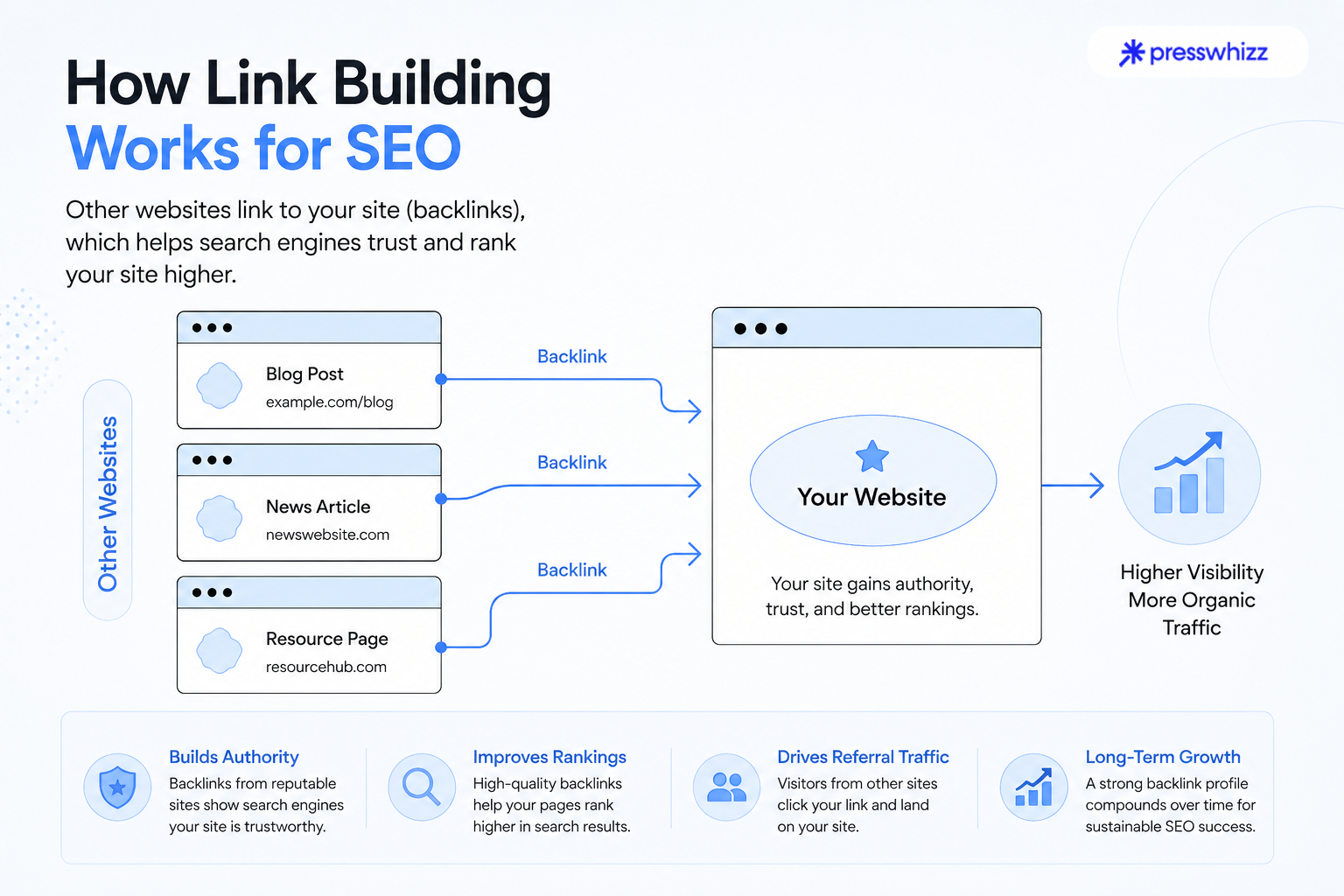
While great content and technical SEO matter, you will struggle to rank in competitive industries without high-quality backlinks.
So, to answer your question more succinctly, links are extremely important for SEO, and “link building” is the process of actively acquiring more links to your site, whether through asking for them, buying them, or earning them.
The reason that actively acquiring backlinks is so important is that some niches require you to have hundreds or even thousands of referring domains if you want to rank. You can’t sit and wait for 1,000 links to show up naturally. You need to actively acquire them by asking for them, outreach, link exchanges, or just buying links.
Much more on this further below.
How Does Link Building Help SEO?
Links help SEO by acting as “votes of confidence” with Google. Google uses links from other websites to gauge how relevant, trustworthy, and authoritative your website is. In general, the more links you have, the higher you will rank in Google’s search engine results (but many other factors matter, too).
So, link building helps your SEO by helping you acquire more backlinks, which in turn increases your search rankings for relevant keywords.
Most of the top websites online with millions in organic traffic have massive backlink profiles. Take Nerdwallet.com, for example:
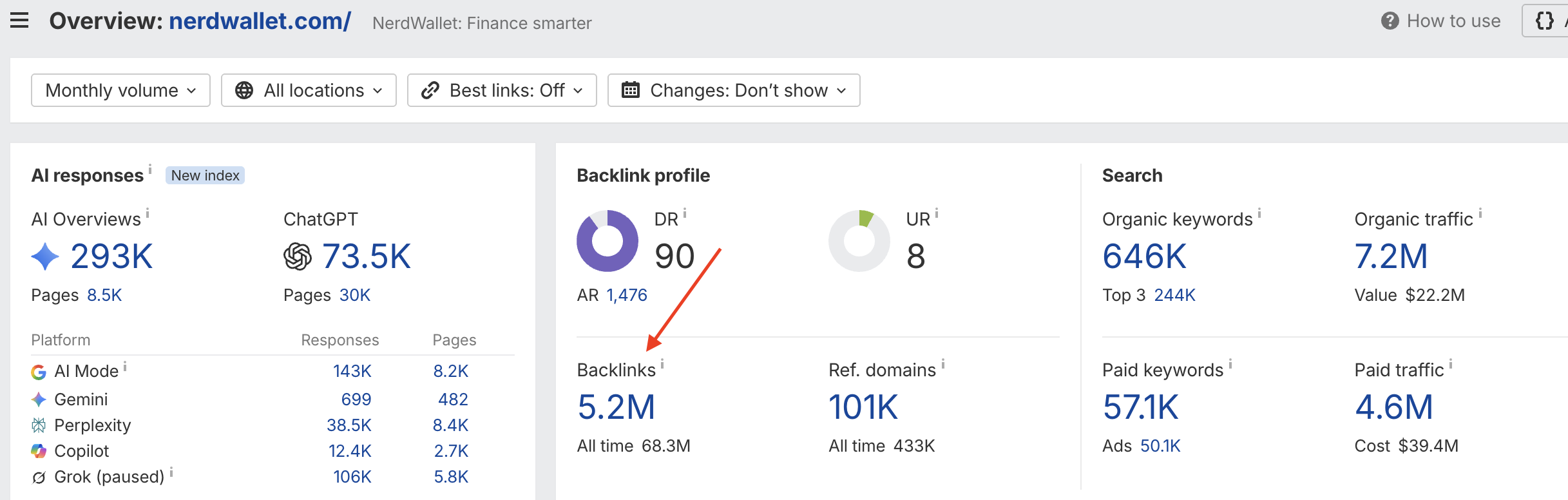
Links from relevant, authoritative websites provide the following SEO benefits:
- They boost your organic rankings
- They increase your website’s authority
- They accelerate your indexation
- They drive referral traffic
- They improve brand visibility
While Google prefers to keep its algorithms a secret, we know from our own experience as well as patents and DOJ testimony how important links are.
Backlinks are one of Google’s most important ranking factors. Period.
In fact, an analysis by Backlinko.com of over 11 million Google search results on their page “We Analyzed 11.8 Million Google Search Results. Here’s What We Learned About SEO”, found that the number of referring domains to a page strongly correlates with higher rankings.
We also know that PageRank, Google’s fundamental ranking algorithm, determines rankings using the quantity and quality of backlinks pointing to a page. This is not conjecture. They literally have a patent on this entitled “Method for node ranking in a linked database” that says the rank assigned to a document is calculated from the ranks of documents citing it:
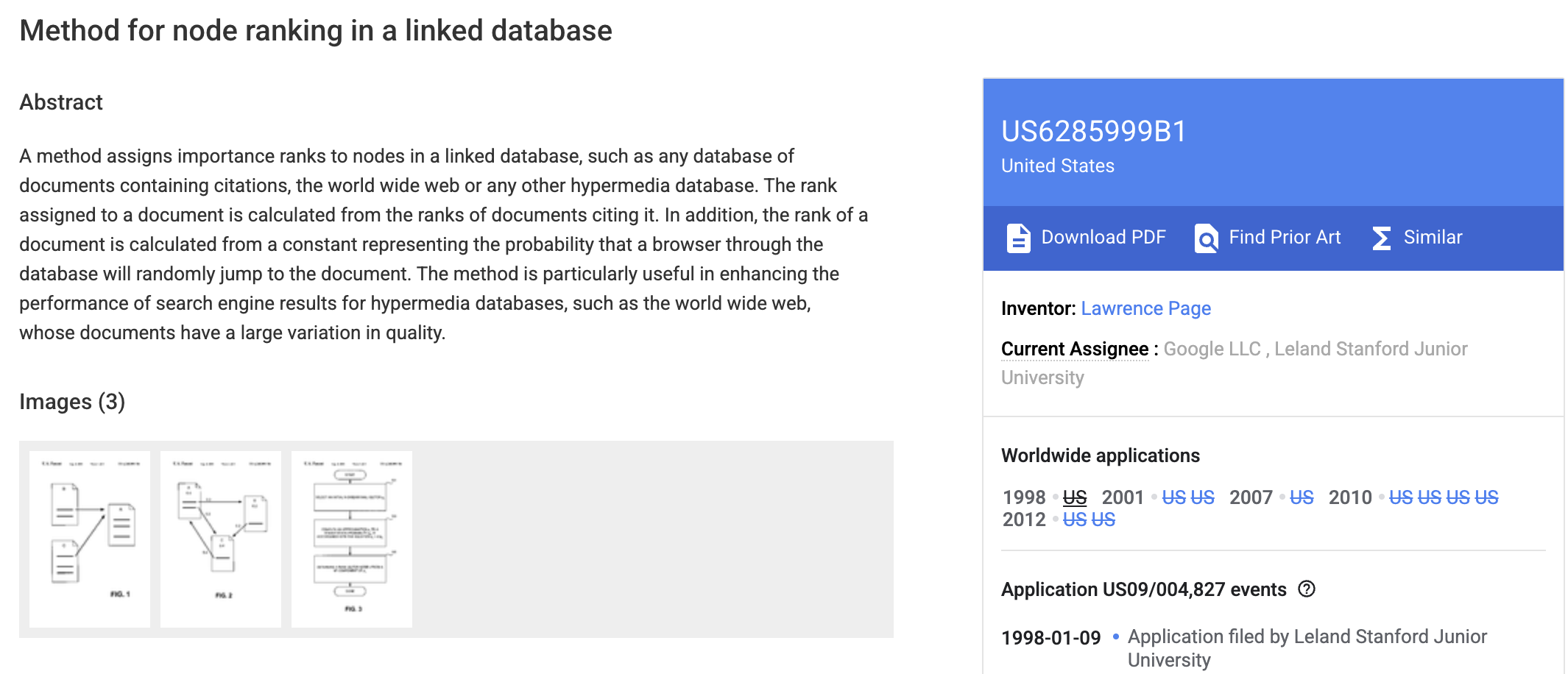
Translation: links matter.
So, our experience selling links proves it. Studies on vast amounts of ranking data prove it. And Google even, under oath to the DOJ, said PageRank is still an active signal. So, yes, links help your SEO.
Moving along…
What Are the Different Types of Links in SEO?
There are many different types of links in SEO, such as editorial links, free links, and internal links. You may hear these terms used frequently and even interchangeably by some people on social media. Since this can get a bit confusing, we will break down each type of link for you.
Here are the main types of links in SEO:
- Editorial Links: Editorial links are naturally earned links that another website adds because it genuinely wants to reference your content. They’re considered the highest quality backlinks because they’re earned rather than paid.
- Dofollow Links: Dofollow links allow search engines to crawl the destination page and pass PageRank and other ranking signals, making them the most valuable type of link for SEO.
- Nofollow Links: These contain the rel=”nofollow” attribute, which tells search engines not to treat the link as a traditional endorsement. While they typically pass less ranking value than dofollow links, they still drive referral traffic, reinforce your entity, and contribute to a natural backlink profile.
- Sponsored Links: These are links marked with the rel=”sponsored” attribute. They indicate they were created as part of a paid placement, advertisement, or sponsorship. Google recommends using this attribute for commercial link placements, but very few people follow the rules.
- UGC (User Generated Content) Links: These use the rel=”ugc” attribute and usually appear in forum posts, blog comments, community discussions, or other content created by users rather than site owners.
- Web 2.0 Links: Web 2.0 links are backlinks created on platforms that allow users to publish their own content, such as Medium, WordPress.com, or Blogger. While they can still have uses, low-quality Web 2.0 spam has become far less effective than it was a decade ago.
- Internal Links: Links that connect one page of your website to another. Internal links help search engines crawl your site, distribute PageRank throughout important pages, and establish topical relationships between your content.
OK, now that we’ve covered the different types of links, let’s move on to what determines the value of a link.
Google has become increasingly sophisticated, and you can no longer just build high-DR links and expect to rank. Google now takes into account other facts, such as relevance and context, which are harder to manipulate or “fake”.
Let’s get into that, so you don’t waste time or money on low-quality links that don’t help you rank.
What Makes a High-Quality Link?
To be considered a high-quality link, a link placement must fit the following criteria:
- The link is on a relevant website
- The link uses proper anchor text
- The website is a real website in your industry with traffic and rankings
- The link is in the main body of the content
- The website has authority and trust with Google
In the past, it was easy to game the system, and there was nothing Google could do about it except issue a manual penalty to the worst offenders.
But Google is much smarter now. The algorithm is scarily complex and takes into account numerous machine learning models to determine relevance, context, surrounding text, anchor text, and other factors when determining the quality of a link.
Let’s cover this all in more detail…
Relevance
Relevance is the single most important factor when evaluating the quality of a backlink. In most cases, a highly relevant link from a smaller website will outperform a random high-authority link because it sends stronger topical signals to search engines.
As Google’s algorithms have become more sophisticated, they’ve moved beyond simply measuring authority. Today, they also evaluate whether the relationship between two websites makes sense. A backlink from a gardening blog to a landscaping business, for example, is far more natural and valuable than one from an unrelated cryptocurrency website.
This seems intuitive, but even just 5 years ago, it was easy to manipulate the system with shady link building tactics. Those tactics no longer work for the most part.
The more relevant websites that reference your business, the easier it becomes for search engines to identify your entity with that industry, strengthen your topical authority, and trust that you deserve to rank for related searches.
Traffic and Rankings
A website’s organic traffic and keyword rankings are some of the strongest indicators of a backlink’s quality. When a site (or specific page we want a link from) has no traffic and no organic keyword rankings, we typically ignore it.
The reason for this comes down to how Google “transfers” something known as “link juice” from one site to another. I’ll spare you the SEO details, but it goes something like this: If Google already trusts a website enough to rank it for competitive keywords and send search traffic, there’s a good chance a backlink from that site will carry more SEO value than one from a website with little or no search visibility.
That’s why organic traffic has become one of the biggest pricing factors in the link building industry (even more than authority!). Buyers aren’t just paying for a backlink anymore. They’re paying for placement on websites that have already proven themselves in Google’s eyes.
You can see on our marketplace that sites with high traffic can charge quite a bit for their links even with just modest authority:
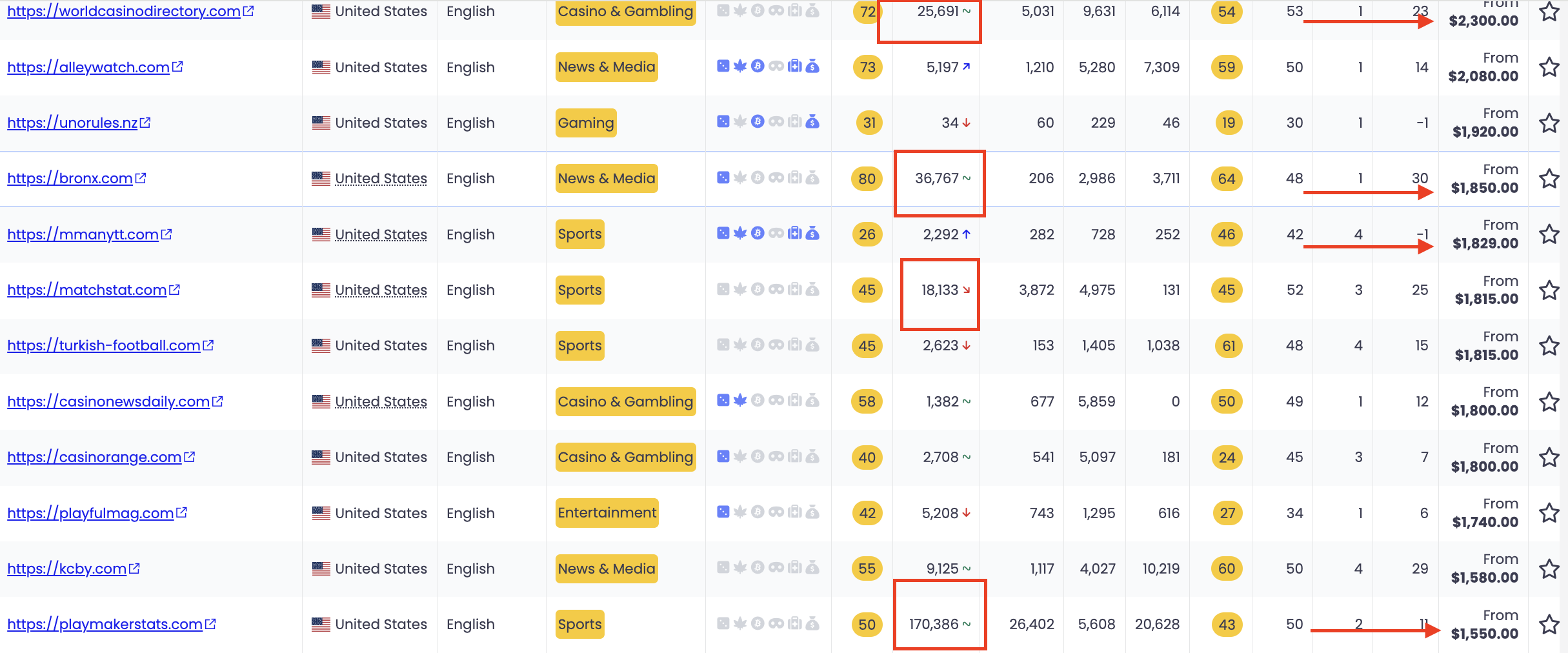
When evaluating a link opportunity, look beyond Domain Rating and Domain Authority.
Check whether the website ranks for relevant keywords, attracts genuine organic traffic, and is active within your niche. Those signals often tell you far more about a website’s quality than any third-party metric.
Pro Tip: When evaluating a link insert, make sure that the specific page you’re buying a backlink from has organic rankings and traffic, too. The site might have a lot of traffic, but if the page where your link is going has 0 traffic, the link will be worth a lot less.
Authority
Authority is essentially how much trust Google has in your site. It’s also a simple way for SEOs to measure the “power” of a website. Website authority still matters, but it’s no longer the dominant ranking factor it once was.
Ahrefs uses Domain Rating to quantify a site’s authority. You can view it here in the Overview section of their tool:
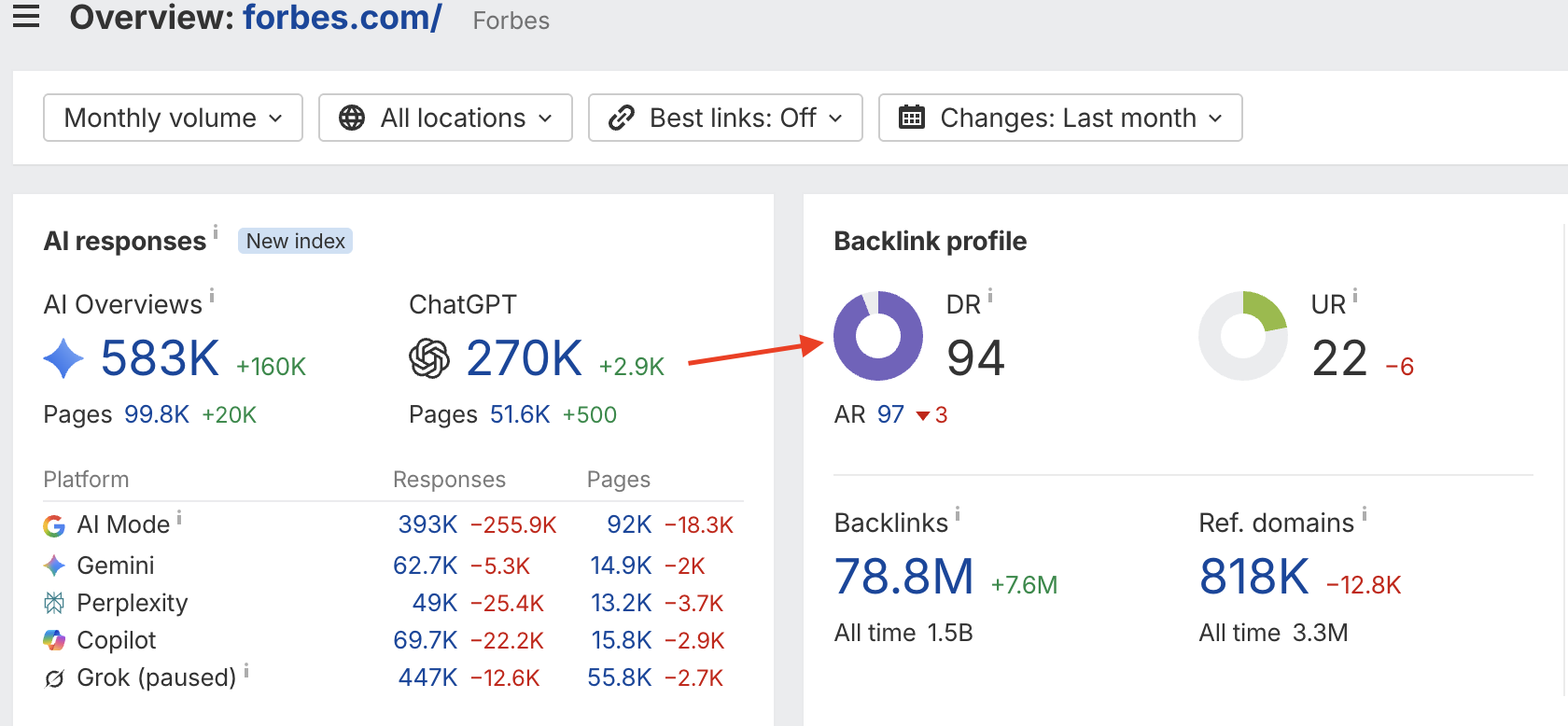
Years ago, SEOs would chase the highest Domain Authority or Domain Rating they could find, often ignoring whether the website had any relevance or organic traffic. I remember days when you could just buy a DR 80 link from any major site regardless of the niche and get an instant SEO boost. It’s not quite that easy anymore.
As Google has evolved, authority has become just one piece of the puzzle. Today, a backlink from a relevant website with strong rankings and genuine organic traffic will often outperform a higher-authority link from an unrelated site with little search visibility.
For example, if I had a niche blog about travel, I’d much rather have a link from a popular DR 45 travel blog than a random DR 70 news site.
That doesn’t mean you should ignore authority altogether. Instead, think of it as a supporting signal rather than the deciding factor. It’s also a simple way to sort link opportunities.
The best backlinks combine authority with relevance, traffic, and rankings, rather than relying on a single metric alone.
Note: Just because authority matters less than before doesn’t mean you should ignore high-DR websites. It’s always valuable for your SEO to get links from major news sites like Yahoo, Forbes, and USA Today. It’s just that now you need to combine those PR links with relevant links from niche-relevant sites to succeed. You can’t just blast PR and dominate anymore.
Placement
Where your backlink appears in an article has a strong effect on how much “link juice” it passes to your website.
In general, links placed naturally within the main body of an article tend to carry the most SEO value because they’re surrounded by relevant content and look like genuine recommendations.
There’s a reason why high-priced digital PR link placements usually go in the top paragraph:
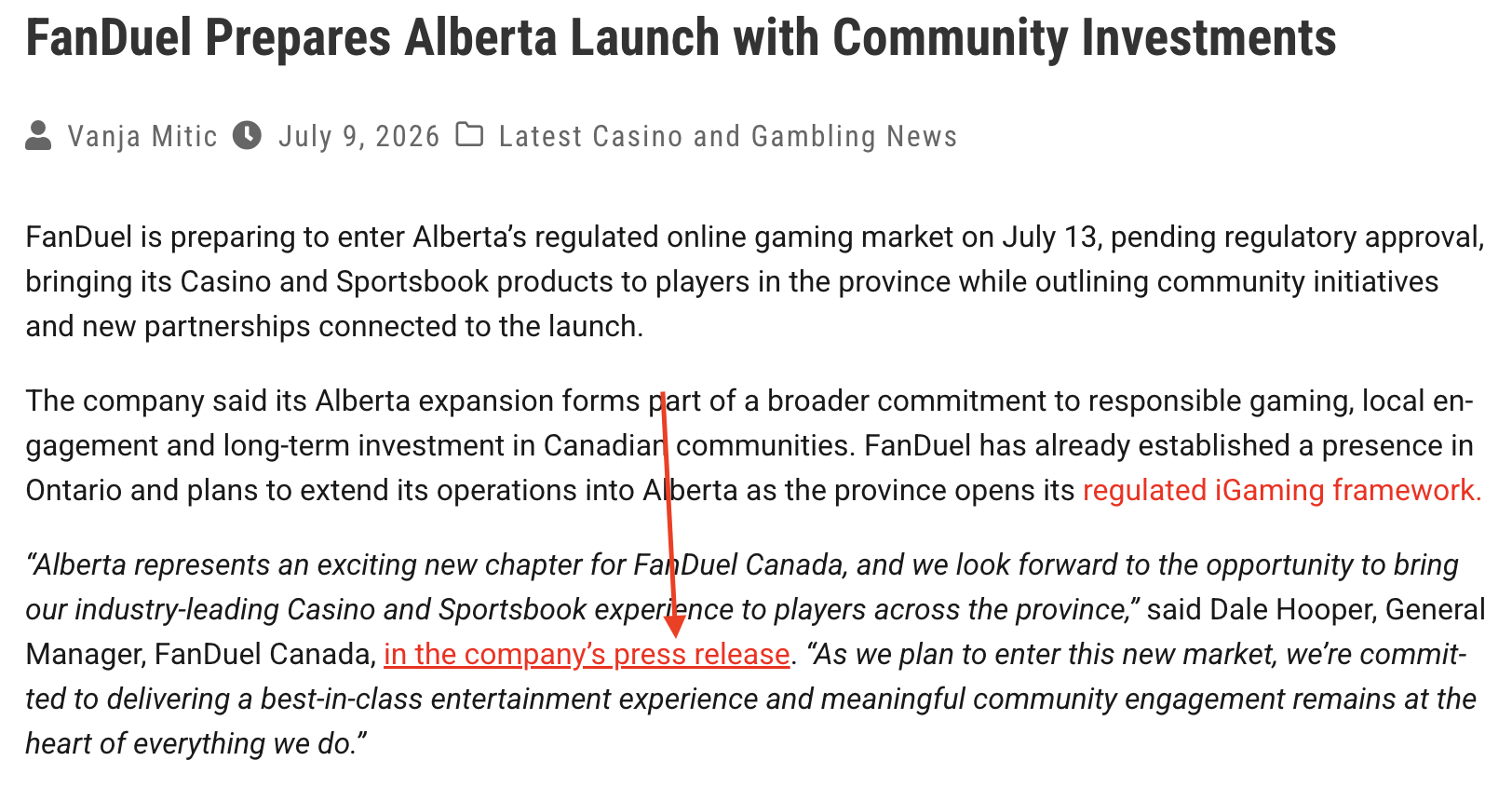
Again, this is not conjecture. Google’s “reasonable surfer” patent is a search engine algorithm that determines the value of a link based on the probability a user will click it. A link buried in the footer will never get clicked. A link in the top part of the page probably will. Hence, the latter transfers more SEO value.
I don’t recommend you buy links hidden away in footers, sidebars, or author bios, because they’re not as impactful. They also just look like spam links, to be honest.
Anchor Text
Anchor text is the clickable text that contains a hyperlink. It’s often in blue, and it helps search engines understand what the linked page is about. For example, if a link says “best landscaping company”, Google uses that as one of many signals to understand the destination page’s topic (and rank it for those keywords).
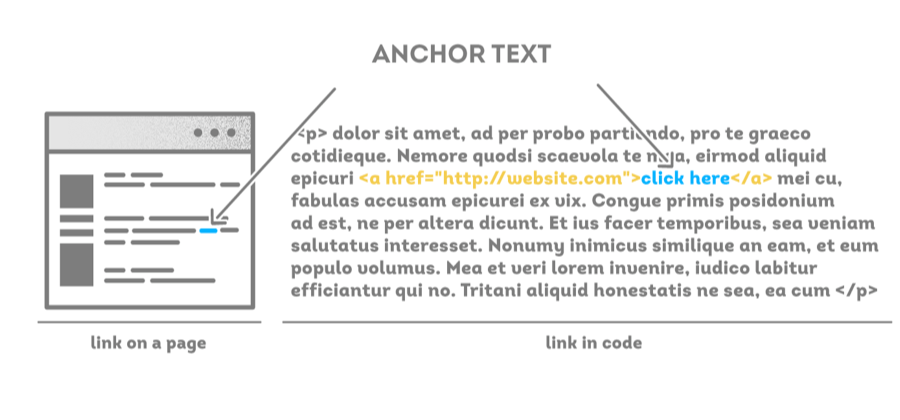
There are several types of anchor text, including exact match, partial match, branded, naked URLs, and generic anchors like “click here“.
When building links to your site, I recommend that you focus on exact match and partial match anchors. Don’t overdo it, because this could open you up to a Google penalty, but as long as you keep exact and partial match anchors to around 50%-60% of your anchor text ratios, you should be fine.
My advice? Aim for a natural mix of anchor text. There isn’t a perfect ratio that works for every website, but the strongest backlink profiles typically combine mostly branded and generic anchors with a smaller number of partial and exact match keywords.
Pro Tip: Always include the intended anchor text when negotiating terms with a link partner.
How to do Link Building: 5 Link Building Strategies That Work
OK, you now know what link building is, why it’s important, and what makes a high-quality backlink in SEO.
Now, it’s time for you to actually learn how to build backlinks the right way.
There is a LOT of bad advice out there about SEO link building. Most advice suffers from the following issues:
- It’s too white hat, meaning it follows guidelines to a T and goes too slow
- It’s too black hat, meaning it breaks the rules too much and opens you up to penalties
- It’s misguided and comes from people who don’t actually do real link building
As the world’s fastest growing link building marketplace, our team knows a thing or two about how to do link building the right way.
Here are the 5 best link building strategies that actually work in 2026. No fluff. No lies. Just advice that works on our real client sites…
Broken Link Building
Broken link building is a link building strategy where you find dead links on other websites and suggest replacing them with a relevant page from your own site. Broken links on a website are bad for SEO, so broken link building is a win-win for everyone. The site owner fixes a dead link, you get a link, and everyone is happy.
For example, if a gardening blog links to a landscaping guide that no longer exists, that’s a good broken link building opportunity. If you have an up-to-date guide on your own website, you can contact the site owner, point out the broken link, and recommend your article as a replacement.
Simple enough, right?
When it works, broken link building can earn high-quality backlinks from relevant websites 100% free. That’s why SEOs love it.
The downside is that it’s fairly time-consuming. You’ll spend a lot of time finding broken pages, creating suitable replacement content, and sending outreach emails, so success usually comes down to quality over quantity rather than blasting hundreds of generic pitches.
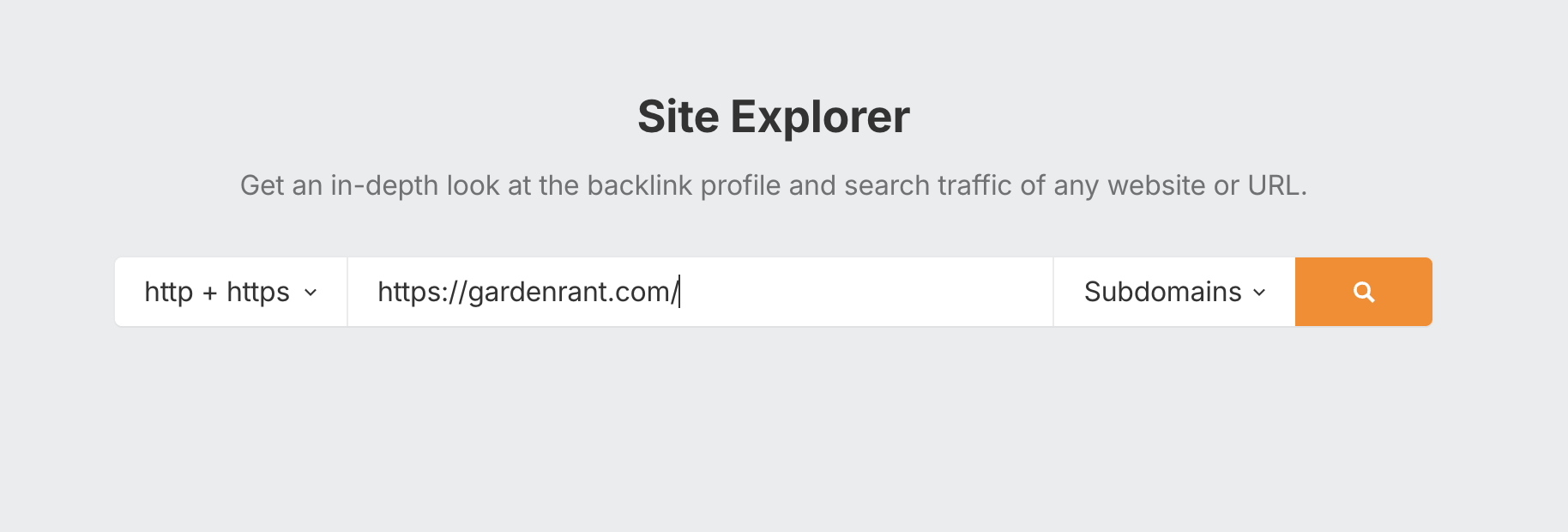
To find broken link opportunities, go into Ahrefs and add a competitor’s site into Site Explorer:
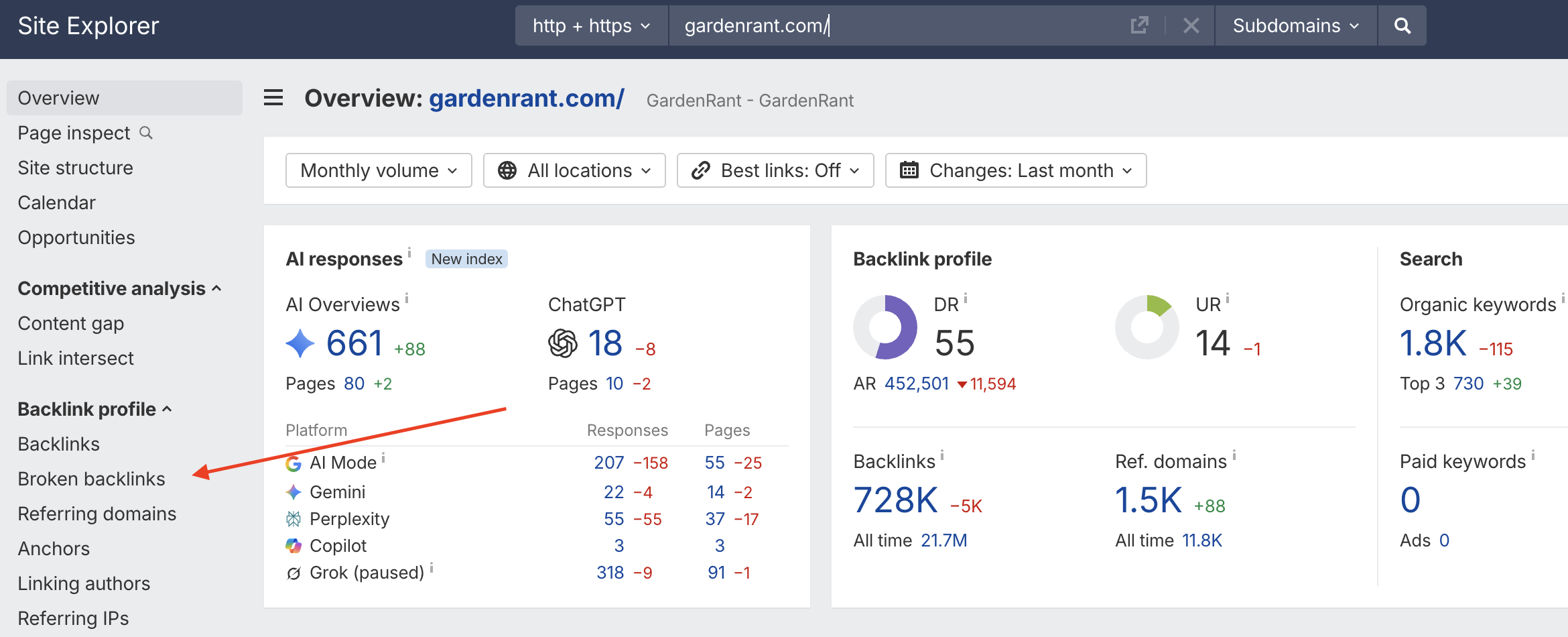
Then, click on the Broken Backlinks Report on the left-hand side:
There are literally thousands of links pointing to dead pages on this competitor’s site that you can try to steal:
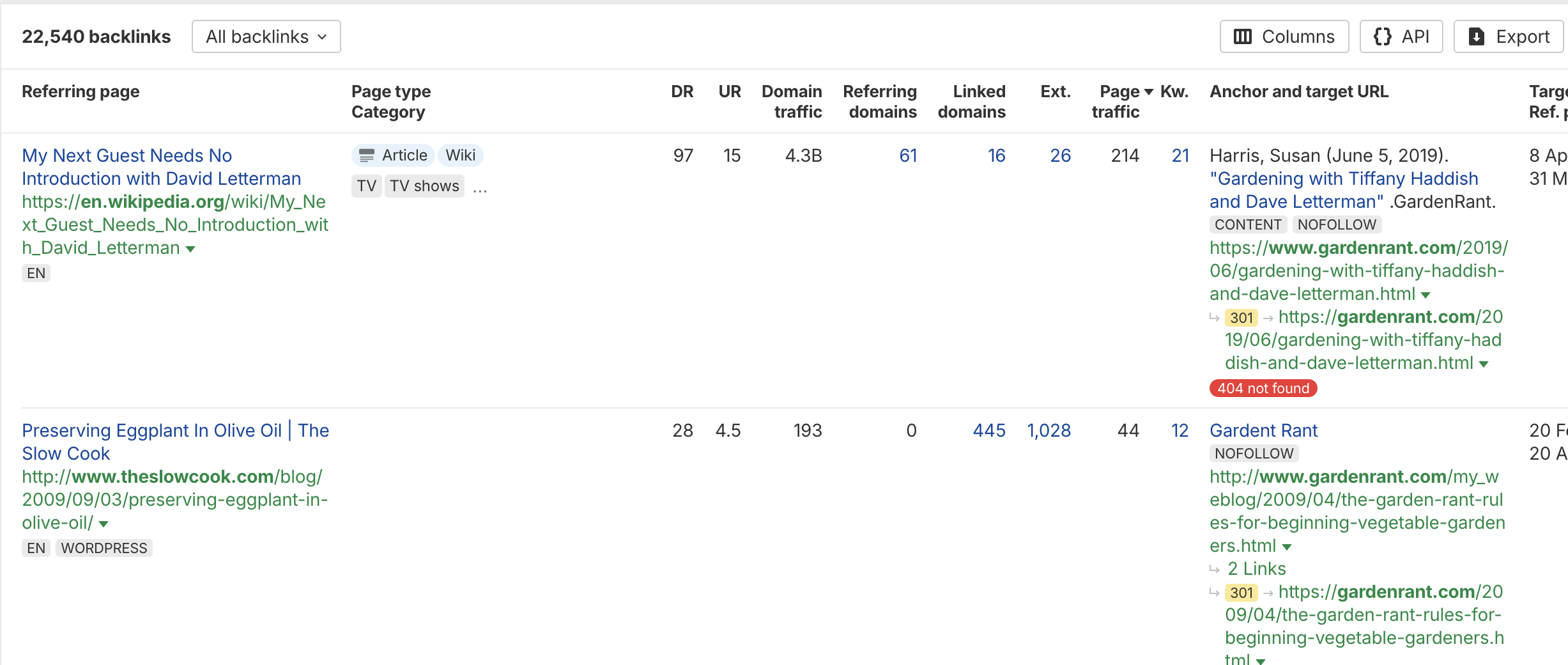
You just need to reach out and contact the site owner, create a replacement resource, and you’ve got a free link.
Guest Posts
A guest post is an article you publish on another website in exchange for a backlink to your own.
It’s one of the oldest link building strategies around and, in my opinion, still the bread and butter of modern SEO because it gives you complete control over the relevance, placement, and anchor text of your link.
There’s a reason guest posting remains so popular. According to an Authority Hacker industry survey, 64.9% of link builders use guest posts, making it the most widely used link building strategy in the SEO industry.
You can’t just buy guest posts on any website, though. I would avoid low-quality websites, spammy PBNs (high-quality PBNs are acceptable), and sites with no topical relevance or traffic.
Google’s algorithms have become far more sophisticated over the past decade, and a website’s relevance, organic traffic, keyword rankings, editorial quality, and even the number of outbound links on a page all influence how valuable a backlink is likely to be.
I’d much rather have one guest post on a trusted, relevant website than five on obvious link farms.
Here’s a good example of why you should avoid low-quality guest posting sites. We did an audit on this client’s website and found they had thousands of backlinks from sites with no relevance, traffic, or keyword rankings (or even referring domains!):
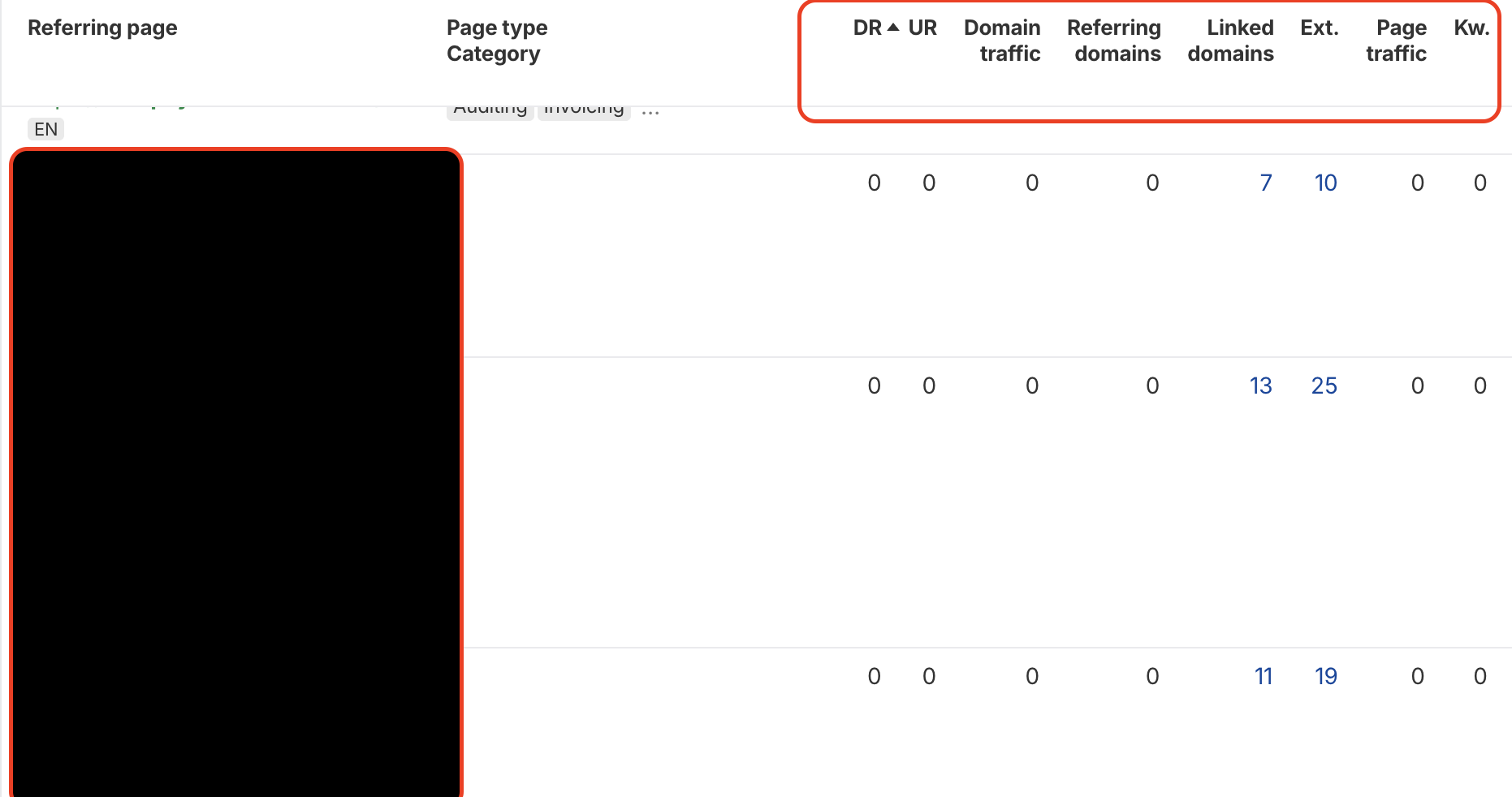
These are toxic backlinks that you should disavow immediately (when they are done to this scale). Focus on high-quality guest posts only.
Niche Edits
Niche edits, also known as link insertions, are when you add your backlink to an existing article rather than publishing a brand new guest post. With niche edits, instead of creating fresh content, you secure a placement on a page that already has traffic and rankings. This usually gives you a quicker SEO boost than other forms of link building.
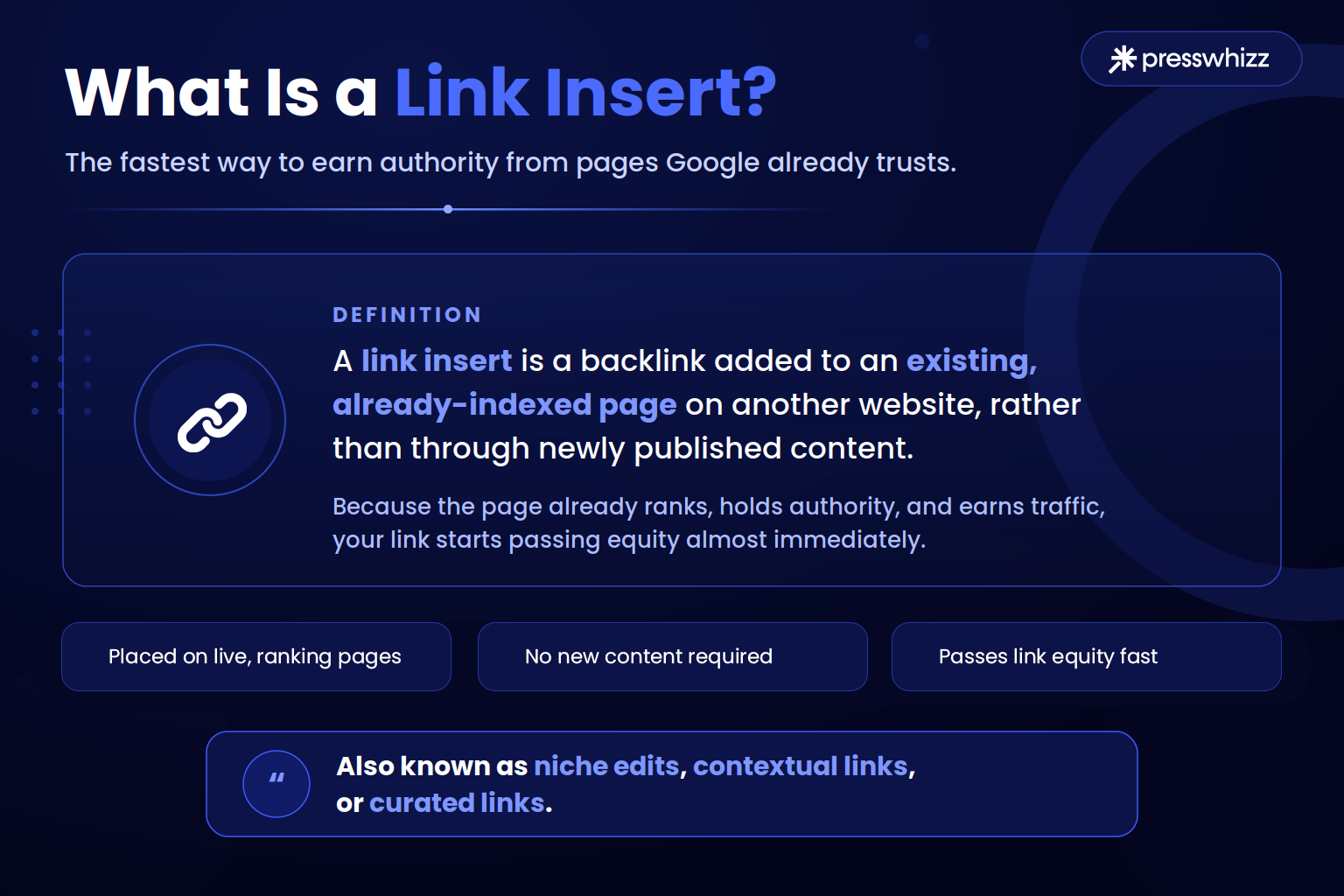
Contextual link placements are one of my favorite link building strategies, and they are consistently one of the most popular link placements we sell at PressWhizz. Because the page already has authority, backlinks, and organic traffic, your site benefits from those existing signals immediately instead of waiting for a new article to gain traction.
I’d still be selective about where you buy niche edits, though. The best niche edits come from relevant pages with genuine organic traffic where your link fits naturally within the content. If the article has been stuffed with dozens of unrelated outbound links over the years, it’s usually a sign to look elsewhere.
Digital PR
Digital PR is a link building strategy that earns backlinks by creating something journalists and publishers want to write about. That could be original research, industry surveys, unique datasets, or a story with genuine news value. If your campaign gets picked up, the publication links back to your website as the source.
In my experience, digital PR backlinks are some of the highest-quality backlinks you can build.
They come from real publications that Google already trusts, which strengthens your website’s authority while reinforcing your brand’s association with the topics you’re trying to rank for. According to Reboot Online’s analysis of more than 370,000 news articles, the average Domain Rating of a digital PR placement is 61, with over 20% of backlinks coming from DR 70–79 websites.
Digital PR takes more time and money than buying a guest post or niche edit, but one successful campaign can earn dozens or even hundreds of editorial backlinks. At the very least, it will reinforce your entity with Google and help you rank for other key terms. That’s very difficult to replicate with almost any other link building strategy.
Unlinked Brand Mentions
Unlinked brand mentions are when someone mentions your brand, website, or people without linking back to your site. And they are one of the lowest hanging link building opportunities in SEO.
Someone has already mentioned your business, product, or website. They just haven’t linked to it. All you have to do is contact them and politely ask for them to add a link.
You can find unlinked mention opportunities using Ahrefs Content Explorer. Type in your brand name and select “In-Content” from the drop-down menu to the right:
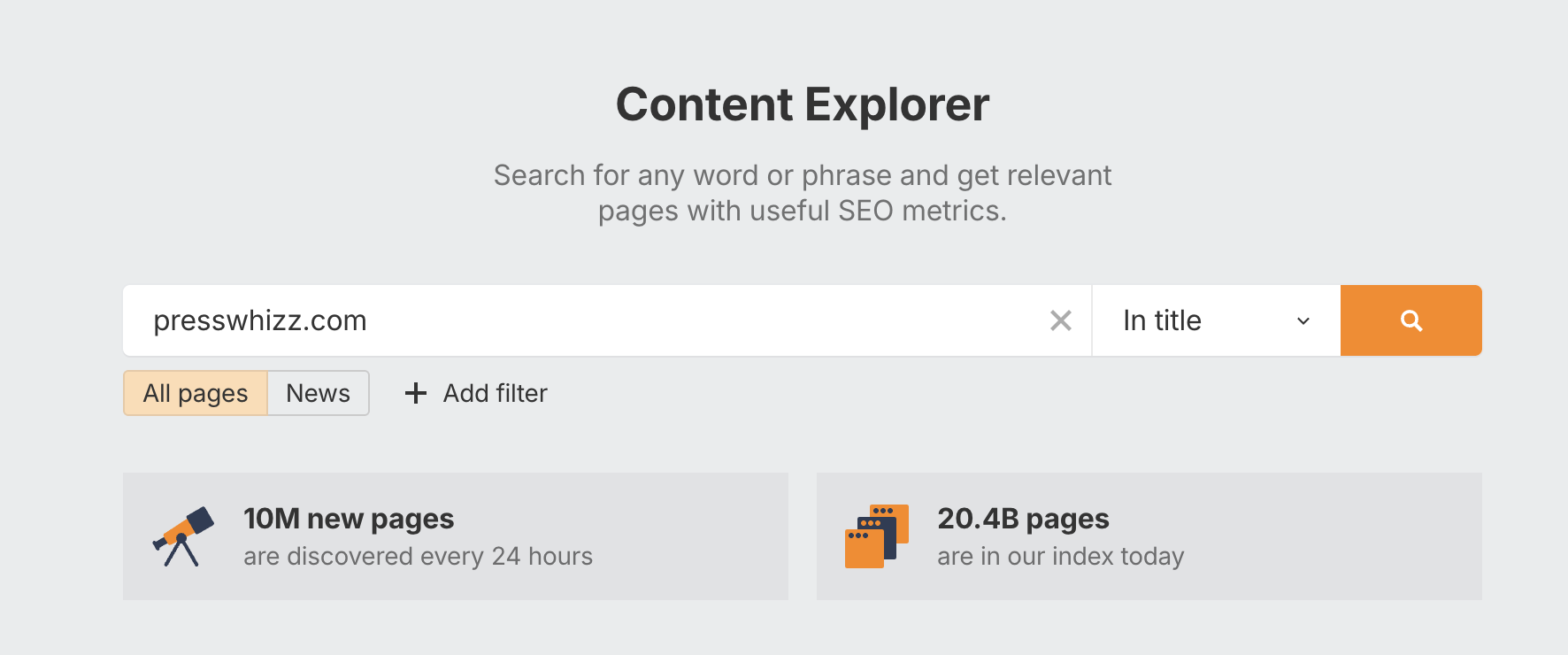
That will show you opportunities where your brand is mentioned but they have not linked to you. Just make sure to toggle on the “Highlight unlinked” option next to the results:
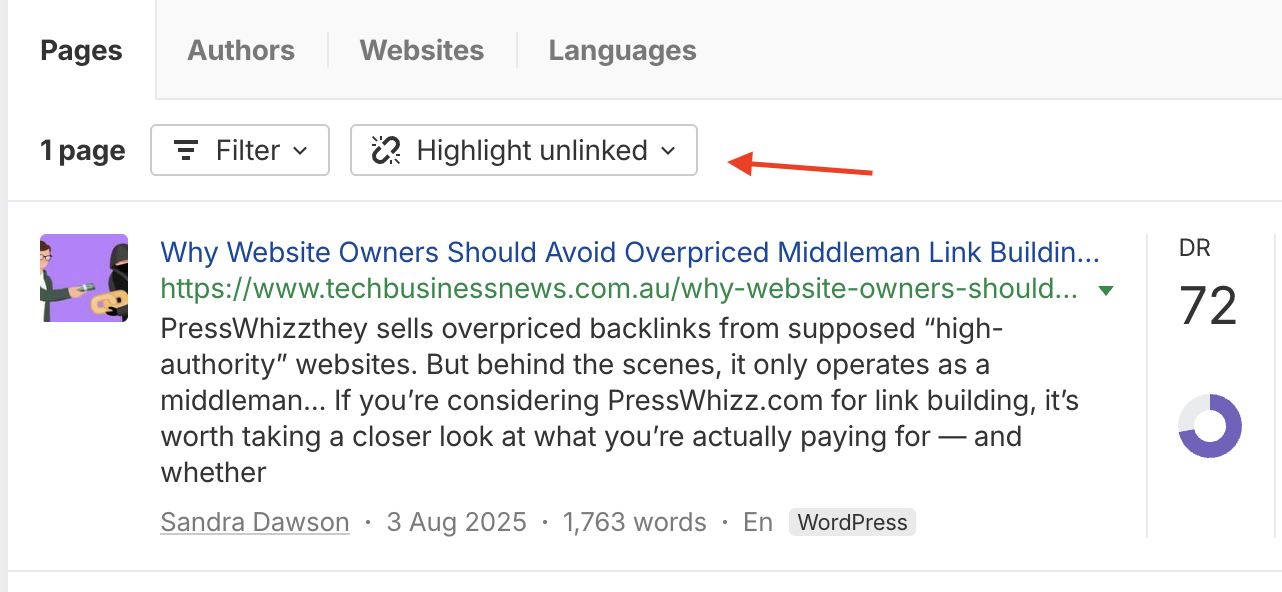
Hey, we only have one unlinked brand mention! Our team is on top of things here. We’ll send them an email to get the link inserted.
I recommend checking for unlinked mentions every few months, especially if your brand is growing. They’re quick wins, require very little effort, and can turn existing publicity into valuable backlinks.
How Much Does Link Building Cost in 2026?
Now for the million dollar question: How much do backlinks cost in 2026?
The answer is that backlinks can cost anywhere from $50 to $5,000, with the average cost being somewhere between $100 and $200, depending on traffic, authority, and link placement.
But all of the studies online about link pricing rely on opinions and inflated prices from agencies that charge high markup.
We wanted to find the truth about how much links cost in 2026.
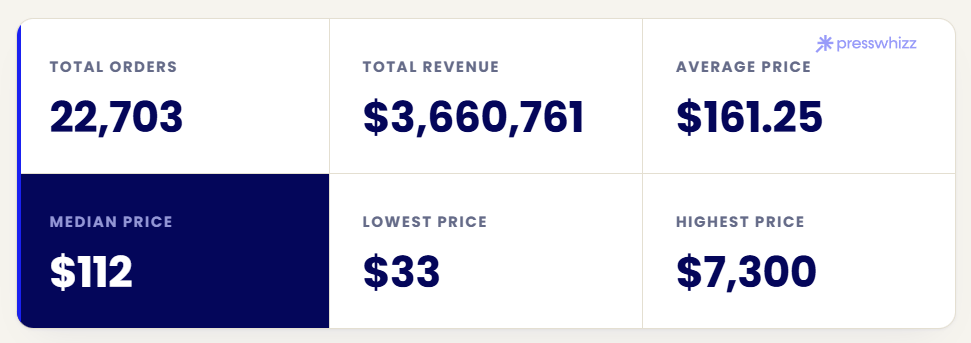
So, we analyzed 22,703 real link placements worth $3.66 million in our link building pricing report to uncover what backlinks actually cost in 2026 and, more importantly, what actually drives link pricing. Here are the biggest takeaways from the data:
- The median backlink costs just $112: The average link price was $161, but the median was quite low. That means there are ten thousand plus link opportunities in the $100 range.
- Most link placements fall into the $100–$250 range: Premium editorial placements and highly competitive niches typically command $250+, but most links are very affordable.
- Budget links under $100 still make up a significant portion of the market: You don’t need a massive budget to build quality backlinks.
- Organic traffic is now the biggest pricing factor: Buyers increasingly prioritize websites with real search visibility over Domain Rating. So, while DR is important, being a “real website” matters too.
White Hat Link Building vs. Black Hat Link Building
The main difference between white hat and black hat link building comes down to Google’s Webmaster Guidelines. White hat link building focuses on earning links naturally through content, PR, and outreach, while black hat link building includes any tactic designed to manipulate rankings, including buying backlinks.
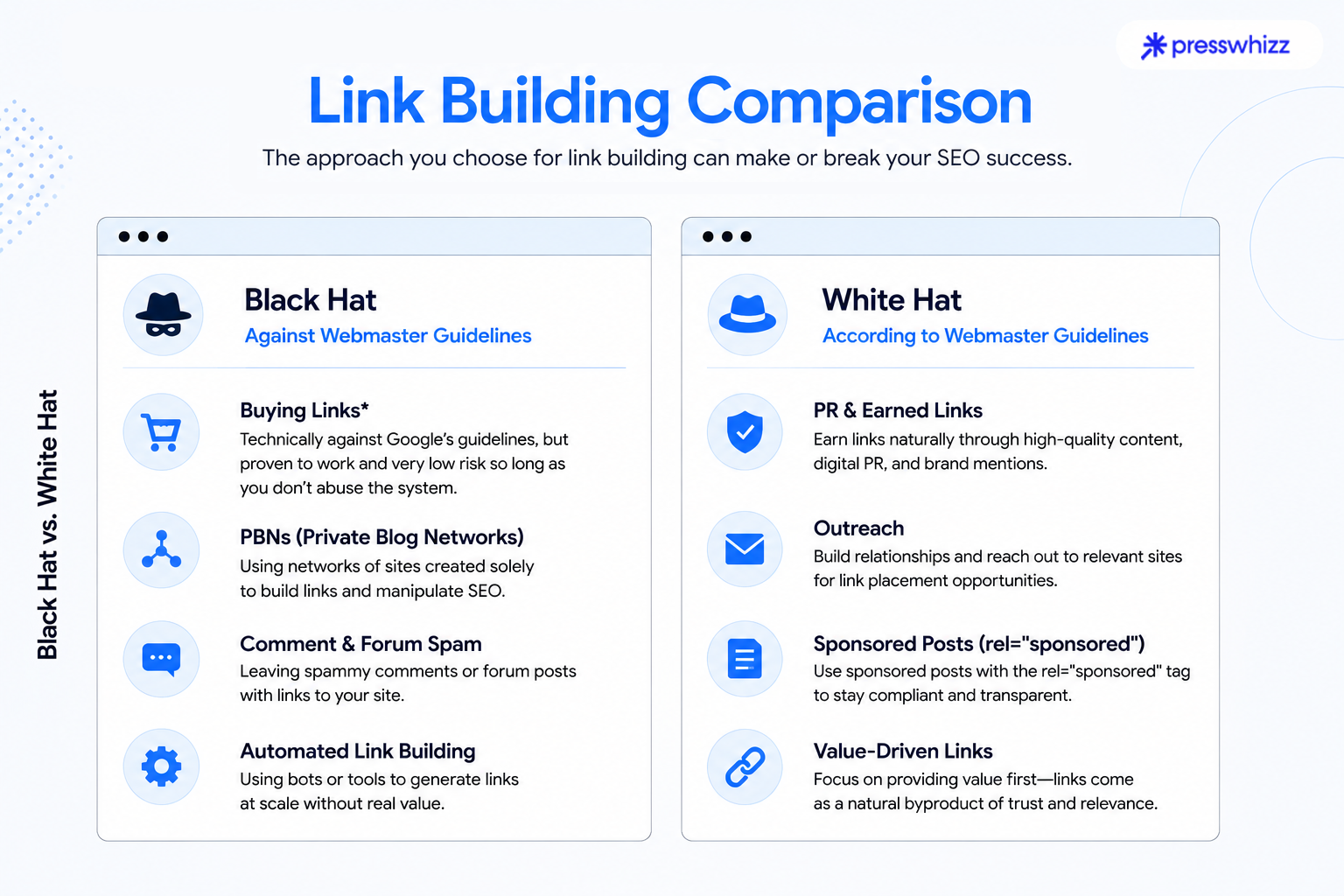
In reality, I think that’s the wrong way to look at it.
The question shouldn’t be whether a link technically complies with Google’s guidelines. It should be whether it’s a high-quality backlink that genuinely deserves to exist.
Yes, Google’s documentation does label most paid links as spam. However, the reality is that agencies, brands, affiliates, and SaaS companies buy backlinks every single day. If paid links didn’t work, there wouldn’t be a multi-billion-dollar industry built around them.
Google also isn’t trying to investigate every commercial relationship on the internet. That’s impossible.
Its anti-spam systems are primarily designed to stop the kinds of manipulative tactics that ruin search results: automated link spam, hacked websites, link farms, obvious private networks, and other large-scale schemes that exist solely to game the algorithm.
That’s why I recommend focusing on building high-quality links from relevant websites with real traffic, sensible outbound link profiles, and strong editorial standards. Whether money changed hands behind the scenes is far less important than whether the link makes sense for users and fits naturally within the content.
My advice is simple: Don’t obsess over whether a tactic is labeled “white hat” or “black hat.” Obsess over the quality of the websites you build links from. That’s what moves rankings over the long term.
How to Do Link Building Outreach
Last up, I’d like to leave you with my 5-step process for reaching out to site owners and getting them to actually respond (and place your links). This is the same outreach process I would use if we were taking on a new link building client today.
Step 1: Find Relevant Websites
The first step in doing outreach for link building is creating a list of websites you actually want links from.
One of the easiest ways to do this is by reverse engineering your competitors with tools like Ahrefs.
Export their backlink profiles, identify the websites linking to multiple competitors, and build a prospect list from there. If they’re linking to other businesses in your niche, there’s a good chance they’ll consider linking to you as well.
I wouldn’t stop there, though. Check each website’s relevance, organic traffic, keyword rankings, and outbound link profile before reaching out.
Next up, you’ll need to personalize outreach using a mix of manual work and AI automations.
Step 2: Send Personalized Outreach
When reaching out to website owners, keep your email short, personal, and focused on the value you’re offering. Nobody is falling for the “I just happened to be 15 pages deep on your website and found an exact perfect match for my link insertion” pitches these days.
A simple template works well:
Hi [Name],
I came across your article on [Topic] and thought it would be a great fit for a guest post (or link insertion). Would you be open to discussing a collaboration? Happy to send over some topic ideas if you’re interested.
If you’re reaching out at scale, tools like Pitchbox can automatically find contact details, send email sequences, track replies, and follow up with publishers who don’t respond the first time.
We use it to create hyper personalized emails at scale:
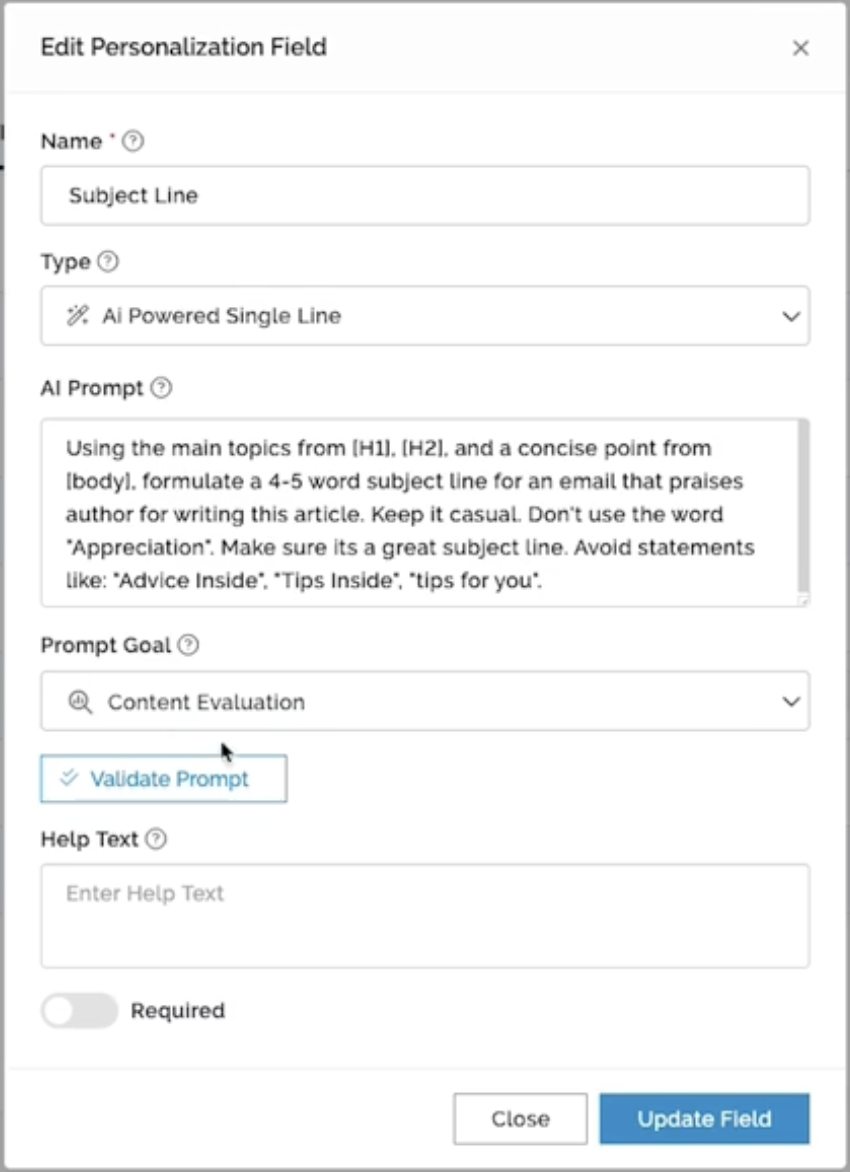
You can also use AI to generate personalized opening lines based on the publisher’s website, recent articles, or company, making each email feel far less generic without having to write every message yourself. It’s amazing what AI can do these days.
Step 3: Negotiate the Placement
Once a publisher replies, it’s time to agree on the details of the placement.
A major mistake I see SEOs making here is just negotiating the price. Obviously, that’s important. Site owners selling links are more savvy than ever and they know how much their links are worth.
But you also need to confirm other link placement details, such as:
- Target URL
- Anchor text
- Dofollow or nofollow status
- Turnaround time
- Content requirements
- Time frame (when will it be published and is it permanent?)
- Link location (where in the article is it?)
Taking a few minutes to confirm these details upfront avoids misunderstandings later and ensures you get maximum SEO value.
Step 4: Publish the Link
Now that you’ve agreed to terms, it’s time to publish the link.
There are just a few things to check here.
First, make sure that the backlink points to the correct page, uses the agreed anchor text, is dofollow (if requested), and appears naturally within the content.
I also recommend making sure the page is indexable and hasn’t been marked as noindex, as that can significantly reduce the SEO value of the placement.
This is mostly just common sense. Do your due diligence, and you shouldn’t have any issues.
Step 5: Perform Backlink Management
Backlink management is the process of monitoring, analyzing, and optimizing the links pointing to your website, and it’s one of the most under-utilized SEO techniques in the entire industry.
The truth is that SEO is a fast-paced and ruthless discipline. Things are changing all the time. Links get taken down, sites get sold, and articles get deleted…lots of things can happen. And they all have an effect on your backlink profile.
I recommend auditing your backlink profile every few months using tools like Ahrefs, Semrush, or Google Search Console to identify lost links, broken pages, and new opportunities. Maintaining your existing backlinks is often just as valuable as building new ones, especially if you’ve invested heavily in your link building campaign.
Final Thoughts
If you’ve made it this far, then you’ve learned everything you need to know about link building to run a successful link building acquisition campaign.
You know:
- That it’s fine to buy links
- What to look for in a good link placement
- How to evaluate a potential link partner
- How to find high-value link building opportunities
- How to do outreach
- And a ton more
My advice to you is this…
Link building is not easy anymore. It’s no longer just “buy links -> rank”. The secret is out. Everyone knows you need high-quality links from reputable websites within your niche.
I encourage you to go a level higher. Better systems. Better research. Better SEO. Better relationships with publishers.
The SEOs winning the link building game these days are the ones with established relationships, good systems, AI automations, and even content systems to back up the links they build.
I’ll leave you with this: If you want to succeed at SEO in 2026 and beyond, you need to invest money in links. And it’s not nearly as expensive as you may think (and certainly more affordable than what you see online).
Whether you outsource your link building, do it in-house, or use a marketplace, I wish you luck.
– Dusan Novakovic