
The Link Building Price Report 2026
We analyzed 22,703 real link placements worth $3.66 million to answer the question. What does a backlink actually cost in 2026?
Backlink pricing is perhaps the most controversial topic in all of SEO…
And that’s saying something.
Ask ten SEO professionals what a backlink costs and you’ll likely receive ten different answers.
Some agencies will quote you $100 per link. Others charge $500 - $1,000 per placement or more. Like all things SEO, it depends.
Google SERPs are even worse. Google “how much do backlinks cost?”, and you’ll find agencies quoting thousands of dollars for links.
The problem is that studies based on SEO professionals, agencies, and anonymous surveys all have the same flaws:
- They are based on opinions.
- Those opinions come from people selling links, so the prices are higher.
- Many of the people surveyed don’t know the industry that well. Their answers are most likely based on what agencies have quoted them (see reason #2…).
So we decided to use cold, hard data to truthfully answer the question: How much do links cost in 2026?
We analyzed nearly 23,000 real link placements from our marketplace worth $3.66 million. Then, we looked at average pricing, median pricing, link type, anchor text patterns, and niche data to gain even more granular insight into backlink pricing.
In this report, we are going to share everything we’ve learned with you.
You might be surprised to learn that backlinks are more affordable than most people think…
Overview
Here is a Summary of Our Key Findings
First, let’s start with an overview of the data set:
Dataset Overview
Total Orders
Total Revenue
Average Price
Median Price
Lowest Price
Highest Price
- Our data shows that the median price of a link is only $112, meaning half of all completed link placements cost less than this (without agency markup).
- The average price of a link is $161, but the average is skewed by premium links.
- The 3 most expensive niches are casino and gambling, sports, and finance. This is due to competitive SERPs, high customer long-term value, and limited publisher inventory.
- The news and media niche generates the most revenue by far. In fact, the news and media niche generates 154% MORE in sales than the 2nd most popular niche: technology.
- Guest posts account for nearly 64% of all link placements at an average cost of $164.
- The #1 factor that increased link pricing was NOT Domain Rating. It was organic traffic. Websites with more organic traffic tend to command higher valuations. In our data, links from sites with more than 100,000 monthly organic visits sold for roughly 218% more than sites with fewer than 1,000 monthly visits.
- The United States accounts for more than 80% of all transactions.
- Nearly one-third of all link placements use exact match anchors, but partial match anchors are still the most common, with ~40% of the total being partial match.
Those are the key findings. Here is more analysis of the key takeaways from PressWhizz’s data.
01Findings
The Average Price of a Backlink is $161 BUT…
Despite years of blog posts and general collective wisdom claiming that high quality links cost $500+ at minimum, our data suggests that the average price is much lower than that. And that there’s a thriving “budget” market for links in the $100 - $200 range.
The average price of our 22,703 completed orders was just $161. So, common SEO industry benchmarks might claim that links typically cost $500 - $1,000+, and agency retainers typically cost anywhere from $2,000 - $20,000, but the average cost of a link placement is still only $161 in 2026.
This is great news for small businesses, startups, and affiliates. Nobody is priced out of the link market.
Here is the average price of a link based on the niche:
Top Niches By Average Price
However, when we dug deeper into PressWhizz’s order pricing data, we found that these averages didn’t accurately reflect “normal pricing” due to premium placements driving the prices up.
Let us explain…
Of the 22,700+ PressWhizz link orders we examined, the majority of them were below these averages. However, there were many very expensive “premium placements” at the very top that skewed the average towards a higher price point.
So the average price doesn’t truly reflect what most people pay on a day-to-day basis.
There are plenty of affordable options below this price point. When you look at market statistics, prices don’t seem very scary:
Budget Market
Mid-Market
Premium Market
The data is clear: You don’t have to pay $500 for a good backlink. In fact, we’ve sold high quality links for as low as $33.
In other words, links aren’t that expensive once you strip away agency markup and opportunity cost.
In fact, the median price for a link in our data was only $112, meaning 50% of all 22,703 orders sold for around $100 or less (our budget range).
02Findings
Businesses Spend the Most Money on Digital PR Placements
Digital PR placements on major media sites are still the alpha and omega of link building. As they should be. Editorial links from Forbes, Healthline, and other major outlets come with unrivaled trust, authority, and other SEO benefits.
And when your brand is mentioned alongside well-known companies, people, or topics on authoritative sites, it helps establish your presence within a broader topical context.
There’s a reason that Google Trends data shows an increase in interest for the term “digital PR” since the start of 2026: It’s very effective AND it’s getting even more effective for SEO as Google continues to lean into brand authority. Look at some of these numbers…
“Digital PR service” is up nearly 400% over the last year, and “what is digital PR” is up 170%!:
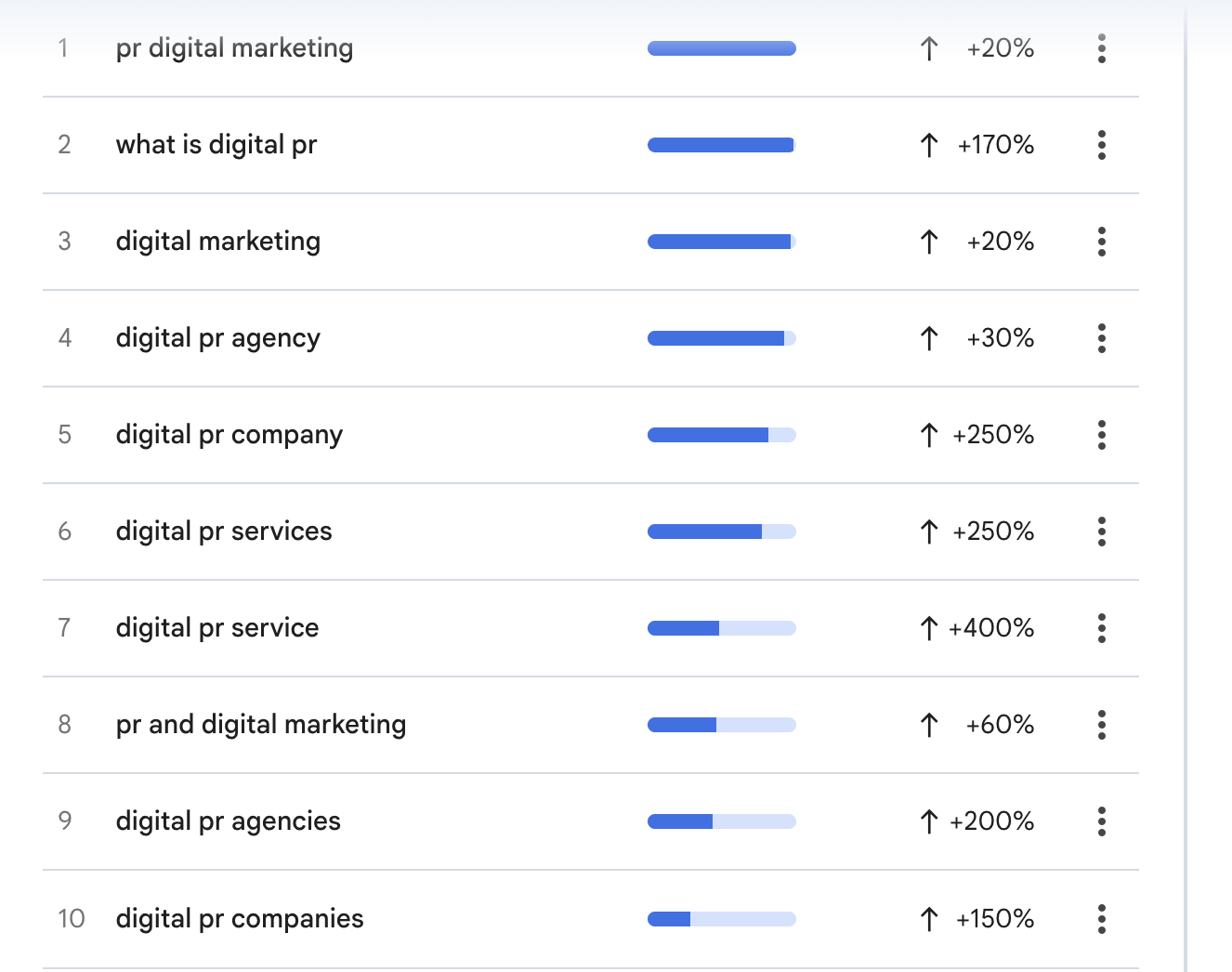
PressWhizz’s data clearly demonstrates that SEOs, agencies, and regular businesses allocate the vast majority of their link building budgets to news and media placements…and it’s not even close.
This makes sense, though. These are the best types of links. Links from high authority media outlets such as Forbes, USA Today, and Yahoo provide massive SEO value, such as passing link juice, reinforcing your entity, and sending referral traffic.
Here is a breakdown of the top link building niches by revenue:
Revenue By Niche
These numbers are in line with other findings from our study.
Our data showed that the higher the DR and higher the organic traffic of a website, the higher the price for the link. This is obvious, of course. But it’s no surprise that news and media sites (which typically have high organic traffic and high DR) are where most budgets are allocated.
03Findings
Competition, Customer Lifetime Value, and Publisher Inventory Drive Pricing. NOT Just DR
Another interesting finding from PressWhizz’s link placement data is that the niches with the most expensive average prices are:
- Casino and gambling
- Sports
- Finance
Here is the full chart:
Top Niches By Average Price
Of course, the casino niche is no surprise. Gambling SERPs are notoriously cutthroat. Just look at the SERP for the keyword “best online casino”:
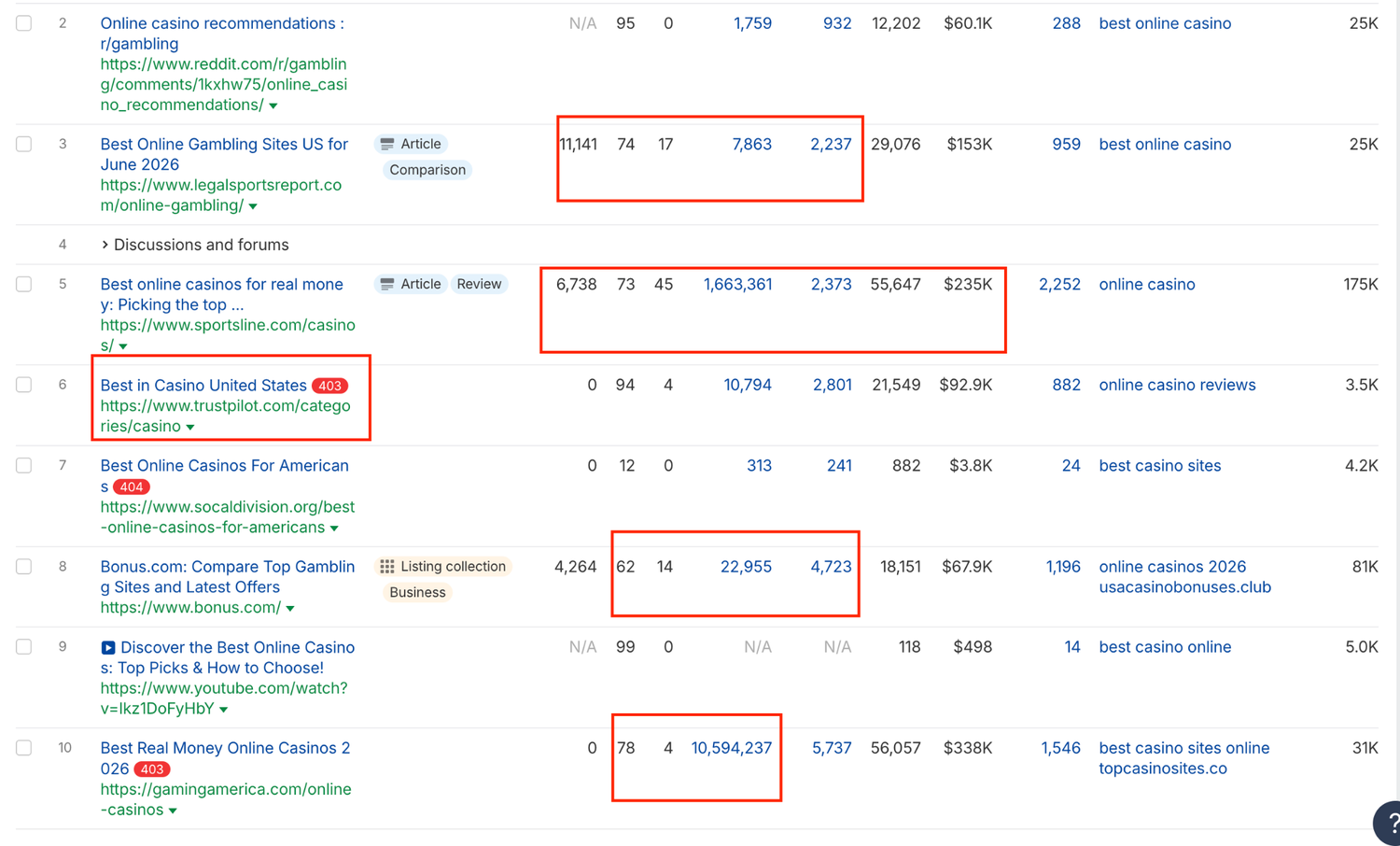
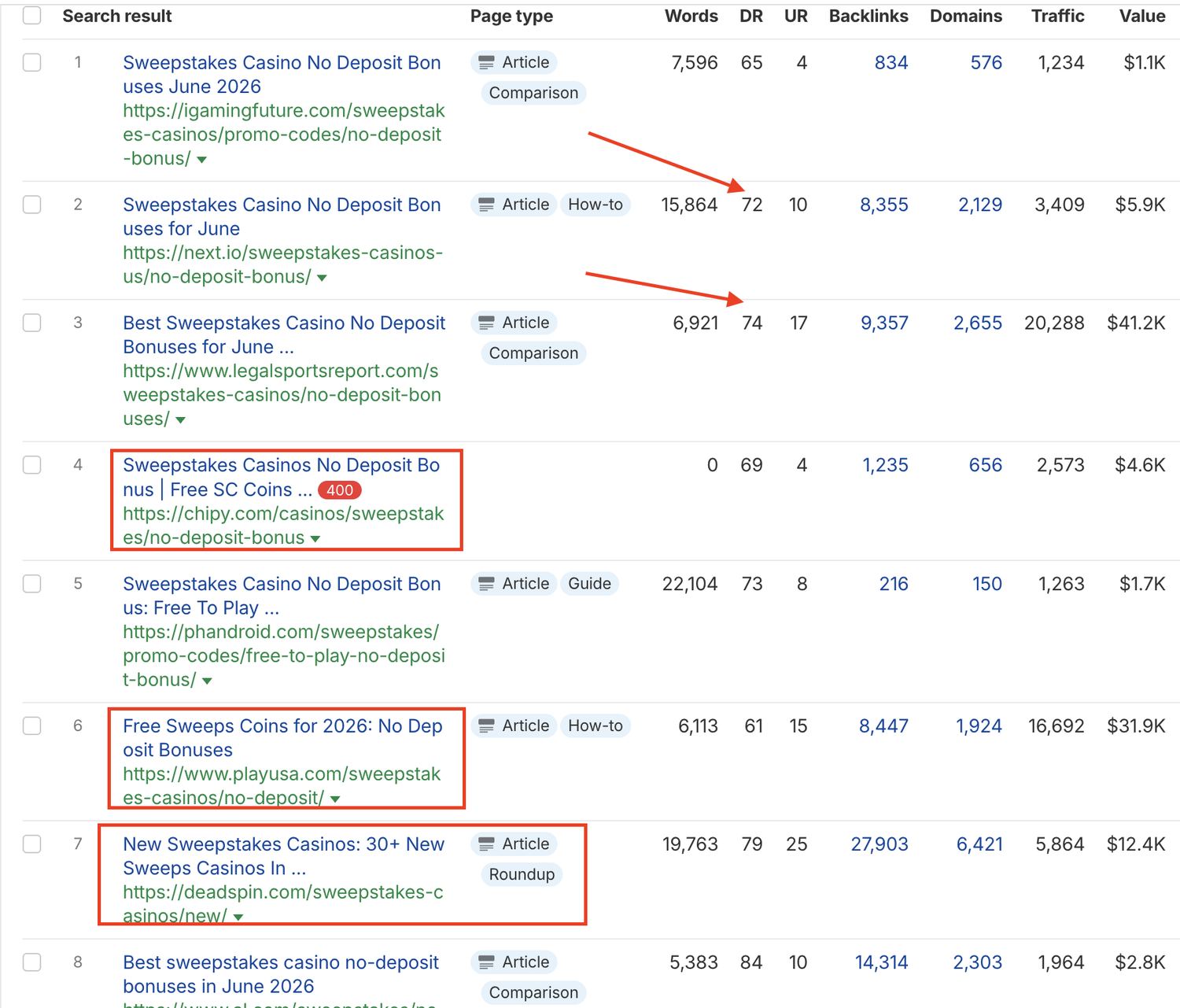
This SERP has high DR websites, some with millions of backlinks. And, no, going for long-tail variants like “sweepstakes casino no deposit bonus” isn’t much easier. You’re still up against high DR media sites or the casinos themselves:
Finance is, unsurprisingly, another one of the most expensive niches in link building. Finance includes:
- Loans
- Insurance
- Investing
- Credit Cards
- Mortgages
This should come as no surprise to anyone. The customer lifetime value (CLV) of a customer in one of these niches could easily be hundreds of thousands of dollars or more.
Just take a look at the SERPs for credit card keywords, and you’ll see how intense the competition is:
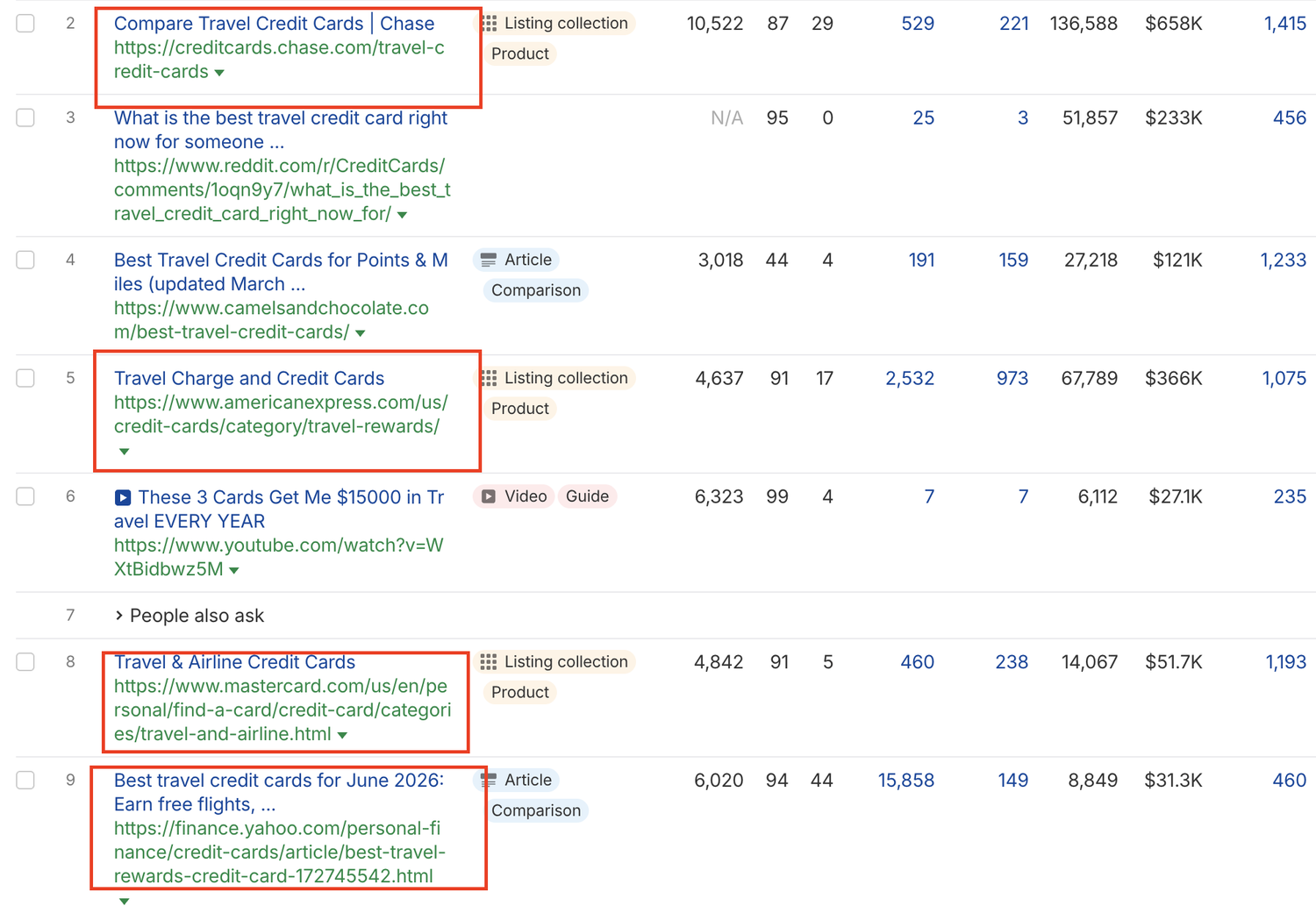
You’re up against Yahoo, the credit card companies, and, somehow, a travel blog that managed to squeeze in there.
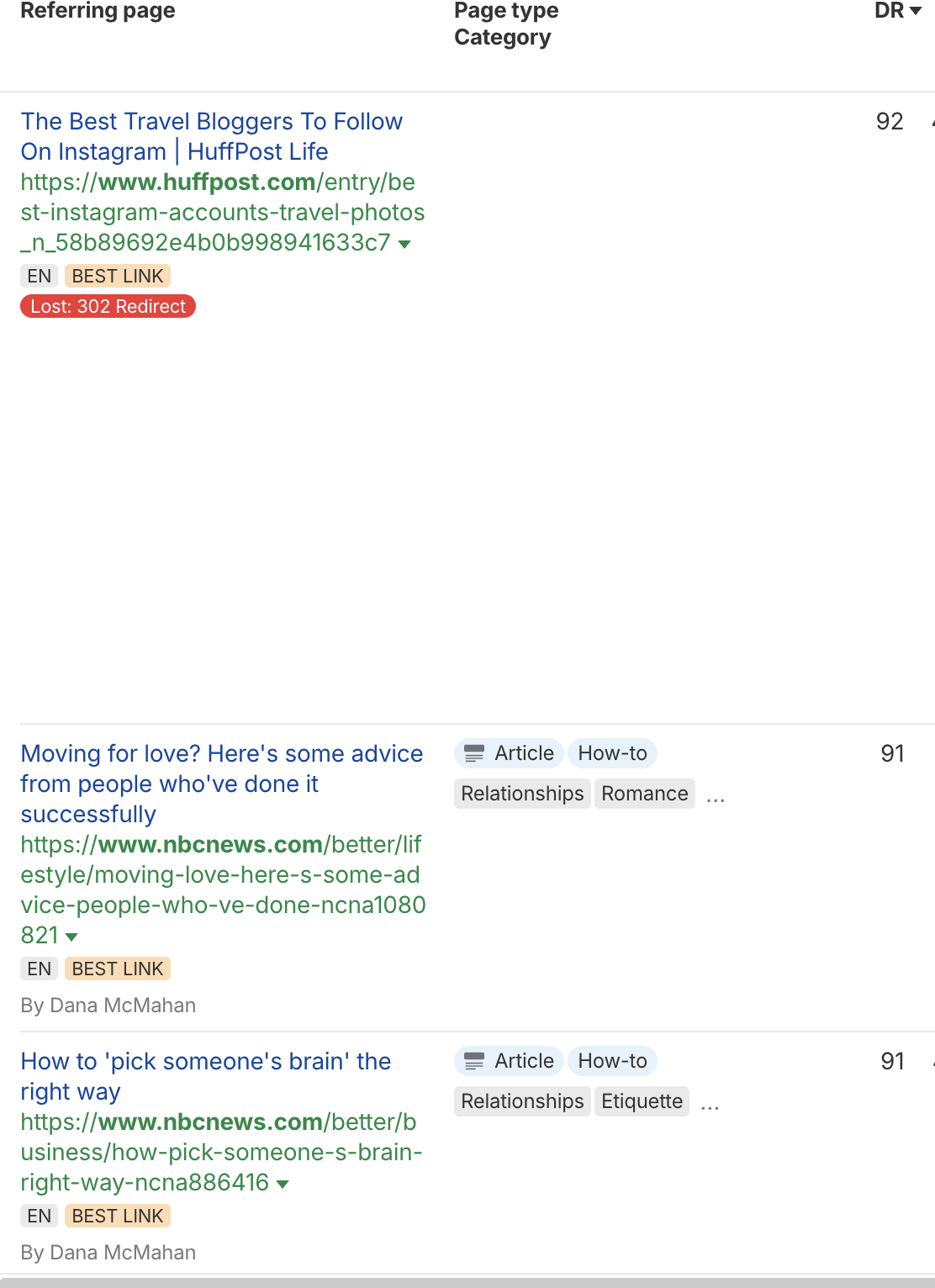
And even that travel blog has some incredibly powerful digital PR backlinks from HuffPost and NBC News:
So, there are a few key factors that drive prices so high in these markets:
- High ROI: When a single customer could be worth thousands of dollars or more, the value of a link increases significantly.
- Limited Publisher Inventory: The barrier to entry in these industries is much higher than others, and competition is fierce, which leads to a more limited supply (and higher prices).
- High Demand: As you could tell from the screenshots we provided, there is intense demand in these niches. You need thousands of backlinks (or more) to compete for lucrative finance, casino, or other gaming key terms. That insatiable demand means link providers can charge more for placements.
By the way, if the sports niche seems strange to you, it’s because there’s also limited supply in the niche. And gambling opportunities in sports drive link prices up compared to other niches.
04Findings
Guest Posts Are Still the Most Common Form of Link Building
Guest posting is one of the oldest, most common, and most controversial forms of link building in the SEO industry.
It’s also one of the most popular, with nearly 65% of link builders using guest blogging as their primary tactic, according to Ahrefs.com on their page 73 Blogging Statistics for 2024.
Some SEOs swear by it. Google claims that guest posts have limited value and violate spam policies. And others even claim that link building is dead as a whole because search engines can identify commercial patterns and nullify their SEO value.
Talk is cheap. If you want the truth, follow the money.
The truth is that guest posts make up roughly 64% of PressWhizz’s total orders (ironically, almost dead on with Ahrefs’ reported ~65%) and nearly 75% of all revenue.
So, regardless of what you’re seeing on the web, getting contextual links on relevant websites with real traffic and natural outbound link profiles remains incredibly valuable for SEO.
Here is the comparison between guest posting and niche edits as a total portion of our sales:
Guest Posts vs Link Inserts
Guest Posts
Link Inserts
At first glance, this may come as a surprise. Link inserts (“niche edits”) are considerably more affordable and typically provide a quicker SEO boost, since they are inserted into pages that already have organic rankings and traffic.
But if you dig a bit deeper into the market, it makes sense.
Guest posts offer a few advantages that niche edits don’t have. For example:
- Editorial Control: You create the content, choose the anchor text, and control where the link goes.
- You Control the Narrative: Guest posts allow you to frame your business in the best possible manner.
- Higher Quality Websites: High authority media sites don’t typically offer link insertions, but they do offer guest posts. Since these placements typically cost a lot more, it skews the data in favor of guest posting.
- Buyer Perception: Guest posts remain the industry standard. Any digital PR or SEO agency will almost certainly build link building packages around guest posts. They are just perceived as higher value since the company gets complete control and the article is “about them” rather than just a contextual link in “someone else’s article”.
However, we want to stress here that it’s about quality and not necessarily the “type” of link. Neither guest posts nor niche edits are inherently better than the other. A contextual niche edit on a relevant, high DR page with heavy traffic is, of course, worth more than a guest post on a spam website.
05Findings
Traffic Correlates With Higher Prices More Than Domain Rating
This is perhaps the most important finding in the entire study.
For years, the SEO industry has been obsessed with Domain Rating. If you were looking for link opportunities in the past, chances are you sorted everything by DR first.
We all did it. And there was some logic to it. Domain Rating gave us SEOs a quick way to estimate the strength of a website’s backlink profile, and for a long time, it was the closest thing we had to a benchmark metric.
And hard data even backs up the importance of DR.
Backlinko’s landmark case study, We Analyzed 11.8 Million Google Search Results. Here’s What We Learned About SEO, found that “data shows that a site’s overall link authority (as measured by Ahrefs Domain Rating) strongly correlates with higher rankings.”
So DR is still valuable, but it’s not 2016 anymore. SEO is a lot more sophisticated than it used to be.
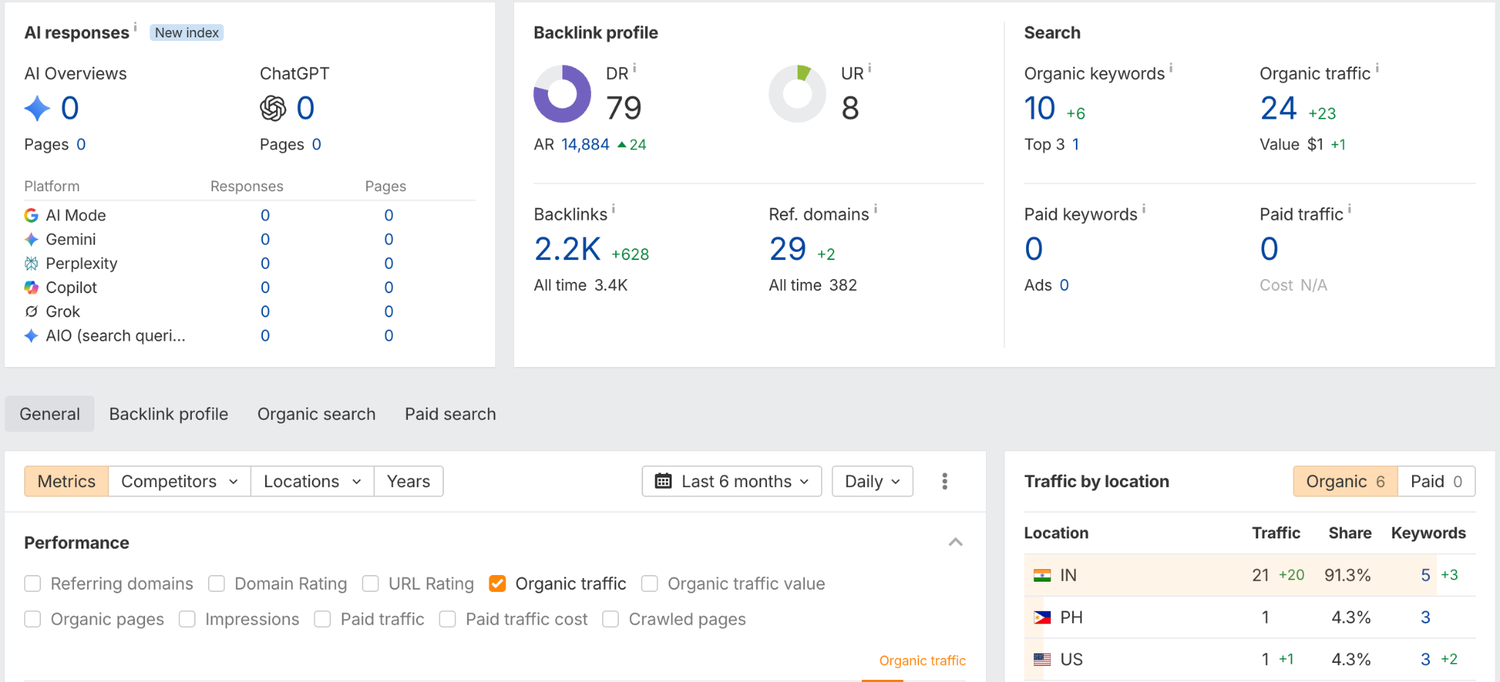
High DR no longer automatically means a high quality website. Here’s an example of a DR 79 website with almost no organic rankings and no tier-1 traffic:
As SEOs ourselves, we know all the tricks: Expired domains, redirects, manufactured backlink profiles. It’s easy to inflate authority metrics. Sophisticated buyers now know that DR is not all that matters, AND they don’t always trust it.
And as other metrics such as relevance gain in importance, high-level metrics like Domain Rating inevitably decrease in value.
Another thing is that DR is a third-party metric designed to estimate the strength of a site’s backlink profile.
It has nothing to do with Google. But traffic? That’s ALL Google.
If a site is getting thousands of organic visitors who interact, click, stay on site, and return, that’s a sign that readers and Google love the site (which will then pass more link equity to you). DR is just a made up, albeit helpful, metric.
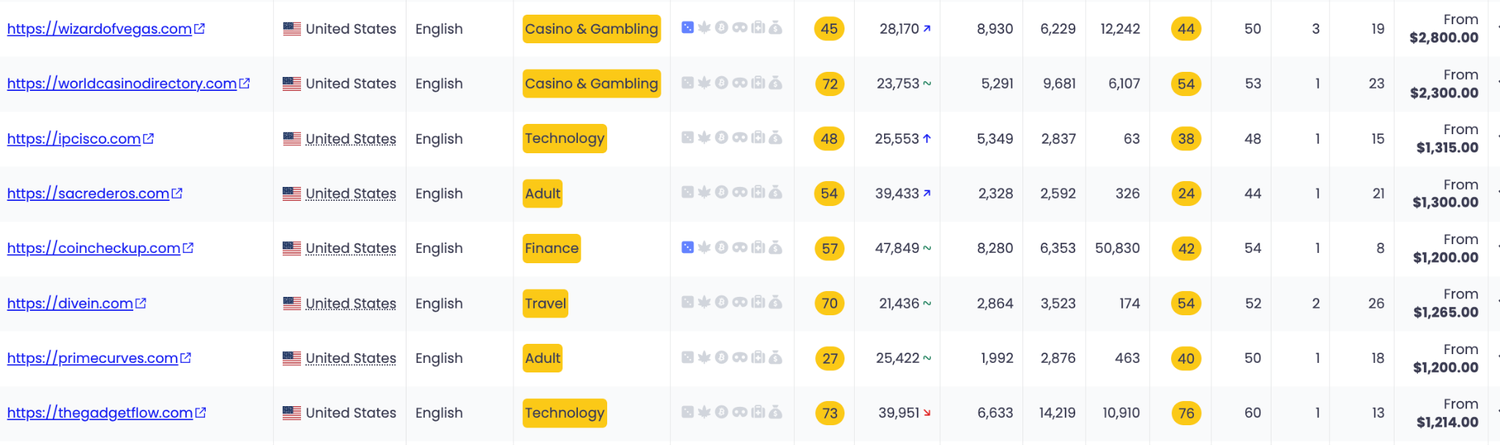
This trend plays out in many of our listings on PressWhizz. As you can see in the following screenshot, many websites with a modest DR of 25 - 50 but high organic traffic go for higher prices than average:
06Findings
Partial And Exact Match Anchors Are Still Going Strong Despite Warnings
Anchor text ratio is a source of controversy in the SEO world (are you noticing a pattern here?).
Many in the SEO community warn that even the slightest misstep will trigger Google’s spam filters and result in “quality raters” knocking down your door. Just Google “anchor text ratio suggestions” and you’ll see respected sources of knowledge warn that exact match anchors should be 5% or less of your anchor profile.
That is clearly not true. But even we were a bit surprised at the level of aggression shown by buyers in PressWhizz’s data.
If you’d asked us before running this study, we’d probably have guessed exact match anchors would account for somewhere around 20–25% of placements. Turns out we were wrong. At 32.5%, exact match anchor text is far more common than many in the industry would expect.
Here is the anchor text distribution according to the 20,000+ PressWhizz placements that we studied:
Anchor Text Distribution
We found this quite surprising given the years of warning from SEOs and Google about anchor text ratio “violations”.
Conventional wisdom says to avoid over-optimizing money anchors, yet the market clearly hasn’t got the memo yet…or simply doesn’t care.
The reality is that exact match anchors are still widely used because buyers want to maximize relevance signals on money keywords and squeeze the most SEO value out of every paid placement.
In other words, exact match anchors are popular because buyers know they work.
There are also other market factors at play, such as expectations and perceptions. For example, if a client wants to rank for “best protein powder”, they’ll probably pressure their agency into using “best protein powder” as the anchor text.
That doesn’t necessarily mean they’re overdoing it, though. In fact, the healthiest takeaway from this data is that partial match anchors were #1 at 40.2%.
Rather than forcing exact keywords into every link, many SEOs are using more natural variations that reinforce topical relevance while diversifying their anchor profiles.
07Findings
The United States Continues to Dominate
This one won’t surprise many people. The United States accounts for nearly three quarters of all transactions in our dataset. It wasn’t very close.
Here is the chart:
Country Distribution
This doesn’t require in-depth analysis.
The US has the world’s largest SEO industry, the biggest affiliate marketing ecosystem, an enormous SaaS market, and some of the most competitive search results on the internet.
That said, we urge you not to overlook opportunities elsewhere. The United Kingdom, Canada, and Australia all punch well above their weight. Even India, despite generally lower commercial values per keyword, has quite a bit of opportunity due to the sheer scale of its SEO ecosystem.
If there’s a takeaway here, it’s that the US remains the undisputed center of the link building economy, but there’s plenty of money to be made in other English-speaking markets.
In closing
What this means for your business
The main point we want you to take away from our analysis of PressWhizz’s link order data is that link placements aren’t as expensive as you may think.
Browse SEO forums or Google “how much do backlinks cost?”, and you’ll often see claims of $500–$1,000 for average links (or more), with some agencies charging $10,000 - $20,000 per month for retainers.
Our data paints a very different picture. Links aren’t that expensive.
The median link placement in our dataset cost just $112, with an average of $161 before agency markup.
That means high quality links are considerably more accessible than many businesses assume.
Agencies, of course, provide additional value through prospecting, outreach, negotiation, content creation, strategy, reporting, and campaign management, which can be worth many thousands of dollars for sure. But the underlying publisher transaction itself is far more affordable than the market perceives.
TL;DR: Don’t let fears of inflated link costs stop you from investing in SEO.
For businesses, you can buy backlinks for affordable prices. And for agencies or freelancers, our data proves you can still have a substantial profit margin without requiring your clients to pay high prices.
Thank you for taking the time to read this today.
Good luck with your link building.
- The PressWhizz Team