If you’re looking for a guide on digital PR backlinks that explains everything you need to know about PR links and shows you step-by-step how to acquire them, then you’re going to love this guide.
Public relations backlinks from trusted media outlets are some of the most powerful links in all of SEO, and websites with strong links from trusted media sites tend to be more resilient to Google algorithm updates. That’s why businesses, search engine optimization professionals, and agencies often spend thousands of dollars just to acquire them.
But if you think you can just spam syndicated press releases and instantly rank on Page 1 like it’s 2015, you’re wrong. Link building is much harder than it used to be.
The good news is that over my 17+ years in the SEO world, I’ve developed advanced link building prospecting, organization, and outreach strategies that have resulted in my landing countless high quality editorial links from major publications (many of them for free).
Follow my advice, and you’ll give yourself the best chance at landing links that generate authority, reinforce your brand’s entity, increase brand visibility, and increase organic rankings.
What Are PR Backlinks?
A PR backlink is any link to your website that comes from a media outlet, such as a national newspaper, online magazine, or industry trade publication.
You earn them when a journalist or editor references your brand, quotes you as an expert, or cites your original data inside their reporting. Common examples of PR backlinks in the SEO world include sponsored content on media outlets such as The New York Times or Forbes, HARO mentions, press release links, or a link you earned from a journalist citing your content (such as a data study).
The most common types of press links you’ll see in SEO include:
- Press Mentions: Press mentions are when you get quoted as an expert in an online publication. These are great for SEO.
- Syndicated Press Releases: This is when you get 200 low quality links from random online news sites. They worked in the 2010s, but Google is too smart for that now. They provide little to no SEO value.
- Genuine Press Releases on Trusted Websites: A legitimate press release on a trusted publication can provide SEO value through brand visibility, entity reinforcement, referral traffic, and potential secondary editorial pickups.
- News Coverage: This is when you have a genuinely good news story and a newspaper picks it up organically. If a real outlet with editorial oversight writes about you because their audience finds it interesting, that produces a high quality backlink for you.
- Sponsored Posts on Media Outlets: Major media outlets like Yahoo, Forbes, and The Guardian all accept sponsored posts. While many of the links are nofollow (meaning they don’t pass ranking equity or “link juice”), they are still very valuable for the relevant traffic, brand mention, and entity validation they provide (more on this below).
Here’s a good example of a high quality digital PR backlink from Yahoo Finance for an AI platform called “Attorney Share”:
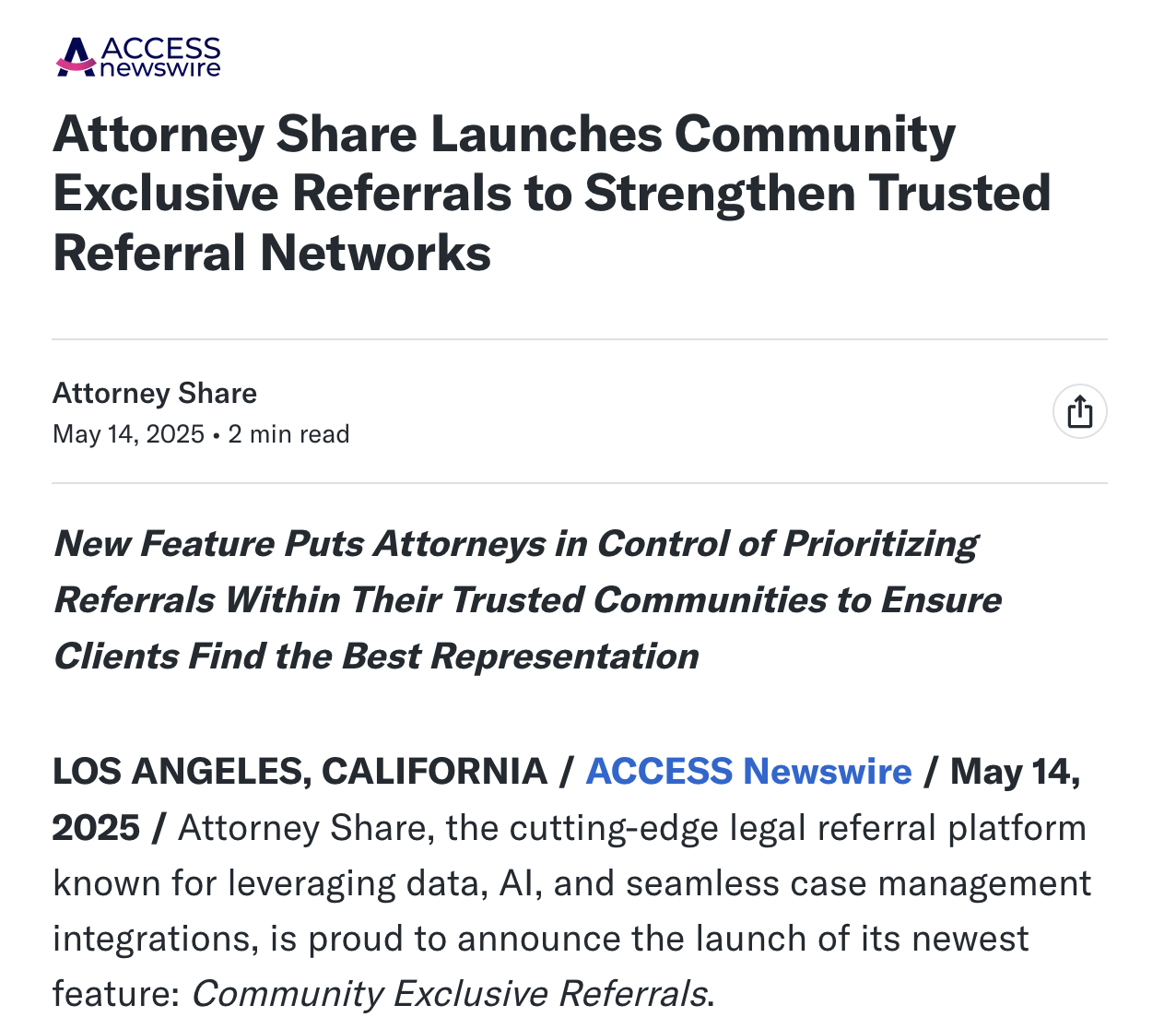
Yahoo Finance is a well known media outlet that ranks for legal and technology related keywords, so being mentioned there helps Attorney Share’s SEO. But this link provides even more value than a standard PR backlink, because this article also ranks for the company’s brand keyword and gets some organic traffic.
And ranking pages often make stronger link placements because they are crawled more frequently, attract more engagement, and may accumulate additional links over time.
Note: If you’re new to the SEO world, you need to understand the term “authority”, which refers to a website’s power in Google’s eyes. Authority is typically measured by Domain Rating (DR) in Ahrefs or Domain Authority (DA) in Moz. It’s not the only key metric, but it’s helpful. I have an entire article on domain authority vs. domain rating you can read to better understand the topic.
But what makes press links so valuable? And why are SEOs so ravenous about them? Let’s move on to that now.
Why Are Press Links so Valuable in SEO?
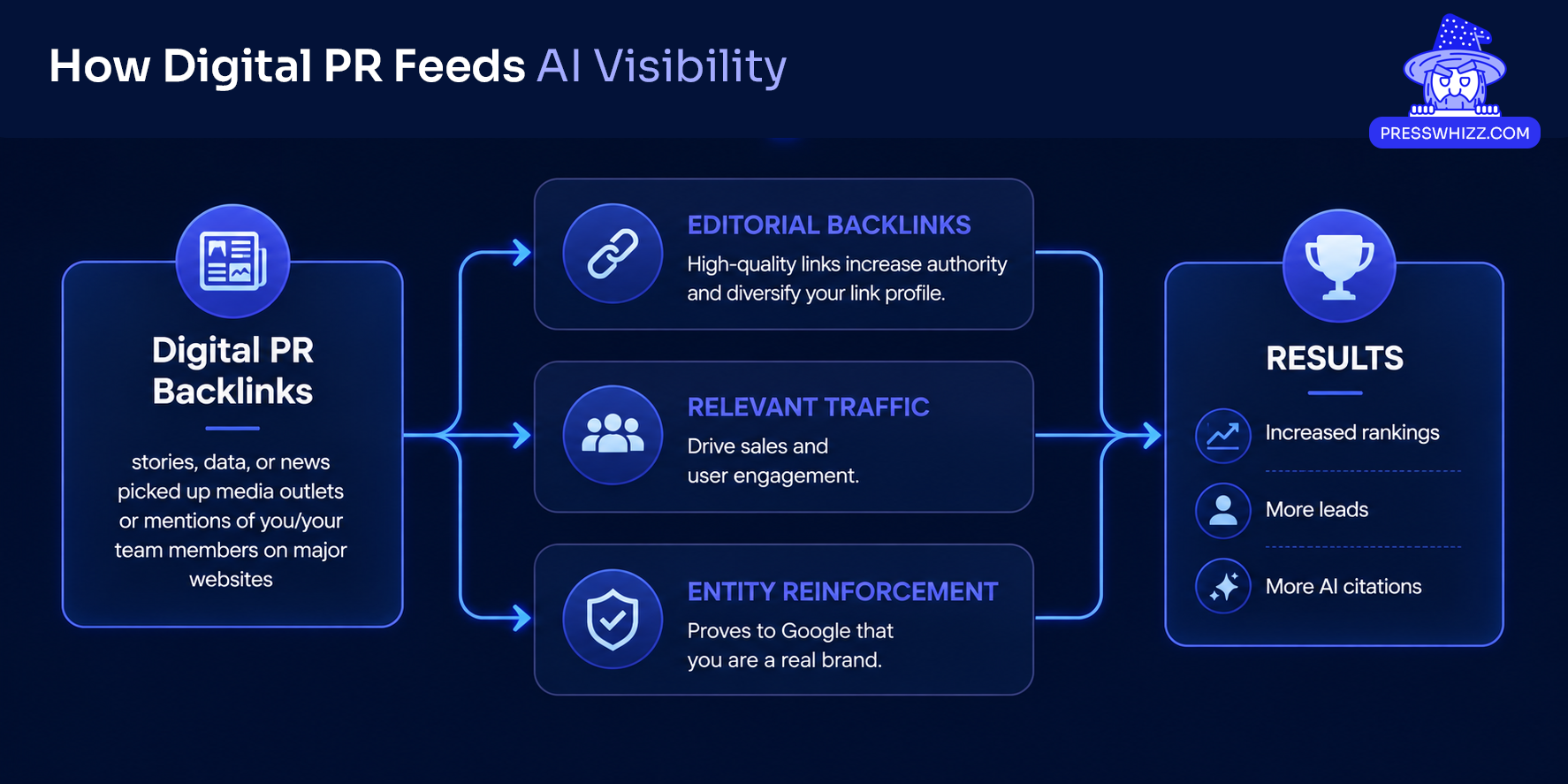
PR links are valuable for SEO because they combine authority, trust, brand recognition, and high quality referral traffic in a way that’s difficult for competitors to replicate.
When you get mentioned in a trusted media outlet, it acts as a unique vote of confidence to search engines like Google. The trusted media site is essentially vouching for you, which passes “link juice,” trust, and authority to your website.
Before we move on, let me briefly explain how Google’s algorithm works.
Google’s ranking systems use links to evaluate the authority and trustworthiness of websites. PageRank is one of the most well-known examples of a link based Google algo.
PageRank works by passing authority through links, meaning a backlink from a highly trusted website can transfer more value than dozens of low quality links. Google’s algorithm incorporates hundreds of additional signals, but according to court testimony, algorithm leaks, and Google’s own research, links are a fundamental part of how pages are ranked.
Do you see why PR links are so valuable now? A trusted website is, in a way, transferring authority and trust signals through Google’s link graph.
And it goes beyond just link equity, too. PR links also:
- Send relevant traffic to your site, which can help SEO
- Reinforce your entity (Google sees you as “more real”)
- Diversify your link profile
- Increase brand awareness and brand reputation, which can increase branded searches and user engagement signals that appear strongly correlated with stronger organic performance
Note: Digital PR is a form of white hat link building. Unlike black hat link building, nobody can tell you it’s wrong to build PR links.
The Benefits of PR Backlinks
The benefits of PR backlinks include higher overall search engine rankings, more referral traffic, increased authority, better brand awareness, reinforcement of trust signals, better AI visibility, and entity validation.
As you can see, it’s impossible to overstate the advantages of links from major media outlets. They are perhaps the most valuable links in all of SEO.
Let’s break these benefits down one by one so you can see just how much value they create for your brand.
Higher Search Rankings
Links from credible, high authority sources improve your search rankings. We know from overseeing thousands of link placements, anecdotal evidence, Google patents, and data studies that backlinks (particularly high authority links) drive better search rankings.
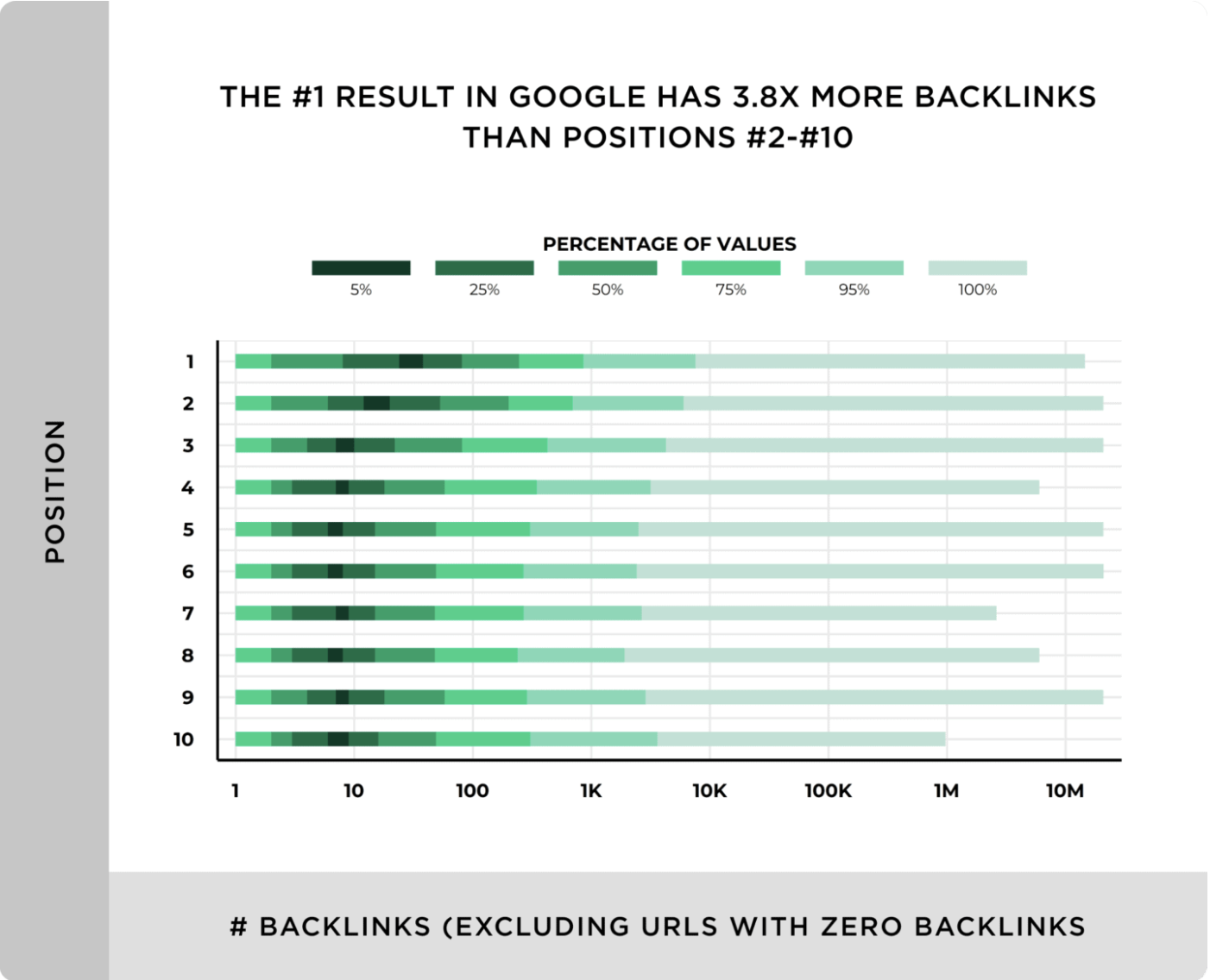
A Backlinko study titled “We Analyzed 11.8 Million Google Search Results. Here’s What We Learned About SEO” found the following:
- A site’s overall link authority (as measured by Ahrefs Domain Rating) strongly correlates with higher rankings.
- The #1 result in Google has an average of 3.8x more backlinks than positions #2-#10.
And a major study of ranking factors by Semrush titled “Ranking Factors 2024” found that the following link metrics had powerful ranking impacts:
- The domain’s Authority Score (based on a website’s link power and traffic)
- Backlink diversity (via referring IP addresses)
- Number of referring domains
So, we know that backlinks heavily influence rankings, especially high quality links. And you won’t find more powerful, unique links in SEO than PR links.
More Referral Traffic
A placement on a major publication can put your brand in front of thousands of potential visitors who are more likely to engage with your content. That can send positive user interaction signals to Google that then boost you up in the rankings.
People who discover you in the news often spend time reading or clicking around your site and researching your brand. While clicks alone don’t necessarily improve rankings, evidence suggests that links capable of generating genuine user engagement may provide benefits beyond traditional link equity.
For example, Google’s Reasonable Surfer model was built around the idea that some links are more likely to be clicked than others. And Google’s NavBoost system uses aggregated user interaction data as part of its ranking systems.
That means some links (like PR links) are a lot more valuable than others. A link buried in a footer on an obscure website may pass some authority, but a prominently placed link on a trusted news publication can generate clicks, brand searches, and real traffic.
By the way, we haven’t even mentioned how PR pieces can lead to direct sales yet.
Increased Domain Authority
Getting high quality backlinks from reputable websites can increase third-party metrics such as domain authority and domain rating, and both of those metrics correlate with higher Google rankings.
However, I want to stress two things here:
- DR and DA are not Google ranking factors. They are third-party metrics created by SEO brands to estimate website authority. While they are valuable metrics for getting a 10,000 foot view, they aren’t direct ranking factors.
- Increased domain authority isn’t the catch all metric most SEOs claim it is. Yes, it’s valuable, but it’s not the only thing that matters. Relevance, referring domains, anchor text, and other factors are also important.
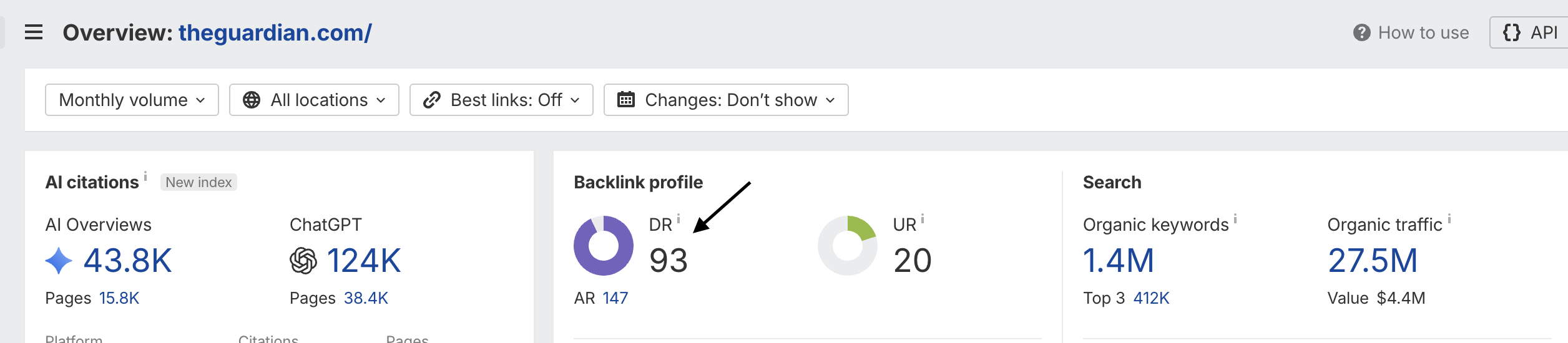
In case you’re new to SEO, you can pop your site into a tool like SEMRush or Ahrefs and see your Domain Rating or Domain Authority. This is what it will look like:
Brand Awareness
Brand awareness is one of the most valuable long-term benefits of PR links. When your business is featured in trusted publications, you’re exposing your brand to potential customers who may later search for you directly, spend time on your site, or even buy things from you.
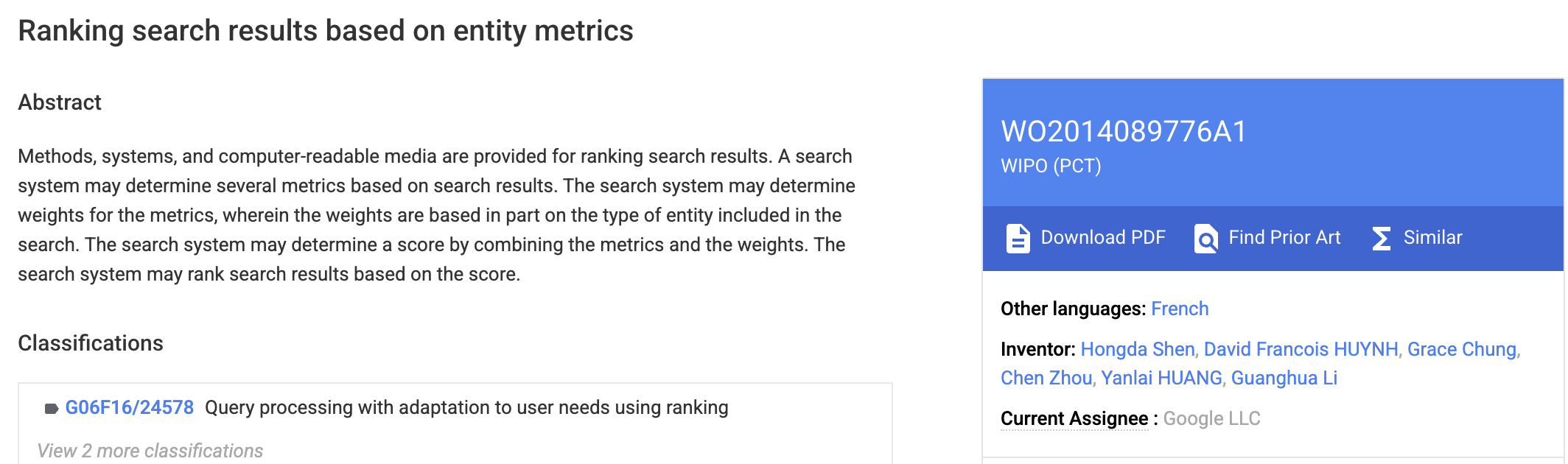
While Google has never explicitly stated that branded search is a ranking factor (surprise, surprise…), they have filed patents relating to entity metrics and query analysis, both of which discuss concepts such as user interest, navigational searches, popularity, and user behavior.
I won’t bore you with the technical details, but they have patents such as “Ranking search results based on entity metrics”:
They also have “Document scoring based on query analysis”:
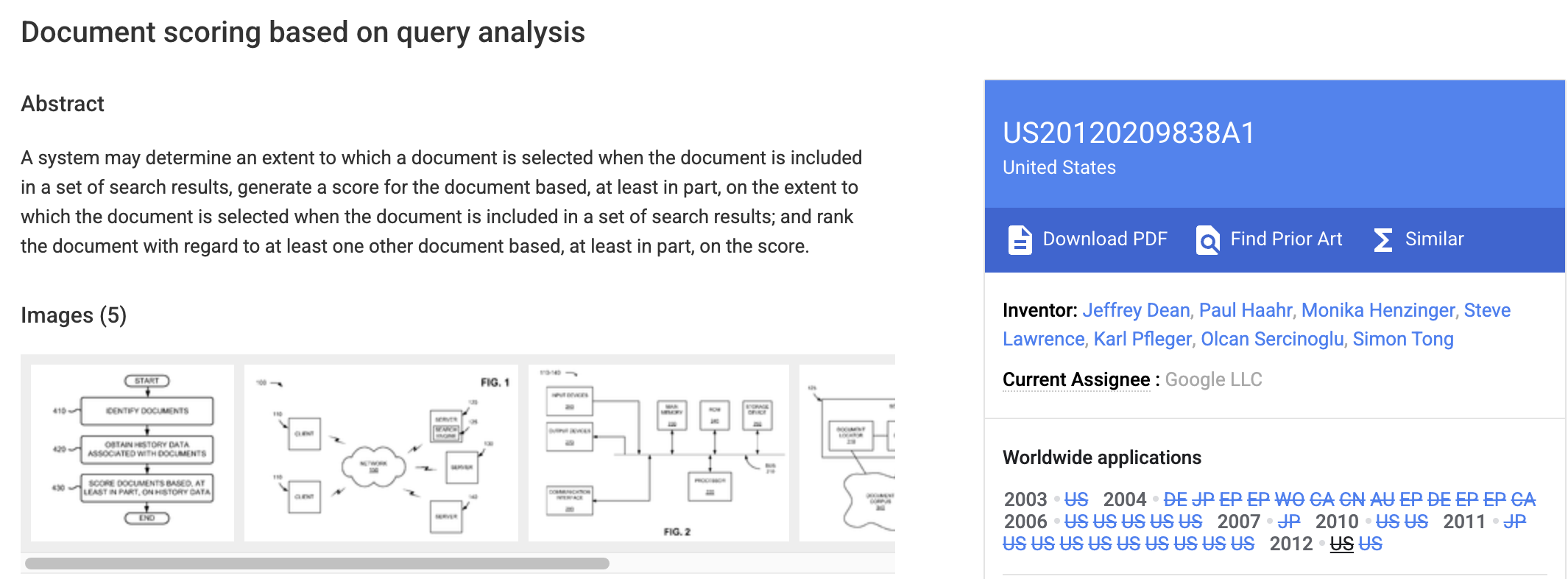
Both patents suggest that Google measures factors such as branded search activity.
PR campaigns help create demand by increasing visibility, generating branded searches, encouraging repeat visits, and reinforcing your brand as a recognized entity within its industry.
More AI Citations
Large language models increasingly rely on trusted sources when evaluating brands and generating recommendations.
Mentions from major publications help:
- Strengthen entity recognition
- Validate expertise
- Improve citation likelihood
- Increase inclusion in AI-generated recommendations
In many cases, the same publications that influence Google’s trust systems also appear frequently in AI retrieval systems. This is an extremely nuanced topic, so I recommend you read my guide on AI link building for more information.
How to Get PR Backlinks
Traditional SEO advice says the best way to get PR backlinks is to build relationships with journalists and to create good content. However, in my experience, that isn’t nearly enough. You can’t just create good content and expect editorial links to appear (though it can happen).
In reality, digital PR link building takes one of two forms: earned media and paid media placements.
Earned media is when you create something genuinely newsworthy and earn high quality backlinks naturally. Think of it like getting media coverage just because you deserve it. Paid placements are exactly what they sound like: you pay for a sponsored post. Instead of putting in hours of legwork to get PR links, you can buy them directly from a marketplace like ours or hire a digital PR agency (though this will likely be expensive).
Check out my guide on how to buy backlinks safely before purchasing links, so you avoid scams or Google penalties.
Which one is better?
It depends on your circumstances. I always take a money hat approach. Do whatever works.
I recommend doing whatever fits your niche, goals, budget, and risk tolerance.
But for the sake of this guide, I’ll give you my personal process for gaining earned media links naturally:
Step 1) Research Your Link Partners
The first step in building a successful PR links campaign is to identify top tier publications that publish industry relevant content. If I were looking for link partners, I’d look at sites and ask the following questions:
- Do they publish industry relevant content?
- Do they have sponsored posts or PR pieces on their site already?
- Do they link to competitors?
- Do they rank for keywords in my niche (good for Google Knowledge Graph)?
- Do they have clear contact information, or do the contributors display their social media?
I’d also look at the topics they cover and any recurring themes to help build my own news pieces.
Here’s how to do it.
Search Google for industry-related news, rankings, studies, and trends. Pop these keywords into the search bar and take note of which publications appear repeatedly:
- [industry] study
- [industry] statistics
- [industry] trends
- [industry] report
- [industry] survey
- [industry] ranking
Next, let’s do some competitor backlink analysis. Go to Ahrefs and reverse engineer your competitor’s backlink profiles. Add their URL into Site Explorer and click Backlinks on the left hand side:
Then, turn on Best Links and sort by DR so you only see the most authoritative sites. I also like to filter results for only English language websites, but that depends on where you are:
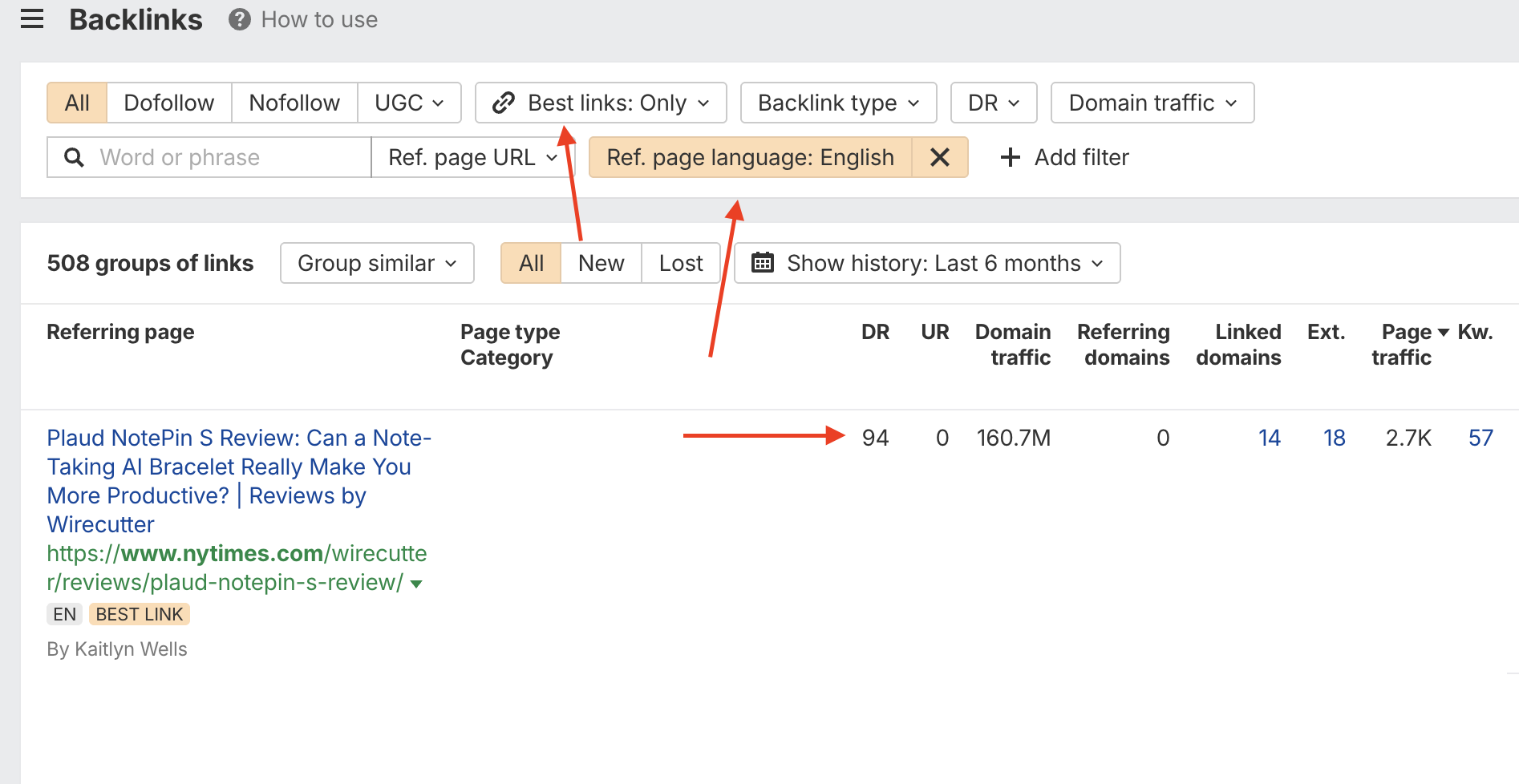
As you can see, this brand has a New York Times link. Hard to get better than that…
They have other links from news outlets and industry relevant publications as well:
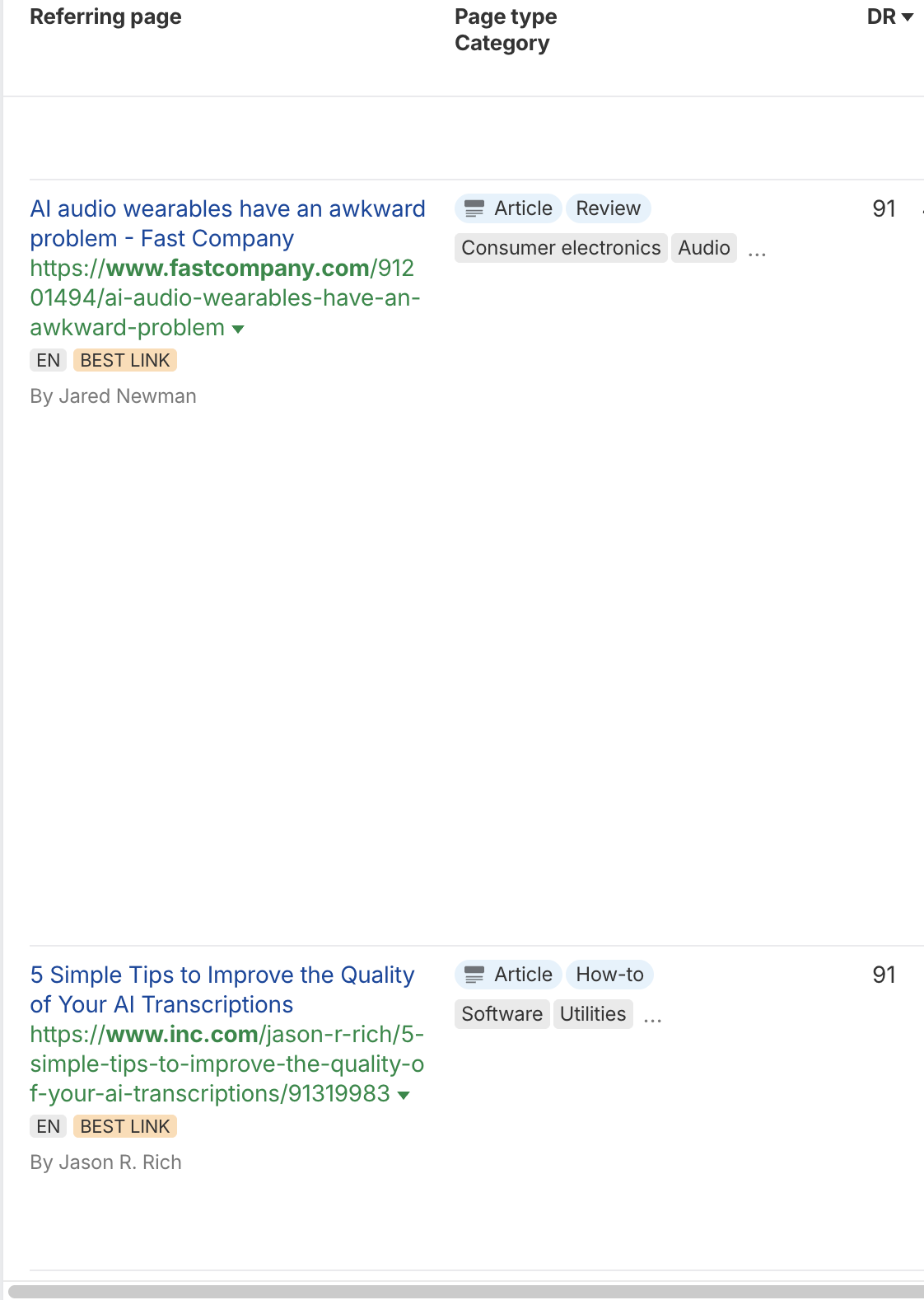
You can sift through all this manually, but I recommend exporting the data and having AI organize and score it for you. First, click Export on the far right of your screen:
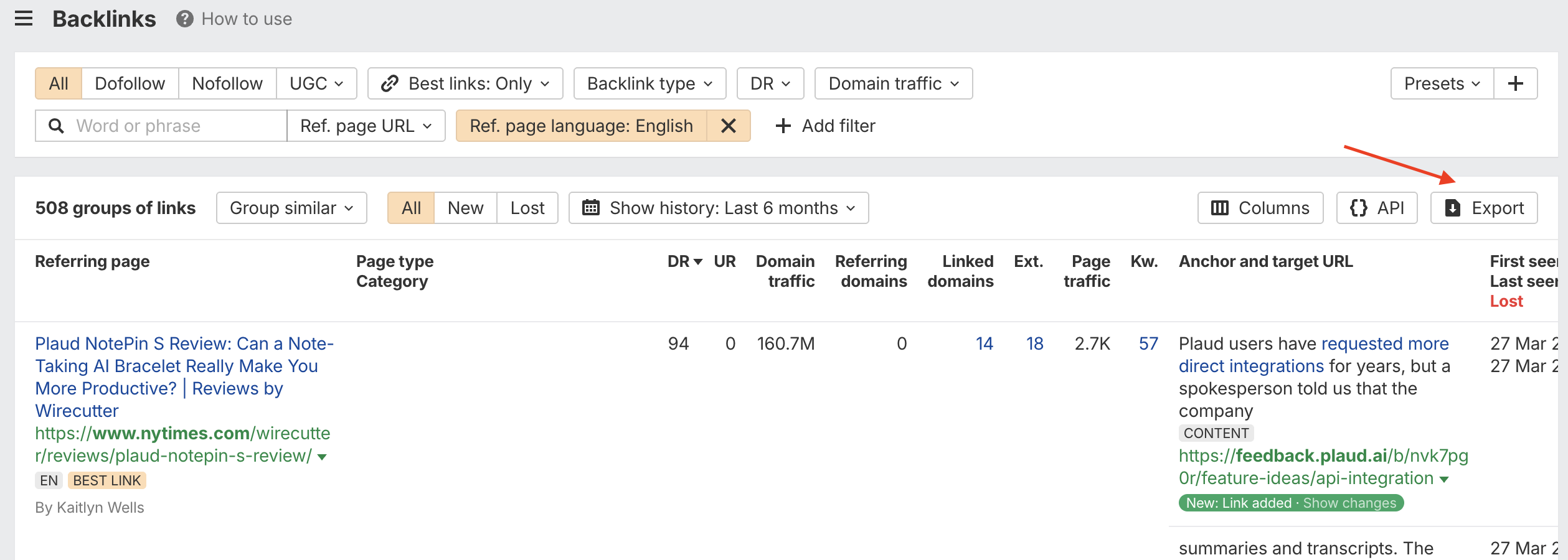
Once you have the data, download it as a CSV and put it into a custom GPT or Claude Project trained on your link building knowledge. Then, use this prompt to organize the data:
Analyze this backlink spreadsheet and identify only domains that represent genuine PR, media, editorial, news, magazine, business publication, trade publication, podcast, association, or industry publication opportunities.
Exclude:
- Directories
- Citation sites
- Social media sites
- Forums
- Guest post farms
- Web 2.0 sites
- Link exchanges
- PBNs
- Profile links
- Resource pages
- Coupon sites
- Affiliate sites
- SaaS tools
- Vendor links
- General blogs with no editorial standards
- Any link source that would not realistically be considered a PR placement
For each remaining domain:
Categorize the website:
- National News
- Business News
- Industry Publication
- Trade Publication
- Local News
- Magazine
- Podcast
- Association
- Government
- Educational
- Other
Assign a PR Opportunity Score (1-10).
Output:
| Domain | Category | PR Opportunity Score | Notes |
Sort results by PR Opportunity Score in descending order.
Be conservative. If a domain is not clearly a PR, media, editorial, publication, association, magazine, podcast, or news opportunity, exclude it.
This will produce a spreadsheet that looks like this:
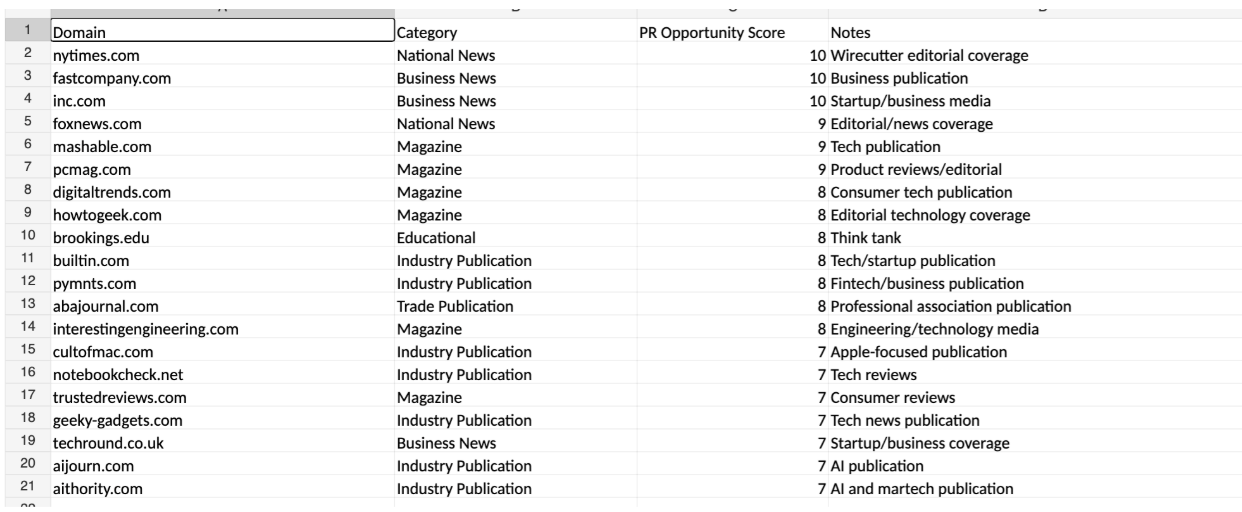
There isn’t a single best way to approach building PR links. It depends on your budget and goals. If you’ve got the money to go after The New York Times and Inc.com, be my guest. I think for most SEOs, it’s best to start with low hanging fruit.
Step 2) Find a Newsworthy Topic
Next, it’s time to create a newsworthy topic that your audience will enjoy reading (and a journalist is more likely to cover).
Here’s what I would do…
Start by manually browsing the sites on your sheet and taking note of the topics they cover. Use a site search (site: website.com “keyword”) to find articles in your niche that they’ve covered and review the headlines, types of content, and whether those articles are ranking for industry related key terms.
You can also use Google Trends to find hot topics in your niche. Just enter your topic into Google Trends and see what comes up. Below, I’ve entered a random topic, and it’s showing a decent uptrend over the year:
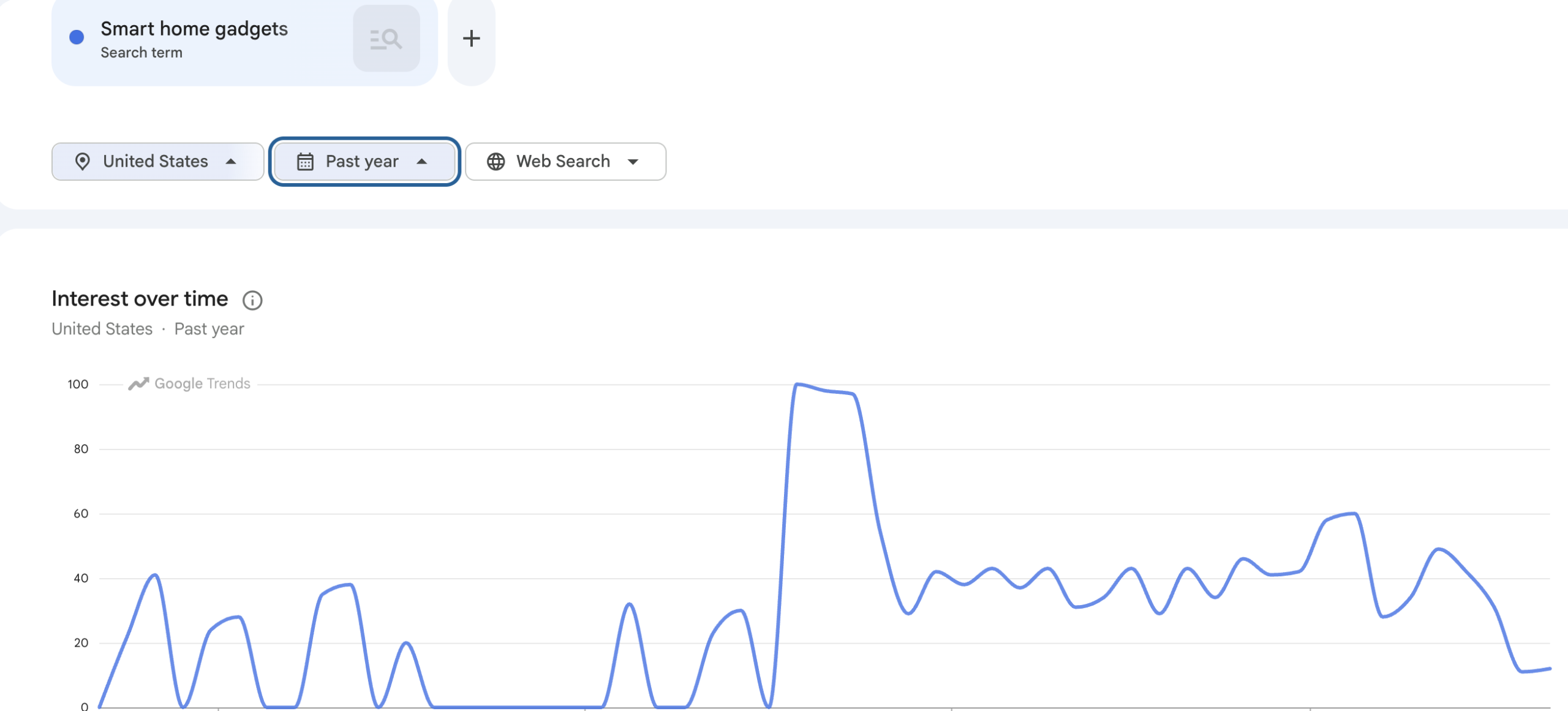
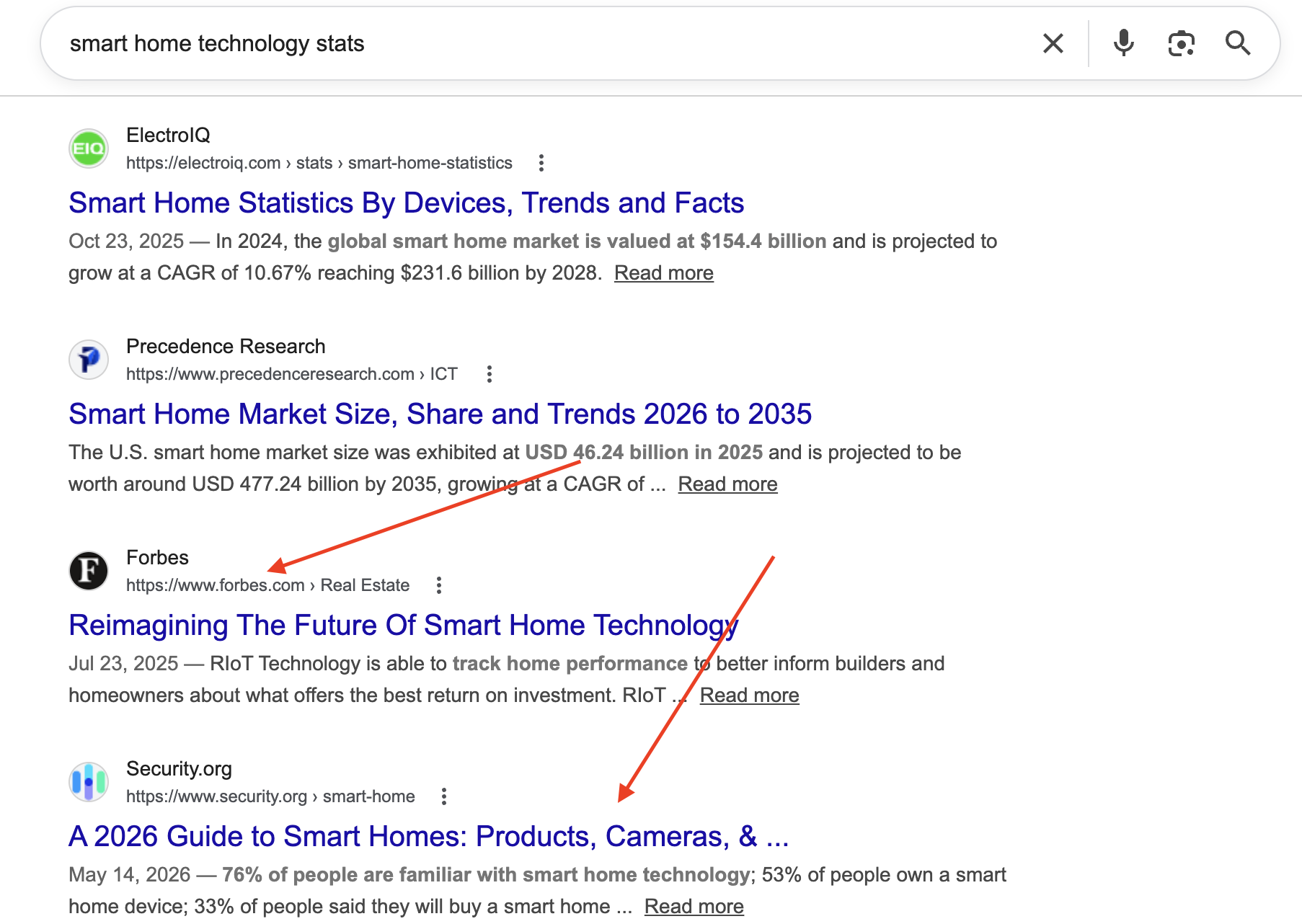
Now that I have my industry (AI) and a subniche that’s trending up (Smart home gadgets), I know I have a great angle for a news piece: Smart Home Statistics. I bet there are already PR pieces on this topic. Right away, I see some media sites publishing pieces about this topic:
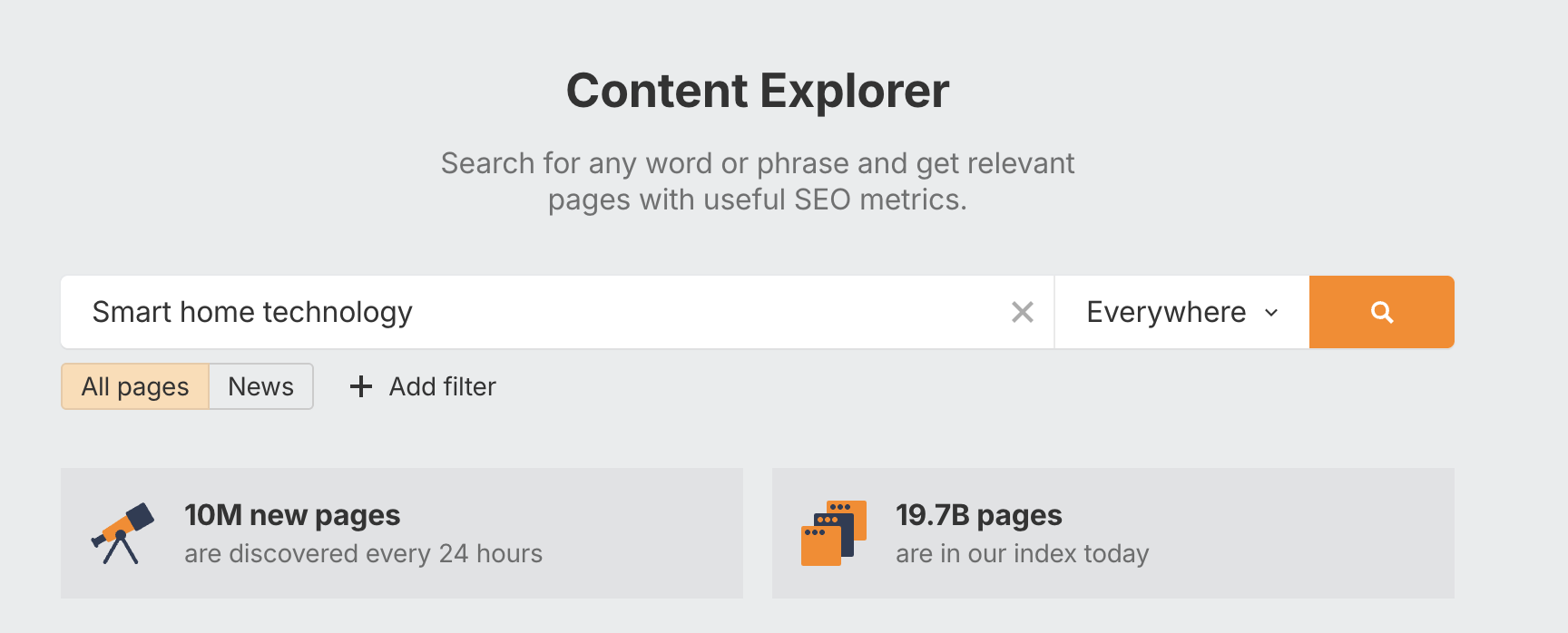
You could also use Ahrefs Content Explorer to find similar content that’s attracting links and traffic. Go to the Content Explorer and enter your topic:
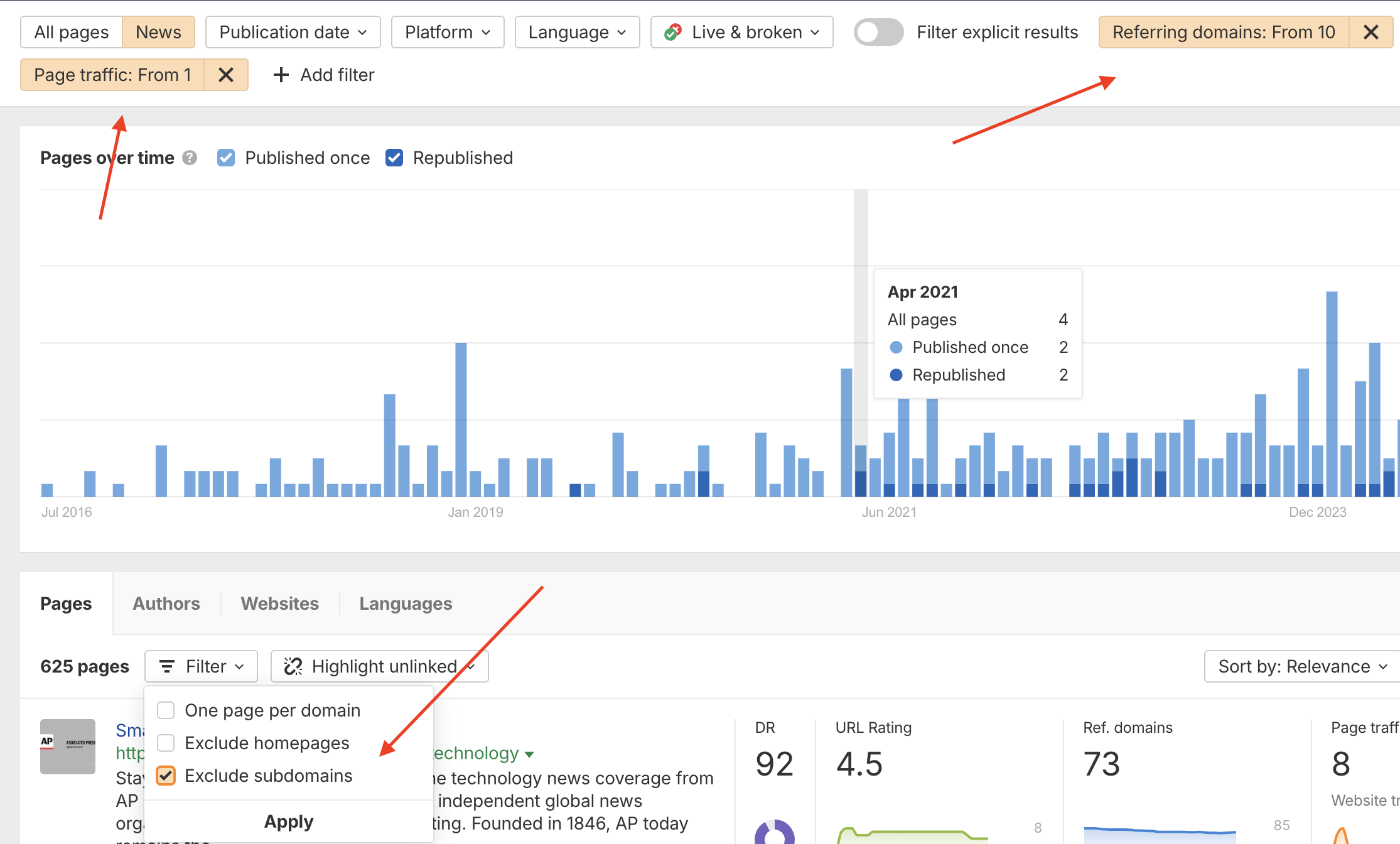
Then, set these filters to reduce the noise and identify high value topics:
Now, we see only high performing PR pieces that you can use for inspiration (and for improving conversion rates during outreach).
Here’s what we have:
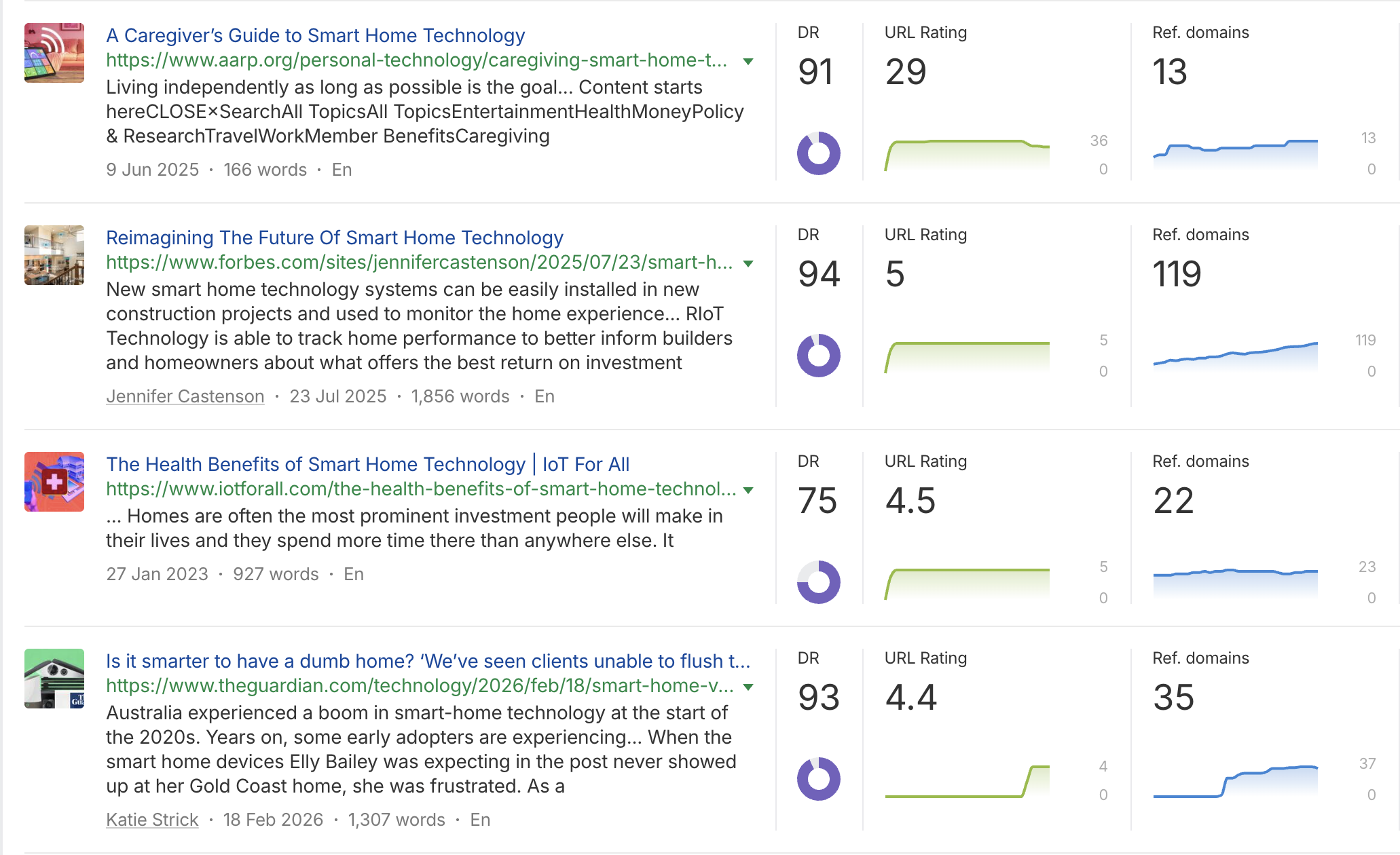
I like the piece in The Guardian! It seems a bit controversial (people love that).
Step 3) Create Professional Content
Your next step after settling on an idea is creating a piece of content worth referencing.
This could be a study, survey, industry report, ranking, expert analysis, or trend piece. It all depends on your industry, competition, target audience, and what you’ve found during your research. It may even come down to the publication that you’re writing for. For example, Forbes may want industry data, whereas The Guardian might want a story that families can relate to.
The goal is to take a proven topic and add a unique angle, stronger data, or a more interesting insight. Focus on a clear story, support it with evidence, and make the content easy to understand (and even slightly controversial).
Here are a few tips for creating better PR articles:
- Use original data, statistics, or research whenever possible.
- Focus on a single headline worthy insight or takeaway.
- Support claims with credible sources and evidence.
- Keep the story relevant to the publications you’re targeting.
- Create content that can be easily referenced, cited, and shared.
Step 4) Reach Out to Journalists
Next up, everyone’s favorite part of link building: outreach.
A quick review of recent articles will usually reveal who is actively writing about your industry and whether your story is a good fit for their audience.
Here’s what I would do if I were pitching journalists today. Keep in mind that their inboxes and socials are flooded with spam. Everyone wants a digital PR link from their sites.
Follow this process:
- Find the right journalists: Review the publications on your target list and identify the writers covering your topic. Focus on journalists who have recently published similar stories, studies, reports, or industry news.
- Personalize your pitch: Don’t send generic “Dear Sir/Madam” emails. Use the journalist’s name, reference a recent article they’ve written, and explain why your story is relevant to their audience.
- Lead with the story: Just get to the point. Don’t butter them up. People are tired of that (ask me how I know…). We’ve built thousands of link placements here at PressWhizz, and our most successful pitches are all honest and direct. Just explain the angle, highlight the most interesting statistic or takeaway, and make it clear why the story is worth covering.
- Provide data: Don’t miss this. Provide any data you can, like Ahrefs screenshots or Google Trends data, to show them that the content is getting links and organic traffic.
- Make it easy to cover: Include a link to the content, supporting data, and any resources the journalist may need.
- Follow up: If you don’t get a response, send a short follow up a few days later. Don’t hound them, but gently remind them you exist. Sometimes things just get lost in the shuffle.
Pro Tip: I recommend using Pitchbox and N8N to set up an automated workflow to scale up your outreach. You can create templates and personalize them using Claude Skills.
Step 5) Monitor Your Progress
Once your campaign is live, I recommend monitoring performance by doing the following two things:
- Tracking your results in a spreadsheet
- Setting up alerts
The first one is obvious. Keep track of all of the outreach you do with media sites and see who responds. Why are you doing this? To see which sites accept your PR, which angles work the best, and which emails are most successful. This is just basic backlink management anyway.
If something works, double down on it and cut everything else out. SEO these days is a scale and efficiency game.
Also, I recommend setting up Google Alerts for your brand name so you see new mentions as they appear online.
Ahrefs Alerts can take this a step further by notifying you whenever new backlinks or referring domains are detected. Go to All Tools -> Alerts:
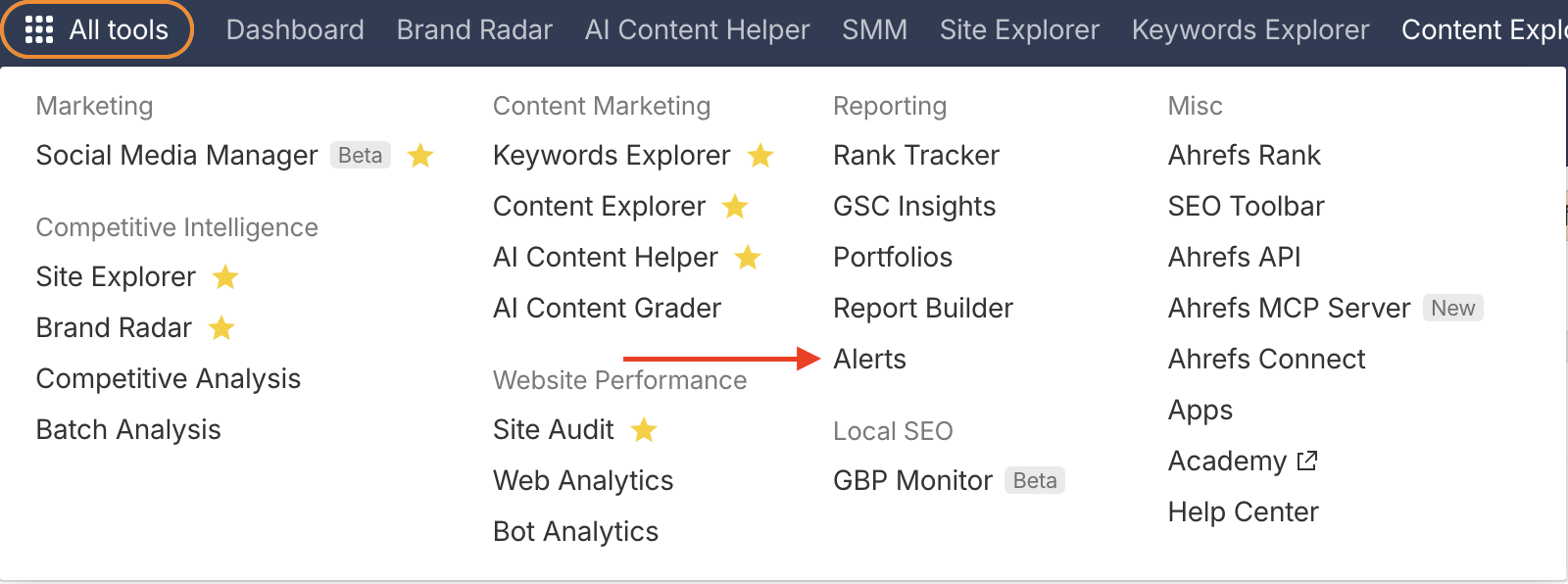
Then choose New Alert and enter your brand name:

The Best PR Link-Building Strategies
My favorite strategies for earning high authority backlinks include publishing original data, unlinked brand mentions, HARO outreach, and publishing genuine newsworthy content.
I’ll cover them in more depth below.
Original Statistics And Surveys
This is my #1 tip for building high quality editorial links to your website. In my nearly two decades in SEO, this has brought me the most success for the least amount of money. If you’re a decent sized brand, conducting original research shouldn’t be that hard. All you need is an email list or a social media following to get data.
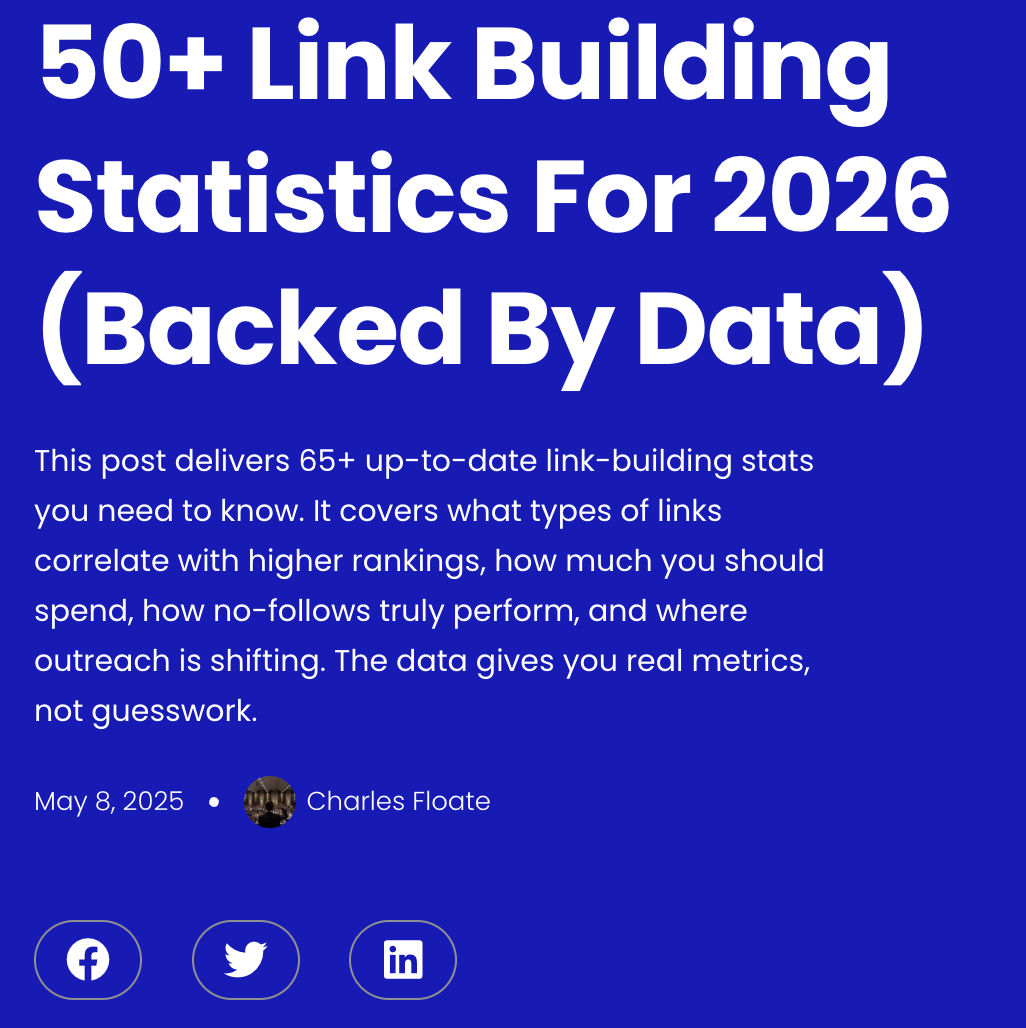
I have a statistics post on this blog called 50+ link building statistics:
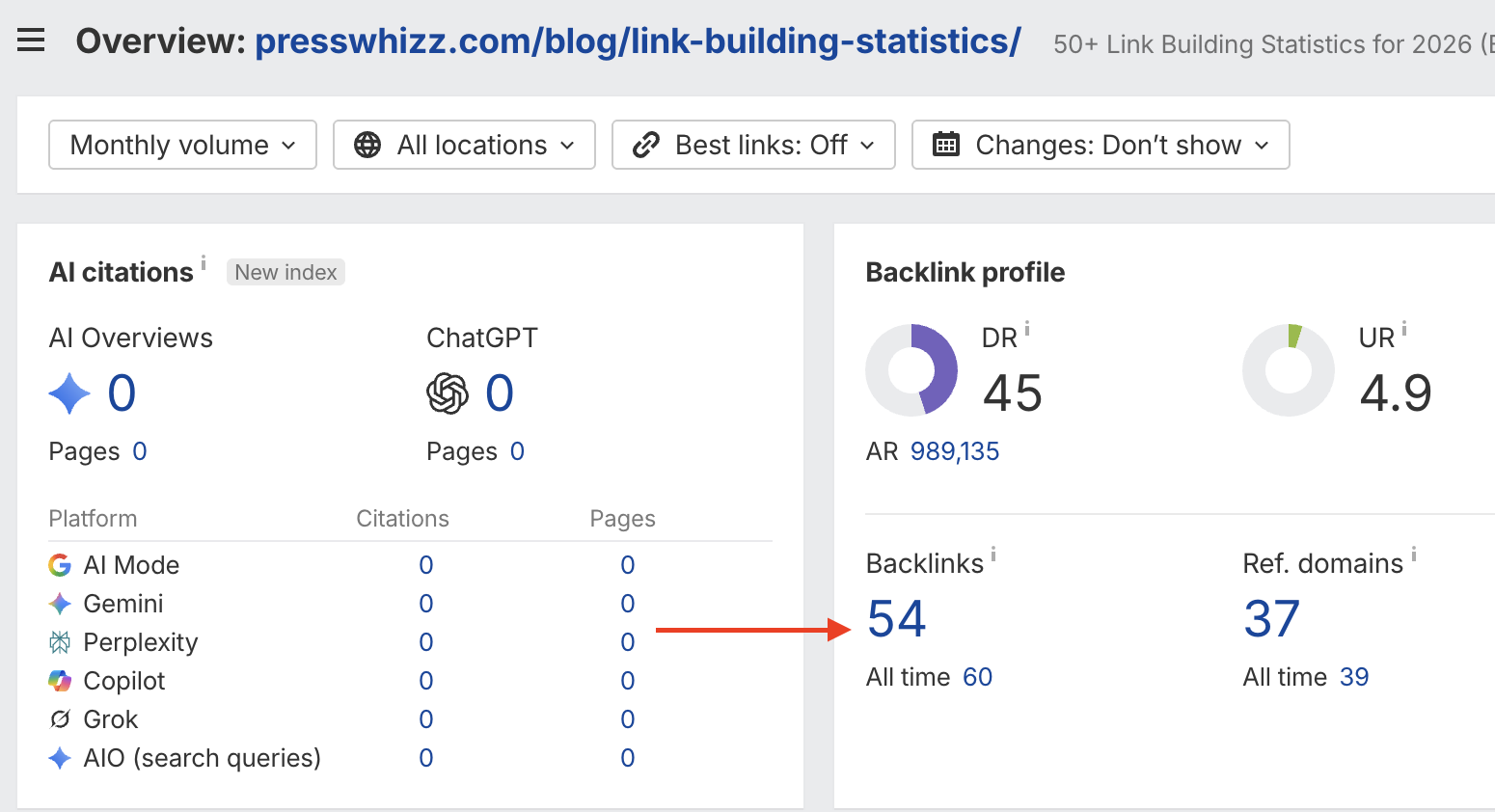
It took me just a few hours to write, but it has generated dozens of links from industry sites:
HARO Link Building
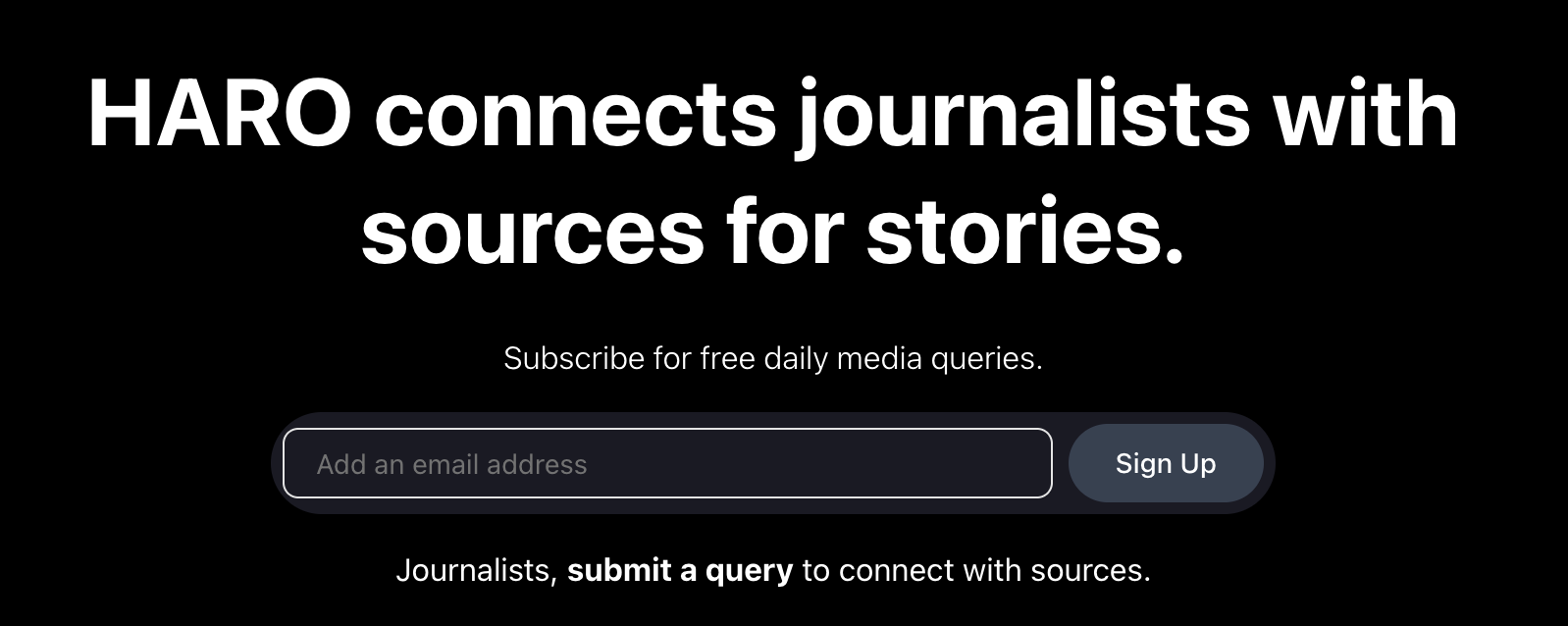
HARO link building is a form of digital PR where you provide a journalist with an expert quote, and they add your quote to their content with a link back to your website. It’s a win-win for both sides.
They get an industry expert adding insight to their post, and you get a backlink, brand mention, and entity reinforcement.
It’s also 100% free. Just sign up to get regular emails with opportunities for being featured in media publications in exchange
One fair warning: HARO is extremely competitive, and opportunities aren’t sorted by niche. For something more user friendly and less competitive, read my guide to the best HARO alternatives.
Build Long-Term Relationships
Journalists are inundated with cold emails every day, many of which are generic, irrelevant, or mass generated. If you’ve already worked with a journalist, had a conversation, or successfully placed a story with them in the past, you’ll drastically increase your chances of getting published again.
In my experience, once you publish something that an outlet’s audience loves, it will keep publishing your stories.
So, my advice is to keep track of the journalists who engage with your content and take the time to build rapport with them. Share useful information when you have it, respond quickly when they need a comment or quote, and become someone they can rely on as a source.
Create Controversy
Anger sells.
Just look at any news website, Reddit thread, Facebook group, or comment section online. People are far more likely to engage with content that challenges their beliefs, sparks debate, or encourages them to take a side. That’s why controversy can be such an effective angle for PR campaigns.
A controversial story naturally attracts attention, discussion, and shares. That increases the likelihood of journalists covering it. The key is to create a debate around a topic that is relevant to your industry rather than manufacturing outrage for the sake of it.
Here’s a great example from The Guardian that’s got a bit of controversy:

This article has everything: People getting dumber, people complaining, international hackers, horror stories of people getting locked out by tech malfunctions…people love it. By the way, this article has generated nearly 100 backlinks for The Guardian. It’s crushing.
Newsjacking
Newsjacking is when you jump on a trend to ride the wave.
Everyone loves jumping on a trend once something starts gaining popularity, and the same principle applies to PR link building. Instead of trying to create attention from scratch, you attach yourself to a story that’s already generating interest and contribute something useful to the conversation (not everyone contributes something useful, by the way).
Use tools like Google Trends, X, Google Alerts, and industry newsletters to spot emerging stories before they become saturated.
We see it all the time in the SEO world. When Google rolled out AI Overviews, SEOs rushed to publish studies, screenshots, commentary, and real world data on how search results were changing. Those who moved quickly earned coverage, backlinks, and visibility.
Unlinked Mentions
My last tip is to reclaim unlinked brand mentions. This is one of the lowest effort digital PR strategies in the game. I mean, the hard work has already been done, hasn’t it?
Someone decided you were worth mentioning and published content about you. The only thing missing is the link.
All you need is a tool like Ahrefs Alerts (I swear I’m not sponsored by them…) to find these opportunities. Once you’ve found a mention, reach out, thank them for including you, and ask if they’ll add a link. The conversion rate should be pretty high. All you’re asking them to do is turn a mention into a link. Why would they say no?
Final Thoughts
Backlinks from major news outlets are some of the most valuable backlinks in all of SEO.
A strong digital PR campaign can:
- Improve organic rankings
- Strengthen entity recognition
- Increase branded search demand
- Improve visibility inside AI search engines
- Generate referral traffic
- Create trust signals competitors cannot easily replicate
As search evolves toward AI-powered discovery systems, brands that consistently earn mentions from trusted publications will have a significant advantage across Google, ChatGPT, Gemini, Claude, Perplexity, and future search interfaces.
But if you’re still spending money on low quality press release services, you’re wasting money. Or worse, actively harming your website’s SEO.
I’ll leave you with this: Editorial links from media websites are not easy to land organically, but if you find the right publications, create newsworthy content, and invest in legit outreach, you should land high quality links regularly.
And if that doesn’t work, you can always purchase sponsored content on news sites. Ideally, you’ll combine both earned and paid media with other link building tactics into your SEO strategy, such as guest posts and niche edits.
Whichever route you take, I wish you luck.