If you’re an attorney, law firm, or managing legal marketing for clients, and you want to rank for competitive keywords that bring in high ticket leads, you need to build high quality links on a regular basis.
Think about it: You’re operating in one of the highest ticket, most profitable SEO niches. The average CPC for law keywords in the US makes crypto look like pocket change. And the value of a single lead can easily be five, six, or even seven figures in some areas of law.
That means the competition, and those building and buying links, are often paying large monthly retainers to do so. And if you aren’t, you’ll find it hard to outrank competitors and win those six or seven-figure leads.
I’d like to show you an example that proves my point. Here’s the #1 result for “best personal injury lawyer in Atlanta”:
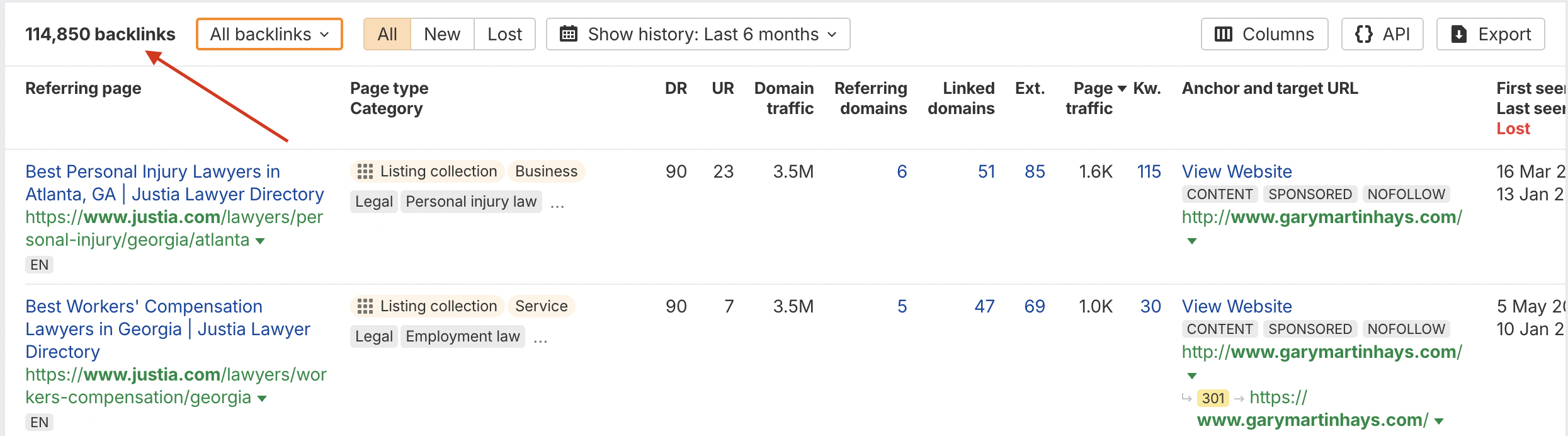
114,000 backlinks!
Now, most of those are low quality links or duplicates that Google ignores. But even if Google ignores, say, 80% of these links, that’s still tens of thousands of backlinks. And this is Atlanta. Not New York City, Chicago, or LA. Just a mid-tier (but lovely) city.
The competition in the legal industry is fierce no matter where you go. In every major geo, your competitors will all have high quality links and lots of them.
This is the #1 result for personal injury attorney in Oklahoma City (never been…heard it’s nice):
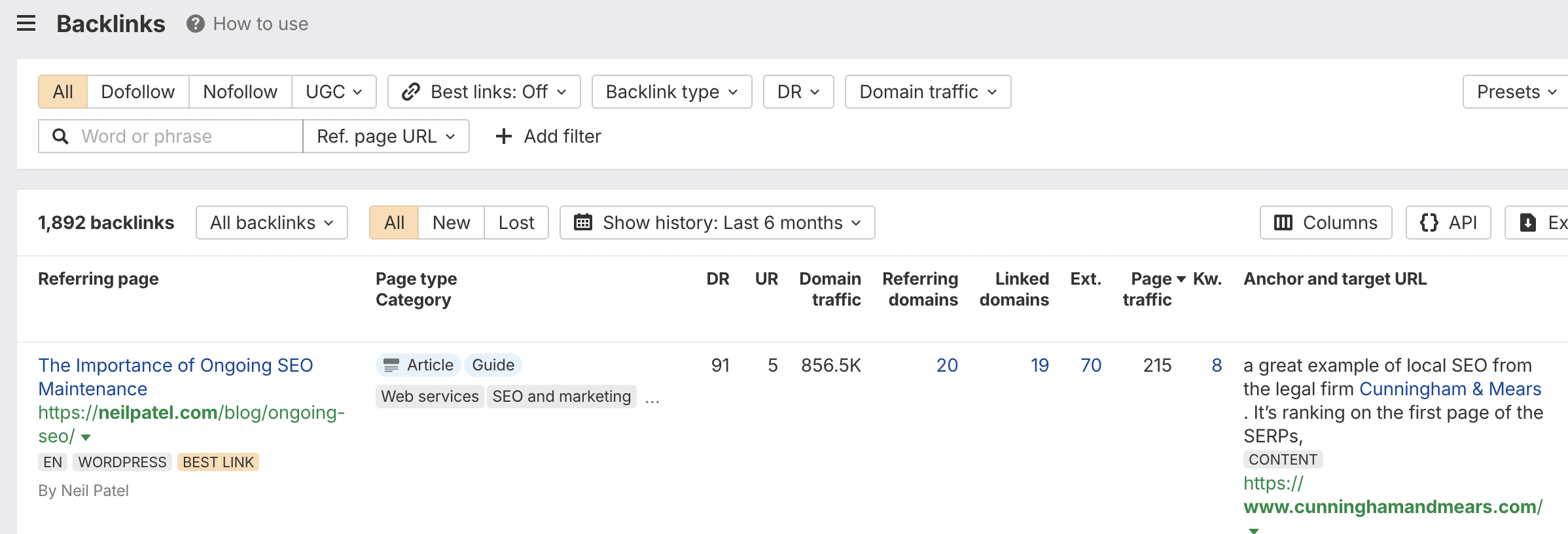
Nearly 1,900 links…and one of them is from a DR 91 website. I think it’s clear why you need to engage in link building for lawyers if you want to rank.
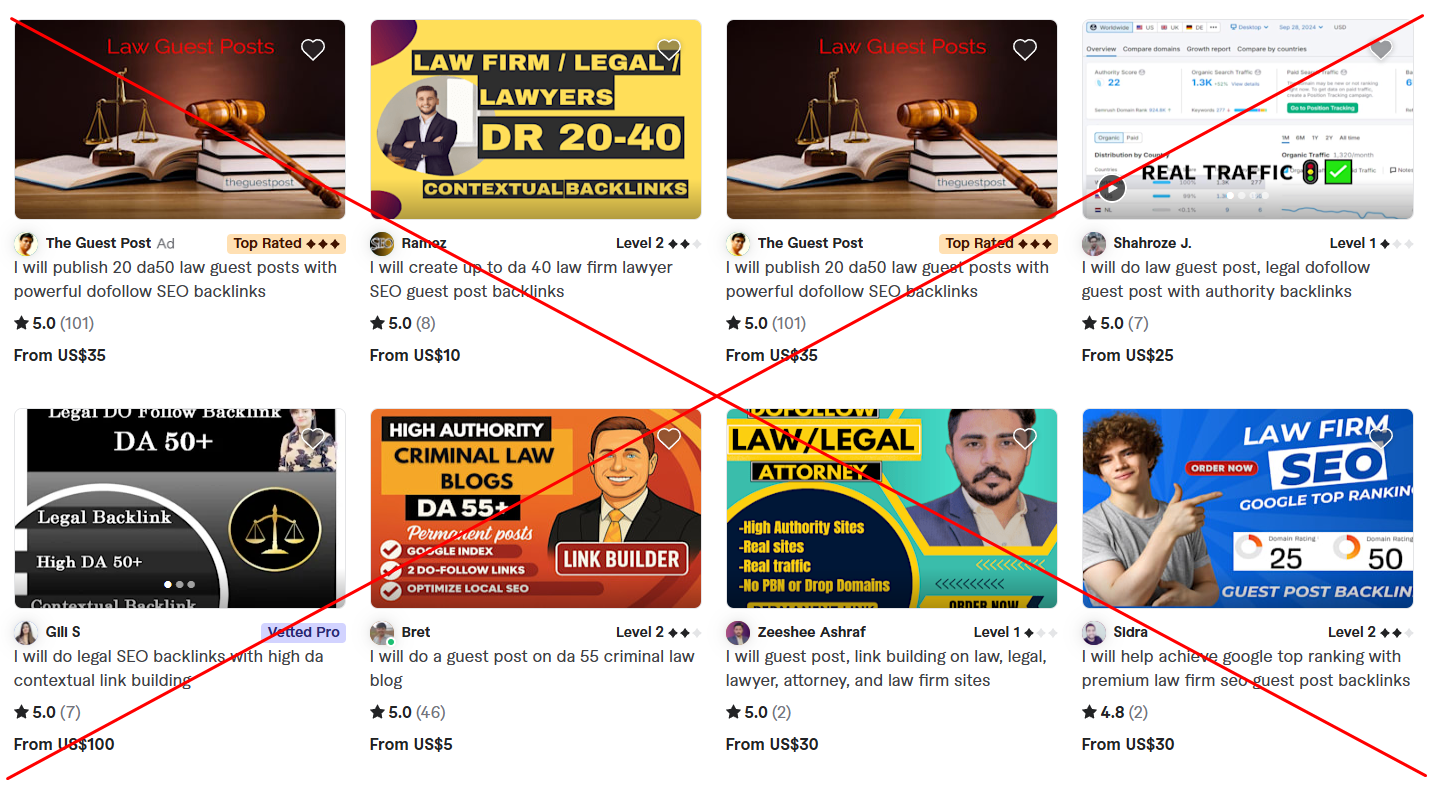
But most law firms are still using agencies running outdated tactics, buying garbage guest posts from “legal” blogs nobody reads, or pushing out press releases every week that end up being negative signals.
By the way, don’t use cheap law firm guest post services like these:
You want to rank for highly competitive keywords and consistently bring in high ticket leads organically?
Then you need to be constantly building high quality backlinks to your (or your client’s) law firm site. And that’s exactly what I cover in this article.
In this guide, I’ll explain everything you need to know to acquire a steady stream of high quality backlinks that help you rank your law site on Page 1, no matter how big of a firm you are (I’ve helped enterprise law firms dominate AND solo practitioners outrank big names).
Everything you read in this post is based on my 12 years of experience operating in the legal niche. I’ve ranked sites of all sizes in some of the most competitive legal niches like personal injury, divorce, and estate planning.
I’m going to run you through everything I know about legal SEO link acquisition. No soft sells, no empty promises, just advice from consistently ranking pages for attorneys for the past 12 years.
What is Link Building for Lawyers?
Link building for lawyers is a search engine optimization strategy involving the acquisition of backlinks from other websites to your law firm’s site in order to increase your rankings in search engines such as Google.
The most common legal link building strategies include local sponsorships, legal directory link building, digital PR, creating case studies, building free legal tools, and publishing legal industry statistics.
In case you aren’t familiar, a “backlink” in this case is when one site links from their website BACK to yours. If your website links to someone else’s site, that’s considered an outbound link.
So, why do law firms do it?
It’s because backlinks tell search engines that your site is trustworthy, which pushes you higher in Google’s search results. Google uses links from other sites to determine whether or not your site is a trustworthy source of information. Think of it like an election and links as votes: The more sites that link to you, the more votes you get (I’ll cover more on the importance of link building in the next section). Check out my complete guide on why backlinks are important for SEO to learn more about the mechanics of links and search engine rankings.
We know for a fact due to Google’s algorithm leak and Department of Justice testimony that backlinks are one of the top 3 ranking factors. Google has even publicly confirmed this recently (after vehemently denying it for ages).
There is no doubt now that you need backlinks if you want to rank in Google.
Why is Link Building so Important for Legal SEO?
Link building is important for legal SEO because it boosts your search engine rankings, brings in referral traffic, increases brand awareness, and improves your local SEO. Beyond that, link building is MISSION CRITICAL in SEO for lawyers because the legal niche is ultra competitive.
So, let’s start with that first.
Legal SEO is Competitive
The legal niche is one of the most competitive niches on the web, and without a steady influx of high quality, relevant backlinks, Google won’t view your site as trustworthy or credible.
Here’s a quick example to help illustrate why link building is so important. Here we have one of the top ranking results for “divorce lawyer New York”:
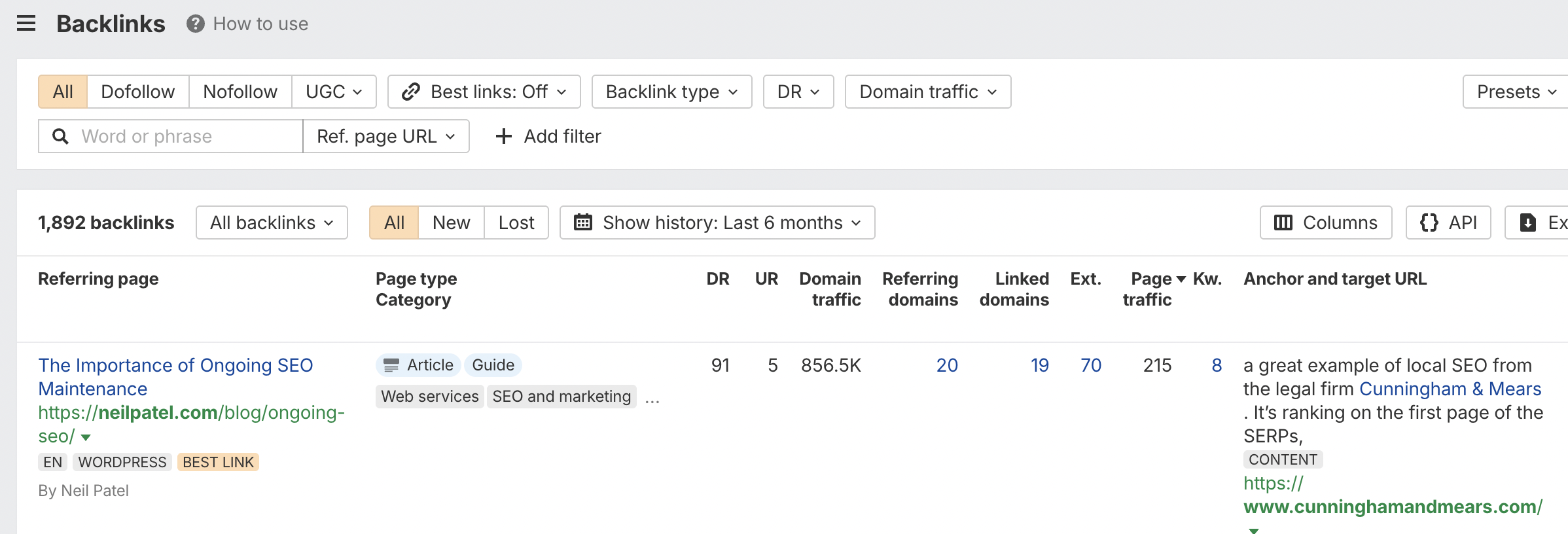
Nearly 15,000 backlinks, and this is a relatively minor keyword (only 700 monthly searches).
If we investigate their link profile further, we see that they have some very high quality links from authoritative sources:
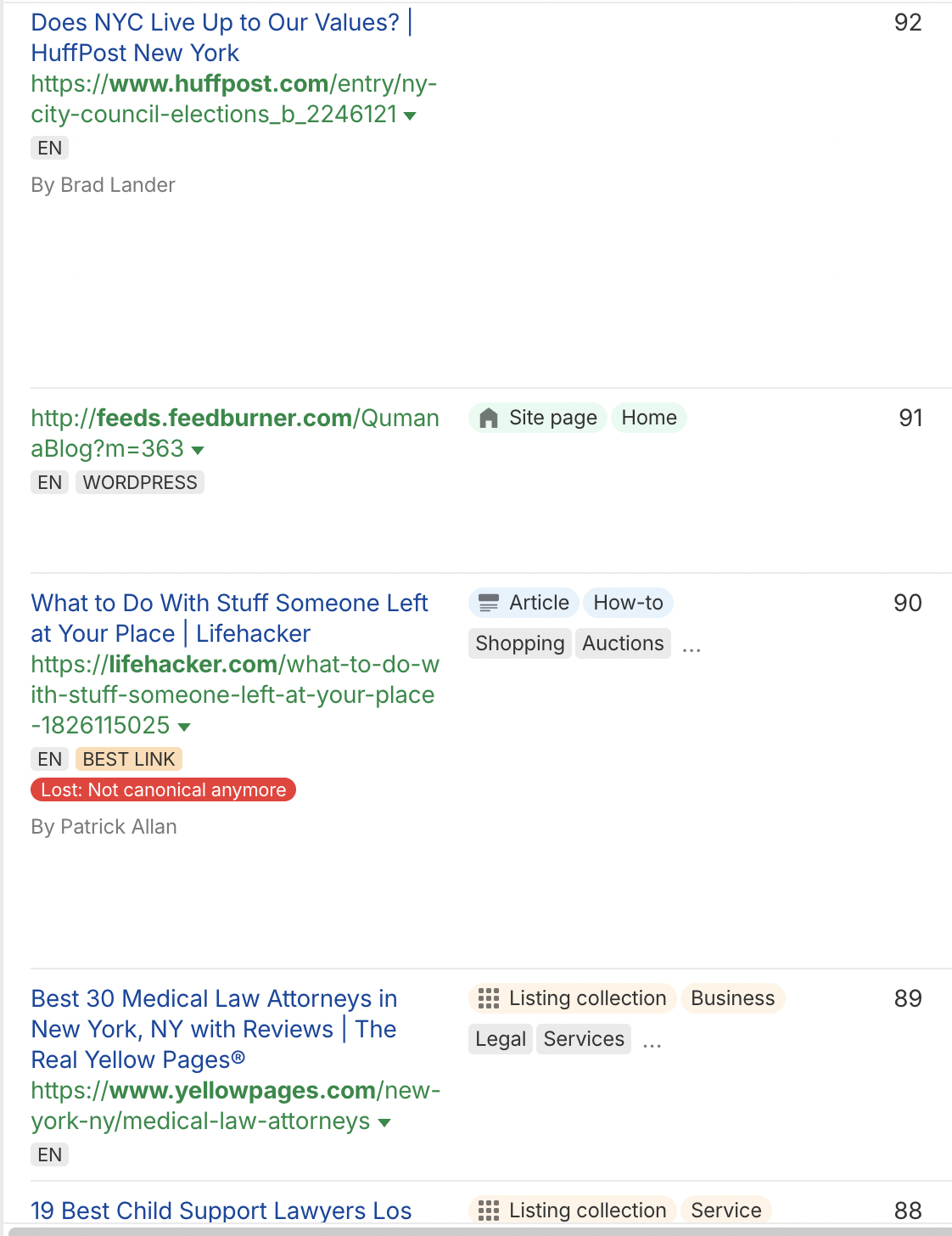
I would ignore the Feedburner.com link, but other than that, these all look like solid, relevant sources for links.
And this isn’t just a one-off thing, either.
Every city in the USA has stiff competition up and down the SERPs. The top ranking law firm for “personal injury lawyer Miami” has 2,771 backlinks and the #2 result has 1,688. And notice how the sites with more links are crushing the sites below them.
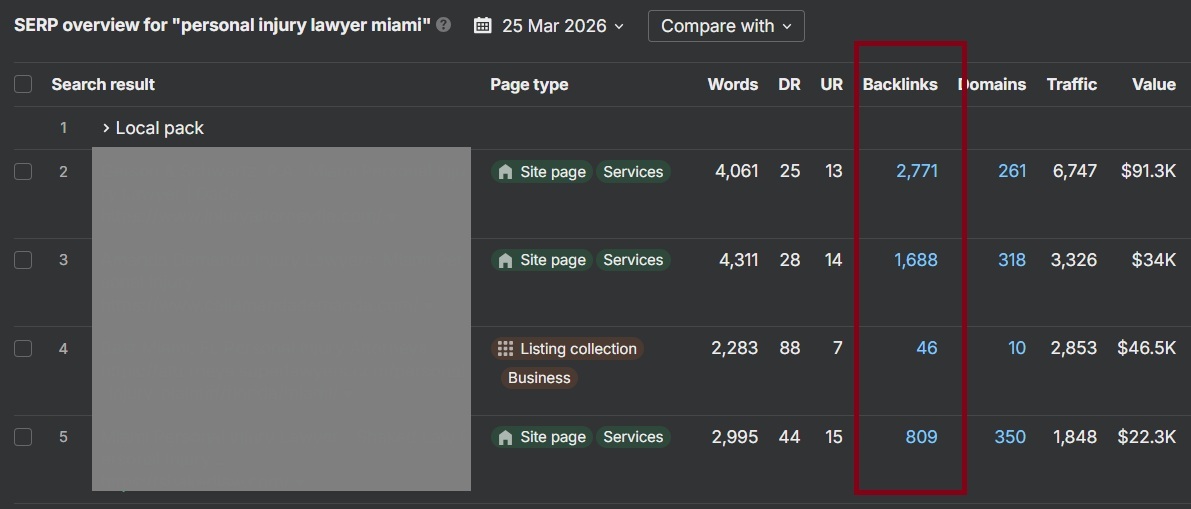
To sum it up, if you want to rank for competitive legal terms in your city or state, you need links from trustworthy websites. And link building (the discipline of acquiring links at high volume) is the way to do it. You can’t just sit around and wait for other websites to magically link to you. You have to actively work to acquire them.
There have been a number of studies specifically in the legal niche that have proven this point, as well. This isn’t just my opinion.
According to Rankings.io on their page SEO Data Science: A Study of 112K Personal Injury Law Firms, “the overall number of referring domains for the domain was a top indicator of overall domain traffic.”
Another study by Zahavian Legal Marketing also found that personal injury websites ranking 1st, 2nd, and 3rd organically on Google have an average of ~300 referring domains.
Boosts Search Engine Rankings
Building links to your law firm’s website will increase your rankings for legal keywords. My two decades of testing plus nearly infinite documentation, leaks, and testimony prove this to be true.
Algorithm leaks. DOJ testimony. My 20 years of experience in SEO. AND data studies all back it up. Links equal rankings more now than ever before.
Google can say whatever they want about how links “are less important” than they used to be. But you can never trust what Google says. You have to look at the evidence (as a lawyer, you know this better than even I do).
Their own algorithm leak confirmed that it is still one of the top ranking factors.
Google uses an extremely complex algorithm known as PageRank to evaluate page authority (as well as other factors). Every time a credible and relevant site links to yours, it passes some of that PageRank, known as “link equity” to your page.
So, if my ultra high authority website were to link to your law firm’s site, it would be like my site “giving” you some of my ranking equity and boosting your site up.
If you’re interested in more data to back this up, I suggest you check out the following study.
According to a Backlinko.com study entitled “We Analyzed 11.8 Million Google Search Results. Here’s What We Learned About SEO”, the top result on Google has, on average, nearly four times more backlinks than the rest of the top 10 results.
Local SEO Benefits
As I’ve previously mentioned, local link building boosts your local SEO by signaling to Google exactly where your practice is and who you serve.
For example, if you were to get a link from a local newspaper or a community page in Dallas, you’d be telling Google that your firm is within the Dallas area, which helps boost you up in the search results and could even rank you in the Map Pack (the local Google Maps results at the top of the page).
I did some research on a random city to find evidence of this. Here’s what I found in Dallas:
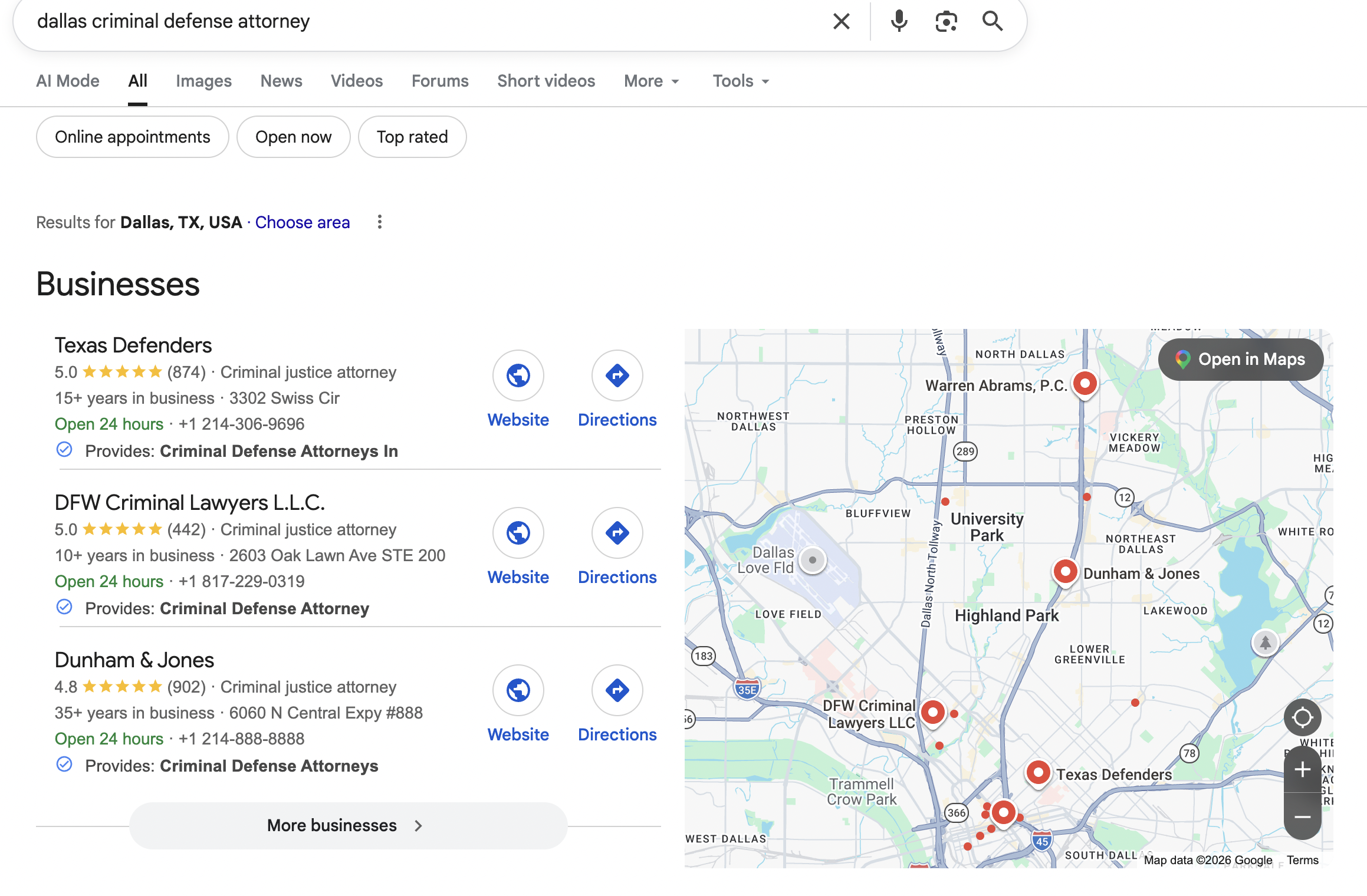
Texas Defenders was the top result. I was fairly certain they had high powered local links proving to Google that they are in the Dallas area.
So I took a look…guess what? One of their top links was a high authority link from a Dallas Area online newspaper:
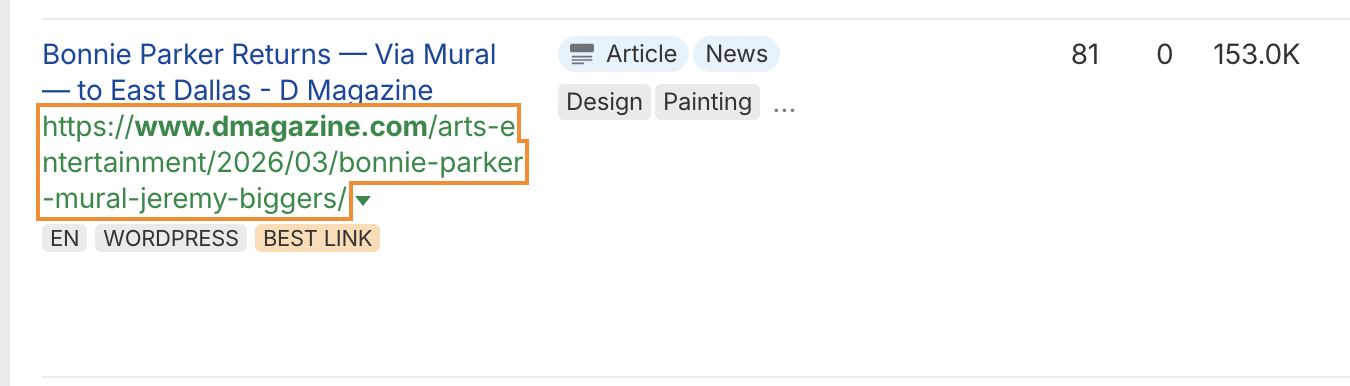
This is D Magazine’s home page:

I hate being right about SEO all the time…
If you want to be #1 on Google and especially #1 in the “Map Pack”, you’ve got to build local links.
Some of the best ways to do that include local directory citations, editorial links, and case studies from local businesses. Much more on this below.
Referral Traffic
Referral traffic is when visitors land on your law firm’s website by clicking a link from another site. The person is reading a blog on another website, sees a link to your law firm’s site, clicks that link, and comes to your page. This is actually a huge boost for your legal practice’s search engine rankings.
The reason it’s so valuable for your firm’s SEO is that Google uses another sophisticated algorithm known as Reasonable Surfer – among others – that takes into account how users click links and interact with the content they discover.
The folks at Google HQ in Mountain View rarely talk about this, but they have a patent on it. It is 100% a fact that this exists:
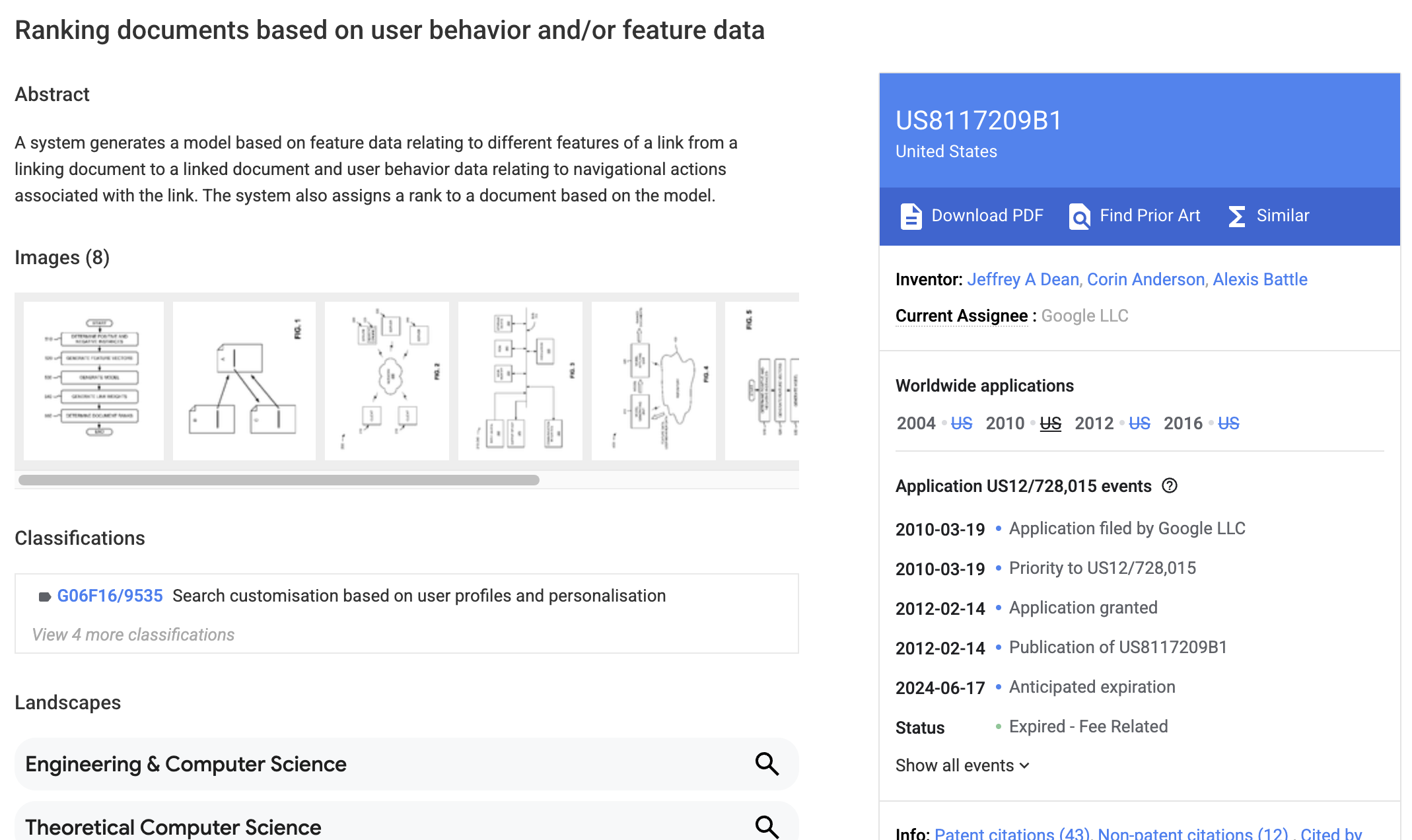
The way it works is, if an interested web surfer finds your page via a link on another page, then spends time on your page and clicks around, Google takes this as a sign that your content is a high quality piece of content on a related topic. This sends more positive signals to Google and boosts you up in the rankings.
For example, imagine that an insurance blog were to publish a blog titled “What to Do After a Car Accident in Miami?” and your practice got quoted as legal experts inside of the article with a link back to your personal injury landing page.
People who click on that link are already reading a law related blog, so they’re most likely looking for an attorney who specializes in cases such as theirs. So, someone who clicks on that link is much more likely to engage with your content (and maybe even call!), and Google loves that.
The more people who do it, the more Google boosts you up in the rankings.
Brand Awareness
Brand awareness is one of the most important competitive advantages in any industry, but in the legal industry, where trust is everything, it’s even more important. And link building, especially digital PR and branded mentions on high authority sites, is the fastest way to build it. When you’re seen on high authority media sites, customers automatically see you as trustworthy.
This is why attorneys often pay large sums of money to be featured on Forbes, like Ad Astra Law Group here:
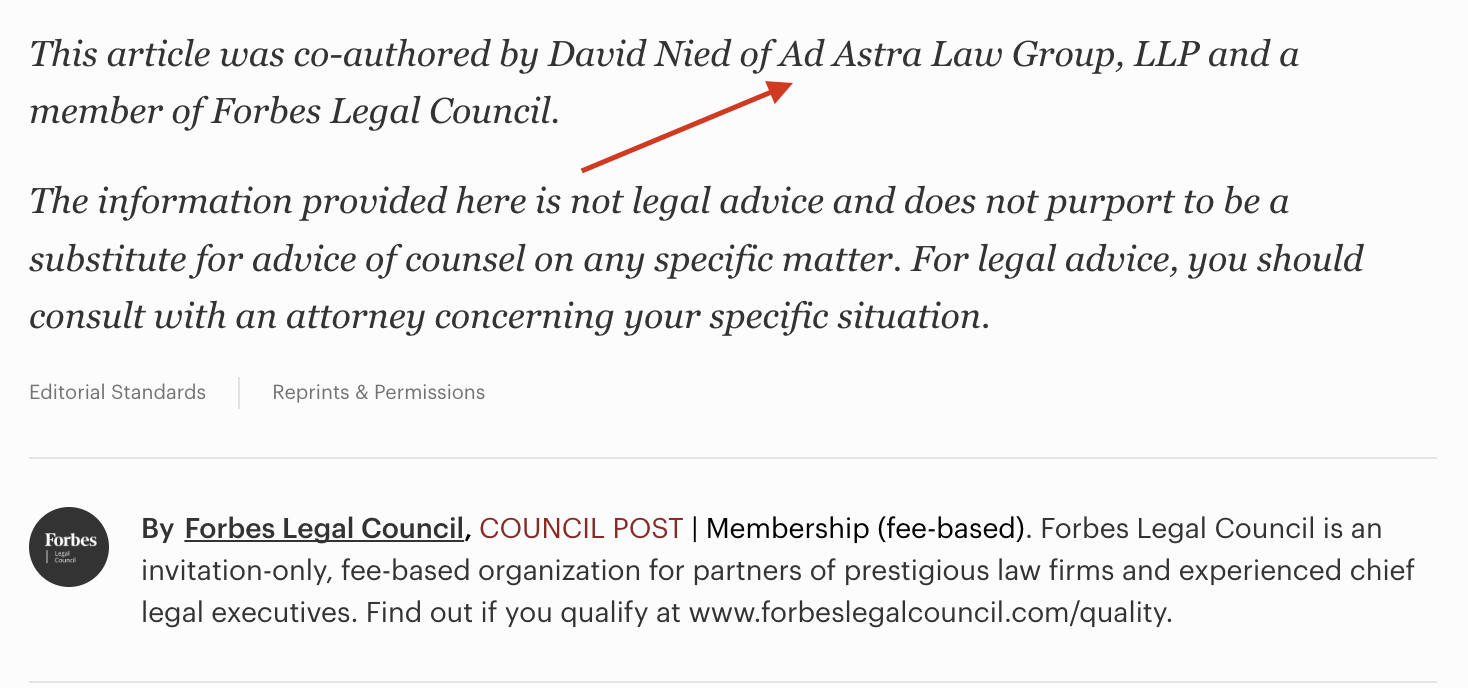
When your name appears in major media outlets, you are seen as an expert, and this increases the chances that someone chooses your law firm over a competitor.
Google also cares about your brand as well.
After the Helpful Content update and Google’s increasing emphasis on EEAT (experience, expertise, authoritativeness, and trustworthiness), brand signals have become a key search engine ranking factor. Google wants to send visitors to firms that are well known around the web, which includes brand mentions, branded search (how often people Google your firm), and social media chatter.
I think it’s clear why creating a successful link building strategy is so valuable for law firms like yours. Every time your firm gets cited in local government websites, local news, social media sites, and communities, you are building that trust, both for humans and the algorithm. Over time, people (and Google) start associating the practice name with the service.
In my experience, using link building for brand awareness is one of the most underrated long term strategies in legal SEO. Not only does it help you rank, but it also increases trust, and that makes the conversion much easier once they find you.
How is Link Building for Law Firms Different Than Traditional Link Building?
Link building for law firms is different in that it’s usually hyperlocalized, very competitive, and requires a higher standard of link to achieve SEO results. And compared to other verticals, legal link building is much more difficult and more expensive.
On the surface, legal link building follows the same principle as any other industry, which is getting quality links from reputable websites to link to yours.
However, as you surely know, the legal industry is held to a much higher standard than typical industries, and this changes your strategies for link building slightly.
Google holds law websites to a higher standard because it falls under what they call YMYL (your money or your life).
Basically, your law firm is giving information that can affect someone else’s finances or safety, which means you’re scrutinized by Google more (kind of like me). It’s kind of like how lawyers need to pass the bar and are regulated in how they practice.
This is just one of the reasons legal link building is more complex than typical link campaigns. Here are the reasons link building for lawyers differs from others in more detail:
- Hyperlocalized: Most law firms are based in a specific city or region, so local links carry more weight than broad, national ones. Links from local news outlets, local bar associations, and community organizations will provide more SEO rankings benefits to you compared to a national brand.
- Extremely competitive: Legal keywords are among the most expensive in paid search, with some terms reaching $935 per click, according to Clickpatrol.com (I’ve been in SEO for 17 years and have never seen anything close to that in other niches). I’ve already covered the competition angle ad nauseam, so I’ll spare you here. By the way, this is why most law firms outsource their link building and SEO. It’s really hard.
- Google treats YMYL sites differently: Legal content likely falls under YMYL, as I’ve mentioned above, so Google holds your law firm to a stricter standard of trust and authority. Links that you build must meet a higher link quality threshold compared to, let’s say, a lifestyle brand.
- Requires .edu and .gov links: Competitive, regulated niches like law require high authority links from trustworthy institutions. Links coming from universities and government websites carry significant weight because these are institutions that Google already trusts. If you’re wondering how, I’ve written a couple of blogs on how to get .edu links and .gov links. I highly recommend that you read them to familiarize yourself with these high powered link opportunities.
- Ethical and regulatory constraints: Aside from complying with Google’s YMYL policies, lawyers must also comply with bar association advertising rules.
Whatever you do, do NOT chase volume over quality. This is the #1 mistake in all of link building. I see marketers working with law firms do this all the time. They buy cheap link packages, submit their site to low quality directories, or use dodgy PBNs. They might feel like it’s progress, but Google is terrifyingly good at filtering these out. Chances are they’ll do NOTHING for your SEO, and could even get your site penalized in the long run.
Let me give you a clear example of how low quality link building can ruin your SEO.
Here are the search results for “Fort Lauderdale criminal defense attorney.” Excluding the directory listing, the top results have around 2,000 backlinks.
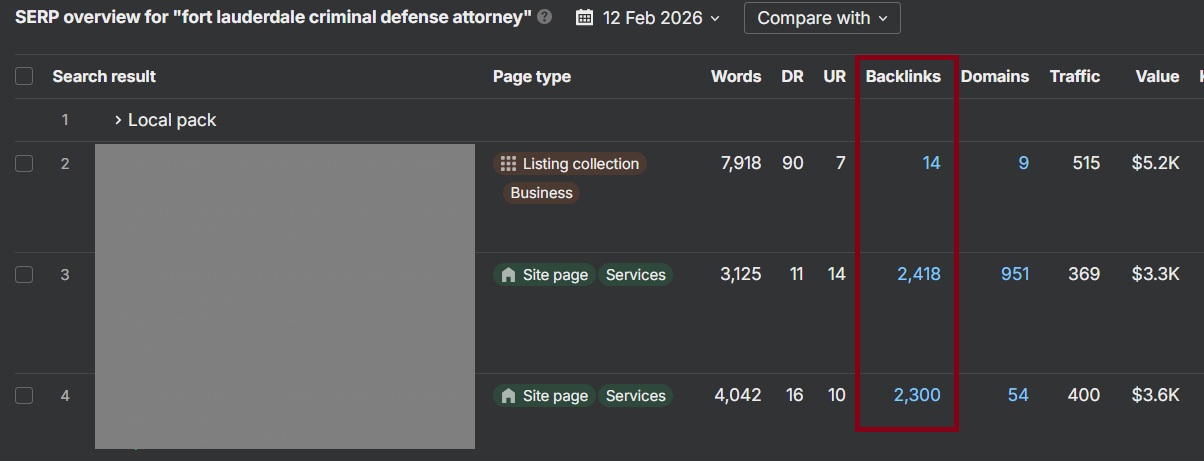
On the other end of the results are practices with much higher backlinks. Both websites have more than 10,000, as you can see in this screenshot below:
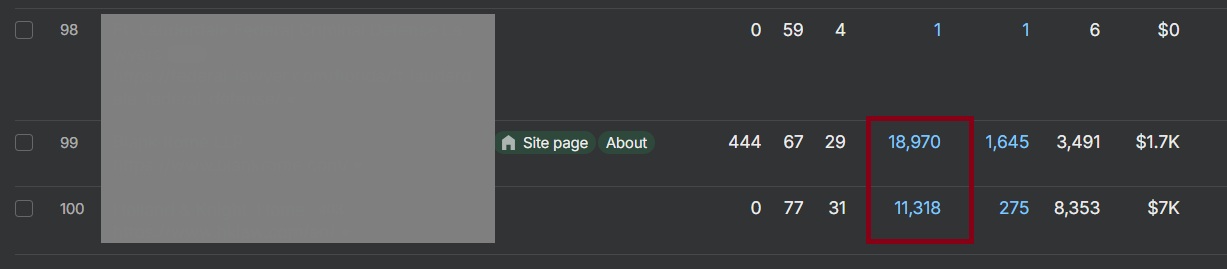
But wait, aren’t backlinks supposed to help you rank higher? Why are they BELOW the others?
Well, if we look closely at one of the results, 86% of their backlinks are considered low quality. Here’s what Ahrefs says about their link quality:
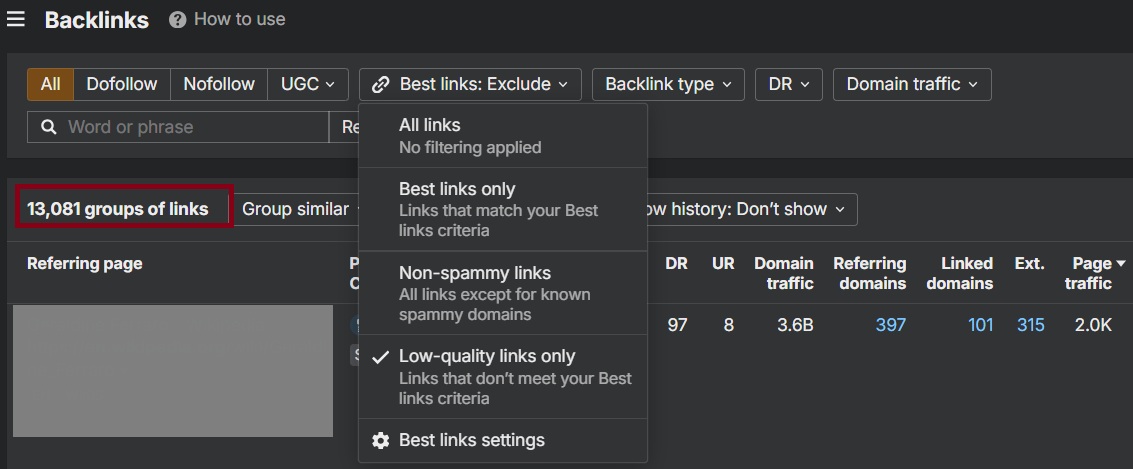
Let me explain…
Google doesn’t just count how many backlinks you have.
It uses a mix of sophisticated machine learning algorithms, relevance scores, pattern recognition, and historical behavior to determine what is a quality backlink and what isn’t.
If most of your links are like this one, which came from spammy directories, random blogs instead of reputable legal blogs, or irrelevant sites, Google will know right away and totally ignore them. You will get absolutely 0 SEO ranking equity from them. In fact, they’ll HURT your site.
It’s always better to focus on getting high quality links that matter not only to the algorithm but to your practice and clients as well.
My Top 8 Link Building Strategies for Law Firms
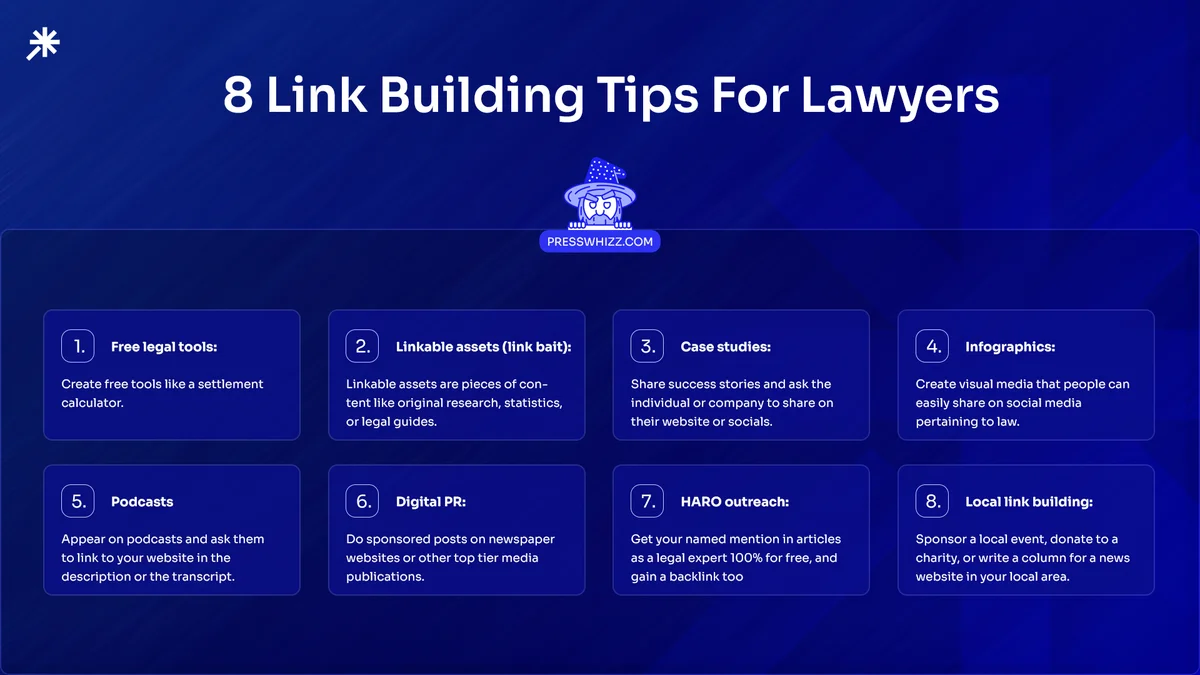
My top link building strategies for law firms are building free legal tools, creating linkable assets like statistics posts, creating infographics, doing digital PR campaigns, going on podcasts, guest posts, and building case studies.
Like I said before, link building for attorneys is slightly different than for other industries. It requires a more thoughtful and stricter approach, which makes it slightly more difficult.
After nearly 20 years of link building across every niche imaginable, these are the seven strategies I keep coming back to. They’re practical, scalable, and work well with the YMYL niche.
1. Free Legal Tools
Building free legal tools like a personal injury settlement calculator is by far my favorite link building strategy for law firms for two reasons: It attracts tons of links, and it’s relatively easy.
Let’s cover each in more depth.
Free legal tools build links on autopilot once they’re up. No outreach, no follow-ups, no content calendars. You’ll attract high quality, relevant links without having to do extra work. The example I show you below has nearly 1,000 backlinks from a single tool.
And, with generative AI, it’s never been easier to create these tools. You need absolutely 0 coding experience. Someone on your team could build a good tool in a day or less.
Let’s look at Take AllLaw’s personal injury settlement calculator as an example:
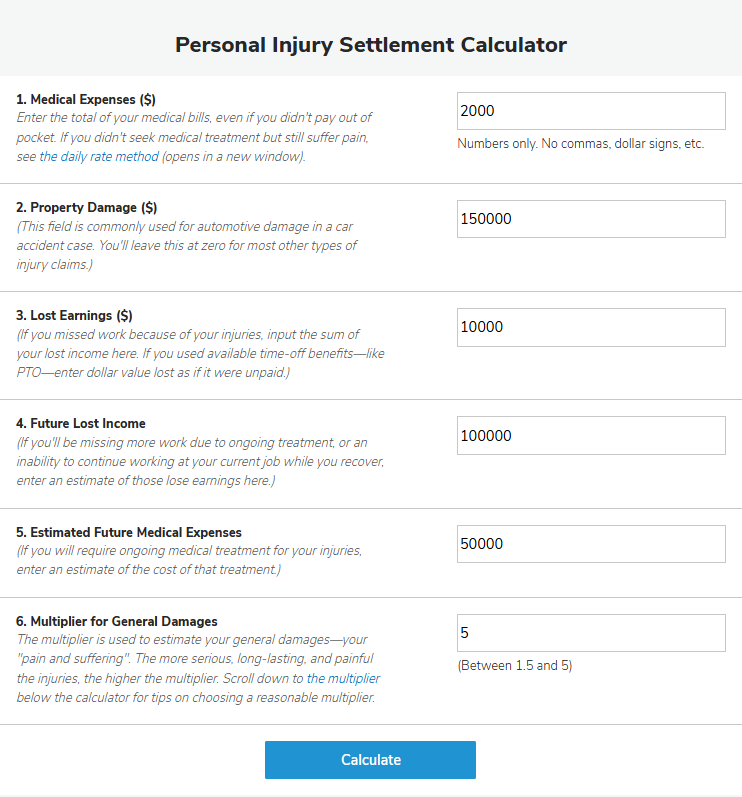
It’s pretty straightforward. You add the values, and it will calculate the settlement estimates.
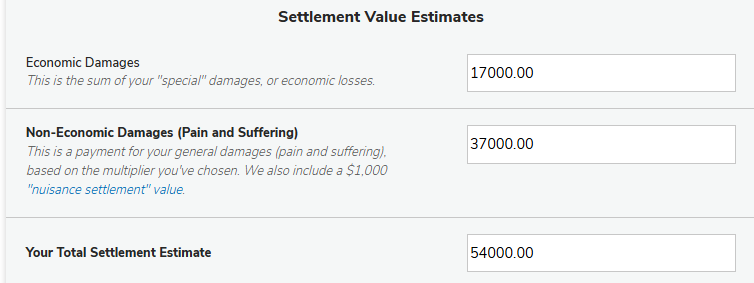
Nothing complicated. But that single page has pulled 977 backlinks from 237 referring domains:
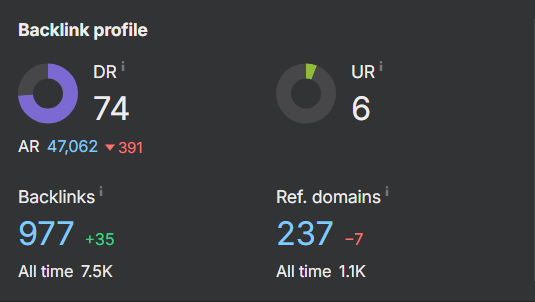
Not bad for a calculator that probably took no time to build, aye?
With AI, you can probably build this in just a few hours. It’s so easy these days, so there’s absolutely no reason for you not to do this
Pro tip: Keep it branded. If your tool gets embedded or shared without attribution, you want the brand to be distinctively there.
2. Link Bait (Linkable Assets)
Linkable assets, also known as link bait, are valuable, data-rich pieces of content that naturally attract high authority backlinks. Common examples of linkable assets include statistics pieces, original research, industry guides, and templates. A common type of “link bait” law firms publish are “complete guides” on complex topics such as “the complete guide to your personal injury settlement”. Legal industry statistics roundups are another common form of link bait. For an example of statistics posts, see my post on link building statistics.
Linkable assets naturally attract links because they provide free value to the reader. And since they provide so much free value, other websites want to link to these pieces to improve the value of their own pages. That’s the “bait” part. You publish something worth linking to, other websites take notice, and they bite. That’s how links come to you naturally.
Here’s an example:
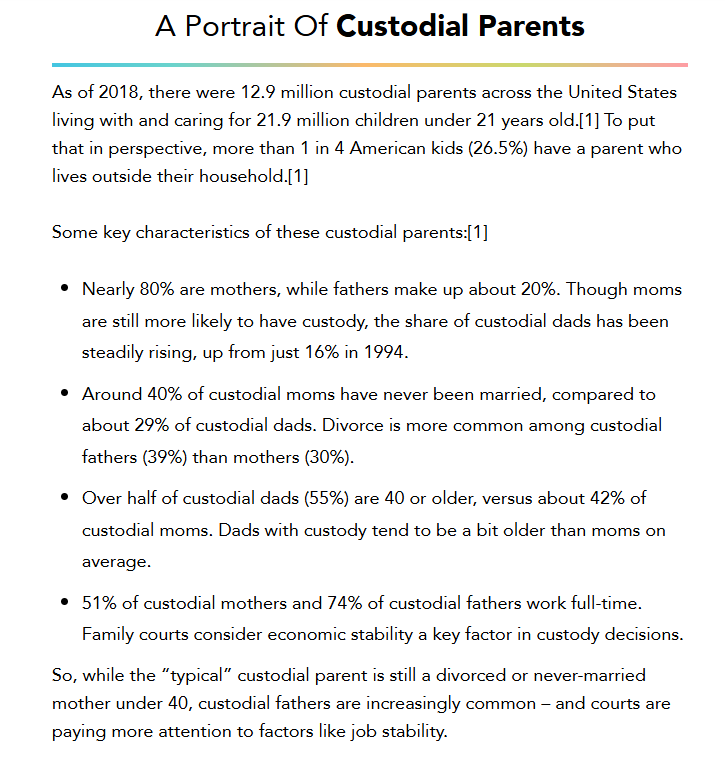
This law firm, Modern Family Law, published a stats roundup on child custody that answers some of the most difficult questions people search for when going through a divorce: What happens to custody?
This law firm website acquired 44 links from this piece alone:

Pro Tip: Publish local statistics as often as possible to improve your local rankings. If you have any data at all from the state or county level, publish it. A good example could be “average personal injury settlement in New York” or “car accident statistics Texas”. Anything related to your area of practice and local geo is a golden opportunity.
3. Case Studies
Case studies are a great link acquisition opportunity, especially for local SEO. And it’s one of the most overlooked link building strategies in all of SEO, in my experience.
There are two types of links you can build from case studies:
- Typical editorial links, where a website or journalist links to you as an expert source
- The business featured in your case study links to you (often because you asked)
Let me explain that second one in case there’s some confusion. Say you were to help a local client defend themselves against a frivolous lawsuit. Maybe someone slipped and fell on their premises and tried to win unfair damages.
If you were to defend them and win, you could create a case study about it and then ask that client to link to it from their website. Perhaps something like “We would like to thank (law firm) for helping defend our practice against an unfair lawsuit”. All they would have to do is make a blog post about it and link to your site in the post. It’s super easy and takes almost no time.
That would be a great, relevant local link earned for $0.
Here’s how I would structure a case study if I were building one for a law firm.
Let me use this case study from Yosha Law Firm as an example:

Notice how they structured it? They started with the main problem (insurance offered $0) and then the outcome (full policy awarded). And then they walk you through the full story, the legal strategy, and how it happened.
This could easily earn a link from a local newspaper or from the client featured in the study.
A typical small to mid-sized law firm may have a few dozen previous clients from the local area or even more. It would only take about a day to reach out to them and ask them if they’d be interested in posting a case study about your services on their site.
4. Infographics
Infographics are pieces of visual content that turn data or information into something easy to digest and understand. Common types of information featured in infographics include charts, timelines, stats, and even processes, all presented in a clean, visually appealing way rather than a wall of text.
And for law firms specifically, this is a great opportunity to build high quality links for free or very affordably.
Think about how complicated legal concepts are.
The personal injury claim process alone is a nightmare (filing deadlines, liability determination, insurance negotiations, settlement timelines, etc.). It would take you 5 paragraphs just to scratch the surface of it in a blog post. But put that same information in a well-designed infographic, and suddenly it’s digestible in 30 seconds and easily shareable on social media.
Like this personal injury settlement timeline from Lovely Law Firm:
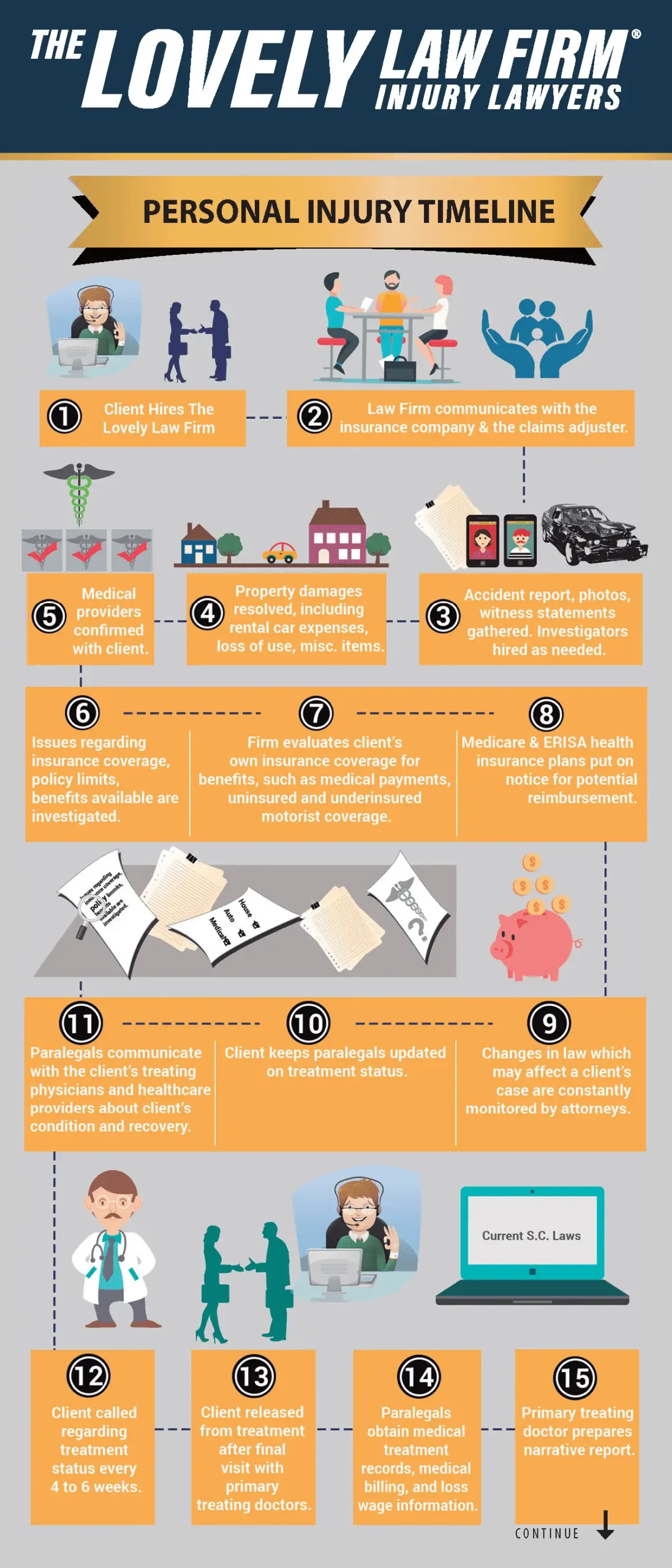
Journalists, bloggers, and content creators love these because it also makes their own content more authoritative and engaging. If the website uses your infographic, you’ll get a link back to your site.
Let me give you another example.
Johns, Flaherty, & Collins created a simple infographic about the US divorce statistics, including divorce rates, risk factors, the most common reasons couples split, and how often it happens. Nothing crazy. But it’s clean, branded, and answers questions that people are actively searching for. I actually quite like it.
Plus, divorce is a popular online topic (for some reason)…Here’s the infographic:
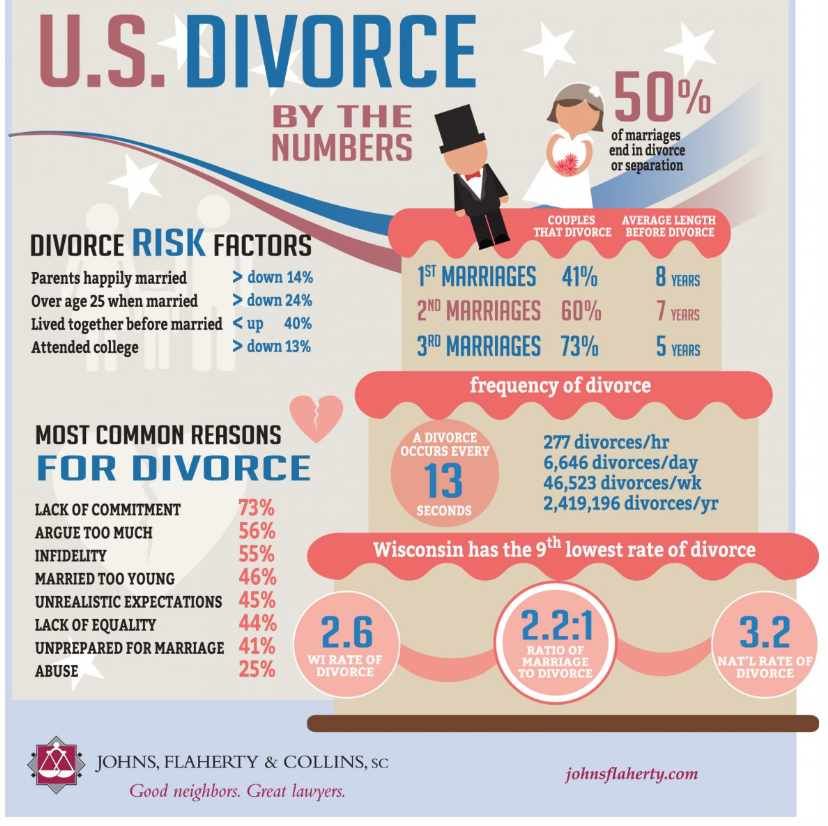
This could easily be picked up by a number of high authority outlets.
A journalist, for example, covering family trends could use this because it provides valuable data to support their piece. It could also get picked up by parenting or relationship blogs and financial sites. It can even be embedded on their blog post, used as a visual on YouTube, or shared on LinkedIn or Pinterest.
With AI, it’s incredibly easy to create infographics. And it’s hard to come close to the value they provide.
Pro tip: I recommend going geo specific. Create infographics using city or state level data, like DUI arrests by state, car accidents by city, etc. You get the idea. Regional news outlets and local government sites are way more likely to link to something that’s directly relevant to their city.
5. Podcasts
I can’t emphasize this enough: Podcasts are one of the most underrated link-building strategies for lawyers, because it builds trust by letting you show your potential clients your subject matter expertise.
Look at this example. Emily Geddes, a licensed attorney in Washington and Idaho, appeared on The Law Entrepreneur Podcast.
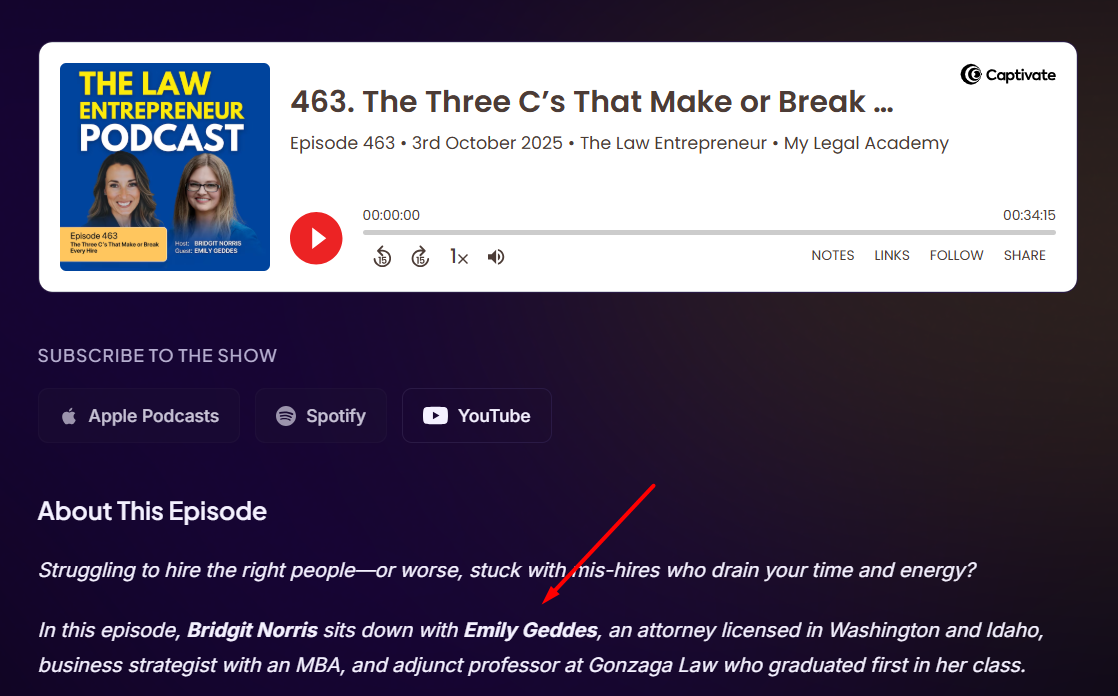
In podcasts, the host normally publishes a transcript or at the very least some show notes. And here, the show notes page links back to her firm’s website.
And this doesn’t just build links for the website. Podcasts also build brand recognition like we spoke about before, which also helps her SEO rankings and positions her as the go to expert in her niche.

6. Digital PR
Digital PR is a link building method that gets you cited, quoted, and linked to in high authority websites. It involves connecting with bloggers and journalists, pitching stories with unique angles, getting quoted as an expert in legal blogs, and finding paid promotional opportunities with major media sites.
Digital public relations is a promotional tactic that I recommend to all law firms trying to improve brand awareness and SEO authority.
As a law firm, you want to create featured posts for these websites where you cover legal news or other legal issues that are important to your target audience. The goal is to get published on major media outlets such as Forbes, Reuters, and Business Insider, or on industry publications such as Above the Law or Justia.
Here’s a great example that was published just recently. The Law Offices of Frank L. Branson got featured on Business Wire in a press release. That’s a DR 92 backlink from a relevant publication. It’s hard to get better than that in SEO. As you can see in this screenshot, the article isn’t very complicated:
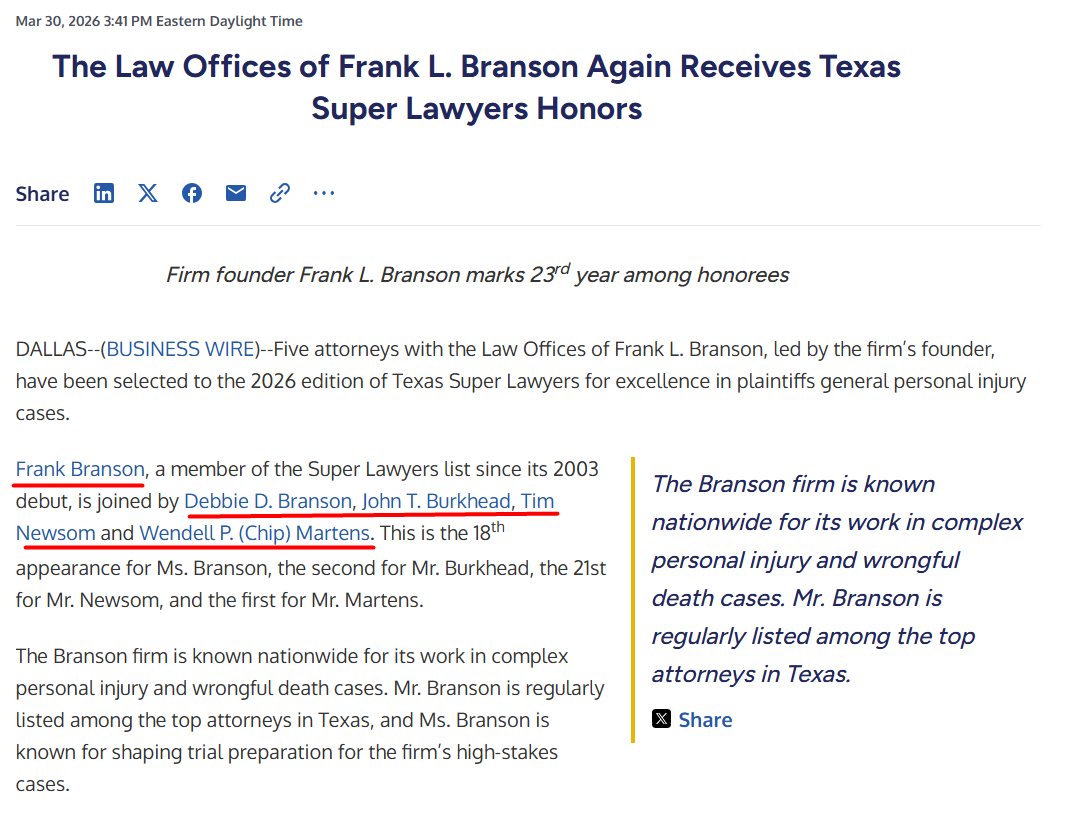
For a highly competitive niche (personal injury) in a highly competitive market (Texas), that’s exactly the type of authority signal that you need to outrank your competitors. If they’re buying $5 links from online marketplaces while you’re building high authority editorial links via PR, you’re going to outrank them in the long run.
There are a few different routes you can take to get more digital PR opportunities.
You could reach out to journalists and pitch a story to them or you could sign up for digital PR platforms and offer your expertise to a journalist. If they’re writing about a legal topic, they can quote you and link to your site. It’s a win-win for both sides: It improves the credibility of their article AND you get a link.
Don’t just go blasting emails out to every journalist in America, please. Use a digital PR platform. There are tons of them and many are free.
Here are my top digital PR platforms for lawyers in 2026:
Top Link Building Platforms for Digital PR
The best link building platforms for digital PR in 2026 are HARO, Qwoted, Featured.com, and Source of Sources. I’ve used most of them over the years. Let me run you through all of them one by one so you can find the right fit for your firm:
1. Haro (Help a Reporter Out)

Haro is the most popular digital PR platform for SEO, and was the original platform we all used for a decade plus before it shut its doors (but it has since re-opened under new ownership).
The way it works is that reporters post daily queries looking for expert sources. You pitch your firm, and if they like your answers, you get featured in the piece and get a backlink from whatever publication they’re writing for.
For example, they might post “We are a newspaper publishing a story on DUI cases in Texas and we are looking for a lawyer in this area to explain to us how the State of Texas typically handles these cases”.
Then, they would list out a series of questions, and you would provide answers. If they like your answers, you’ll be quoted and linked to in the article.
HARO definitely has its flaws. I have an entire piece on the best HARO alternatives you can check out if you want to find a better digital PR platform.
2. Qwoted

Qwoted is the upgraded version of Haro. It’s a bit sleeker and comes with a curated dashboard that’s tailored to your practice area, so you don’t waste your time with unrelated pitches like you would with Haro. You’ll only see law related queries.
In my experience (basically fact at this point), Qwoted tends to have a higher publication quality. It is $149 per month, though. There’s a free version, but it’s not helpful at all. It’s extremely limited.
In my opinion, the money is worth it. A single editorial link could be worth thousands of dollars, so $149 per month is a bargain.
3. Featured.com
Featured.com is a great place to build high authority links back to your law firm’s website. You build out an expert profile and get matched with media publishers that fit your expertise. I find that there’s way less inbox noise and more targeted placements on Featured compared to most other PR platforms. And the interface is outstanding.
Here’s an example of what the interface looks like:
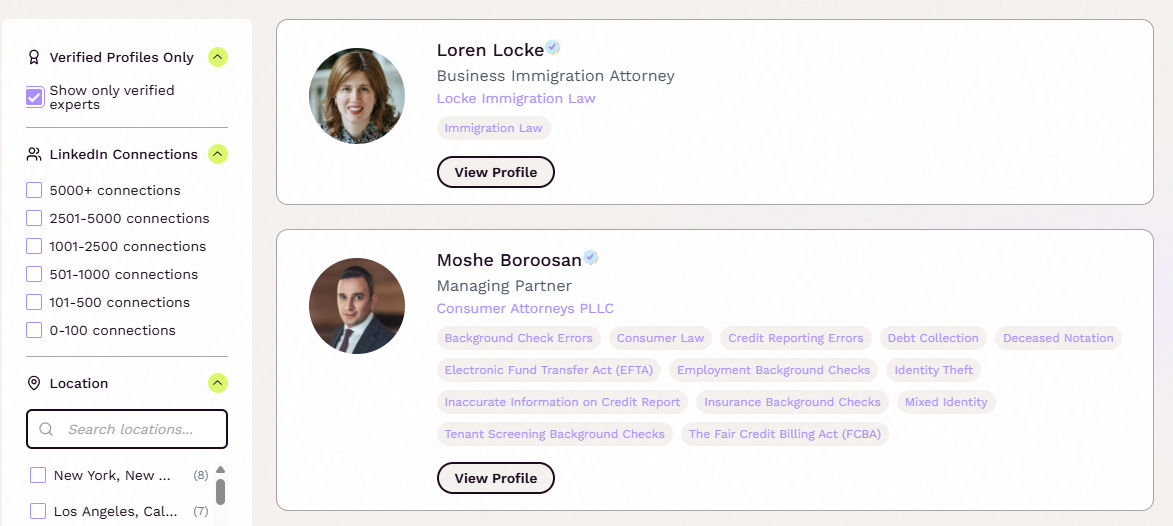
You find publication opportunities based on a number of filters, then answer the queries that the journalists have posted. If they select you, you get “featured”. The biggest advantage of this platform is that the opportunities are curated and very high quality. You can drill down to very niche specific queries pertaining to your area of expertise, and this results in a much higher conversion rate.
4. Source of Sources
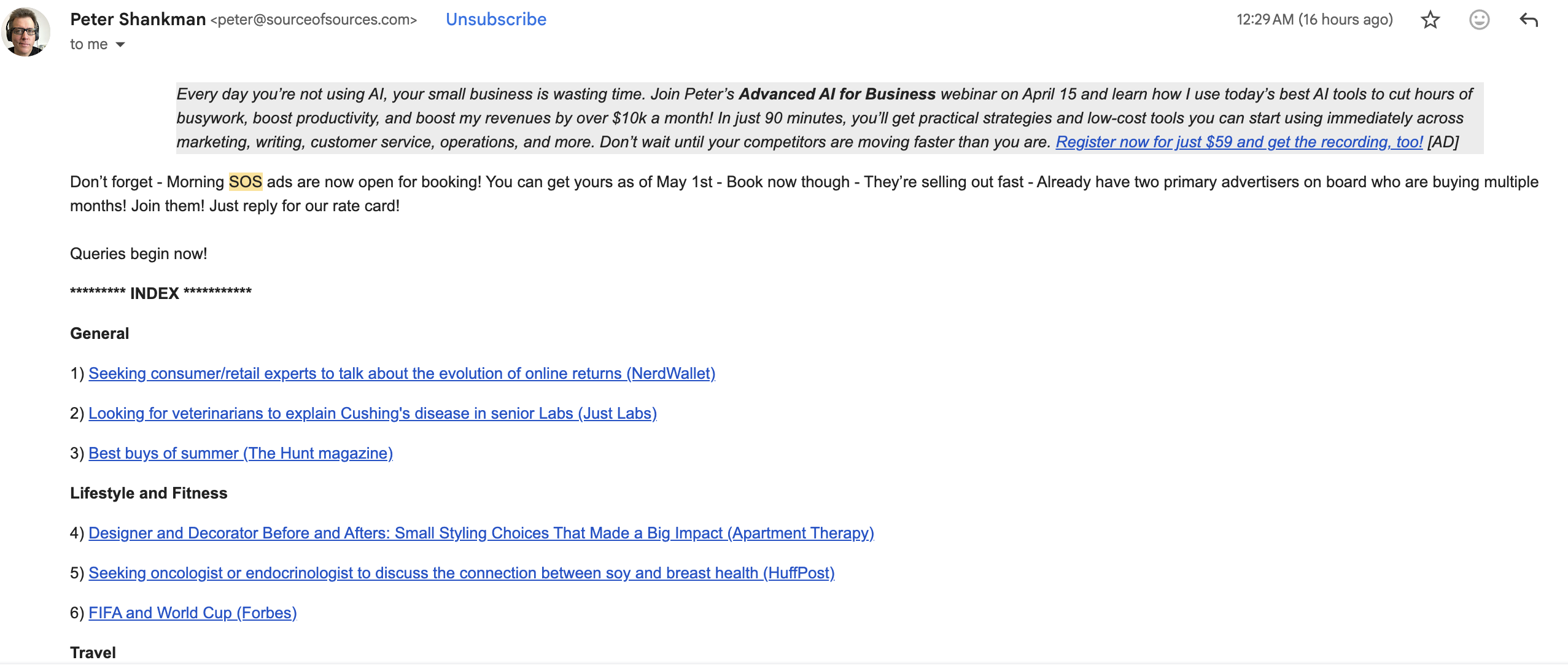
Source of Sources (SoS) is an alternative to Haro that’s very lo-fi and easy to use. It’s also completely free. SoS sends you up to three daily emails with journalists’ queries from 20,000+ reporters across major outlets. The problem is that most of them won’t pertain to your area of expertise, and it’s hard to get the timing right. You never know when the right email is going to show up. I still recommend that you sign up in case a good opportunity pops up. It’s free and very low effort.
7. Guest Blogging
Guest blogging is when you write an article for another site in exchange for a link back to yours.
It’s one of the easiest link building methods because there are hundreds or even thousands of sites ready to accept guest posts. Our platform, PressWhizz, has hundreds of guest blogging opportunities.
There are plenty of legal blogs, local business journals, and finance sites looking for contributors, and if you pay a few hundred dollars (or even less), you’ll get a high quality link very quickly.
Let me explain how it works.
You find a site whose audience overlaps with yours, pitch a topic that fits their niche and audience, write the piece, and then they publish it and place the link naturally in the content.
As long as you choose a high authority site that’s relevant to your niche and has real organic traffic, it’ll provide a nice SEO boost to your law firm’s site. One well placed guest post on a high authority domain can do more for your rankings than a dozen directory listings.
The trick, though, is where to pitch. You want a site that is relevant and has a solid domain rating. I actually put together a comprehensive list of guest posting sites if you’d like to read it.
8. Local Link Building
Local links will help you rank in the Map Pack and get high quality leads from your local area.
I find that local links provide exceptional SEO value, since ranking in your geographic area is the fastest way to getting high quality clients. Most of these opportunities are very simple, within anyone’s budget, and readily available in any geo.
Here are my top tips for building local links for your law firm:
- Join your local bar association: Most state and local bar associations have member directories that link back to your firm’s website. These are .org links, which Google already trusts, so they’ll pass a lot of link equity on to your site. If you aren’t already listed on this website, you should be.
- Sponsor local events: Sponsoring local events is an easy way to earn high quality links from your local area for just a few hundred dollars. I recommend sponsoring community festivals, legal aid fundraisers, and local charities or charity events like 5K runs. These types of events usually publish a sponsors page on their websites with links back to each of their sponsors. You may even get mentioned in local newspapers, which will boost your local SEO even more.
- Sponsor local companies: This basically follows the same logic as sponsoring local events, but it’s more of a long term play. Things that have worked in the past for our clients include sponsoring community theaters or local youth sports teams. Many of these local organizations feature their sponsors on their page for the whole year.
- Donate to charity: You might be doing this already, but donating to a local charity is a great legal link building technique because you do a bit of good in the world and earn some high quality backlinks. Most nonprofits and charitable institutions have a sponsors page. So, if you donate to, let’s say a food bank, your practice gets a link from that site. You may even get a .gov link as well if the city or state lists you on their site as sponsoring a government initiative.
- Local business directories/citations: These are Google Business Profiles and local business directories, such as Yelp, FindLaw, Justia, and your local chamber of commerce. Getting links from them helps you establish your NAP (name, address, & phone number) and getting it consistent across the web is a trust signal you send to Google, which is a foundational local SEO strategy.
- Target local bloggers: Each city has bloggers that cover local news and events, and they usually look for local experts to collaborate with. You can reach out to them and be their go-to resource for anything legal. Most of these bloggers will write about you and link to your site for cheap, since they probably don’t have much money coming in. It’s an easy way to get a relevant, local link.
- Ask for links from clients: If you have happy clients that have their own websites, a community page, or even a blog, you can politely ask them to link back to you. It may seem a bit awkward, but look at it this way…you helped them get great results. I’m sure they would be willing to help you by just adding a link to your site. If not, at least you tried.
Link Building Tools for Law Firms
I cannot stress to you enough how important it is to use SEO tools for law firms, whether you are a firm yourself or are a marketing professional that serves law firms. SEO these days is far too competitive to NOT have a plan AND a method of measuring success. You need tools that can guide link purchasing strategy, content strategy, and link campaign ROI…at the very least.
With that being said, here are my must have link building tools for law firms:
Ahrefs or SEMrush
These are the two tools that I keep coming back to after nearly two decades in the industry. Both let you enter any of your competitors’ URLs and see every site linking to them along with granular data about each one (among other things like keyword volume and content gaps).
They also provide you important information like the referring pages, domain rating, anchor text, whether the link is still live, and a lot more. If these tools didn’t exist, I probably wouldn’t be doing SEO right now (or maybe I would’ve just created them myself).
All you have to do is pop in a competitor’s site into a tool like Ahrefs, and you can see a ton of helpful data like their domain rating and number of referring domains:
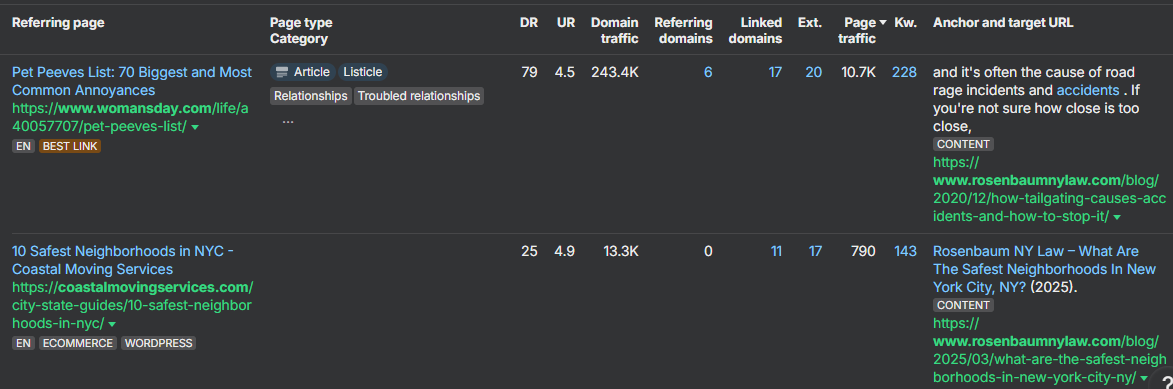
So, instead of wondering why the other firms are outranking you, you can literally just “spy” on their backlink profile and reverse engineer it.
Of course, other than spying on them (which is fun, honestly), you can use the tool to monitor your own link profile too. You can track new links coming in, identify toxic links, and monitor link status (see which ones are no longer live). These tools are absolutely invaluable to SEO success in 2026.
Bonus Tip: Turn on Link Monitoring
This is one thing I see SEOs forget to do constantly, and it drives me crazy.
Links die all the time, but that doesn’t mean you have to just sit there and take it. Both Ahrefs and SEMrush have link monitoring features that alert you whenever a link is lost. So, the moment you receive the notification on your email, you can reach out to the site and restore the link.
I actually wrote a full breakdown of how to do link reclamation, if you want a step-by-step process.
Moz
Moz is a great tool if you want something a bit easier to explore than Ahrefs. The main difference is that it uses a completely different website rating system than Ahrefs. Moz uses Domain Authority instead of Domain Rating. The former is a measure of your link profile’s power, whereas the latter is an overall measure of your site’s “rankability” on SERPs.
Personally, I prefer Ahrefs, but Moz is great too. I don’t have a working relationship with either tool. I’m unbiased.
Anyway, the principle stays the same. Before you pursue any link opportunities, you want to know whether the work is actually worth your time and effort. A site with a high domain authority of 65 that’s relevant and has traffic? Yes, please. A random blog post on a DA 8 website? Probably not.
Another particularly helpful feature of Moz is that it also gives you a Spam Score for any domain. This is extremely important when you’re looking for link opportunities.
Google is very sophisticated nowadays, and it will automatically ignore low quality links. If a link is irrelevant to you AND low authority with low traffic, it will do absolutely nothing for your site.
Final Thoughts
It’s impossible to overstate the importance of link building for law firms.
If you’re an attorney or a marketing professional working for a law firm, you know as well as I do that the legal niche is one of the most competitive and expensive markets in this industry.
You’re in a sector where even small businesses in mid-sized markets spend thousands of dollars per month on links and where the SERPs are crowded with websites with thousands of high quality backlinks from reputable sites.
That doesn’t mean you can’t compete, though. Quality always beats quantity in the long run.
And now you have your formula:
- Build out your foundational links like citations, the bar association, and legal listings
- Build local links from your geographic area
- Create linkable assets like tools, case studies, and statistics to build high quality editorial links
- Begin a digital PR campaign where you get mentioned on trustworthy publications and guest post on high authority websites
If you build a high quality backlink profile using a mixture of foundational, free, and paid methods, I have no doubt that you can dominate the SERPs no matter your location. And please, please make sure to use link building software to track your competitors and ROI.
As always, I wish you luck.