Let me tell you something about .edu backlinks. I’ve been in SEO for nearly two decades now, and I got started building .edus back in the old school days of .edu scholarship link building (which is actually valid again now that everyone thinks Google completely smashed it).
Based on my two decades in the industry, I know that backlinks from academic institutions can be incredibly valuable. But they aren’t a magic solution that’s instantly going to take a website from Page 3 to #1.
In the last year alone, I’ve personally overseen tens of thousands of link placements at PressWhizz. And I’ve seen SEOs waste thousands of dollars and weeks of time over irrelevant DR 40 .edu links when they could’ve built multiple relevant contextual links from DR 70+ .com sites much more quickly.
I’m not saying .edus aren’t valuable. They are extremely valuable. They’re often DR 70+ sites with high trust from Google and in-depth topical authority. And Google clearly gives some preference to the .edu/.gov TLD despite what they say publicly. I’m just saying that you should prioritize relevant, contextual links from your niche rather than fighting to the death over .edus simply because of the extension.
Let’s cover my best tips for building high quality educational backlinks, as well as what they are, why they’re so valuable, and some pros and cons. And since you’re all so obsessed with free links, I’ve divided my practical tips into free and paid methods.
10 Tips for Building .edu Backlinks
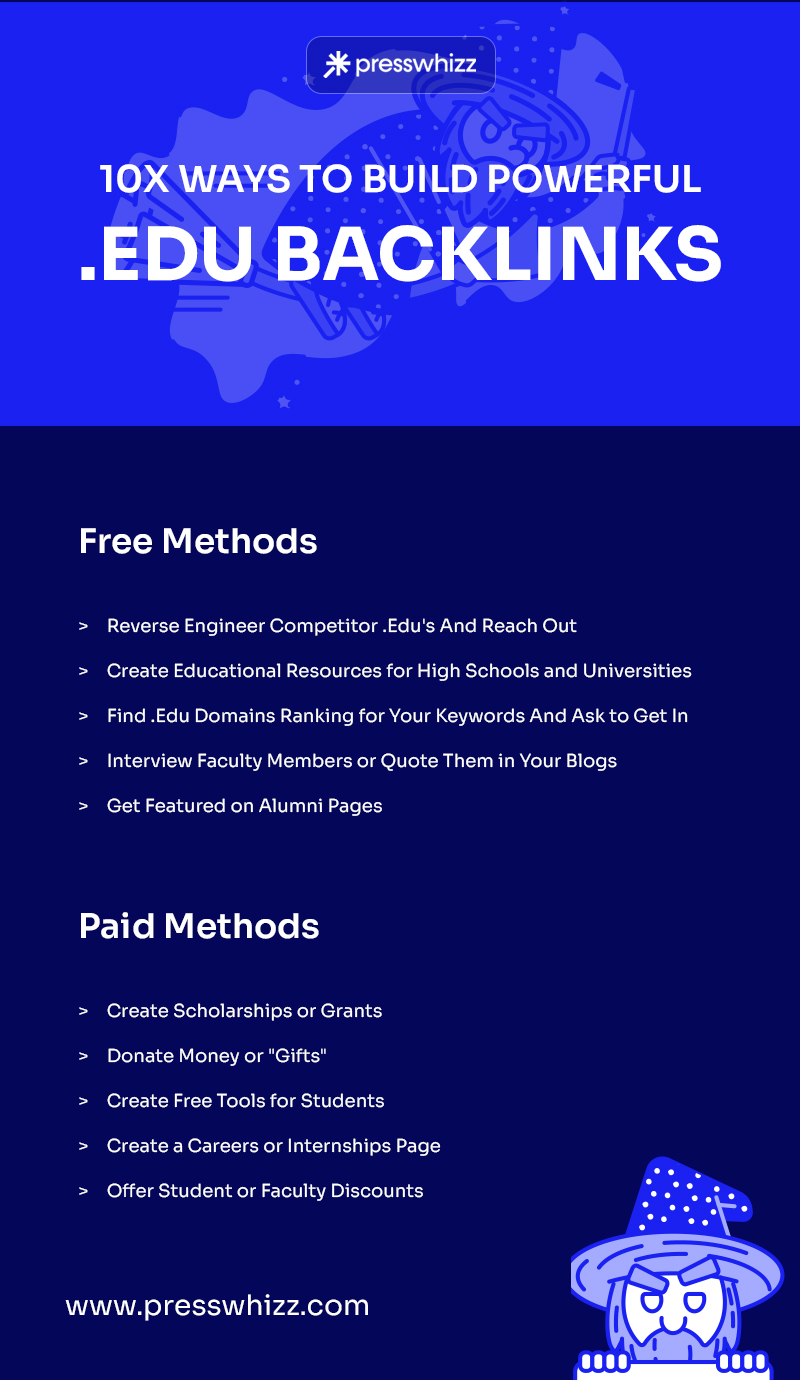
My best tips for building .edu links are as follows:
For free methods, I recommend building broken .edu backlinks, creating linkable assets and pitching them to unis, or getting featured on alumni association pages. If you’ve got the budget, I recommend sponsoring an event, donating, or creating a scholarship.
My team and I have divided our tips into free and paid methods, so scroll down and find the method that works best for you based on your budget.
Note: These are all methods that my team and I have used as professional linkbuilders. These have worked for us for years and still work in 2026.
How to Get .edu’s for Free
My top methods for acquiring .edu links for free include reverse engineering your competitors, creating resources universities want to link to, and interviewing or quoting faculty on your blog or YouTube channel.
Let me break down my 5 methods for getting free .edu links in more detail here:
#1) Reverse Engineer Competitor .edu’s And Reach Out
The fastest and easiest way to find high quality .edu link building opportunities is to find institutions that have already given out links to your competitors and ask them to link to your site as well. It’s really just link-building 101, isn’t it?
To reverse engineer your competitor’s .edu link profile, follow these steps:
- Pop your competitor’s domain into Ahrefs’ Site Explorer
- Look to the left under the Backlink Profile tab
- Click Backlinks
- Filter by .edu

For this example, I’ll use a big evil website like Hubspot (shoutout, Neil Patel).
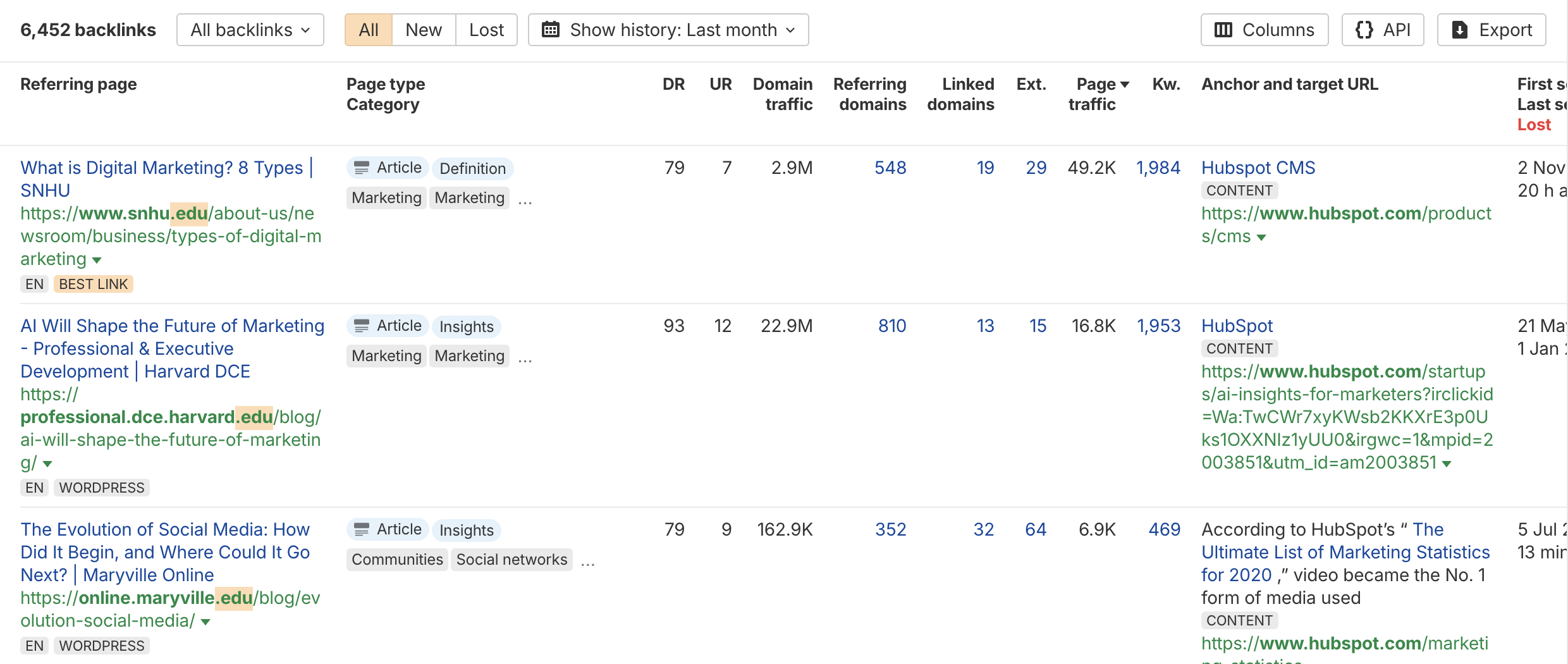
There’s some good news and some bad news here:
- Good news: You have 6,452 possible institutions to reach out to for a juicy link.
- Bad news: If you’re competing with HubSpot, you’re screwed.
Here’s a sick next-level hack for you SEO nerds that will 2-3x your chances of getting a response.
Export the keyword data to a spreadsheet and filter using AI. See which institutions give out the most links and what type of content they look for.
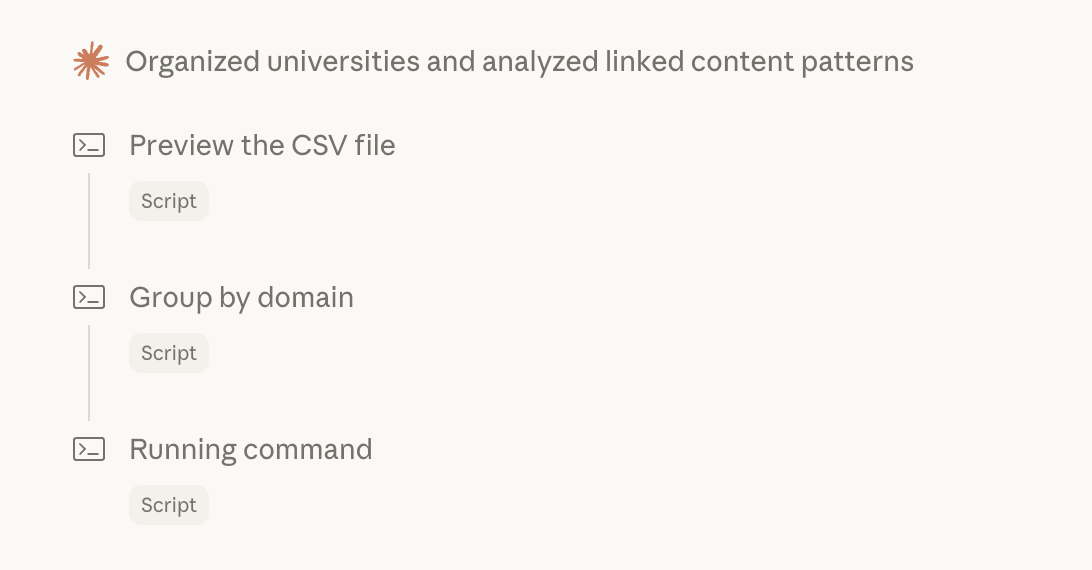
Claude is thinking…
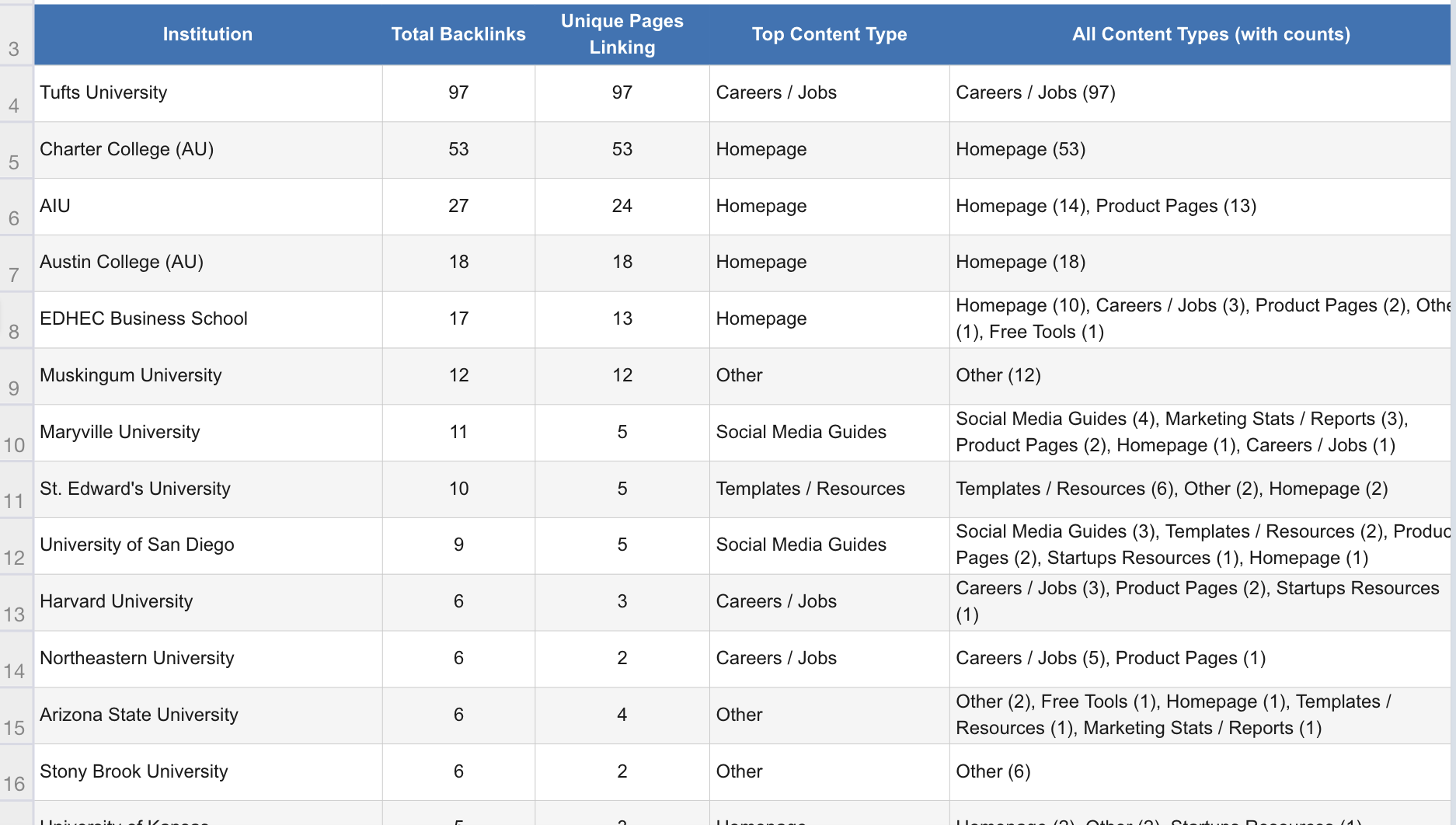
Now you should have everything in the spreadsheet showing:
- Which unis linked to your competitor’s site most frequently
- How many links they’ve given
- What type of content they link to
And this tells you that universities love linking to:
- Career pages
- Product pages
- Free tools
- Statistics/reports
- Templates and resources
If you want to score DR 75+ backlinks without donating $5,000 to a random college, this is a great place to start. More on donating further down…
Pro Tip: Use Ahrefs to find broken links on university websites, and then use AI to match broken links to existing content on your site that the uni can link to. This is one of the easiest ways to build relevant backlinks 100% free of charge. Just make sure you have high quality content. If you don’t have Ahrefs, I suggest you get it or choose another link building tool.
#2) Create Educational Resources for High Schools and Universities
Educational resources are anything a student could use to get a job, learn a skill, or improve their lives during or after university. Whenever you create a valuable resource like a career guide, template, or fact sheet, you’re creating a linkable asset that a school can give its students that makes them look better (and justifies the $100,000/year tuition somehow…).
Universities love linking to relevant resource pages for their students. HubSpot has about 30 .edu links just from these types of assets.
Here’s a good example where HubSpot managed to get 3 links from the University of San Diego just from a guide on YouTube, Facebook, and Instagram marketing.

My #1 tip for creating linkable assets for schools is to create anything related to getting a job.
Check this out…
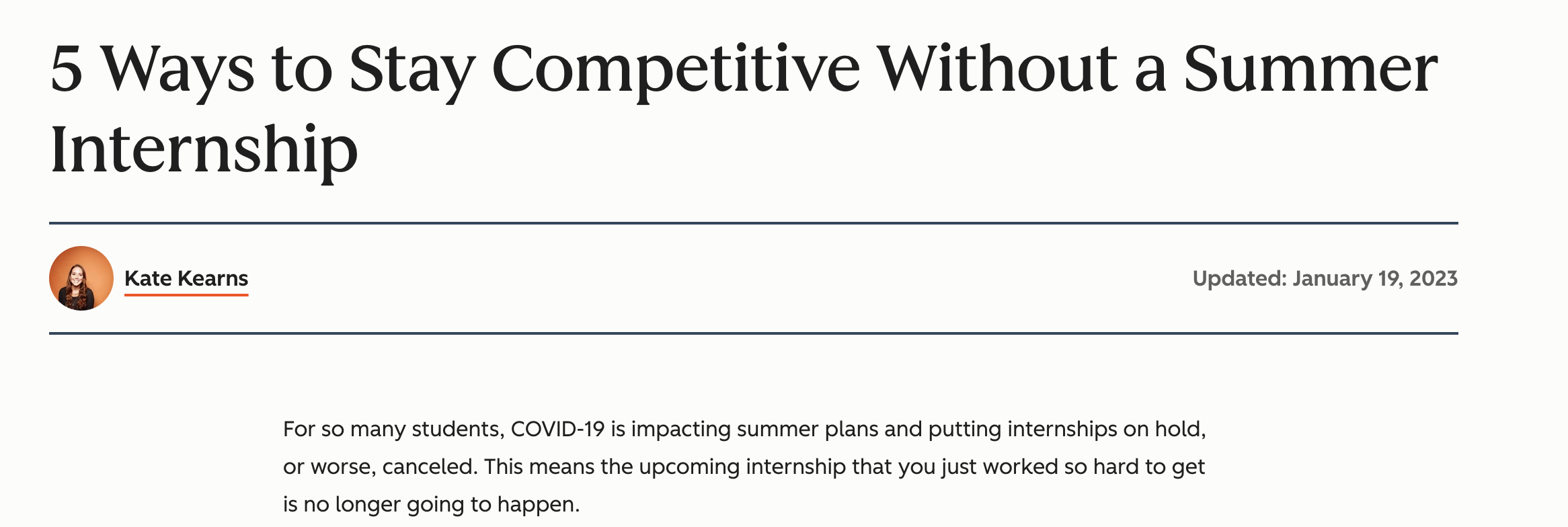
This article got a link from Tufts (who gives out links like a bartender at an open bar wedding) and probably wasn’t that hard to make.
Other examples of content you could create are:
- Statistics & research reports
- Templates
- Career guides
- Free interactive tools
- Glossary/definition pages
- Startup & entrepreneurship resources
- Business Plans
- Research papers
I recommend that you create anything that provides genuine value, but templates are probably the lowest-hanging fruit. Microsoft has these templates:
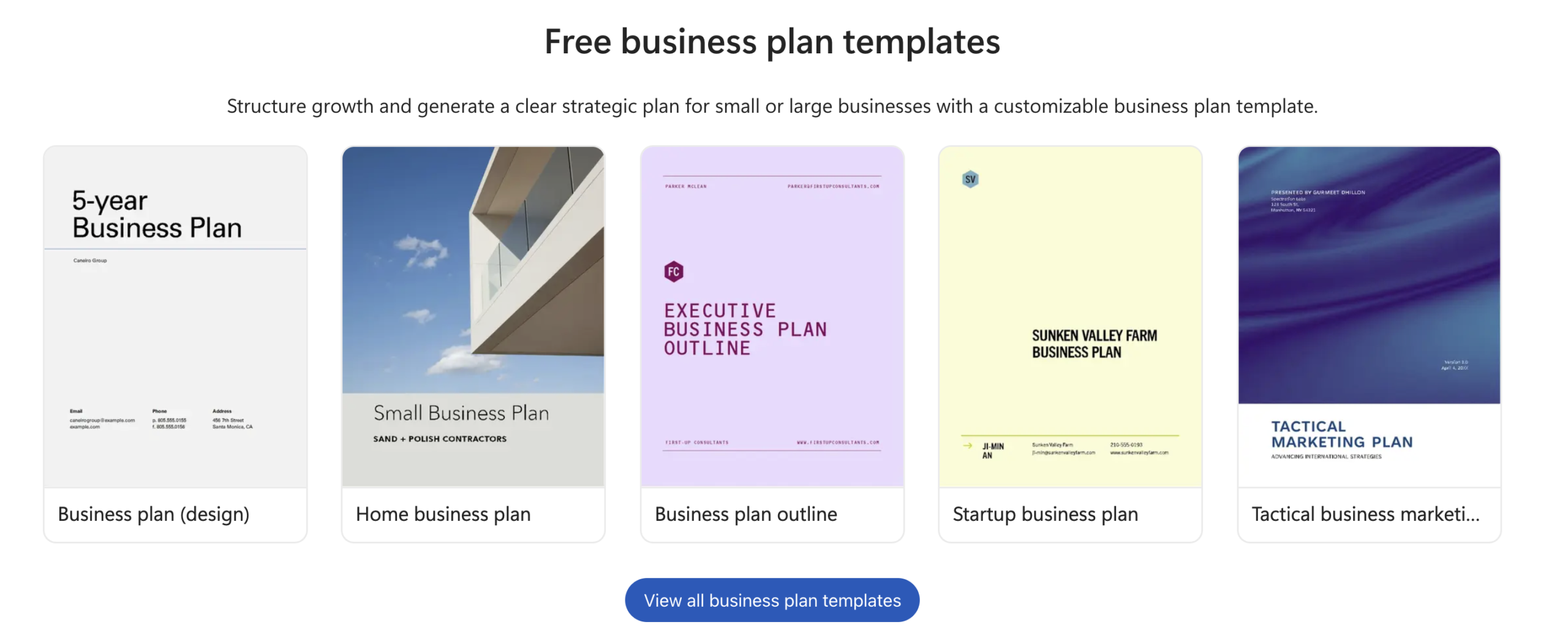
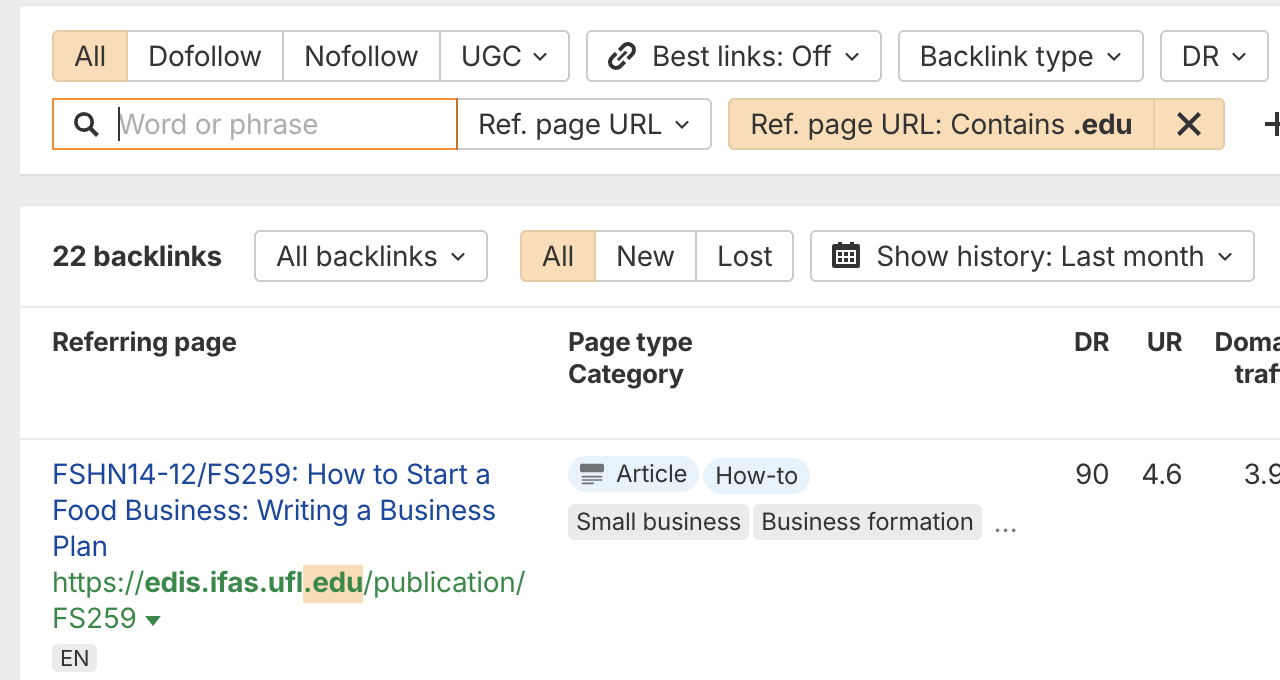
And they generated 22 .edu backlinks. I don’t care if it’s some university in the middle of a swamp in Florida. It’s a DR 90 link.
Pro Tip: You can also do this for high schools, especially for local SEO. Create a link-magnet asset for your client and tell the local school you’re trying to help students get careers in new fields. Chances are, it’ll be a lot less competitive than getting a link from an Ivy League school.
#3) Find .edu Domains Ranking for Your Keywords and Ask to Get In
Next up, we’re going to cover one of my favorite hacks for getting high powered links: Getting your site inserted into relevant content on educational websites.
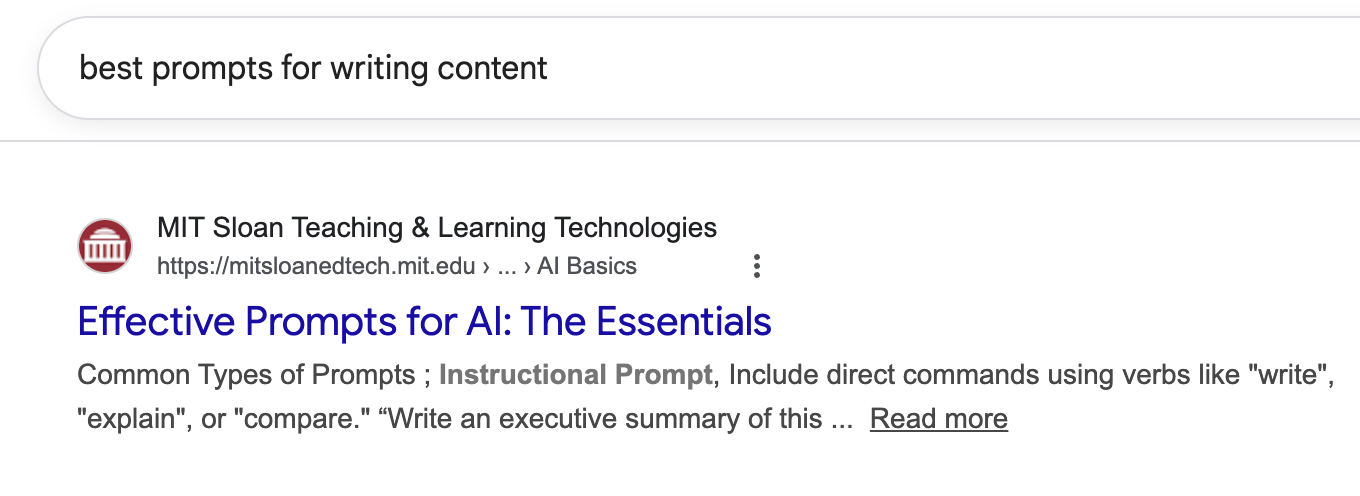
Even universities are crushing the SEO game these days. For example, MIT produces a ton of great content:
And so does Harvard:
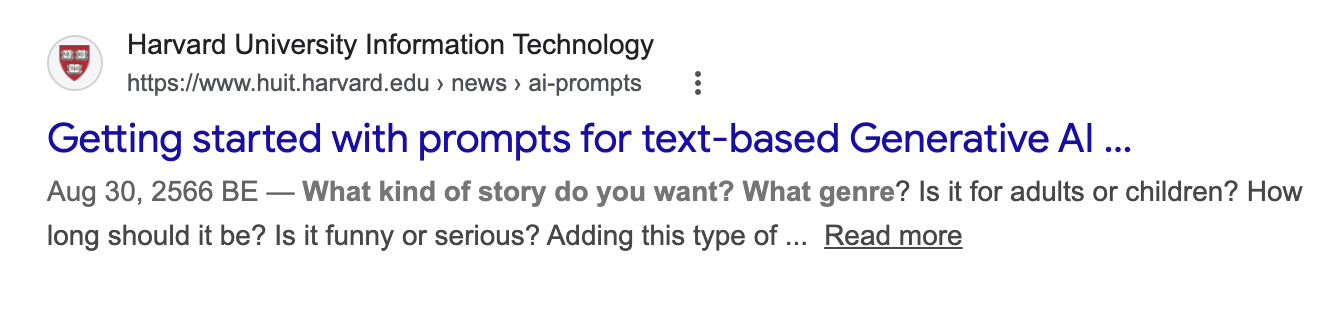
Nevermind that the AI prompting advice is awful. That’s not the point.
My point is that there are probably universities ranking for keywords related to your niche that will link to you if you produce genuinely valuable stuff.
My #1 creative way to get .edu backlinks here is by trying to get into product roundups. This way, there’s no conflict of interest. You get a link, your name gets mentioned, and the school doesn’t help a competitor outrank them. Everyone goes home happy.Imagine you had an AI tool (like everyone else these days). You could look for universities ranking for that term and get your product on their listicle:
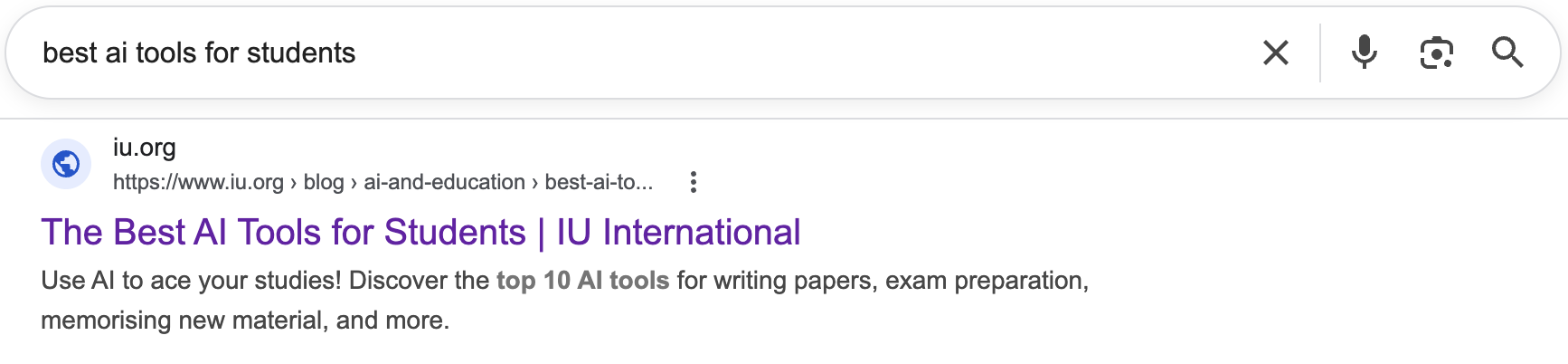
Bang. There’s a nice opportunity.
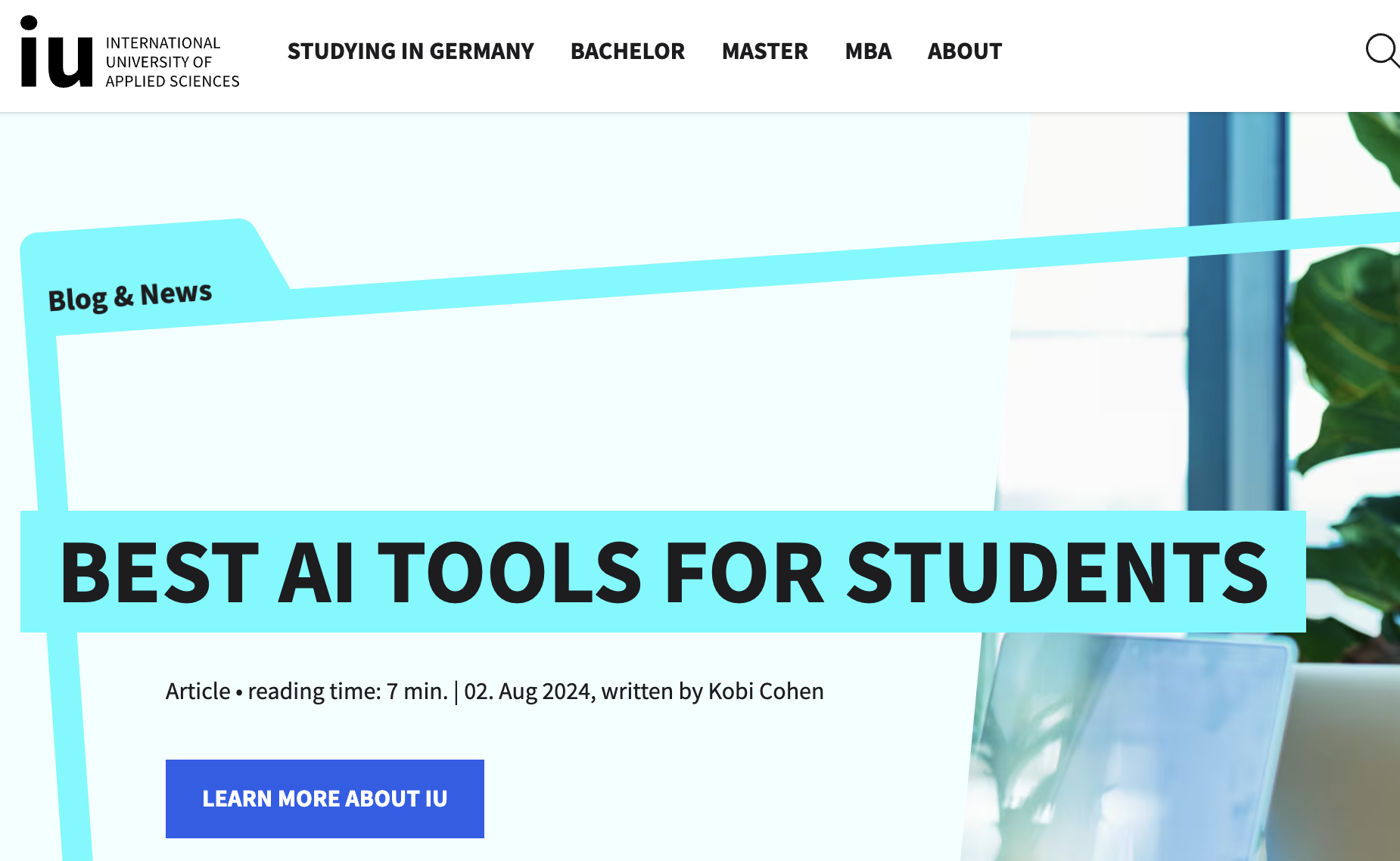
International University of Applied Sciences. Where the HELL is this place?
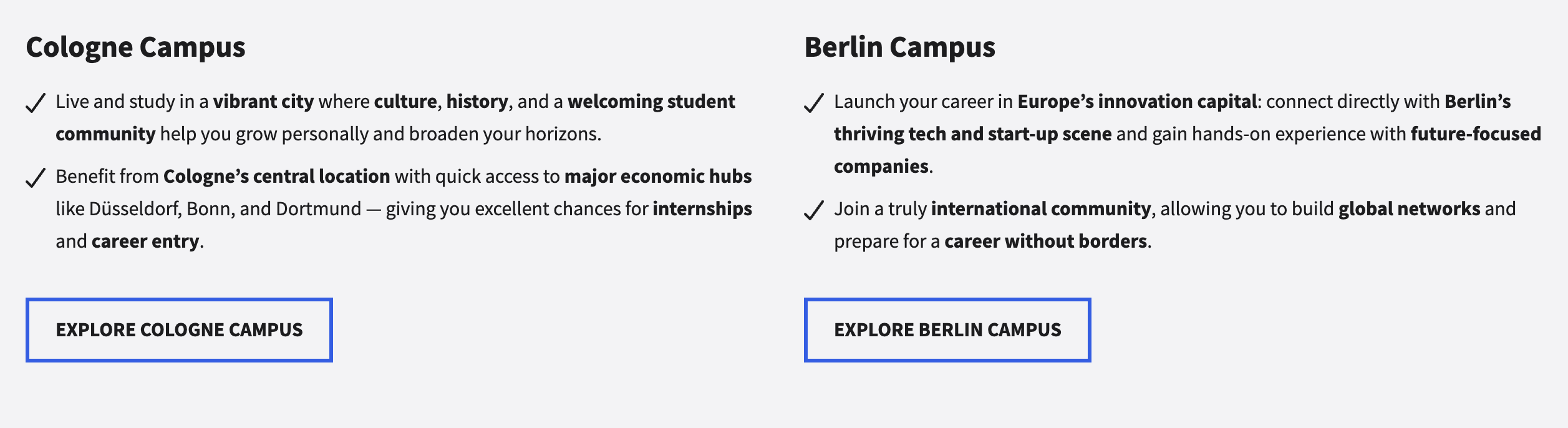
Germany…of course.
Doesn’t matter. It’s a DR 63 website. I would reach out directly to that author and ask them to add my tool to this list.
Luckily, he’s got his email right on his LinkedIn:

Here’s an example email for pitching your tool (or your client’s):
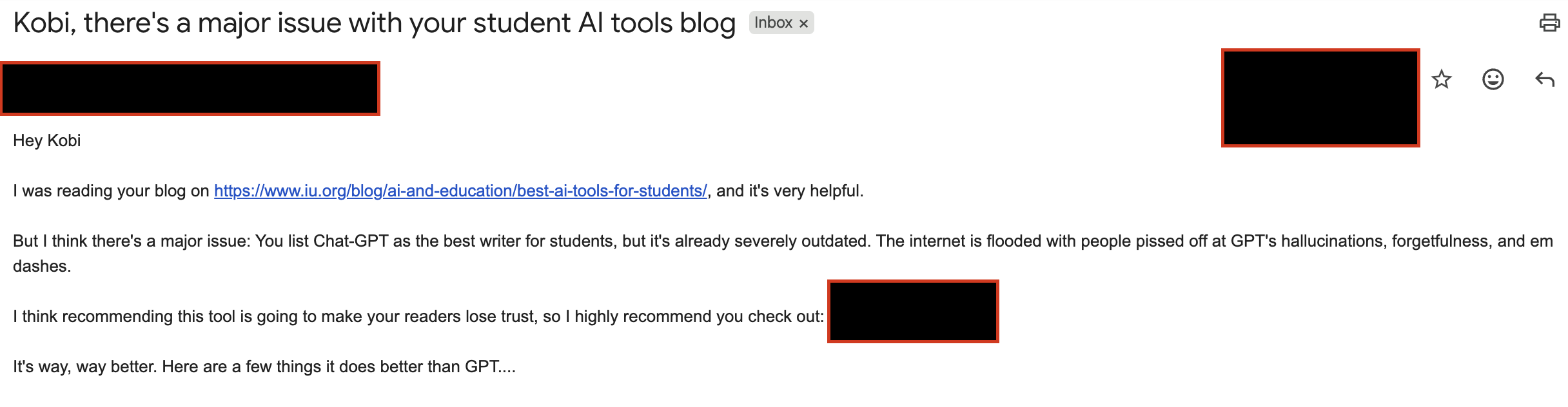
#4) Interview Faculty Members or Quote Them in Your Blogs
Another great way to get links for free is to interview faculty members and ask them to share the article on their faculty profile page. This really only works if you have a large blog with a decent social following.
If you’re still part of the SEO peasantry, you could instead quote them in your articles, either by directly asking them or by finding an interview/article they’ve already published and lifting the quote (and attributing it to them).
Let’s cover each one by one:
Interviewing is pretty straightforward. You find a professor in your niche and ask them to talk with you about their expertise on your website, podcast, or even YouTube channel.
Here’s an example from the Marketing Society’s page:
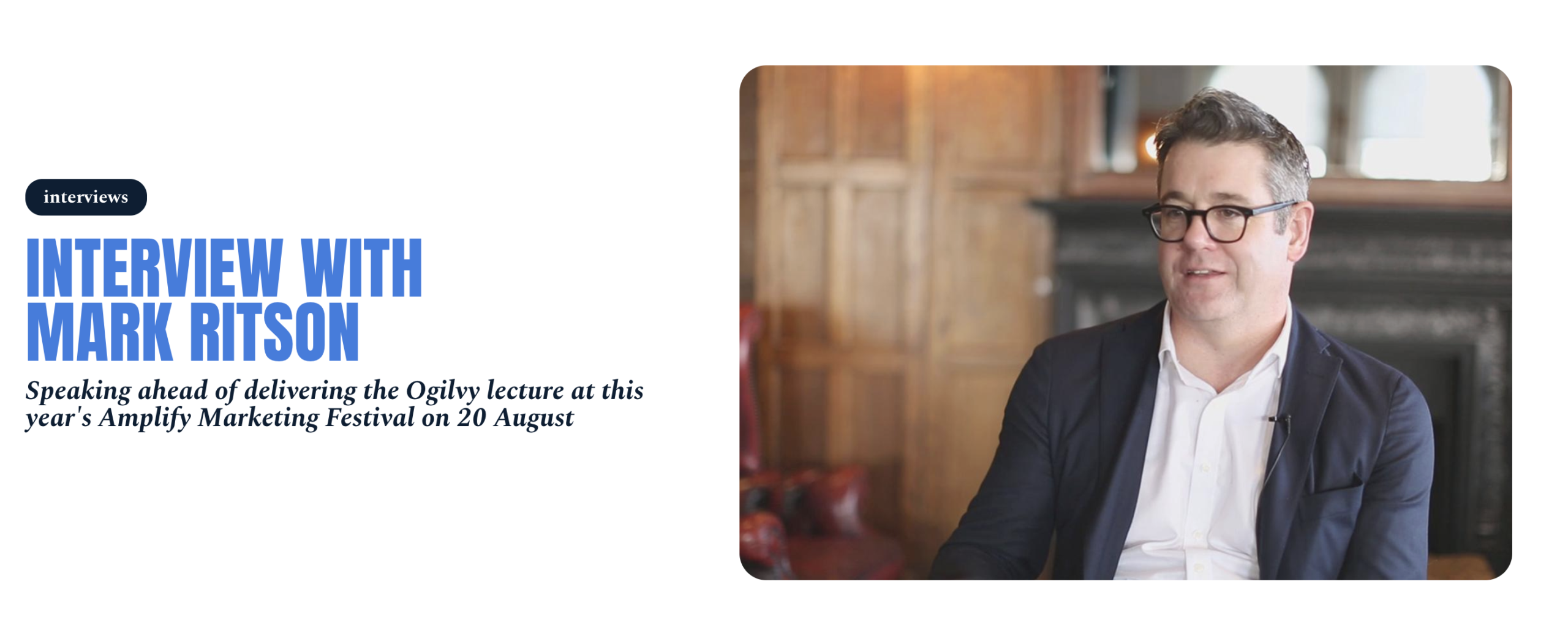
Just post their interview on your blog or channel and ask them to do the same.
If you don’t have that type of pull in the industry, just mention them in an article instead.
HubSpot uses all of these tactics quite often. Interviews, collabs, guest posts, mentions…if it’s a way to manipulate search rankings and crush competitors, HubSpot loves it.
Here’s a collab example:

#5) Get Featured on Alumni Pages
Another underrated tactic I love is getting your (or your client’s) brand featured on university alumni pages. Let me cover why it’s great first before showing you the best way to do it for free.
First, most schools run an alumni spotlight program where they showcase what their graduates are doing in real life (probably not related to their expensive degrees, but I digress…).
These pages almost always link out to the company or product the former student is working on. It just makes them look like their expensive education actually works in the real world.
Once they link to you, that’s an easy DR 70+ do-follow link to your site that’s as close to guaranteed as possible in this business.
Here’s how the Harvard Alumni directory works:
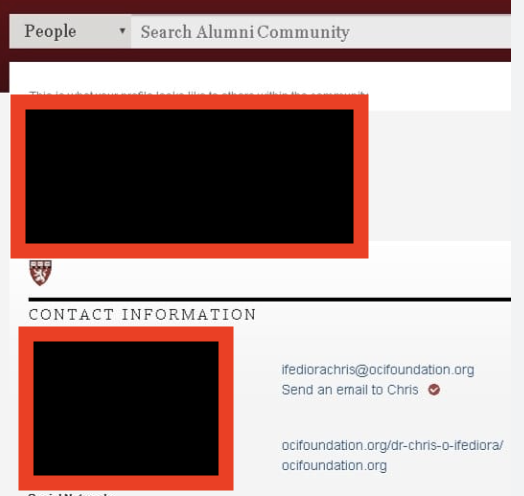
Forgive me if I’m assuming too much, but if you’re on the PressWhizz blog, I doubt you went to Harvard. If you did, please DM me, because that’s pretty damn cool.
That doesn’t matter, though. It could be any university.
So, how do you do it?
You find employees of your client’s company (or yours) who went to universities with active alumni programs and ask them to put a link to the site. That’s it.
You could even ask to be part of an employee spotlight program or something like that. You might get a blog post on the school’s site.
The school gets content, your employee gets recognition, and you get a .edu backlink that costs you nothing but an email.
Paid Methods for Getting .edu Backlinks
Now that you know how to get them for free, let’s cover some paid methods for getting .edu links.
#6) Create Scholarships or Grants
If you’ve got the budget, creating a scholarship or grant is a surefire way to get high quality backlinks from DR 80+ websites.
I’ve seen clients get a dozen .edu links from a single $1,500 scholarship to a local university.
It could be a scholarship, grant, or even just a donation (I’ll cover that next).
Colleges will often list every possible funding option for students, so if you offer a $1,000 scholarship, high DR websites will list it on their sites and link to you, or they might directly link to your scholarship pages.
Here’s an example from Grasshopper, a business phone app listed on Carroll College’s website:

They offer a $5,000 scholarship to students, and this gets them links from universities. Yours doesn’t have to be $5,000. It could be as little as $1,000. I know this is from 2018, but this method still works.
Here’s Bonjour Marketing’s “Dream Big” scholarship. It’s only $1,100.
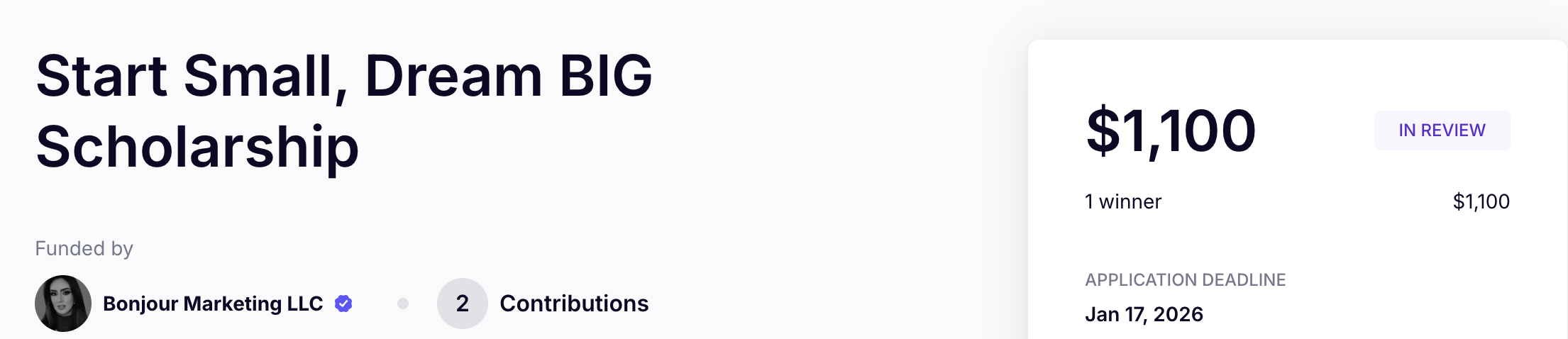
One DR70+ link alone could cost you $500-$750. So, $1,000-$2,000 for multiple, maybe even dozens of links, is not a bad deal.
And these types of links tend to be sticky. Colleges have no reason to take them down if they’re legit.
Once you create the grant or scholarship, start reaching out to university staff or representatives and ask to get featured.
TIP: Keep it niche-specific. If your client is in the legal niche, create a $1,000 grant for law students in the local area. Something like that.
#7) Donate Money or “Gifts”
Most universities maintain donor recognition pages where they publicly thank corporate contributors, and these almost always include a link back to your website. You’re not buying a link…you’re just being a good citizen and getting credited for it (wink wink).
You don’t need to donate a fortune. Some smaller universities will accept anything. Hell, some universities have pages begging for donations…
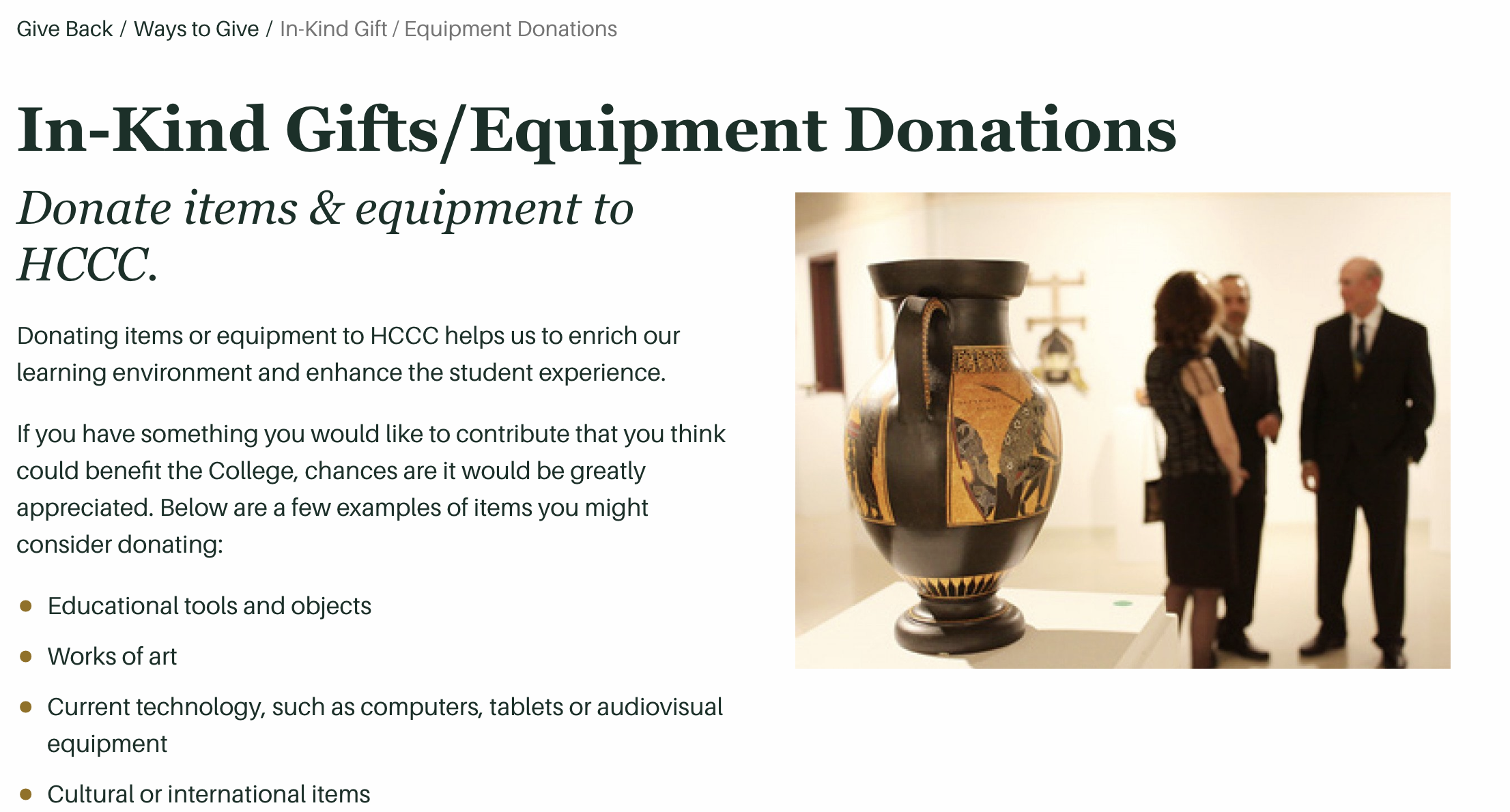
You can donate directly to a university or just sponsor university events. Do whatever is easiest and most affordable for you. Here’s an example of a university event that accepts sponsorships from businesses:
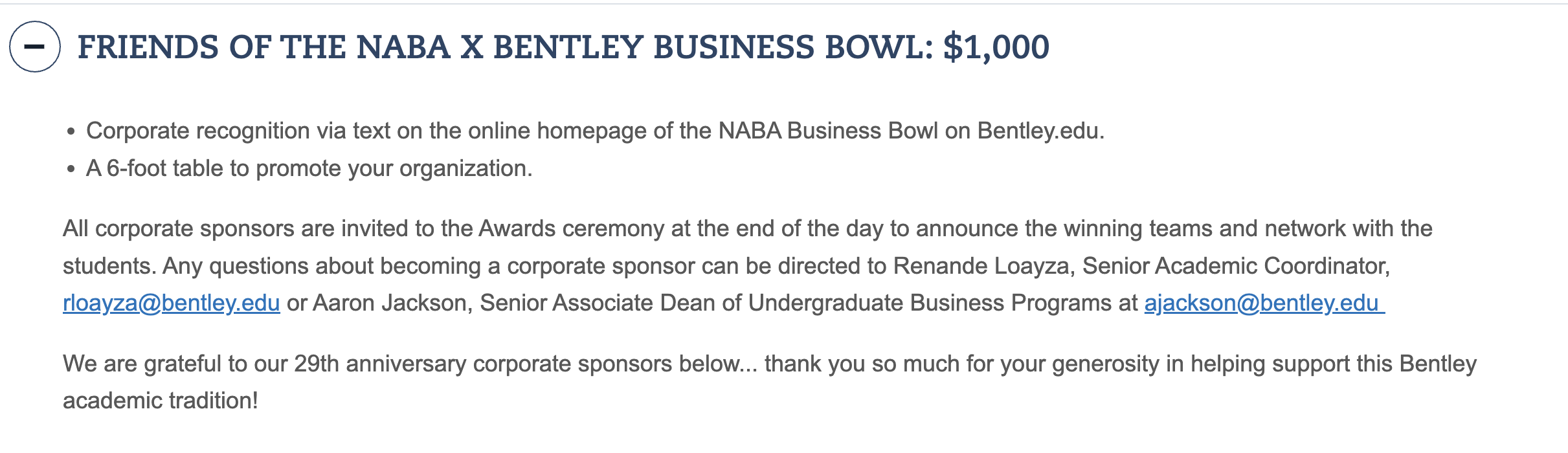
You could sponsor that event for $1,000 and get a bunch of backlinks and exposure.
#8) Create Free Tools for Students
Creating free tools is one of the most scalable .edu link building plays.
Universities love linking to free tools for students. Professors even assign them as part of the curriculum.
This is basically free now with AI tools. All you need to do is create something simple, like a calculator or some type of generator, and you’ve got something that unis want to link to.
HubSpot does this to perfection.
Here’s an example where they landed 14 .edu backlinks from one tool:
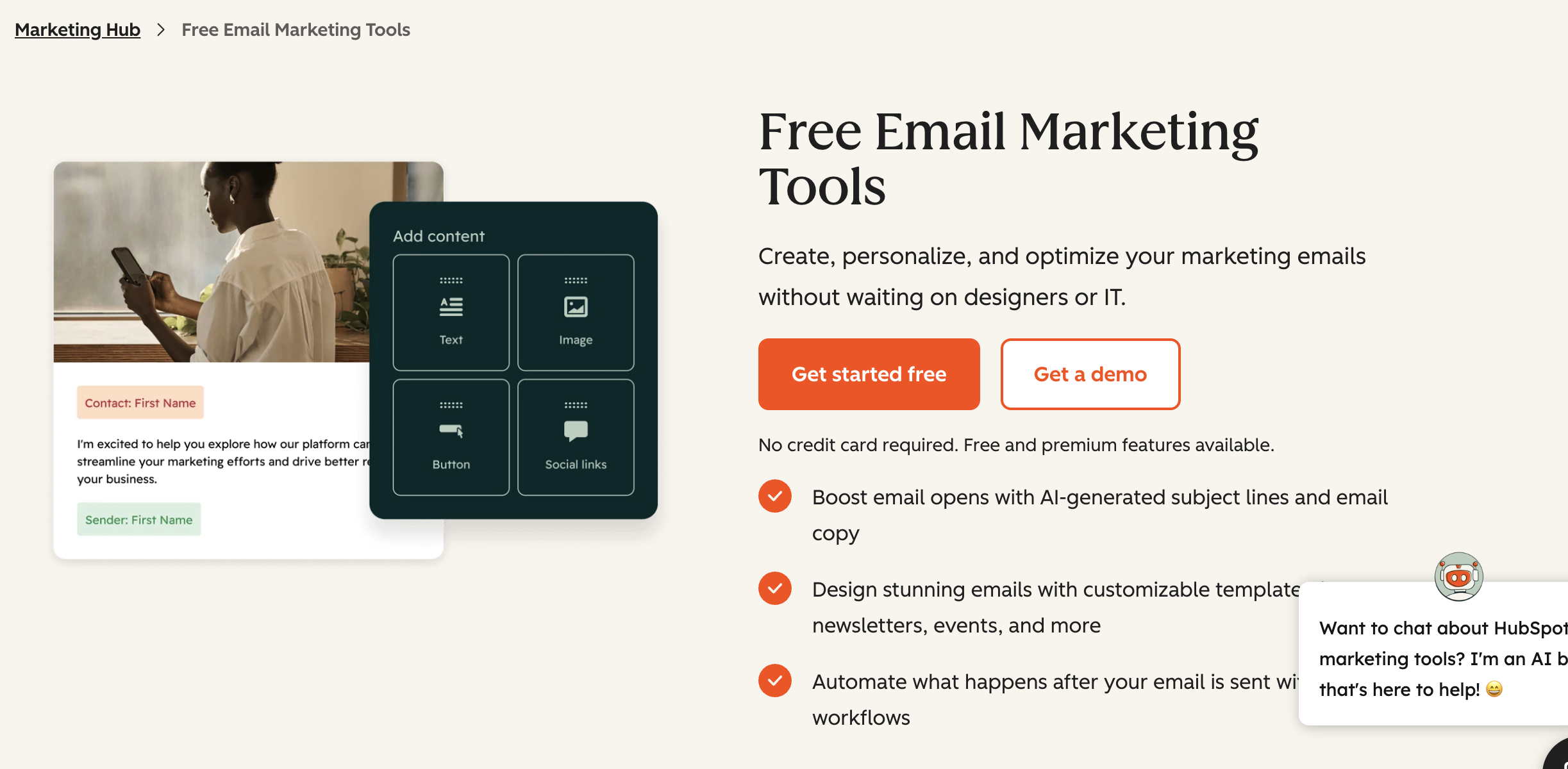
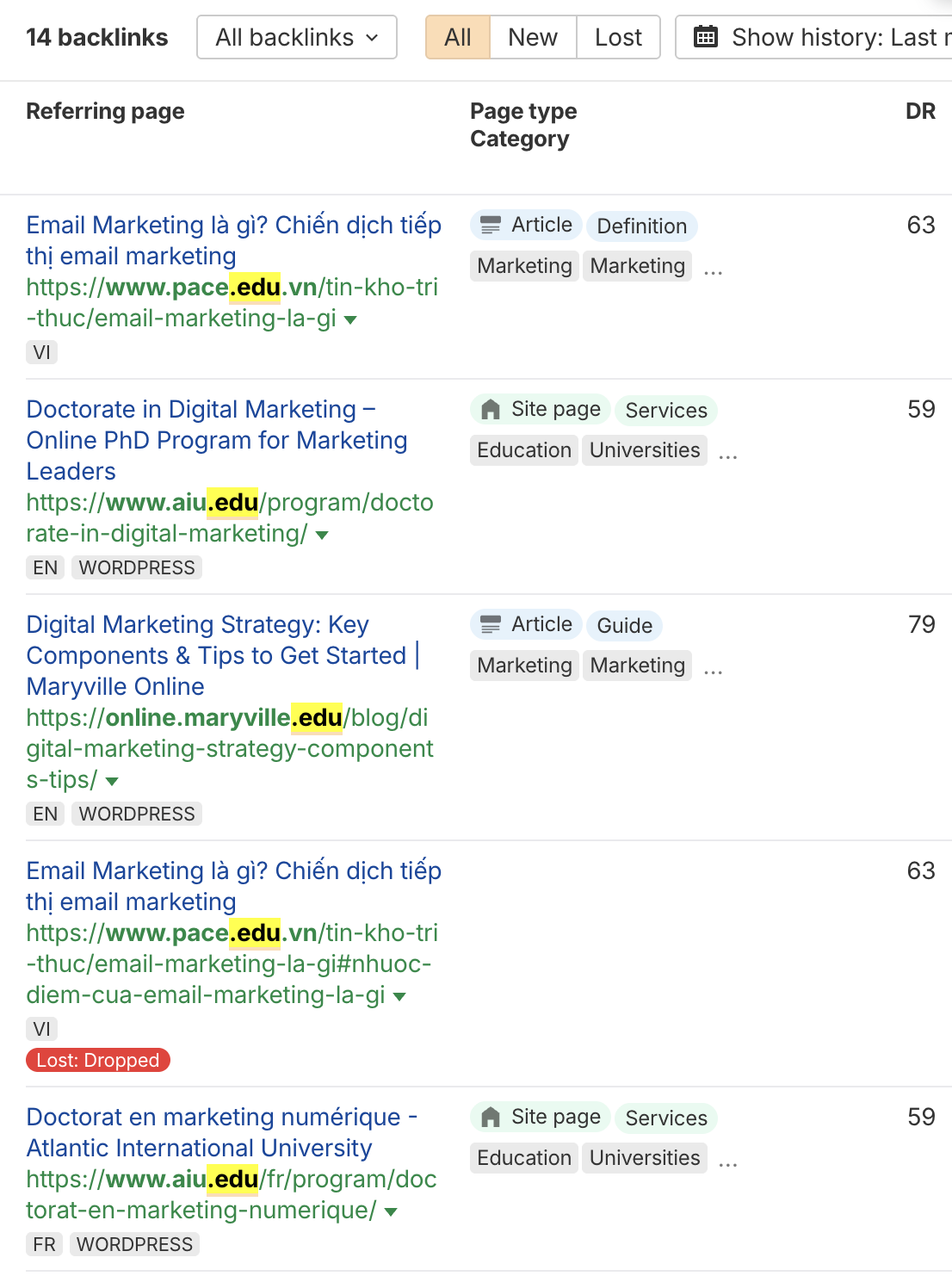
And they have god-knows-how-many of these tools.

#9) Create a Careers or Internships Page
A careers or internship page is one of the easiest .edu link bait assets you can build.
Universities and colleges are always looking for places to send their students for real job opportunities, and a well-built careers page gives them exactly that.
There’s one particular company that got 72 .edu backlinks from their careers/internships page:
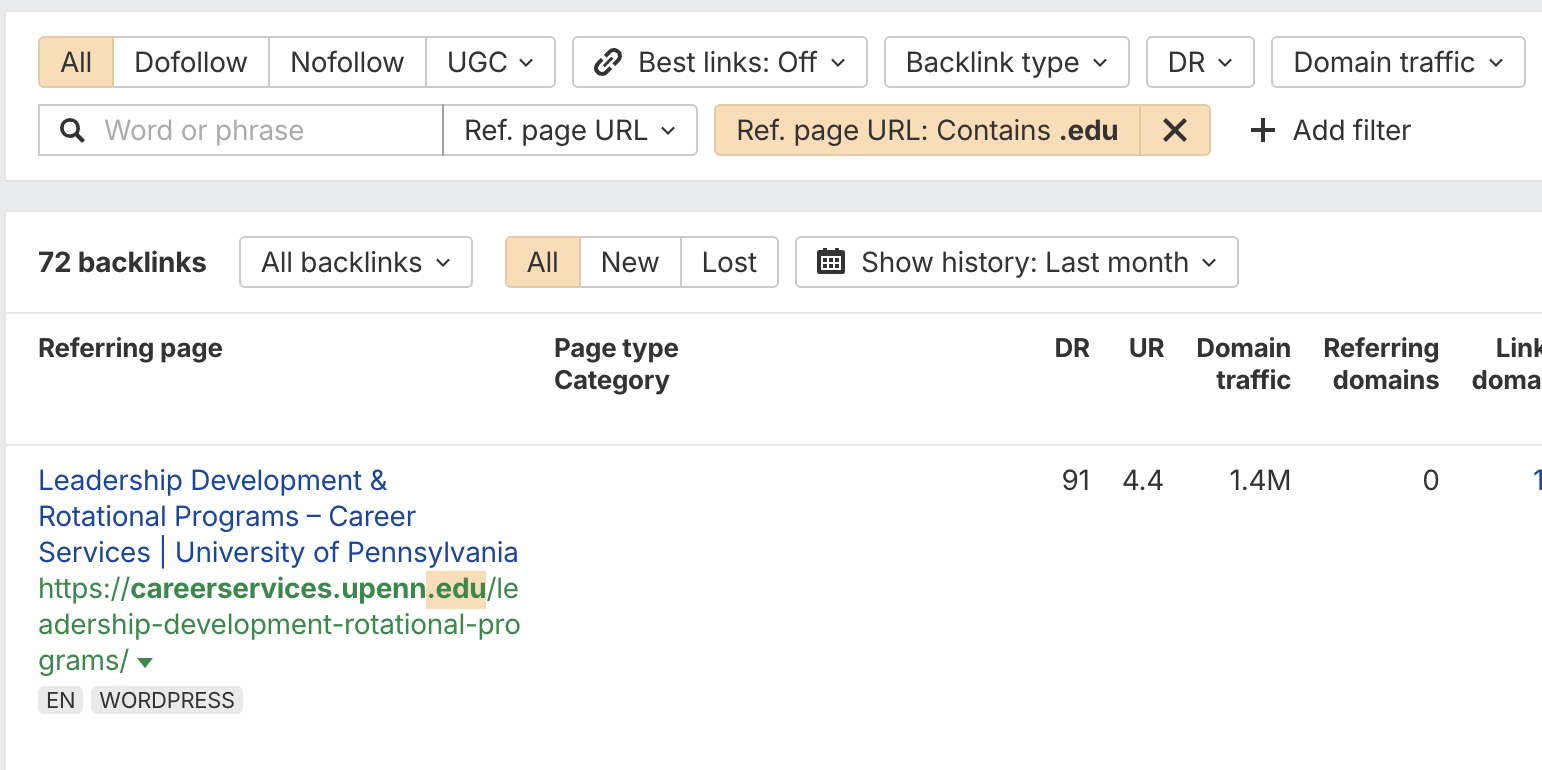
I won’t say the company’s name, but it rhymes with “GrubSpot.”
The key is making it genuinely useful.
Post active listings with salary ranges, explain what your hiring process looks like, and show candidates what growth at your company actually looks like. Career centers link to real companies. Not placeholder pages with a single “we’re hiring” banner.
Once the page is live, email career services departments at schools where your target candidates are studying.
Note: It’s free to make one of these, but you will have to pay a salary to your eventual employee. That’s why it’s in the paid methods section.
#10) Offer Student or Faculty Discounts (Great for eCom)
Last up, offer student discounts on either your products or tools. Actually, if you’re a SaaS tool, I recommend having a free student plan like Notion does (I’ll get to that in a second).
Universities actively maintain pages listing discounted and free software for their students, and if you can get featured on one of those pages, you’re picking up a .edu link with almost zero effort. It’s one of the lowest-friction link-building plays out there.
Companies like Adobe, Notion, and Figma have mastered this. Even a modest 30% student discount gives universities a reason to send their students your way (and link to you in the process).
Check out Notion’s free student plan:
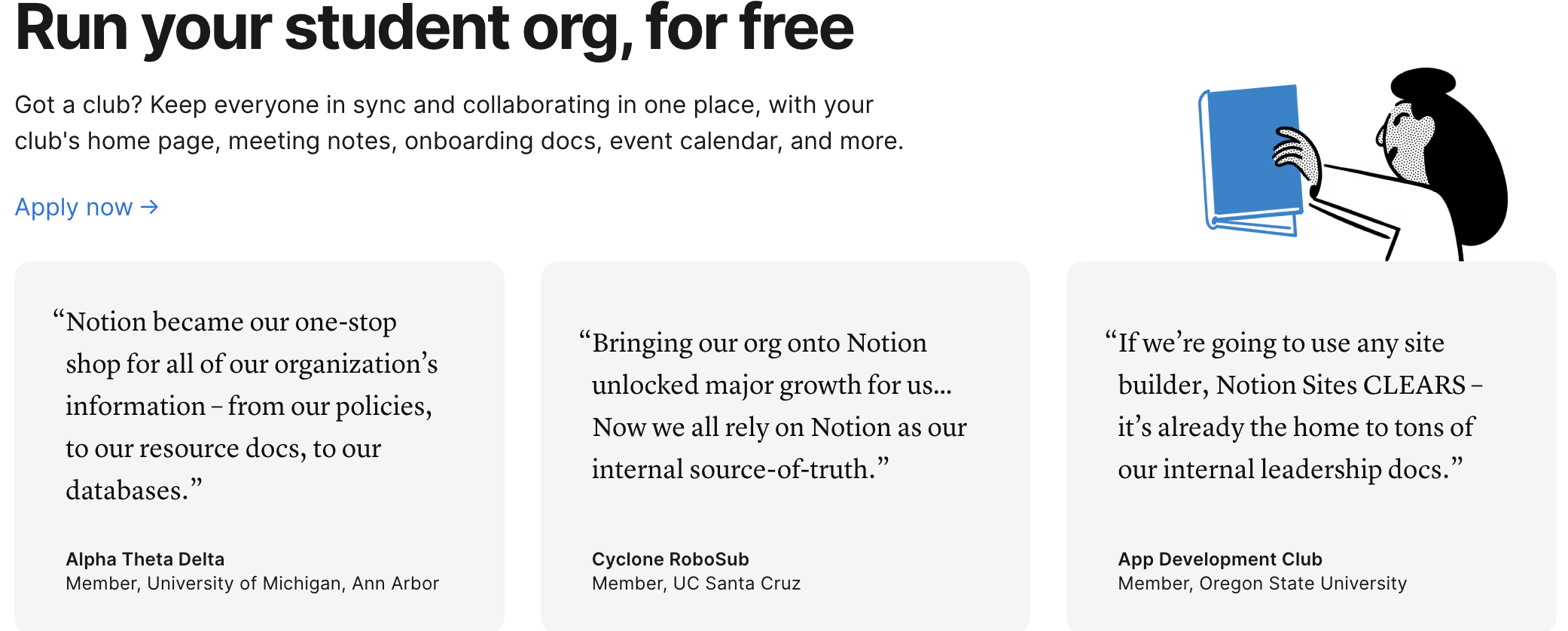
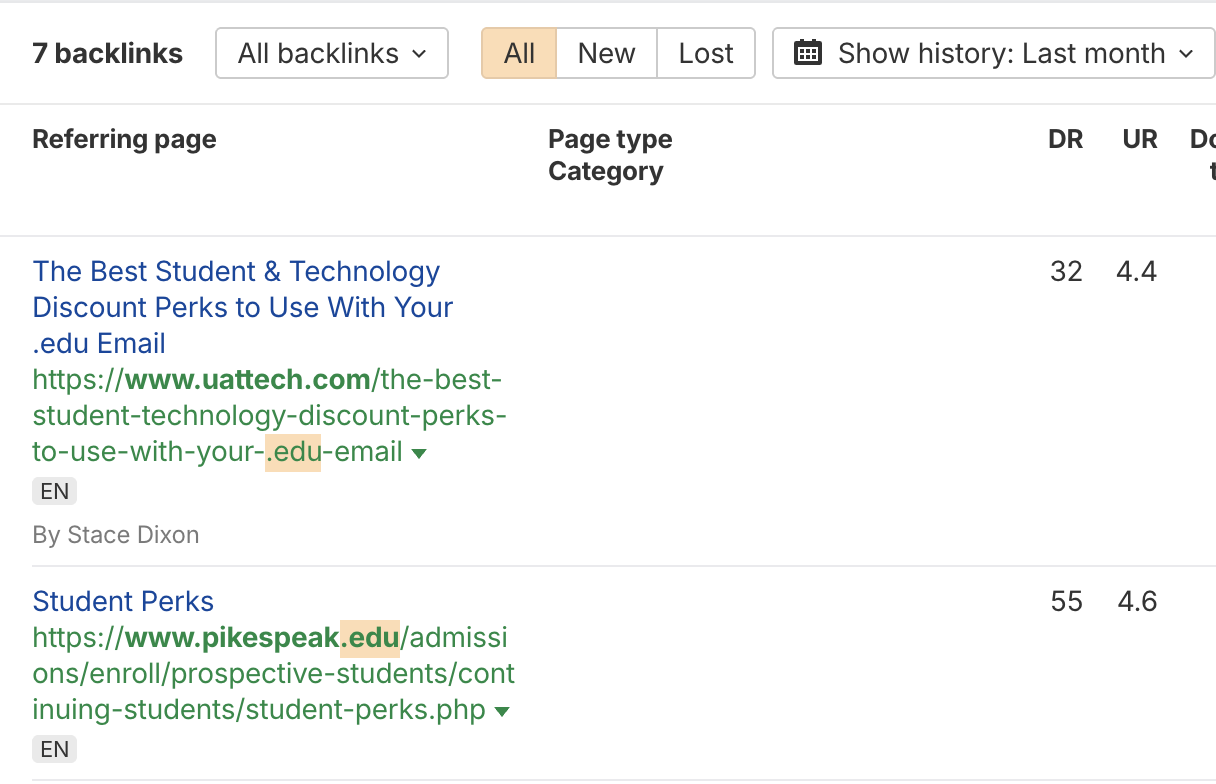
They aren’t doing this out of the goodness of their hearts. They’re doing it for market share and getting some juicy backlinks:
.edu Link-Building: All of Your Questions Answered
Now that you know our best tips for building educational backlinks, we’re going to dedicate the rest of this article to answering the most common questions we get about them.
What Are .edu Backlinks?
.edu backlinks are links from educational institutions with the .edu extension (SURPRISE!).
Everyone in the SEO world loves .edu links because educational institutions are larger, more authoritative, and usually older than typical websites. It’s also (in theory) a lot harder to get links from respectable institutions than it is from regular ol’ websites.
So, links from these sites will pass on a lot more link juice to your site.
Certain white hat SEO fanboys will tell you that .edu links carry no special weight and that Google (and other search engines) treats all links equally. Anyone who actually does SEO and has spent time running link-building campaigns knows that’s not true. The data suggests that .edu links move the needle faster than regular links.
I’ve seen it firsthand. Clients who land even a handful of quality .edu links tend to see ranking movement quickly. The trust and authority these domains pass is hard to replicate anywhere else.
Further Reading: Check out my full guide on why backlinks are important for SEO.
Why Are .edus so Valuable for SEO?
.Edus are insanely valuable for SEO because of their domain authority, trust, and age.
Google loves reputable sources. Perhaps even a bit too much. Since they are verified, well-established institutions with credentials, Google trusts them far more than it would an average website from a random company.
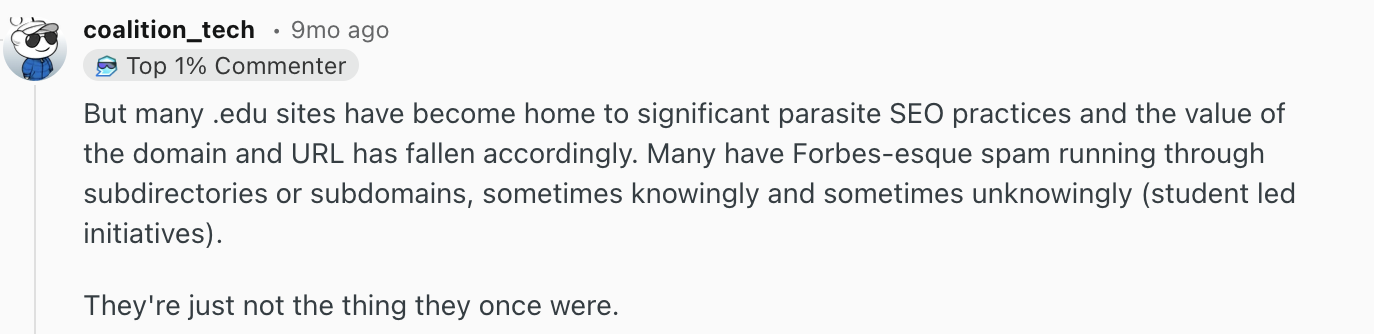
They’re almost certainly going to stay up long-term, and they’re 100% algorithm safe. There is some chatter, particularly on Reddit (a bastion of truth, I know), about whether they’ve gone down in value. Case in point here:
What Are Their Benefits?
Let me spell out some of the main benefits of .edu links for you in case it hasn’t hit home yet:
- Google associates .edu domains with expert, trustworthy sources. So, a university linking to you is a strong vote of confidence in the SEO world.
- A lot of .edu sites are packed with deep research and specialized resources, so links from these pages carry more weight in your niche than other sites.
- Because .edu domains are restricted to accredited institutions, you can’t just buy your way in, which is why they’re so hard to get and so valuable.
- Educational pages don’t get taken down often. A link from a university resource page or scholarship listing can pass authority to your site for years.
- There’s also a “link neighborhood” you need to be aware of. Getting a link from a reputable academic domain puts your site in a circle of trusted, high authority sources, and Google notices that.

.edu vs .gov links: Which Are Better?
Neither .edu nor .gov backlinks are inherently better than the other.
Like most things in SEO, it depends on what you’re trying to accomplish.
In my experience, .gov domains tend to skew higher in DR across the board. Government sites are heavily regulated and carry an enormous amount of trust. They are, after all, the official websites of the government. But DR alone isn’t as important as relevance.
Here’s my advice…
If you’re in law, cybersecurity, healthcare, or any niche that overlaps with government regulation, a .gov link can be incredibly powerful. For most other industries, .edu links are going to be more topically relevant and easier to land. A marketing agency has no business chasing .gov links when there are hundreds of universities producing marketing graduates every year.
Can You Buy .edu Backlinks?
Yes, you can buy .edu backlinks, but probably not in the way you’d think.
Can you just go to Fiverr or Upwork and get .edu links for $20? No. That’s a terrible SEO strategy. It’s just going to be spam from God knows where.
But there are a few things you can do to buy them.
You’ve read all of the best tips here about buying high quality .edu backlinks. You could donate, make a scholarship, sponsor a university, or offer student discounts. My advice is to figure out how many links you need, set a budget, and go from there.
Note: Please, for the love of God, do not use backlink generators for .edus. Actually, just don’t use backlink generators ever. They are not a viable backlink strategy.
Further Reading: I have a complete guide on how to pick the right backlinks when buying links.
Pros & Cons of .edu Links
Pros
We’ve seen .edu links do things that regular links simply can’t. Some of the pros are:
- They significantly improve your website’s credibility with Google
- They pass serious authority that’s hard to match with other link types
- They stick around for years without getting taken down
- Because .edu domains are restricted to accredited institutions, the trust they carry is hard to replicate
Cons
Getting .edus can be difficult. In my experience, academic institutions are usually quite open to payment for things, but it’s still harder to get .edus than it is normal links. Some of the cons are:
- Outreach campaigns are time-consuming and rarely get a quick response
- Scholarship programs cost real money to set up and maintain
- Linkable assets take serious time to build before they attract links
- There’s no guarantee any of it pays off
- Universities are notoriously tight about who they link to
- Simple “hey, link to my site” emails don’t work
Final Thoughts
The one thing I want you to get from this article is that .edu links are powerful and probably carry more weight than regular links. If you have the budget and need them, by all means, get them. But I urge you to prioritize building a natural link profile with relevant links from high authority sources.
My advice is to create a natural link building strategy with links from relevant sites and to work high authority .edu links into that strategy. And not to focus on just getting as many .edu links as possible.
If you create something genuinely valuable for students that attracts multiple .edu links, that’s great. If you have the budget to sponsor, donate, or start scholarships, that’s even better. But remember that Google prioritizes relevance and that there are often better link building opportunities out there. Just getting a bunch of alumni page links or spamming donations is not a viable link building strategy anymore in 2026.