If you’ve landed on this how to buy backlinks guide, then you’re probably asking yourself the following questions:
- Can I buy backlinks? Are paid backlinks safe?
- How do I tell a good link from a bad one?
- Will Google penalize me for buying links (spoiler alert: probably not)?
- How much do links cost?
- Can’t I just write good content and wait for natural links like Google tells me to?
If any of those sound like you, I suggest you read this post thoroughly, because I’m going to answer all of those questions in detail. I’m also going to explain some low quality link buying tactics ruining SEO in 2026 and expose Google for its lies and deceit.
In my experience, nobody really knows how to buy backlinks properly. The entire SEO industry still buys links using outdated advice, does poor or no due diligence, and pays way over market rate for low quality links.
If you’ve struggled to rank in search engines or gotten a penalty because you followed bad link building advice, then I don’t have to tell you.
Today, we are going deeper than just “buy guest posts” or “use niche edits.”
I’m about to show you everything I’ve learned over my ~20 years in the SEO link building game.
You’re going to learn how to evaluate link quality with metrics that actually matter, what links should cost, what Google says about link building (and how it’s all BS), and how to buy links that produce results based on the hundreds of thousands of links that I’ve built over my lifetime.
How to Buy Backlinks the Safe Way (Quick Answer)
What Are the Best Ways to Buy Backlinks?
The 5 best ways to safely buy backlinks in 2026 are:
- Guest Posting: Reach out to websites accepting “sponsored posts” and pay to have a post published on their websites.
- Niche Edits: Niche edits are when you pay to have your link inserted into a relevant, existing article on a website.
- Digital PR: This is when you land featured spots on reputable industry publications. It’s more like brand building than typical “SEO link building”.
- Marketplaces: Link marketplaces like PressWhizz are platforms where publishers list their website, domain metrics, and prices, and customers choose which websites they want to buy a link from.
- Manual Outreach: This is the old school “boots on the ground” approach where either you or a service provider (agency or freelancer) cold emails websites and asks if you can pay for a link.
I will explain all of these methods in a more in depth manner later on in this article.
How to Evaluate Link Quality?
Not all links are created equal. I’ve been doing this for 20 years, and I see a clear difference between links that produce rankings benefits and ones that Google ignores. My top criteria for evaluating link quality are:
- Domain Rating: This is a measure of a website’s authority that predicts how much “link juice” it passes along to you.
- Relevance: You want links from real websites that are relevant to your industry, if possible.
- Organic Traffic: Does this website you’re purchasing a link from have real traffic, or is it some scammy PBN from far flung corners of the globe with no traffic?
- Content Quality: Spammy, spun AI content probably won’t rank. And if the article that contains your link doesn’t rank, then it won’t provide much SEO benefit at all.
- Link Placement: Links further up in the text provide more value than ones further down, or worse, in the footer.
When it comes to buying links, the answer is always “it depends, mate”. Is a DR 40 link on a site with 500 monthly visits “good”? Well, what DR is your site? How stiff is the competition on Google’s search results page? What are you paying to purchase this link?
I’ll go into more detail on this further down as well.
Should You Buy Backlinks?
Yes, you absolutely should buy backlinks from safe, reputable sites no matter what Google, white hat SEOs, or Reddit bots say.
Buying backlinks is the fastest and easiest way to earn high quality links from reputable sites. And, if you do it the right way (which I’ll show you), then you will get SEO results without having to worry about Google penalties or wasting money.
While your competitors just write great content and earn 2 backlinks naturally per month, you can acquire dozens of 100% safe links in a relatively short amount of time and outrank them.
It’s just simple math. On average, articles higher up in the Google results tend to have more backlinks than those below them. So, if you’re earning more high quality links than your competitors, you will outrank them (all other things being equal).
Here’s the main issue about buying backlinks that you need to understand if you want to succeed in SEO: Everyone is doing it, and if you want to win, you need to do it too.
Everyone in this industry – affiliates, in house SEOs, big brands, agencies, etc. – buys links. Some companies spend high six figures a month on links alone. If you’re relying on natural backlinks like Google recommends, you can’t win.
My only caveat is that Google is good at determining what is a spammy, low quality link. And that buying these links en masse is almost guaranteed not to work.
So, my official advice to you is that you 100% should buy backlinks, but you must do it in a safe, controlled manner and only build links with reputable publishers.
Can I Buy Backlinks (What Does Google Say?)
Again, yes, you 100% can buy backlinks without getting penalized. The vast majority of search engine optimization professionals purchase backlinks regularly.
According to an Authority Hacker anonymous survey of 755 SEOs, 74% of SEOs ADMIT they buy backlinks, and in my opinion, that number is actually much higher (they just don’t want to admit it).
In my experience (which is fact more or less), 90%+ of people in SEO buy backlinks, and most never have any issues.
Google’s official stance is that buying backlinks goes against its anti-spam policy. Here is their official policy on their website:
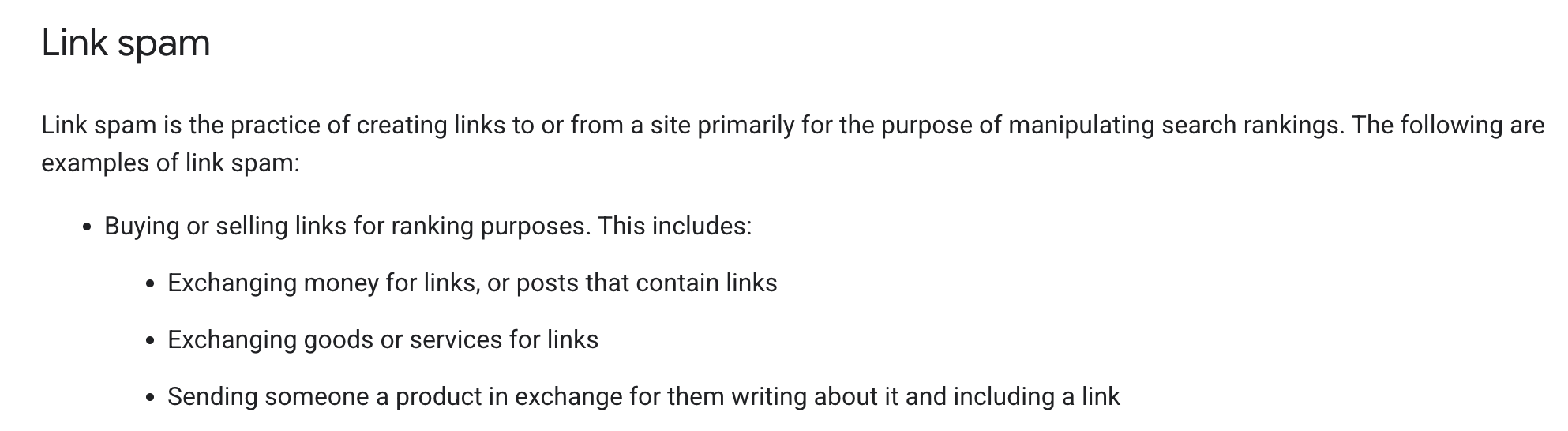
They also employ mass networks of paid propagandists who regurgitate this as if it were fact (it’s not).
Here’s a screenshot from former search liaison, Danny Sullivan, where he warns against buying links:
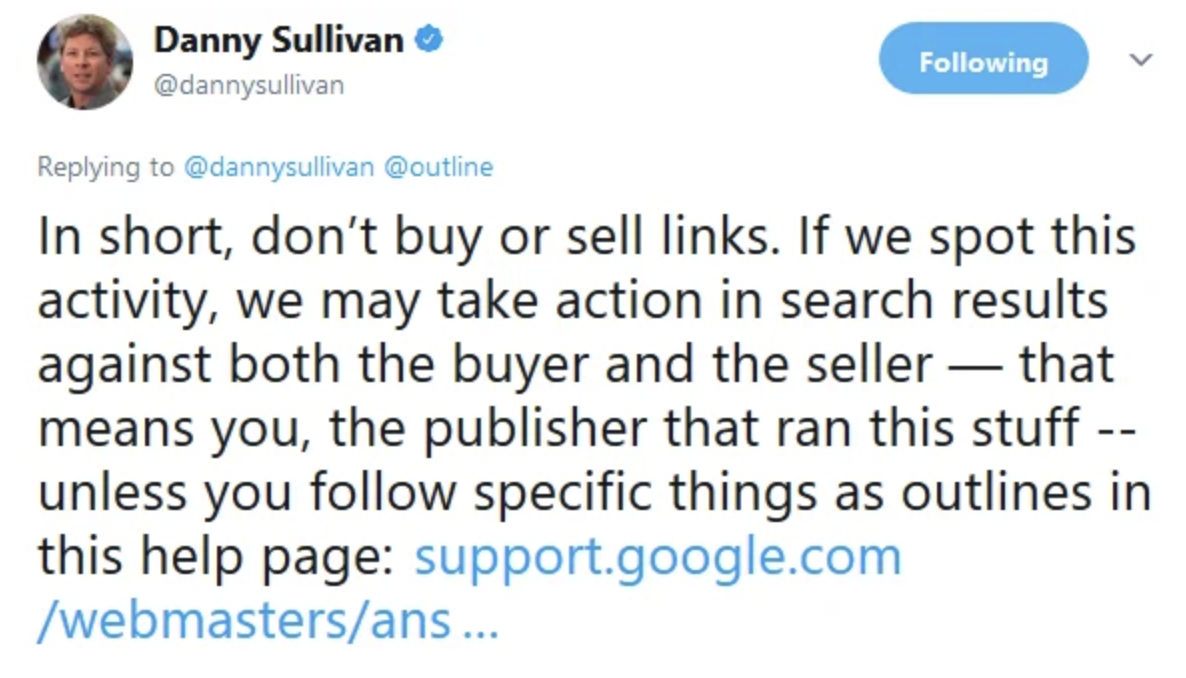
This is all propaganda to scare you. Sure, you don’t want to buy hundreds of low quality links at a time and try to spam the system. But as long as you avoid that, you’re fine.
Google does not have the resources nor the desire to police the entire web for who’s buying and selling backlinks. So, they publish blatant propaganda saying buying links is against our guidelines!! Be afraid of penalties!
In my 20 years in SEO, I’ve bought tens of thousands of links and overseen hundreds of thousands of link sales. And I’ve only ever had a site penalized a handful of times…IF that.
Think about it this way…
Say you want to rank for “weighted vest for dogs”. I have no idea how this is a real product, but anyways…
Well, your #1 competitor has almost 900,000 backlinks to their site!
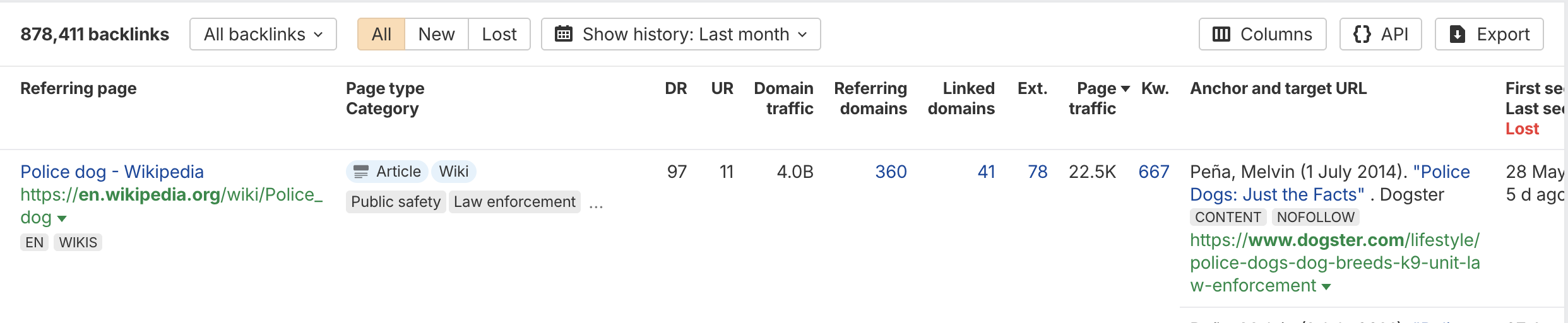
I guess you should just sit around and wait for 878,000 links to magically appear? That’s just not how things work in the real world. You need a link buying strategy.

What Are the Benefits of Buying Backlinks?
The benefits of buying backlinks are speed, quality, volume, and effort. Purchasing links for SEO allows you to get better quality links, faster, and in larger numbers all while freeing up your time to focus on business growth. But you need to do it properly or you’re putting your business at risk of a Google penalty.
Let me explain that in a bit more detail.
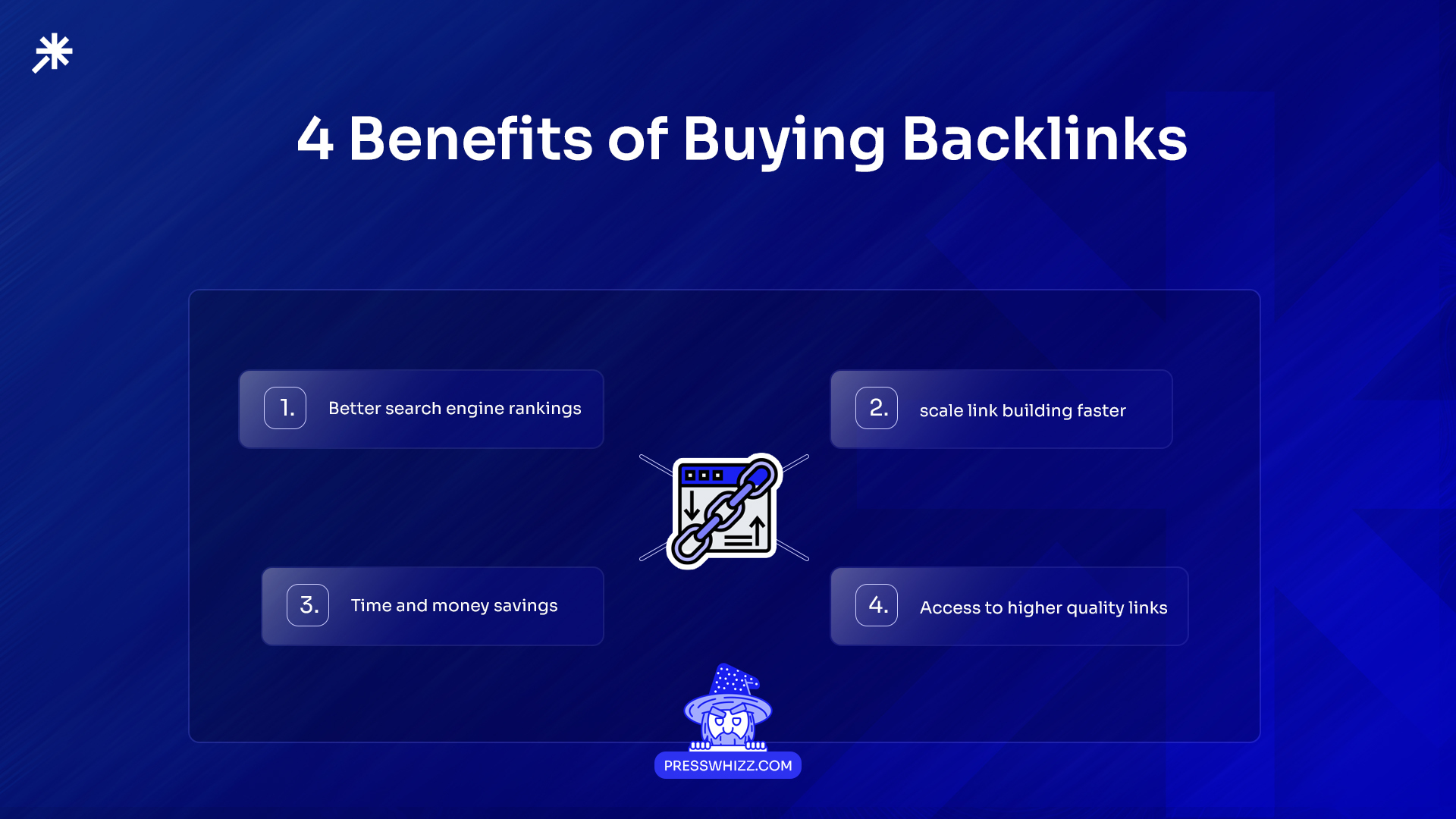
You get the following benefits from buying backlinks:
- You get links faster.
- You get better links overall (high DR sites do not link out for free).
- You can build far more links by purchasing them instead of waiting for them to spontaneously generate.
- You save your team 15-20 hours of work per week that can be spent doing other things.
This is why 90+% of SEOs believe their competitors are buying links: It works AND it’s fast and easy.
Let’s cover the benefits of buying backlinks in a bit more detail:
Better Search Engine Rankings
Improved search engine rankings are the #1 benefit of buying links. Links are still one of the top 3 ranking factors in Google, so you 100% need to be building links if you want to rank.
It’s just basic math at this point. If you’re building 20 high quality links per month and your competitor is building 2, you have a major advantage.
And if you’re still wondering whether or not links matter for SEO, I suggest you read our guide on what are backlinks and why are they important for SEO.
You Scale Link Building Fast
Buying links takes no time at all (depending on the method you use). You pay, and they post content with a hyperlink to your site.
I’ll use my platform, PressWhizz, as an example.
To start building links, you start by filtering your search:
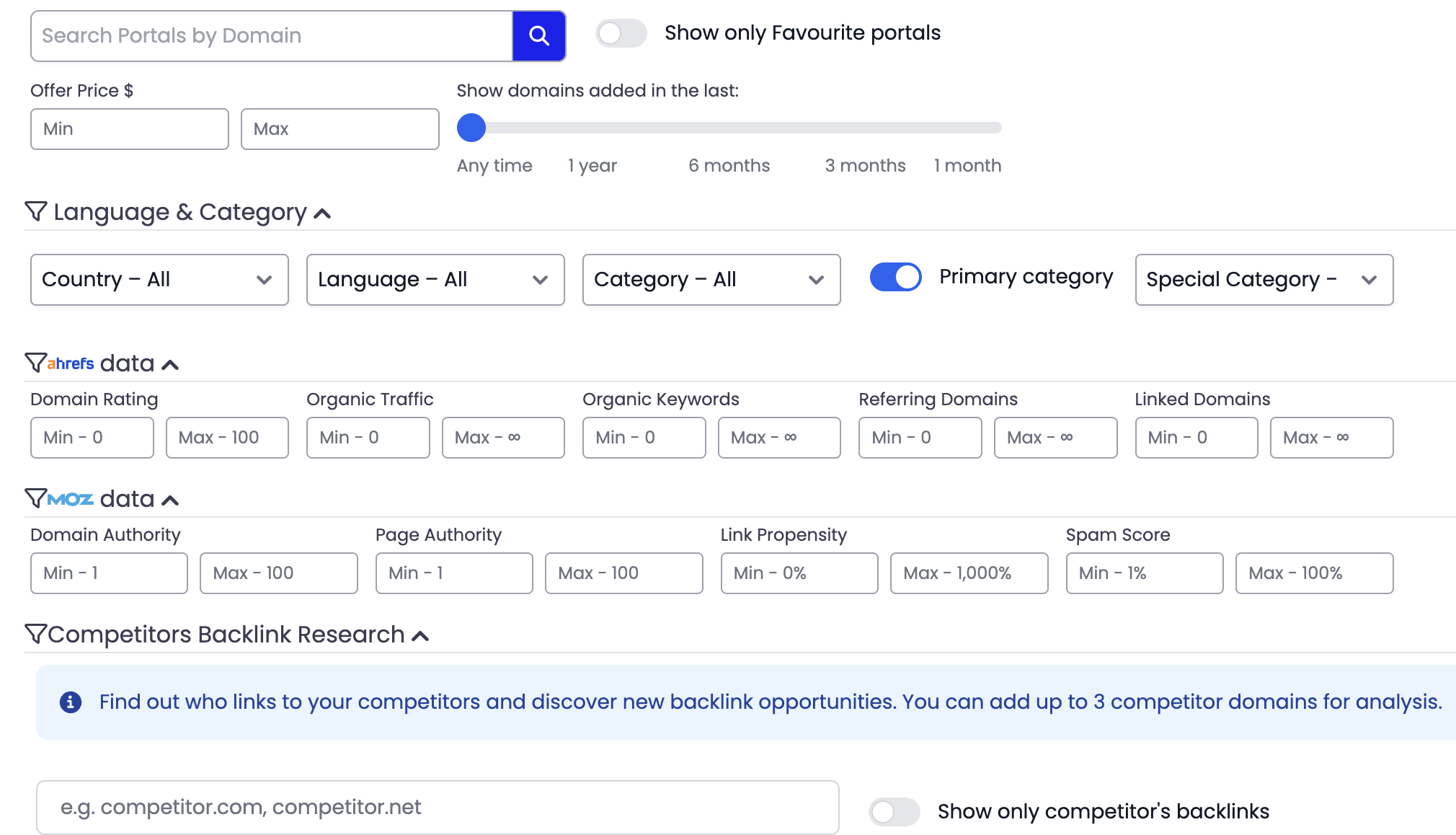
You can select price range, language, and domain data, among other things.
Then, you’re given a list of sites accepting links for a fee to choose from. Let’s say I only want US-based websites with a minimum DR of 50 and 5,000 organic visits or more. This is what I would get:
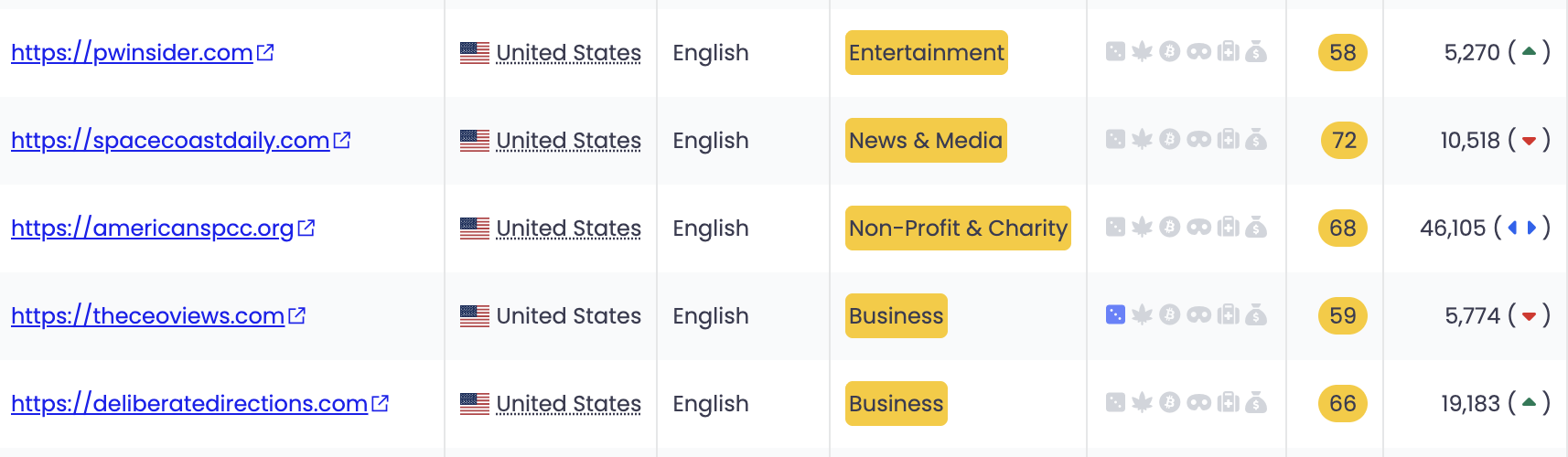
With this method, you can build dozens of links in less than an hour. If you’re doing things naturally while your competitors are buying them in bunches, you’re going to get crushed.
Time and Money Savings
Buying backlinks can save you 15–20 hours per week or more. And that’s time you can better spend on content, strategy, or actually running your business…or relaxing on a beach.
Manual link building is a grind (ask me how I know).
You’re researching prospects, finding contact details, writing personalized emails, following up multiple times, negotiating placement fees, and reviewing content. And that’s all for just ONE link.
And most outreach campaigns convert at just 3–5%, which means the vast majority of that effort gets you nothing. At an average SEO specialist’s rate of $50–75/hour, those 15–20 hours will cost you about $750–$1,500 per week. Outsourcing to a reputable link building service lets you redirect that budget toward activities that directly grow revenue.
Or, if you use a marketplace, you can save that money and do whatever you’d like with it.
Buying Links Gives You Access to Higher Quality Links
Please listen to me when I tell you this: You are not getting DR 80+ links from reputable publishers without the following:
- Money
- Connections
Sometimes you need both.
AP News isn’t just going to wake up one day and think “you know what? Today, we feel like linking to some weighted dog vest website”.
People know the value of links these days. You aren’t getting anything of major value for free. Sure, you might be able to convince some random DR 50 site to do a link swap with you, but is that really going to move the needle at all?
Don’t get me wrong. There are ways to generate high authority links naturally at times, but they require a lot of work and a lot of visibility on the SERPs. And how are you going to get that visibility? Buying links.
What Are the Risks of Building Backlinks?
There are relatively few risks of building backlinks, so long as you do it right. If you purchase high quality, relevant links and don’t spam anchor text like it’s 2005, you should be fine.
But there are for sure a few risks that stem from choosing the wrong links, the wrong providers, or not managing your campaigns the correct way.
The risks of building backlinks with spammy, outdated tactics include:
Low Quality Links
This is the number one issue I see in SEO today. SEOs spend hundreds or even thousands of dollars on links from sites with good vanity metrics like domain rating, but the links provide no measurable SEO results at all.
And, in my experience, most people don’t realize they’re getting trash links until the damage is already done. They hire an agency, pay $500 for “20 high authority backlinks,” and end up with placements on PBNs, link farms, or dead pages on blogs that get 0 traffic.
It’s kind of the nature of the beast when outsourcing to agencies or other link services. If you’re paying $50 to $100 per link and the provider needs to profit, you’re getting $10 placements on link farms or other low quality sites.
Google’s SpamBrain algorithm has gotten terrifyingly good at mapping out entire link neighborhoods, so it’s hard to get away with anything even remotely spammy looking these days. You need to understand what a quality link looks like before you spend a single dollar on building.
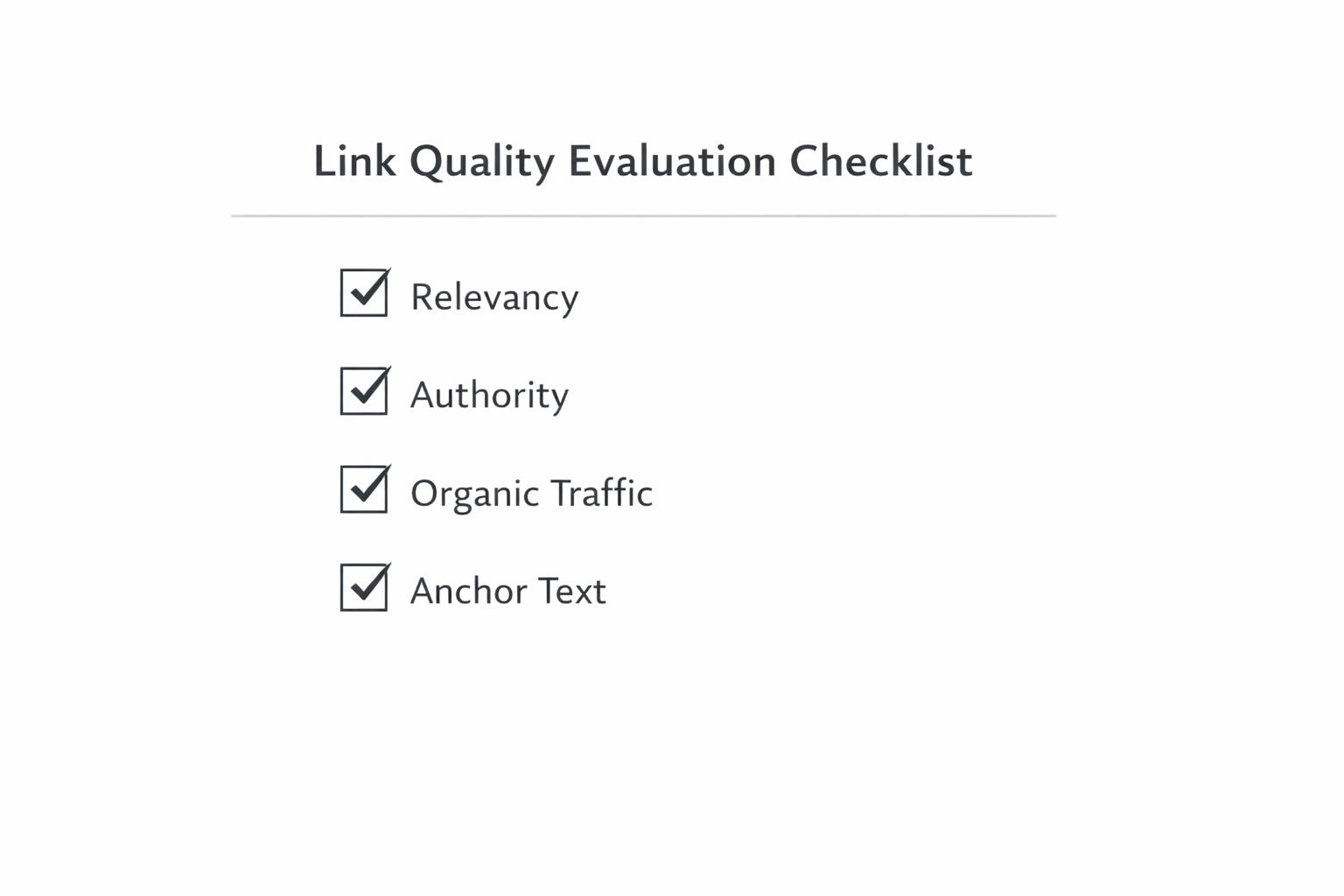
You can read the full section below on backlink quality analysis. For now, just keep the following checklist in mind:
Manual Penalties
Manual penalties are actually pretty rare, mostly because Google would rather let its algorithms handle spam detection at scale. It’s also incredibly expensive and time consuming to police the entire web.
The good news is that avoiding a manual penalty isn’t all that hard.
It doesn’t matter if you bought your links or acquired them naturally. If your link building campaign looks like a natural mix of branded mentions, contextual placements, and editorial links across different sites, you’re going to be fine.
If it looks like someone blasted 500 exact match anchor links from offshore blog farms in a single month, then you’re begging for a penalty. The only people I see complaining on social media about link penalties are the ones who tried to do too much too fast from the wrong websites.
Here’s an example of a website I know that was hit with a penalty late in 2025:
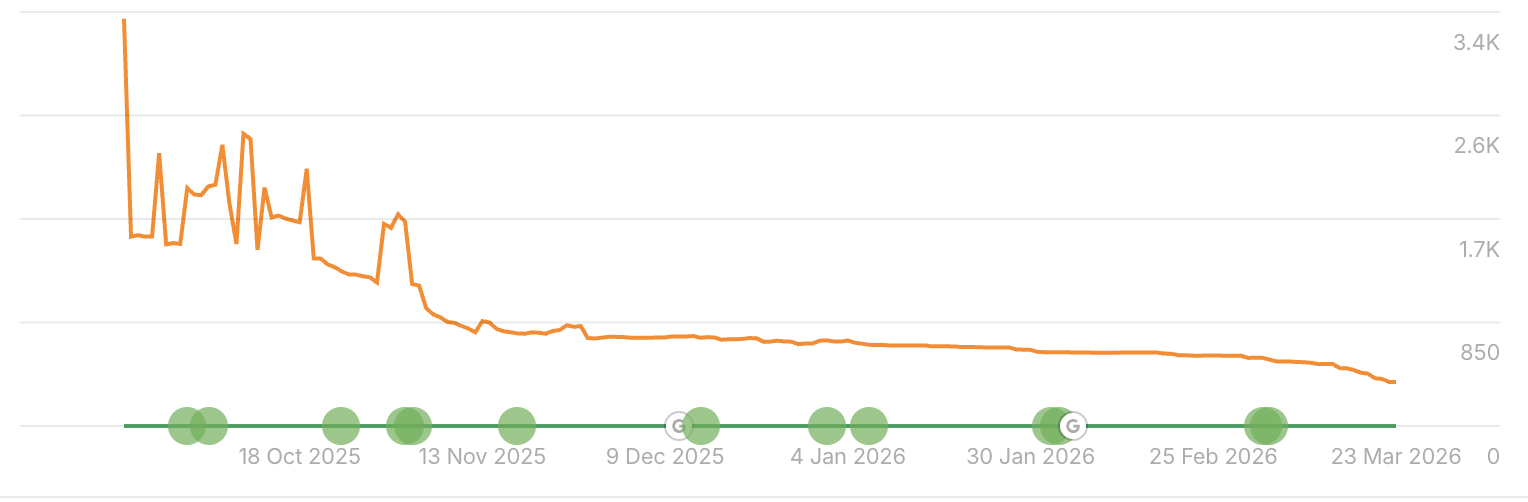
Manual actions are rare but can happen. And when it does, your traffic disappears overnight. If you follow my best practices detailed below, you will be fine.
TL;DR: Don’t be an idiot. If you’re a new site that instantly gets 200 links from some random site in India, Google will know you’re spamming. You need a smart link building plan for a new website if you want to rank. Don’t take shortcuts.
Wasted Resources
This one is more complicated than most people think, because wasted resources in link building usually don’t get noticed until you’re months in the hole.
In my experience, most SEOs build links without tracking which placements are providing the most results, which means they have no idea what their actual ROI looks like. They’re spending $2,000 to $5,000 a month with no system for measuring what’s working and what’s just burning cash.
If you’re running a link building campaign, you absolutely must have tracking systems in place. And that includes who has linked to you, price, link status tracking, and results, at the very minimum.
I’ve seen businesses spend $50,000 over a year on link building with nothing meaningful to show for it, and they had no clue that their link campaigns weren’t working because they weren’t tracking anything.
You need systems in place to track every link, evaluate its performance over time, and cut what isn’t contributing to your growth. Period.
Pro Tip: At the very least, you should have Ahrefs and Google Search Console set up to help track your links and make better decisions.
How Much Do Backlinks Cost in 2026?
A typical (good) backlink can cost anywhere from $30 to $1,000+ depending on the quality, relevance, organic traffic, and owner of the site.
And a typical link building campaign can cost anywhere from $1,000 to $20,000 depending on how competitive your niche is. It’s impossible to say. It just depends on too many factors.
The best thing I can do is aggregate prices from across the web and show them to you. So that’s exactly what I’ll do.
Warning: A site’s domain metrics mean almost nothing without context. A $100 DR 40 link from a local website with a 100% US based audience might outperform a $2,000 DR 90 link from a website that links out to literally everyone and has an irrelevant audience. You need to know your S*** to do link building right in 2026. Do not treat link building like a vending machine, please.
Let’s start with our link marketplace (surprise!). You can get a vetted, safe link on a website with 5,000+ monthly visitors for as low as $80:

But this type of price for an SEO backlink is rare, especially when you’re reaching out cold.
Maybe if your agency or freelancer link builder has industry connections, but I doubt it. And you’ve got to take markup into account there as well.
We also have links in the $100 to $200 range:
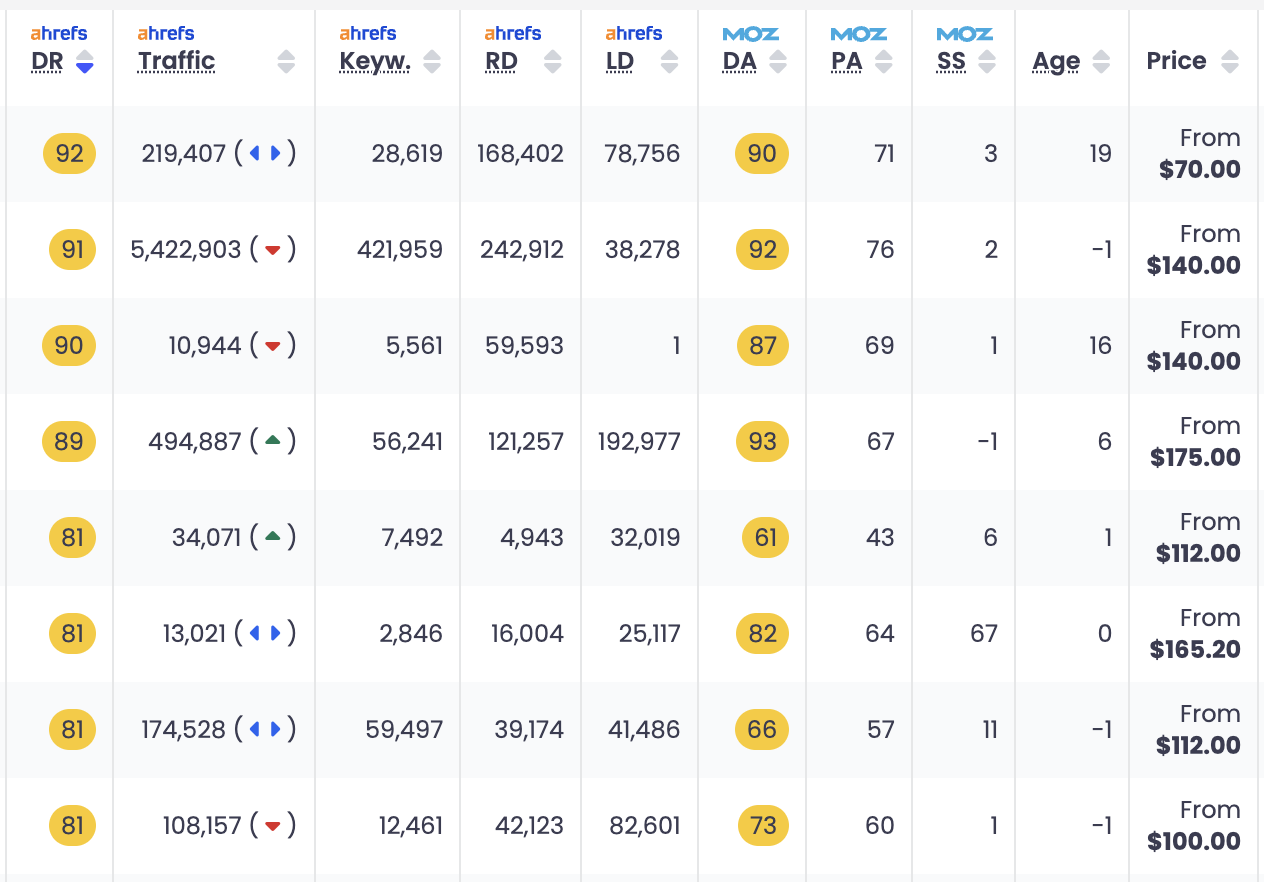
As you can see, there are several factors at play that determine the price of a link, like:
- Authority
- Traffic
- The page where your link will be placed
- Relevance
- How much the site links out in general
Another major factor that most people overlook is how you get your links and from whom.
Here’s a sheet a link spammer (no offense, if you’re reading this) shared with me not too long ago:
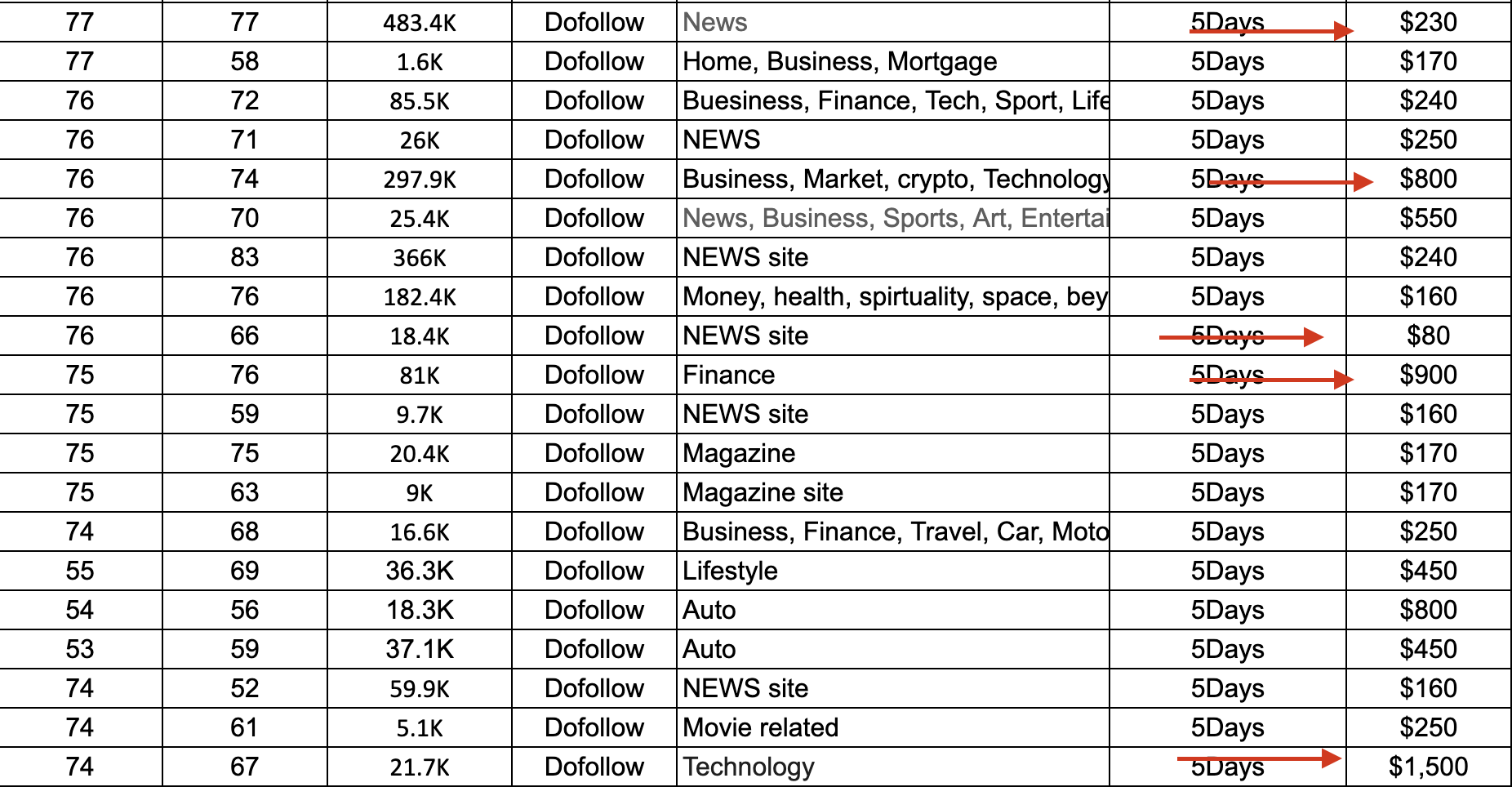
A single link can cost anywhere from $80 to $1,500.
Let me break this down for you a bit.
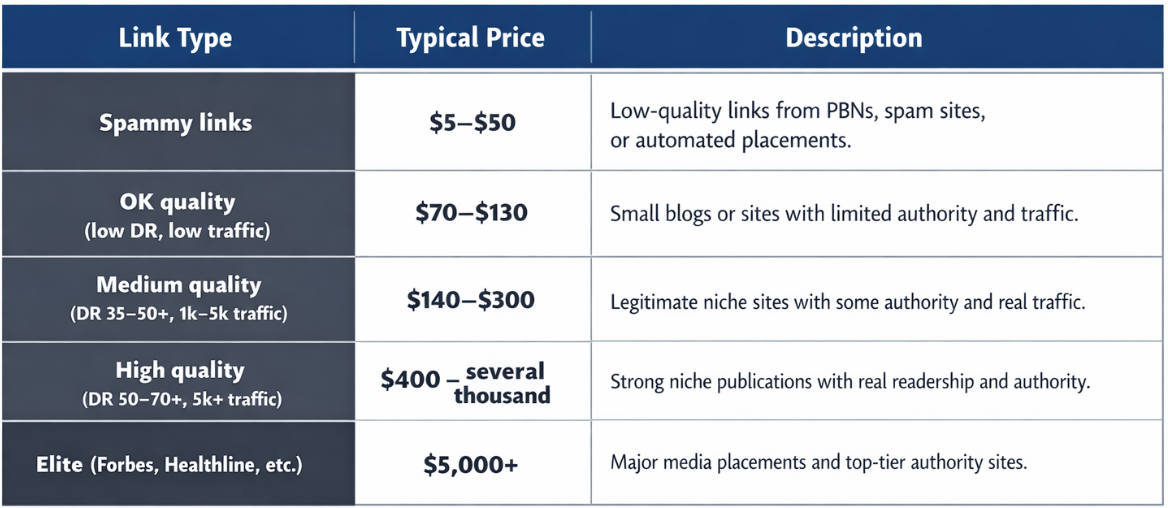
What I’ve seen over the last twenty or so years in SEO is that you can expect to pay around $50 for low quality spammy links and up to $5,000 to $10,000 for a mega juicy link from media outlets like Forbes. Just be aware that cheap links, especially from link spammers, almost never work.
Here’s a quick table with pricing from around the SEO world:
According to an Ahrefs.com study published on their blog post “Should You Buy Backlinks in 2024? It Depends”, these are typical costs for different types of paid links:
- Paid Links: $83
- Niche Edits: $343
- Guest Posts: $77
I have a few issues with these figures. For one, we have no idea how many $5 Fiverr links were included in these studies, so spammy links like that could be dragging the average prices way down.
Second, I don’t think you’re getting very good quality guest posts or “paid links”, whatever that means, for less than $100. Sure, you could find some good ones, we’ve got plenty on PressWhizz for that price. But “average price” of $83? No, not in my experience.
Nothing against the Ahrefs folks at all. I love them, as you can probably tell by the number of times I reference their software in these blogs.
A Few More Tidbits on Link Prices in 2026
I found some other interesting information on the price of backlinks in 2025-2026.
Siege Media on their page “How much does link building cost in 2026?” claims that they pay anywhere from $500 to $1,500 for a good link.
And, according to uSERP, small businesses spend anywhere from $1,000 to $5,000 per month on link building whereas mid market companies spend $5,000+.
One last tidbit…
According to Editorial.link, the average acceptable price for one high quality backlink is around $500.
TL;DR: IT DEPENDS, MATE.
How to Buy Backlinks: 5 Easy, Safe Ways to Purchase SEO Backlinks
Now that you know that you need to buy links and how much links cost, let’s cover how to buy links.
These are the 5 best methods for buying links on the web…
Guest Posts
A guest post is when you write an article that gets published on another website with a link back to your site. Essentially, you’re trading content for a backlink. You get a link, and the host gets an article out of the deal plus payment. It’s a win-win for both you and the website.
It’s one of the most common link building tactics in SEO because it’s accessible, scalable, and relatively straightforward. Anyone who’s spent time building links knows that guest posting is usually the first strategy you learn, and for good reason.
You control the content, you choose the anchor text, and you can target sites in your niche that make contextual sense. And there are literally thousands and thousands of sites willing to accept guest posts, so it’s not that hard to find opportunities.
That said, not every guest post opportunity is created equal, and there are some clear trade-offs to keep in mind.
Note: There are both free guest posts and paid guest posts. While you normally have to pay for quality link placements, there are still free guest posting sites where you can get valuable links for free.
Pros:
- Full control over content, anchor text, and placement
- Easy to scale with a solid outreach system
- Builds relationships with publishers you can tap again
- Works across almost every industry and niche
Cons:
- Quality sites charge $150 to $2,000+ per placement
- Cheap posts land on low quality sites that do nothing
- Google keeps getting better at spotting guest post farms
- Time-intensive if you’re handling everything yourself
And, in case you’re worried about penalties, literally everyone does this and Google doesn’t care.
Example of a Paid Guest Post
Here you can see on Forbes.com, they have an entire section of their site specifically for paid placements: Brand Storytelling.

It literally says “paid program” right at the top.
And, in case you’re wondering, this isn’t some reader-first journalism they’re publishing here.
It’s literally just an SEO style guest post article.
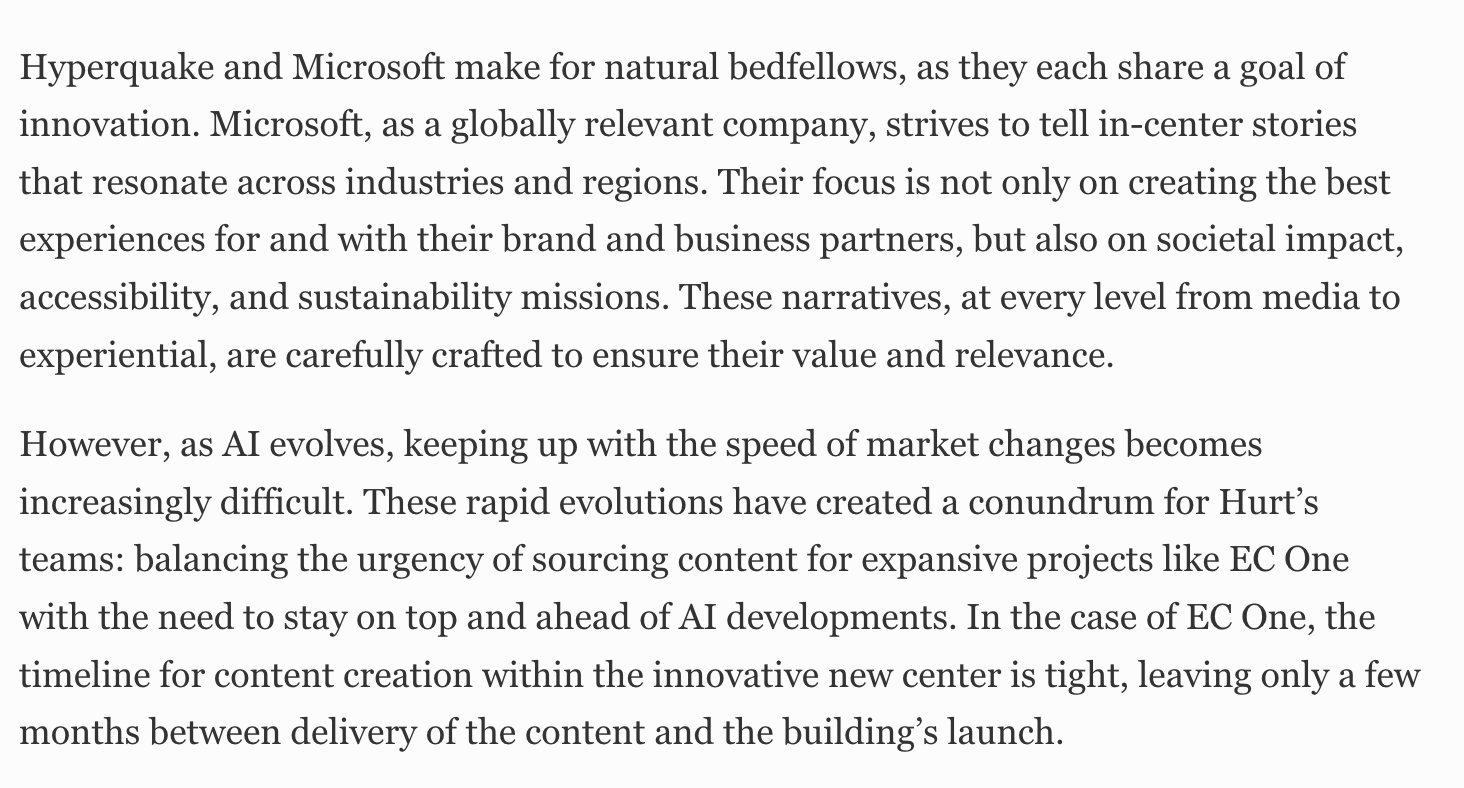
You can find guest posting opportunities all across the web in any niche and at any price point. If you’re just starting out in building links, start here.
Niche Edits
A niche edit (also called a link insertion) is when you get a link to your site placed into an existing article on another website. Instead of creating new content like a guest post, you’re paying to have your link added to something that’s already live and ranking.
A good way to think about it is a guest post or sponsored post is you saying “Hey, I’d like to write this article for your site. Can you post it and place my link inside?”. But a niche edit is you saying “Hey, I noticed that you have an article on x topic that’s relevant to my website. Would you mind throwing a link to my site inside of this article?”. There’s a slight difference.
This is one of my favorite SEO strategies because you’re tapping into a page that already has authority, traffic, and indexation history (3 things that Google loves). You aren’t building from scratch and hoping to get results 1 or 2 months down the road.
Remember, Google values links on pages that rank and have organic traffic, and there’s no guarantee a sponsored post will rank (and thus pass link equity). With niche edits, you don’t have to worry about that.
Google has already crawled and valued that page, so your link carries weight from day one. I’ve personally seen niche edits move the needle faster than guest posts in a lot of campaigns, especially on older pages with pre-existing backlinks and decent organic traffic.
Pros:
- Faster impact since the page is already indexed
- No content creation costs on your end
- Often cheaper than guest posts on the same site
Cons:
- Zero control over surrounding content
- Some website owners quietly remove your link after a few months
- Easy to overpay without checking actual traffic numbers
Link Marketplaces
Link marketplaces are platforms that act as a middleman between publishers and buyers.
The marketplace cultivates relationships with publishers, vets them, and then lists them along with prices right in the dashboard. Then, they allow customers to sort by domain metrics, location, pricing, and other factors for easy sorting.
I am obviously not biased here at all, as the CMO and chairman of a link marketplace that’s about to go public (;)). But link marketplaces are, in my humble opinion, the best way to buy backlinks at scale for any budget in any niche.
Here’s an example of the types of links you can find on our platform:
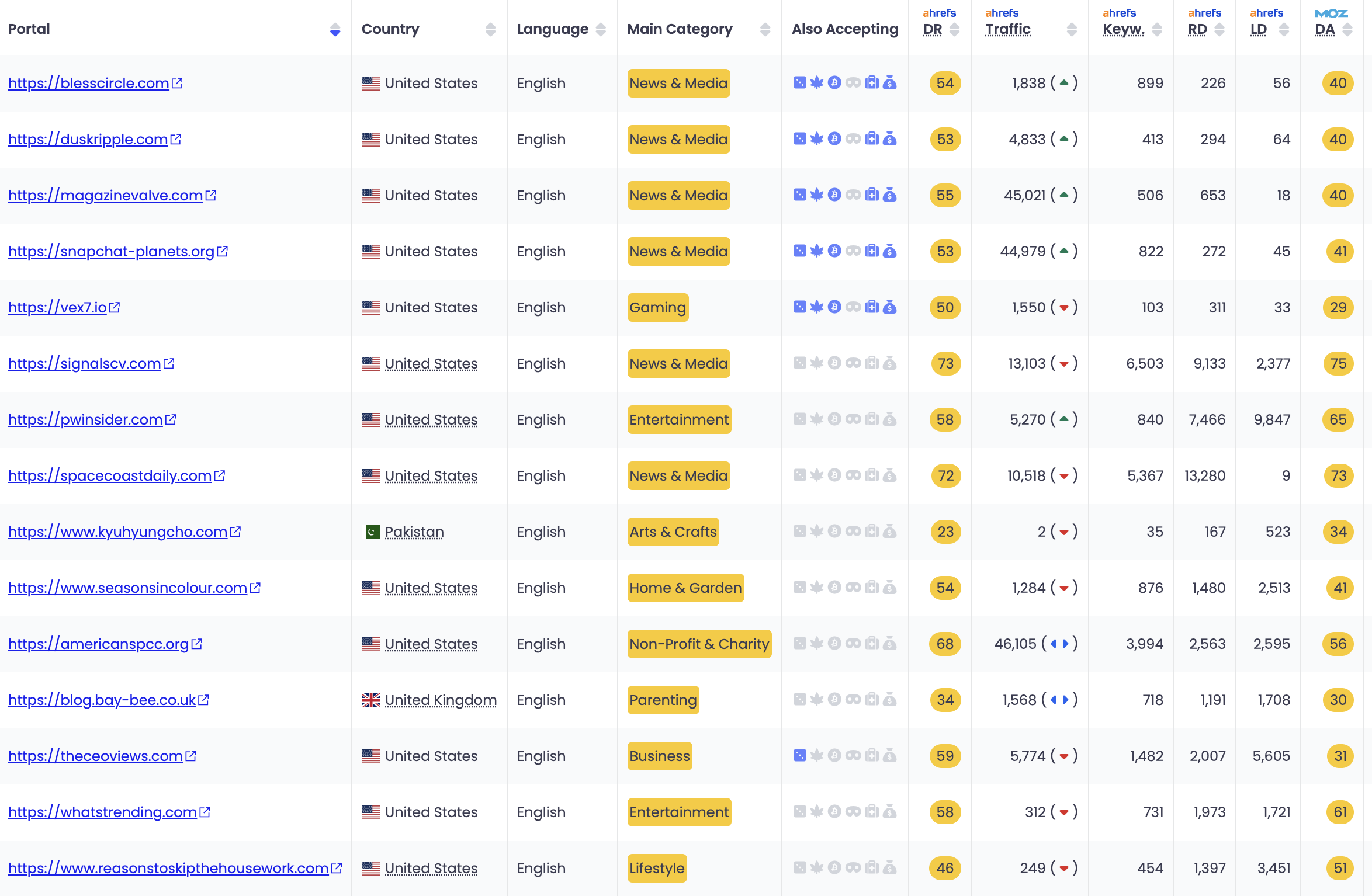
Marketplaces give you direct access to high quality backlinks without needing to pay agency fees or wait weeks to build a single link. That’s why I think they’re one of the best places to buy backlinks in 2026.
Use Agencies or Freelancers
When you outsource link building, you’re choosing between two types of providers: Agencies and freelance link builders. They both have distinct advantages and drawbacks.
With agencies, you get a full team of SEO professionals, outreach pipelines, and established site relationships. And with freelancers, they tend to already have publisher relationships and experience while costing less and being more flexible.
The two main benefits of working with these service providers are as follows. For one, you gain access to systems and relationships you don’t have yet (and would take forever to build). And two, you free up your time to focus on growing your business.
In essence, you’re paying to skip the months of cold outreach it takes to build a network from scratch, and to buy your time back to focus on what you’re really good at. That’s 100% worth it in my opinion. I’ve written an entire guide on how to outsource link building that I suggest you read for more in depth guidance on this topic.
The problem is quality varies wildly. I’ve seen agencies charge $5,000/month and deliver PBN links, and I’ve seen freelancers charge $100 an hour and get no work done. You need to spend a lot of time vetting service providers and make sure you get someone with good references and a track record of success (more on this below).
Pros:
- Saves significant time on outreach, prospecting, and content creation
- Gives you access to established networks you’d take months to build yourself
- Agencies can scale volume quickly when you need it
Cons:
- Quality varies wildly and vetting takes real effort upfront
- Reporting can be vague or misleading, especially around DR and traffic
- Risk of paying for low quality or spammy placements if you’re not reviewing links yourself
How to Vet an Agency or Freelancer
You can tell a good service provider by the specificity of their case studies, the quality of sites in their portfolio, and how transparent they are about their process. In my experience, transparency is the one you should focus on the most. Anyone can show you a spreadsheet of DR 60+ placements, so I recommend looking for a provider who walks you through exactly how they build links.
I recommend you look for:
- Real case studies with context: Look for examples that show traffic or ranking improvements tied to their work.
- Sample link placements you can verify: Ask for live URLs so you can check the sites yourself for traffic, relevance, and whether the content looks natural.
- Clear reporting structure: A good provider tells you upfront what you’ll receive each month and how they measure success (and beware of vanity metrics like domain rating).
Here’s an example of a well known link building agency with good reviews. If I were vetting this agency, I’d search them up and check out customer reviews on sites like Trustpilot.
First, make sure they have claimed their profile on Trustpilot and have a decent amount of reviews:
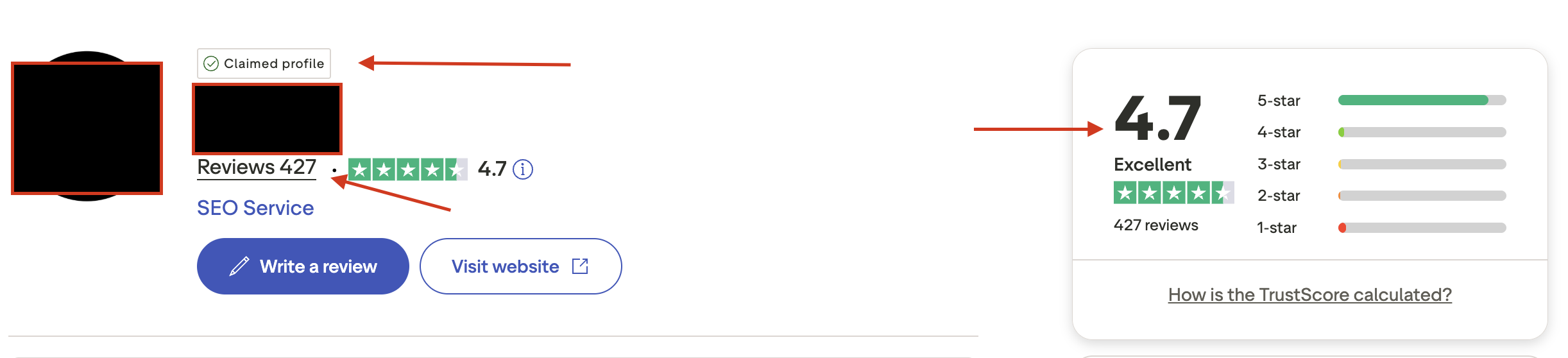
And next, scroll down and make sure there are some legit companies leaving real reviews that are not 100% AI generated. Like this:
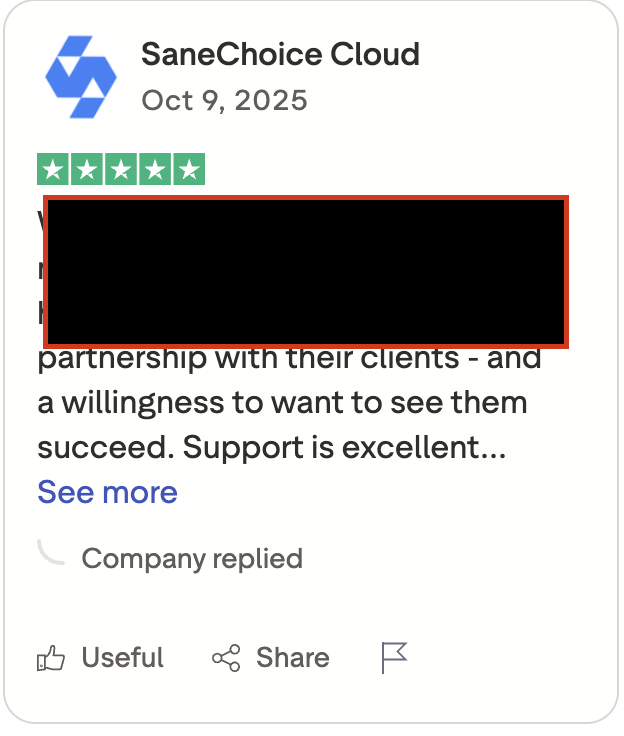
That’s a real review from a real company, and it’s from a recent year. So this company must be doing something right. That’s a great start.
Red Flags to Watch For With Link Service Providers
- Providers who guarantee placements on specific sites usually own those sites themselves, which means PBNs.
- If someone offers 20 DR 50+ links for $500, that’s a link farm. And spamming these types of links is not a viable backlink strategy anymore.
- A provider who can’t show you a single live placement is either brand new or hiding something.
- If they won’t explain how they find and secure placements, there’s usually a reason.
- Legitimate outreach takes weeks, so anyone delivering 10+ links in your first week is pulling from low quality sites.
Digital PR & Sponsored Posts
Digital PR and sponsored posts are closer to traditional marketing than typical link building. I’ve decided to lump them together because they are very similar.
Digital PR is when you get featured in news articles, roundups, or journalist pieces by pitching yourself as a source or expert. I recommend checking out platforms like Qwoted or HARO (now Connectively). They make this easier by connecting you directly with reporters looking for quotes.
And sponsored posts are paid placements on blogs or publications where you’re buying editorial space with a link included.
Both strategies are about as safe as link building gets because the links come from legitimate editorial contexts.
Google has a much harder time penalizing a link from a Forbes quote or a niche industry publication than a random guest post on a recycled blog. I’ve had clients land links from major outlets just by responding to three or four HARO queries a week (it’s a grind, but the link quality is unmatched). You’re also building brand visibility and authority at the same time, which provides a ton of added SEO and business benefits.
Note: Press releases count as digital PR, and they still have some value for SEO in 2026. Just don’t rely on them as a major contributing factor to your Google rankings. They are just one small part of a natural link profile.
Pros
- Links come from legitimate editorial contexts, so they’re safe from penalties
- Builds brand visibility and authority beyond just SEO value
- Platforms like Qwoted and HARO give you free access to journalists actively looking for sources
Cons
- Digital PR takes consistent effort, and you can pitch for weeks before landing a single placement
- Sponsored posts on reputable sites can get expensive fast, especially in competitive niches
- You have less control over anchor text and link placement than with other tactics
Backlink Quality Analysis: How to Evaluate Backlinks
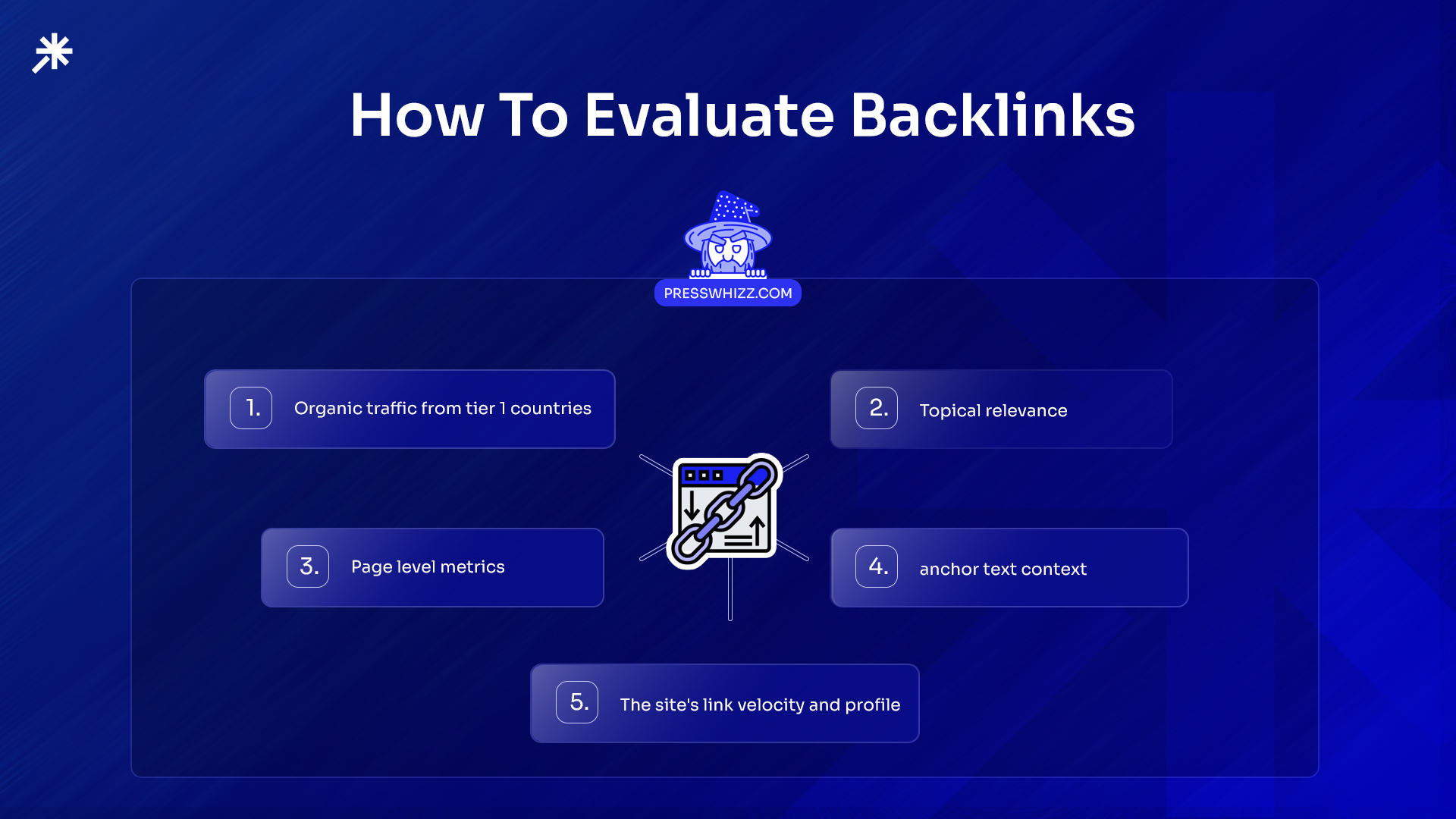
OK, now for the part you’ve been waiting for. I’m going to share with you our 5-step process for performing quality analysis on backlinks before buying them.
This is the same process we use when evaluating links for our enterprise clients AND the same process we use when evaluating potential publishers to list on our marketplace.
Here are the 5 factors you must use to evaluate a potential SEO link opportunity:
Topical Relevance
Topical relevance is priority #1 for links these days. Gone are the days where you could just get a link from any DR 70 website and see an instant SEO boost.
You need topically relevant links from related websites in the same niche (or close to it) to get results in 2026.
If you’re a SaaS tool getting links from beauty blogs, parenting sites, and general news farms, Google will almost certainly ignore those links.
Google determines relevancy through several different patented technologies. Specifically, Reasonable Surfer and Topic-Sensitive PageRank.
Let me explain these both before we move on:
- Reasonable Surfer Model: Google’s patent that says not all links on a page carry the same weight. A link placed naturally within relevant body content is worth more than one buried in a footer or sidebar that no one ever clicks.
- Topic-Sensitive PageRank: Instead of treating all PageRank the same, this model scores link value based on how related the linking page’s topic is to yours. A backlink from a page about email marketing to your email tool carries more weight than one from a page about dog grooming.
OK, making sense? What I want you to learn here is that the relevance of the domain AND the page where your link will be inserted matter more than any top-level domain metrics.
Your link source must be relevant on these two levels:
- Domain Level: Is the site about your topic? (the higher the site’s authority, the less relevancy required, though)
- Page Level: Is the specific article where your link lives covering a relevant topic?
Google looks at both. If either one is weak, the link carries less weight.
Pro Tip: Use NLP tools like Surfer, MarketMuse, or Google’s NLP API to check topical alignment between your link prospect and your target page.
Page-Level Strength
Page-level metrics such as referring domains to that specific page carry more weight than traditional top level metrics, like Domain Rating (DR) or Domain Authority (DA).
They’re fine for sorting large lists, but mostly irrelevant when evaluating individual links. They still do matter a bit, but not nearly as much as they used to.
In the past, you could just get any link from a high DR site and you’d see a near instant search rankings boost. Google is way too smart for that now, and to be fair, it’s way too easy to game a system like that.
When evaluating links, I always look at page-level metrics like:
- Is the page already indexed?
- Does it have any referring domains of its own?
- Is it internally linked from key site pages?
If you can’t tick these page-specific boxes, then the link is worthless.
NOTE: A lot of SEOs get tricked by seeing a massive DR for a relatively low price, then wonder why they aren’t seeing any rankings benefits. It’s because the page the link is on is a totally worthless page. My advice? Plug the actual URL of your target placement into Ahrefs or Majestic and look at referring domains, crawl depth, and internal link count.
If it’s orphaned, do not buy the link!
Anchor Text Context
You want a contextual link surrounded by semantically related terms.
Google reads before and after the link. That’s how it determines why the link exists.
Here’s how to evaluate anchor text:
- “Click here” or generic links in author bios are not recommended
- Stuffed exact-match in unrelated paragraphs are very risky
- Naturally placed, partial match or branded anchors in a related paragraph are strong
Link Velocity & Outbound Link Profile
This is one that most SEOs are not aware of. Google is very good at determining what is a natural link from a real website and what is a spammy link from a link farm. One carries a lot of weight and the other is totally ignored.
I’ve ruthlessly tested this across thousands of links for years now, and the results all point to Google totally devaluing spammy links from less-than-scrupulous publishers.
Here are a few factors that reduce the value of a link:
- Has the domain linked to you before?
- Has the domain published 10+ links per post?
- Does the domain pump out dozens of posts per week?
Google knows everything about everyone. They are probably listening to your phone convos and reading your texts (I wish I were joking…). They know what a real website looks like, and they know how many posts a normal business publishes. And they for sure know how much a normal business links out to other websites.
So, if the domain you’re buying a link from publishes way too many posts full of links, Google knows it’s a scam. And if you really try to spam Google, have fun with a manual penalty.
Before you buy the link, check the backlink profile of recent articles using tools like Ahrefs or just a raw “site:” search + backlink audit. If everything is clearly paid or commercial… walk.
Real Organic Traffic
You should buy links from domains with a real, natural looking traffic profile. And that typically means that the site gets a fair amount of traffic over a sustained period of time, and the traffic is from tier 1 countries, like the US, the UK, or Canada.
Again, I urge you to dig deeper into the details of a website and not just look at the domain rating or raw traffic numbers.
When evaluating a domain, look at these 3 quality traffic indicators:
- Organic traffic to the actual placement page
- Historical traffic trend (not just last month)
- Clean, tier 1 country breakdown (US/UK/CA > India/Pakistan/Indonesia)
Before you buy a link, run the URL through SimilarWeb, Ahrefs, or Semrush, and always cross-check multiple sources. If numbers vary wildly, it’s probably fake.
Final Thoughts
Despite what Google claims, buying backlinks is safe for SEO when done right. And it is 100% necessary if you want to compete.
If you’re still on the fence about buying backlinks, I urge you to consider the following factors:
- Your competitors are most likely spending hundreds or even thousands of dollars on links each month.
- In order to compete with the top results, you need to have as many or more high quality referring domains. You can’t sit around and wait for that to happen. It won’t.
- Buying links is totally fine, and everyone does it every single day. You just need to not spam links to your site.
The fact that my marketplace, PressWhizz.com, a business that exists solely to broker the sale of links, exists is proof that Google does not have the resources or desire to enforce its own anti-spam policies.
So, now the question is not “should I buy links”. It’s “what’s the best, safest way to buy links in 2026?”. That, my friends, is a mix of free links, link exchanges, linkable assets, and purchasing safe, natural links from vendors or marketplaces.
Whatever you choose, just be sure to focus on relevant links from websites with real organic traffic, and ensure that your links are inserted on pages with high quality content and legit traffic/rankings. At the very least, if you’re paying for a guest post, make sure the site uses the proper anchor text, that your link stays live, and the article isn’t spun AI content.
I wish you luck.