I feel like it’s my destiny to write the complete guide to black hat link building. And I’m excited to share some of my best black hat tips, experiences, warnings, and test results with you today.
I’ll start by saying this: Do NOT listen to Google. Black hat techniques still work in 2026. You just need to do them right.
I’ve been obsessed with black hat link building tactics since I was 12 years old.
And in that time, I’ve been targeted by Google, kicked out of high school, banned from several high profile platforms due to my manipulative techniques, and attacked by a cyber mob of white hat Google propagandists on multiple occasions (which I love, by the way).
And despite all that, I’ve still managed to make ~$15 million in SEO. And I’ve done it mostly with black hat SEO techniques, ranging from minor infractions like parasite SEO and running PBNs to old school black hat techniques like cloaking and automated forum comment blasting back in the day.
I also invented something called the money hat concept. It means I’ll wear any hat I need to in order to gain the highest ROI on a particular project. White hat, gray hat, black hat: Any color will do. But at my core, I’m a black hat nerd obsessed with reverse engineering Google’s algorithm and hacking it.
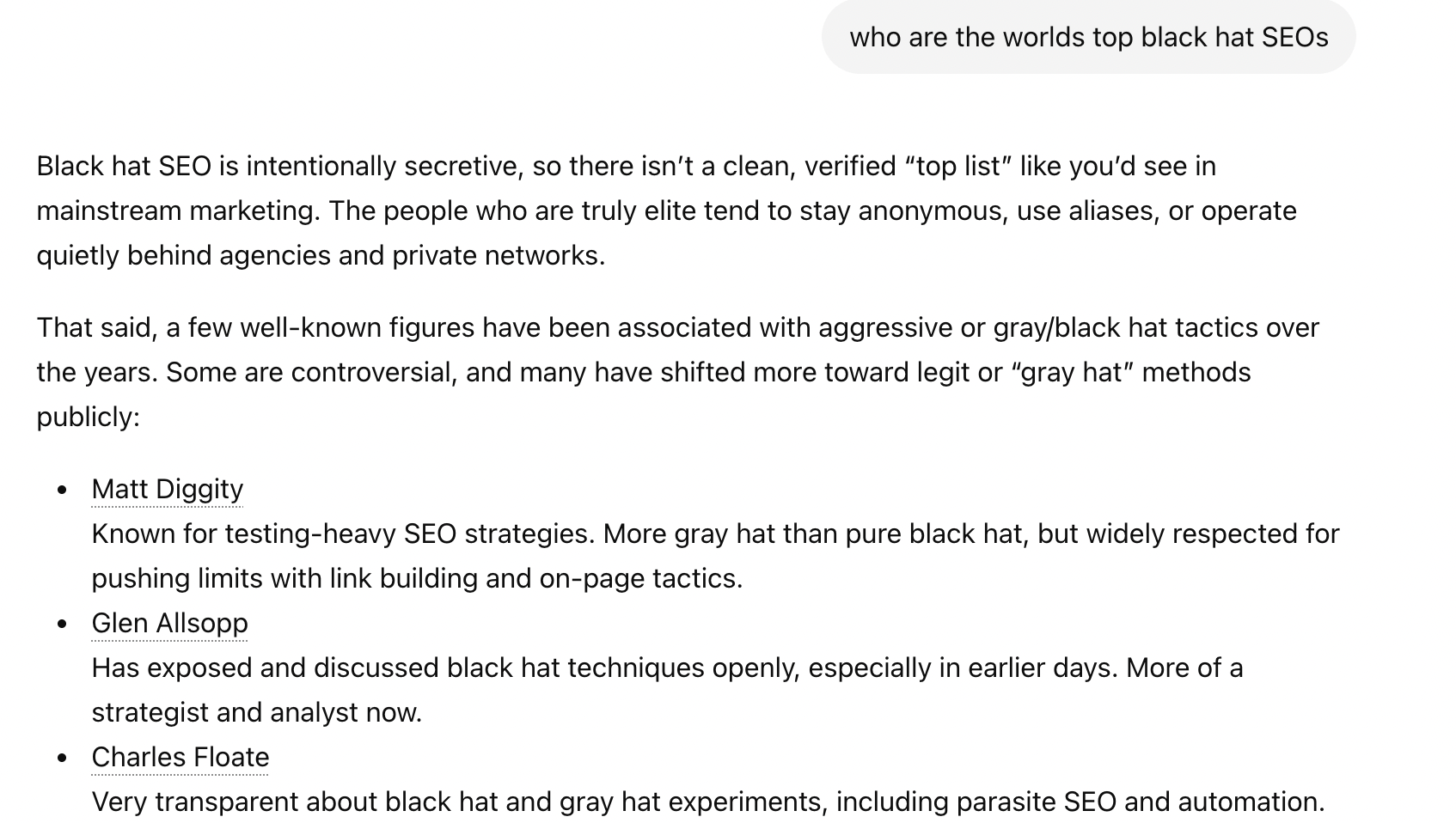
ChatGPT even says I’m one of the top black hats in the SEO world:
I even hosted an event called Black Hat SEO Day with 300+ attendees at an SEO conference in Thailand:

I say this not to brag, but to let you know that I’m proudly black hat, and I don’t care what Google threatens me with.
Like I said, black hat techniques are still very much alive in 2026, and penalty risks are much lower due to Google’s weakened algorithm (more on that below).
In this article, I’ll share what black hat link building is, why it still works, my top tips for manipulating Google’s algorithm, and how to ensure you don’t get caught. And all of it will be based on my 17 years of hacking Google’s algo and real data from real websites.
What is Black Hat SEO?
Black hat SEO is when you use unethical or manipulative tactics that go against Google’s guidelines to improve your search engine rankings. Common examples of black hat SEO techniques include cloaking, PBNs, and parasite SEO. Buying links is another “black hat” tactic that is technically against Google’s guidelines, but the search engine does not actually police it.
Black hat SEO is the exact opposite of white hat SEO. White hat SEO is when you follow Google’s guidelines to the letter. You build links naturally, publish good content, and satisfy the reader’s search query. It’s a fairy tale world where everyone lives happily ever after.
The reality is that there’s a dark underworld where all the major websites that dominate Google’s search rankings are using black hat techniques (buying links, PBNs, paid placements, parasite SEO, etc.). If you don’t break the rules, too, you won’t be able to keep up. Don’t hate the player. Hate the game.
By the way, in case you think black hat strategies don’t work, look at this SERP result for non GamStop casinos in the UK:
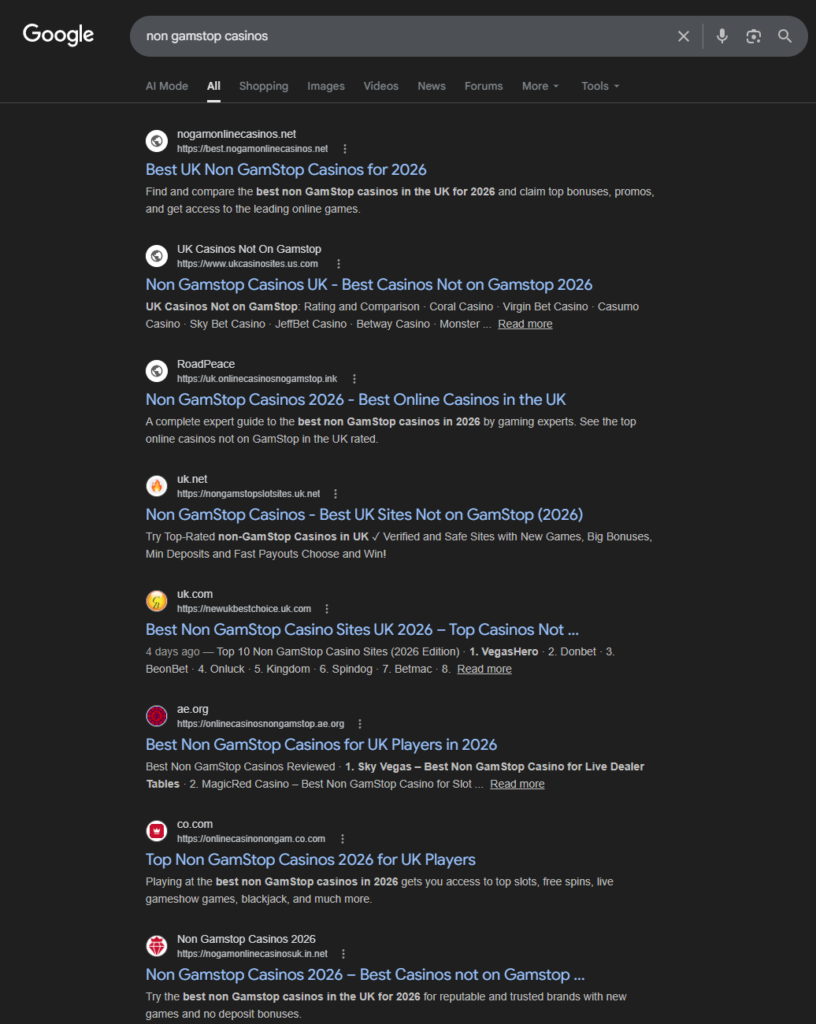
This is all subdomain canonical abuse using PBNs, a blatant black hat tactic that Google claims it polices. This SERP is NOT from 2016. It’s from 2026.
But Google MUST be stopping this, right? I mean, it’s against their guidelines!
Not really. Here’s another great example of using black hat SEO tactics to dominate the Google search engine results page:
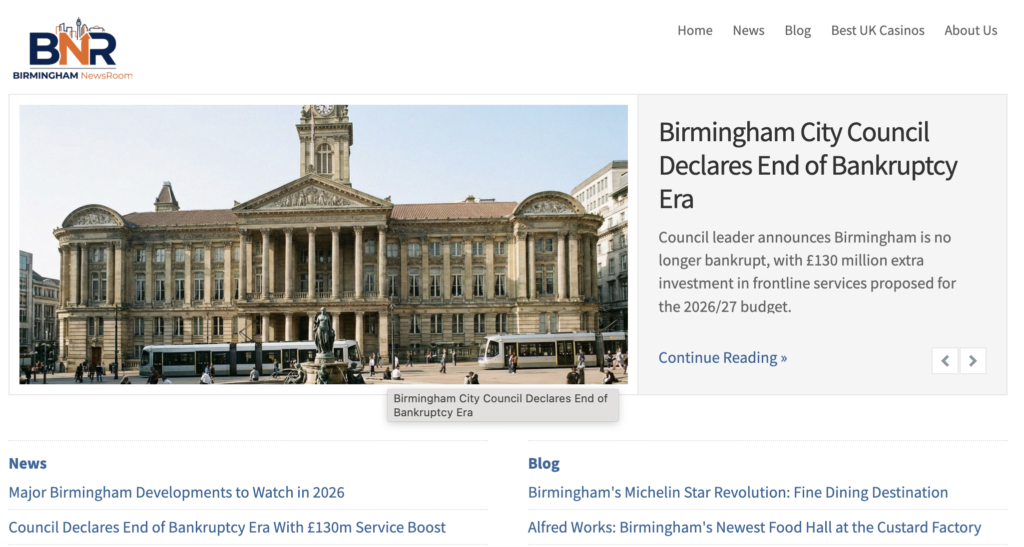
A “news site” from my hometown using an entirely fake editorial team with 0 expertise. Notice anything interesting? Look in the top right corner. They are promoting CASINOS.
WHITE HAT SEOs RIGHT NOW: But Google never lies! The spam update has cleared out these evil black hatters!

No, it has not. This 100% spam website is getting 32,000+ visits per month at an estimated $600,000 in value.
And here’s an Ahrefs screenshot of their traffic:
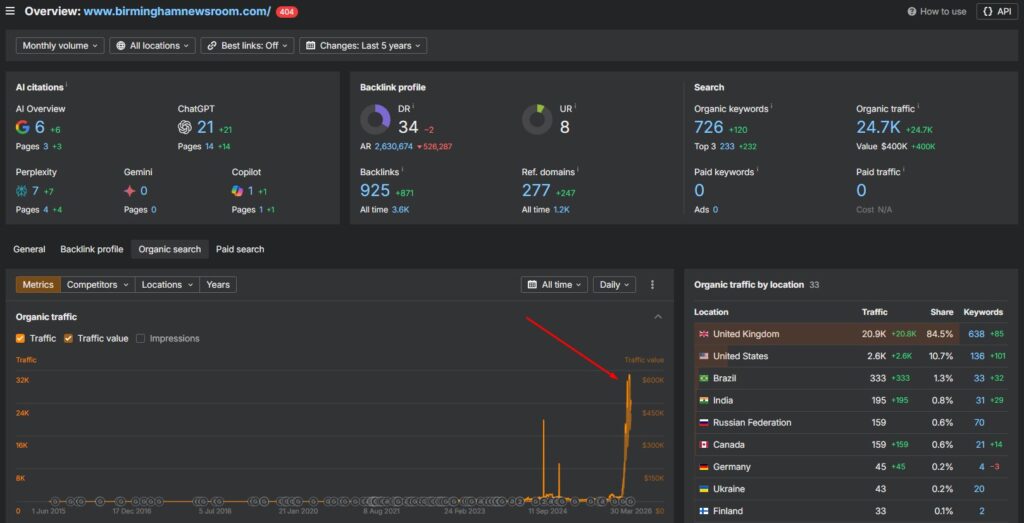
Black hat is alive and well.
Actually, it’s even better than it was 14 years ago. Google has purposely made its algo worse in order to screw users over and make money from ads/keep users in the ecosystem longer, which has opened the door to even more black hat abuse than back in the day. Much more on that a few sections down.
What is Black Hat Link Building?
Black hat link building is any type of link acquisition technique that goes against Google’s guidelines, including paid links, PBN links, link exchanges (or link swaps), automated comment spamming, forum spam, and even scaled press release abuse.
All of these link building strategies fall under the “Link Spam” section of Google’s Webmaster Guidelines:
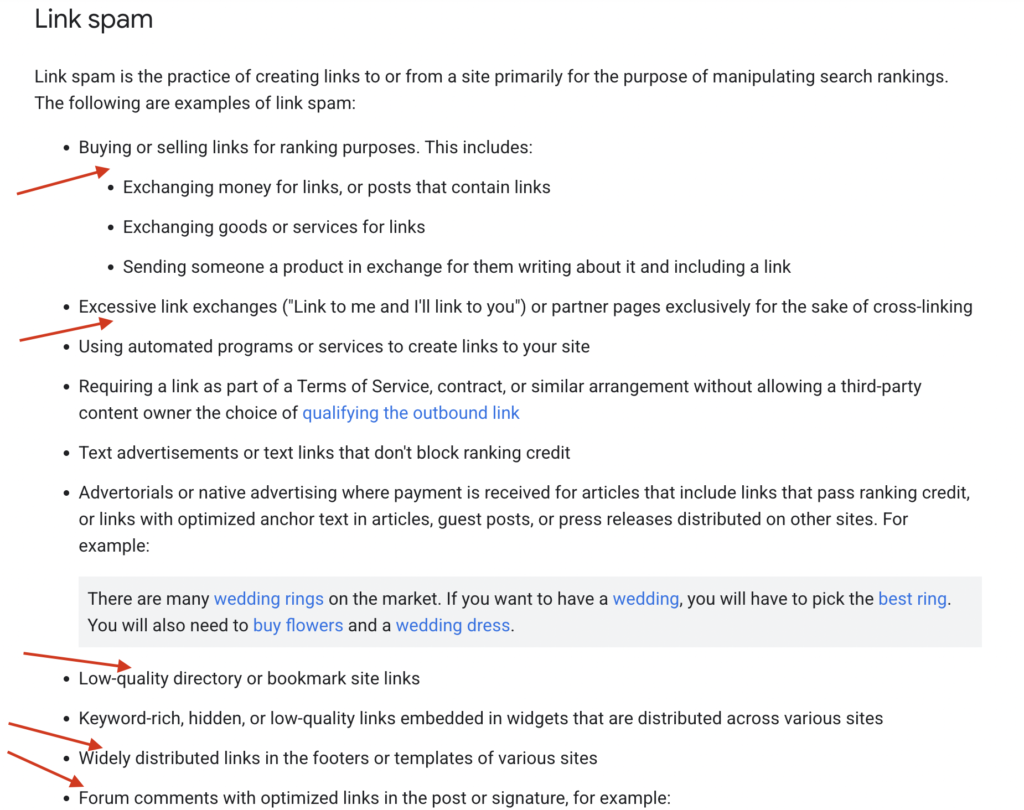
Black hat link acquisition is when you use any technique designed to manipulate the algorithm and circumvent Google’s earn natural links policy. So, any time you go against the guidelines and use an artificial means to obtain a link, you are technically a black hat SEO link building outlaw.
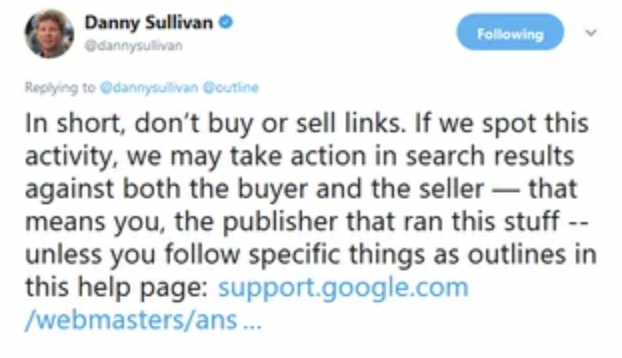
Here’s Danny Sullivan warning all of us nearly a decade ago to NOT buy links:
And of course, since Google is 100% against exchanging money for links, they must be against running ads to buy links, right? Certainly, they are a moral company that would do nothing to jeopardize the integrity of their search results…right?
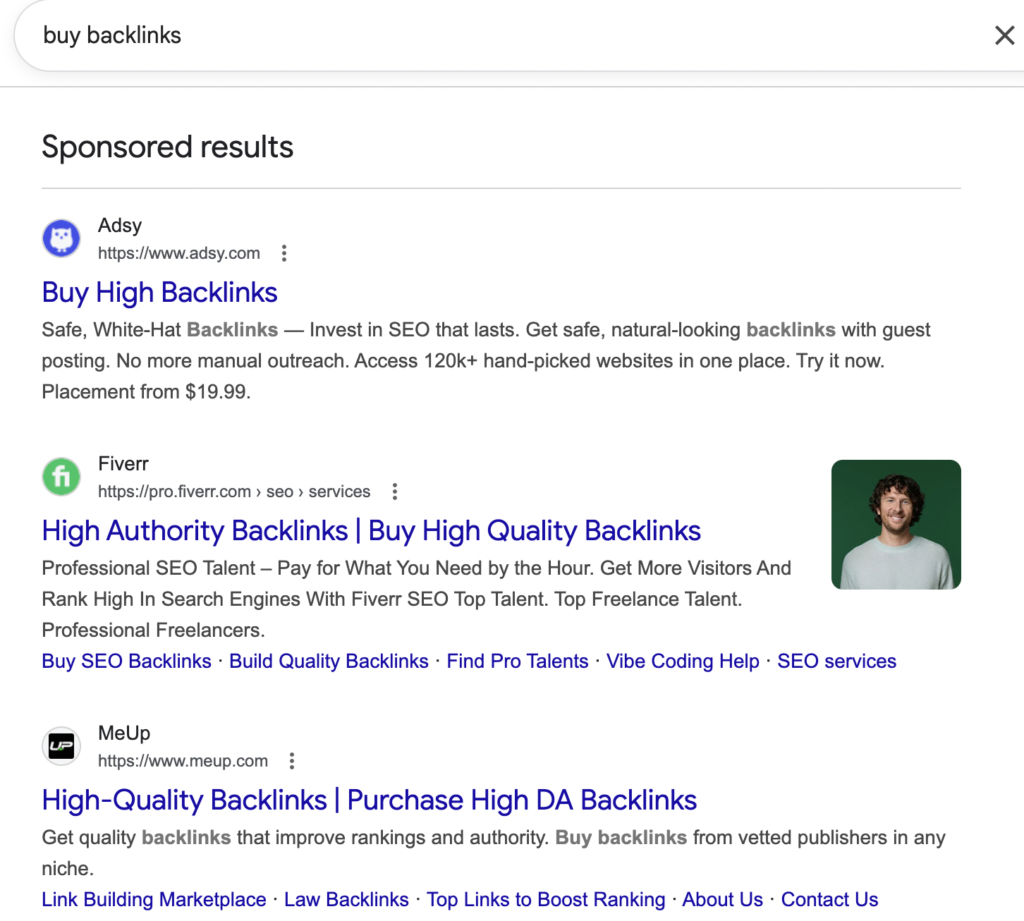
Or maybe not…Google is fine making money from advertisers selling links. But…but…link spam!
Anyway, let’s cover some of the different types of black hat link building techniques before we move on. The following list contains the most common black hat link acquisition methods:
- Paid Links: Paying websites to place a link to your site in any form is a violation of Google’s guidelines since money is driving the placement rather than “writing good content, bro”.
- Guest Posts: Google’s Webmaster Guidelines specifically address creating mass, low quality pieces of content primarily for the purposes of manipulating ranking signals. Good thing nobody ever does that.
- PBNs / Link Farms: Networks of sites built solely to pass link equity to a money site. PBNs are essentially a “fake” web of authority designed to game rankings. This is strictly forbidden (wink, wink).
- Link Exchanges: “I’ll link to you if you link to me” deals that artificially inflate link counts with limited editorial value (again, whatever that is). Google is technically against this but has no way of policing it.
- Forum or Comment Spam: Dropping links in comment sections, forums, or guestbooks purely for SEO. We all did this back in the day. Don’t lie. Google also has specific rules against links in the footer of your comments as well. These are usually ignored by search engines anyway and provide no value, so not really worth your time. There is still some value in using legit comments as a tier 2 buffer, though. I’ll address that towards the end of this article.
- Automated Link Strategies: Using bots or software to blast links across thousands of sites at scale.
- Scaled Press Release Abuse: Flooding wire services with keyword stuffed press releases to generate backlinks en masse is also against link building guidelines. PR is actually a great strategy to build high quality editorial links when done properly. Just don’t spam and you’ll be fine.
- Hacked Links: Injecting links into compromised websites without the owner’s knowledge. This is actually beyond black hat. It’s outright illegal. I am not an illegal hat SEO, and I don’t recommend you do this.
White Hat vs. Black Hat Link Building
The difference between white hat and black hat link building is that when you engage in white hat link building, you naturally earn backlinks, and with black hat, you use tactics that go against Google’s webmaster guidelines to obtain backlinks, such as paying for links.
If you build links according to Google’s guidelines, that’s white hat. If you break the rules and engineer links, that’s black hat. Plain and simple.
White hat link building includes guest posting on relevant sites, building tools that attract natural links, publishing research that journalists cite, and doing digital PR (pitching stories that get published naturally, not sponsored posts).
Black hat link building includes PBNs, link swaps at scale, guest posting, and redirect chain abuse, among other things.
I don’t think white hat link building is bad at all. I do plenty of it. The blog you’re reading this on has been built using pure white hat SEO techniques.
The problem is that it’s painfully slow, and in the most competitive niches, it flat out does not work. Anyone telling you otherwise is probably not ranking for anything difficult or works for Google.
I always suggest you wear what I call a money hat.
Do whatever makes sense for your niche, level of competition, risk tolerance, and budget. Build white hat links, use PBNs, use canonical redirects, build free tools that attract links…whatever works for you. In other words: Wear whatever hat makes you money. Just understand the risk profile of the one you pick.
OK, now it’s time for the million dollar question: Does black hat SEO work? And will you get penalized?
The answer is…
Will Black Hat Link Building Destroy Your SEO?
Yes, black hat link building will destroy your SEO, lower your search visibility, and even result in a manual penalty if you do it the wrong way. Black hat SEO done within reason (such as buying links, link swaps, PBNs, redirect chaining, or high quality guest posts) will do wonders for your SEO, and I would argue it is even necessary for SEO success in 2026.
If you abuse manipulative tactics in an obvious way, this could result in the following SEO issues:
- Manual or algorithmic penalties
- Severe traffic loss
- Your site getting de-indexed
But these penalties are very rare and reserved for only the most blatant offenders (I have received a few penalties like this in my career…proudly).
I’ve been using the blackest hat strategies (is this a word?) to build links for nearly 20 years, and I’ve worked with clients in some of the most competitive niches like iGaming, crypto, law, and SaaS. In all of my years, I’ve seen only a handful of manual penalties for black hat techniques.
I like to think of it like driving on the interstate: The speed limit is 55. If you do 75, nobody cares. Hell, you have to do 75 to even get to work on time. Just don’t be an idiot and go 120, and you won’t go to jail.
3 Reasons Why Black Hat Link Building Won’t Destroy Your SEO
Building links in ways that go against Google’s guidelines will improve your SEO, NOT destroy it, so long as you don’t blatantly abuse the system. And this is 100% fact.
The very fact that my link building marketplace, Presswhizz, exists is proof of that.
I’ve personally overseen tens of thousands of link placements since we opened, including a laundry list of heinous violations of Google’s webmaster guidelines like guest posts, press releases, niche edits, and sponsored placements on high authority websites.
Let’s cover a few reasons why you should ignore Search Engine Journal and the other white hat shills, and stick to reverse engineering the SERPs instead:
Reason #1) Google Doesn’t Have the Resources to Enforce White Hat Policies
I’ll give Google credit. They’re better now at identifying low quality purchased links than ever before, and if you plan to just spray and pray, you won’t see any movement in your rankings at all. Google will just ignore your spammy links, meaning they won’t pass any link equity.
But if you stick to purchasing high quality backlinks from legit, niche-relevant websites with real organic traffic, Google will have no way of telling whether you bought the link or not. They aren’t monitoring your bank accounts, and they certainly aren’t policing the high authority media sites that they’re practically in bed with (Forbes, New York Times, Healthline, etc.).
They do suggest that the publishing website use the rel=”sponsored” tag, but no one does this. It’s just window dressing.
What Google does have is a number of sophisticated techniques for determining what a purchased link looks like. They use a mix of machine learning algorithms, pattern recognition (does the site link to multiple low quality sites?), context, velocity, and previous history (have they linked to you before) to identify what appears to be an evil paid link.
But if you just buy good links from relevant sites that look like legit links, you will have 0 issues.
Source: Charles Floate’s experience as well as anecdotal evidence from thousands of websites across every niche imaginable.
Reason #2) Black Hat Techniques Are Working in 2026
If you’re new to SEO, let me give you an important piece of advice: Never listen to what Google says. Reverse engineer the SERPs instead.
Which brings me to reason #2 that black hat tactics won’t set your website on fire…
I see black hat tactics working all the time.
And I don’t even mean harmless infractions like buying links. I’m talking about blatant manipulative tactics that break Google’s fairy tale rulebook working on real SERPs.
Let’s start with an example I’m sure you’ve all heard of: Parasite SEO.
Parasite SEO is a technique where a website, typically with low authority, publishes an article on another website with high authority in order to “jump the line” and rank on Page 1 for a competitive key term.
This is a blatant violation of Google’s guidelines, but it is still a viable SEO technique in 2026. Here’s a prime example using Outlookindia.com.
An article on Outlookindia.com is currently ranking on Page 1 for the keyword “Fast Loan Advance Reviews”:
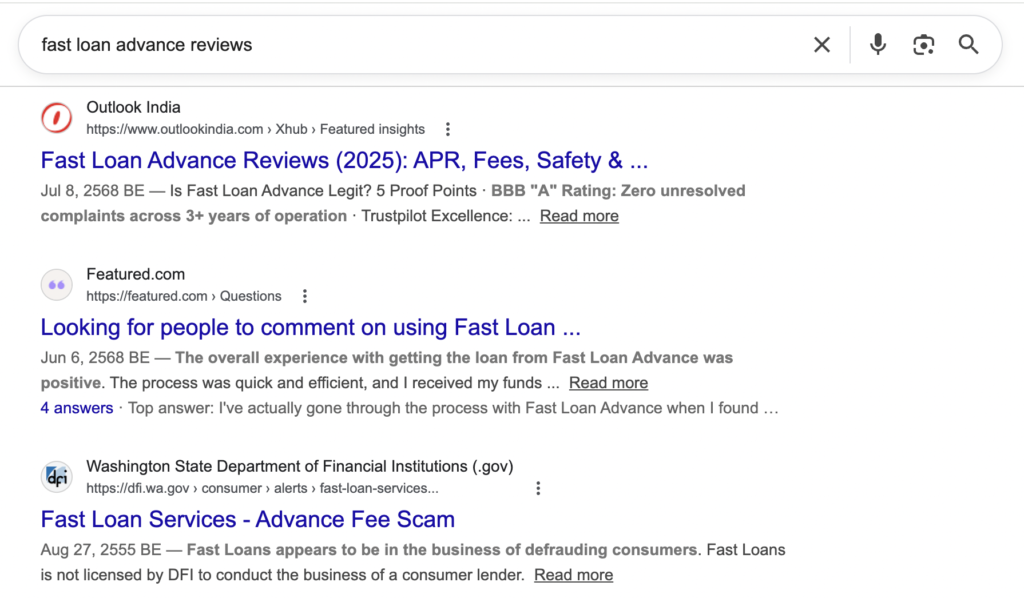
This article links back to the company’s site, so it’s almost like they’re ranking top 3 for this keyword. Interestingly enough, it’s outranking a .gov website from the State of Washington declaring this company to be a scam (I personally don’t know if they are or not).
Fast Loan Advance is a small website with a domain rating of only 17:
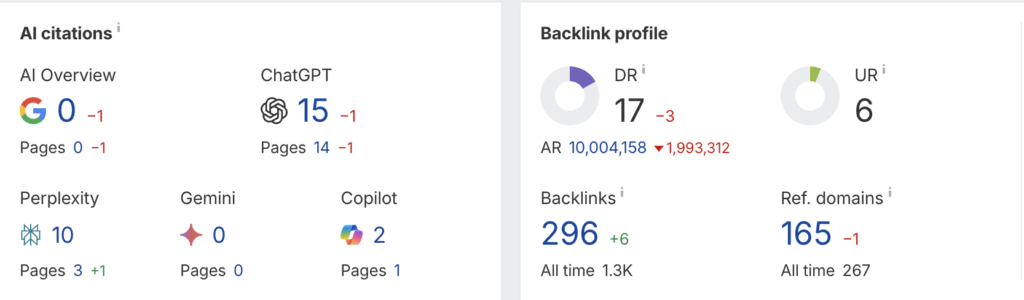
There’s no way they could outrank a .gov website without using these parasite tactics.
Before we move on, I want to show you just how common buying links is and how Google does nothing about it.
This very same post has a sponsored tag on it:
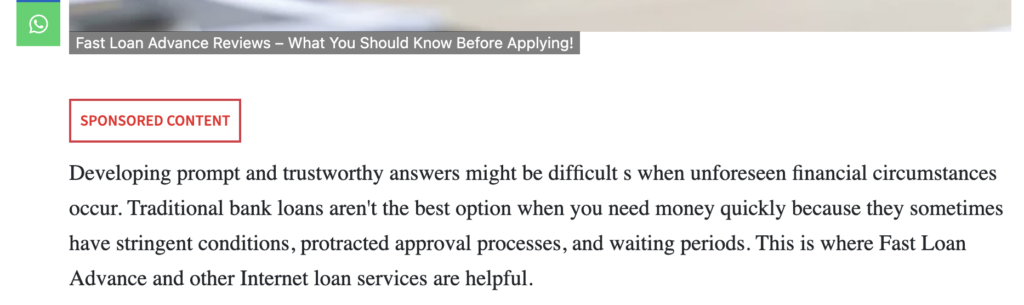
“Sponsored” means they get paid to post this article and link to Fast Loan Advance. That means they have exchanged money for posts that contain links. Look at Google’s guidelines:
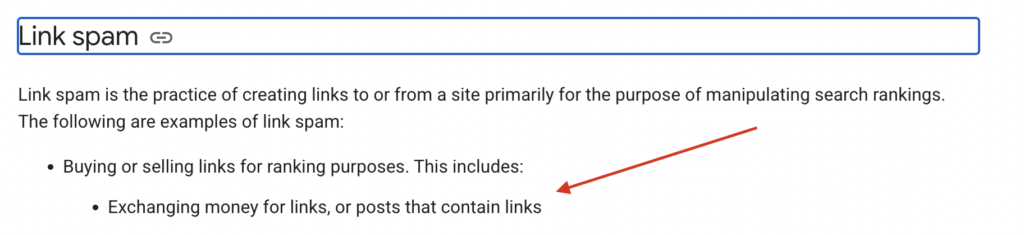
PSA: Don’t listen to Google. Look at what’s working.
This is just one of many examples I could provide. There’s no way I’m going to share any of my personal projects here, but you saw some of my examples of black hat tactics working at the moment earlier on in this article.
Reason #3) Google’s Algorithm is Getting Weaker
In case you haven’t noticed, Google is in a bit of a crisis.
They’re dealing with a flood of AI slop, competition from LLMs, and a massive, embarrassing algorithm leak that coincides with action being taken against it by the US Department of Justice (DOJ).
But problems started for Google all the way back in 2019, long before any of this. And it’s 100% the result of their greed and incompetence. They purposely killed web search and are now dealing with the fallout.
I’ll explain…
Back in 2019, Google had a problem: Revenue growth was stalling because users weren’t making enough queries. Google was too good and users were getting what they wanted, leaving, and not clicking ads. Like any good tech giant with a monopoly on its industry, Google made the obvious decision: Make its product worse for the sake of profit.
Google demoted Ben Gomes, a search purist, and replaced him with Prabhakar Raghavan, an ads guy (the plot thickens). Under his leadership, Google made a series of changes aimed at reducing the quality of its results in order to keep users on the SERP longer and force them to make more queries. This includes putting authority bias on turbo mode (hence why parasite SEO is so effective).
We know that Google has purposely made its algorithm weaker to encourage users to click on paid advertisements for the sake of pumping its ad revenue numbers. This was proven true via an email filed as evidence in the DOJ case:
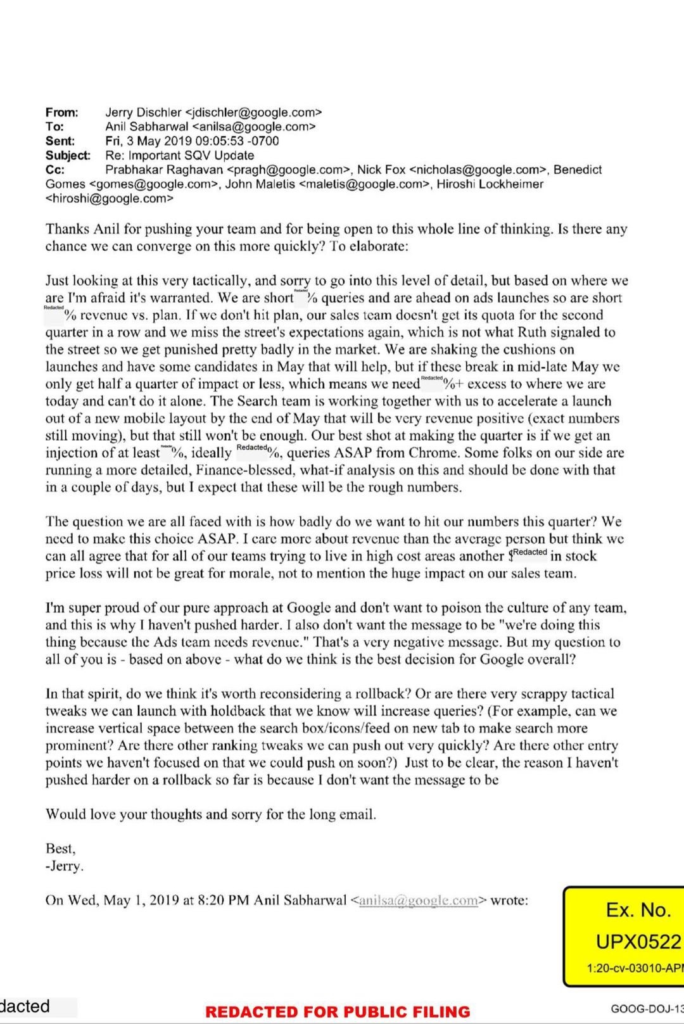
In case you don’t want to read this redacted mess, it’s Jerry Dischler (who ran Ads at the time) asking if they could manipulate things to increase the number of queries made in an effort to display more ads (and hit ad revenue goals). Something that Google claims they never did. Liars.
The SEO world had long suspected this to be true. Google has literally 0 competition, so making organic search results worse would force users to click more ads without having an effect on its bottom line.
Degrading organic search purposely also benefits Google by forcing users to refine their search multiple times to get any real answers.
So, how does all of this relate to black hat SEO? It means a few things:
- Google’s algorithm is much easier to predict than Google claims
- Google simplified the algorithm for the sake of profit
- Certain exploitable search ranking factors, like CTR, AI content, and site authority, are more important than ever
- Algorithmic penalties are less frequent and harder to get. You have to really, really piss Google off to get a penalty these days.
Easy to spot offenses like building hundreds of links overnight might get you penalized, but other than that, I doubt you’ll have problems. Google has a lot of bigger problems on its plate than your $100 sponsored post.
Tl;DR: Penalties are easier to avoid and algorithmic hits are lighter and easier to deal with than ever before. In the rare instance that you are penalized, it probably won’t be that bad.
What Are The Benefits of Black Hat SEO Link Building?
The benefits of black hat SEO link building range from velocity to ROI and fast search engine ranking impact. Purchasing links, swapping with other sites, or using high quality PBNs allows you to rank higher, faster and usually for less than doing things the white hat way.
Let me quickly cover each of the benefits in more detail:
You Can Acquire Links Faster Using Black Hat SEO Tactics
In the fairy tale world of white hat SEOs, you publish great content and links naturally come to you.
In the real world, you need links if you want to rank in Google. They are without a doubt a top 3 ranking factor, and many of your competitors are probably spending hundreds, if not thousands, of dollars on links.
With black hat tactics like sponsored posts, link swaps, niche edits, tiered link building, and guest posts, you can build as many links as you’d like per day (within reason), depending on your budget.
For example, my marketplace, Presswhizz, allows you to search a database of thousands of publications, choose the one that suits you best, and place an order immediately.
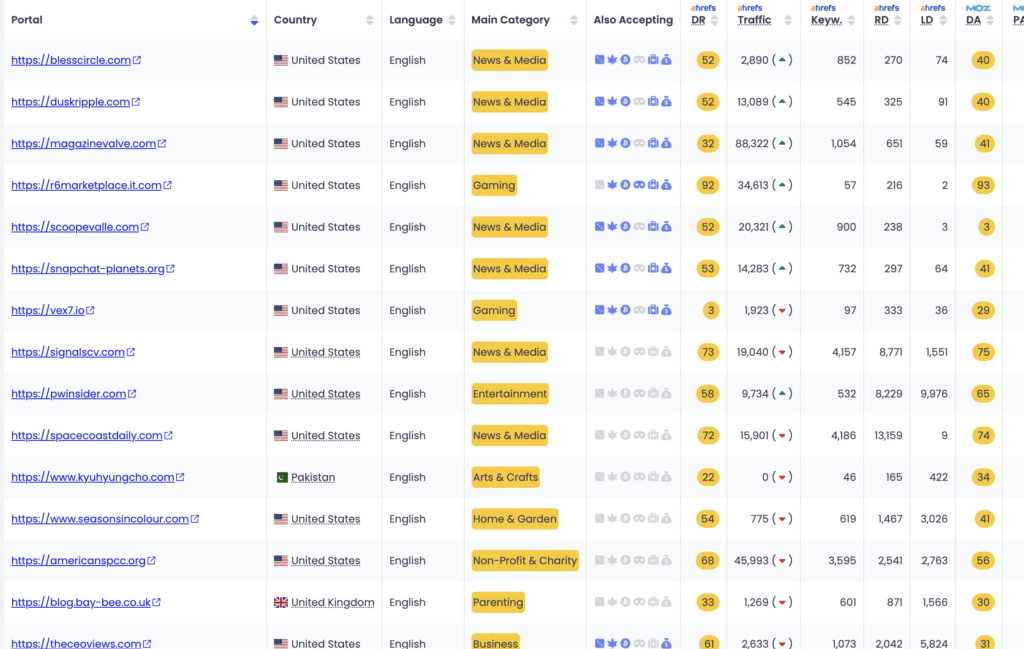
Your link will be live within 18-24 hours in most cases. Imagine how long you’d have to wait to build 5 links naturally. When you buy them, you can acquire 5 links in minutes. I don’t recommend that you just rush into this. Learn how to buy backlinks first, then start shopping.
If you wanted to go the white hat route, you’d have to write content, publish it, promote your site on social media, and pray someone links to you. It’s just not viable. Google is delusional.
Immediate Rankings Boost
When you buy backlinks or use other black hat methods, you gain an immediate SEO advantage over your competition who are doing things “Google’s way”.
As I told you before, links are a top 3 Google ranking factor.
In my experience (aka fact), they are the #1 ranking factor. So, if you get more links from higher authority publications, AND at a faster pace than competitors, you’re naturally going to have an advantage in the rankings.
According to a study entitled How Many Backlinks Does A Website Need to Rank on Google? published on firstpagesage.com, you need anywhere from 150 – 1,100+ backlinks to reach the top 3 spots in Google depending on your niche.
Imagine how long you’d have to wait to naturally build 1,100 backlinks. There’s a better chance that Google doesn’t even exist by the time that happens than you building 1,000+ links just by “publishing good content”.
Check out my guide on the topic if you aren’t sure how many backlinks you need to rank.
And whatever you do, ignore shills like whoever this guy is:
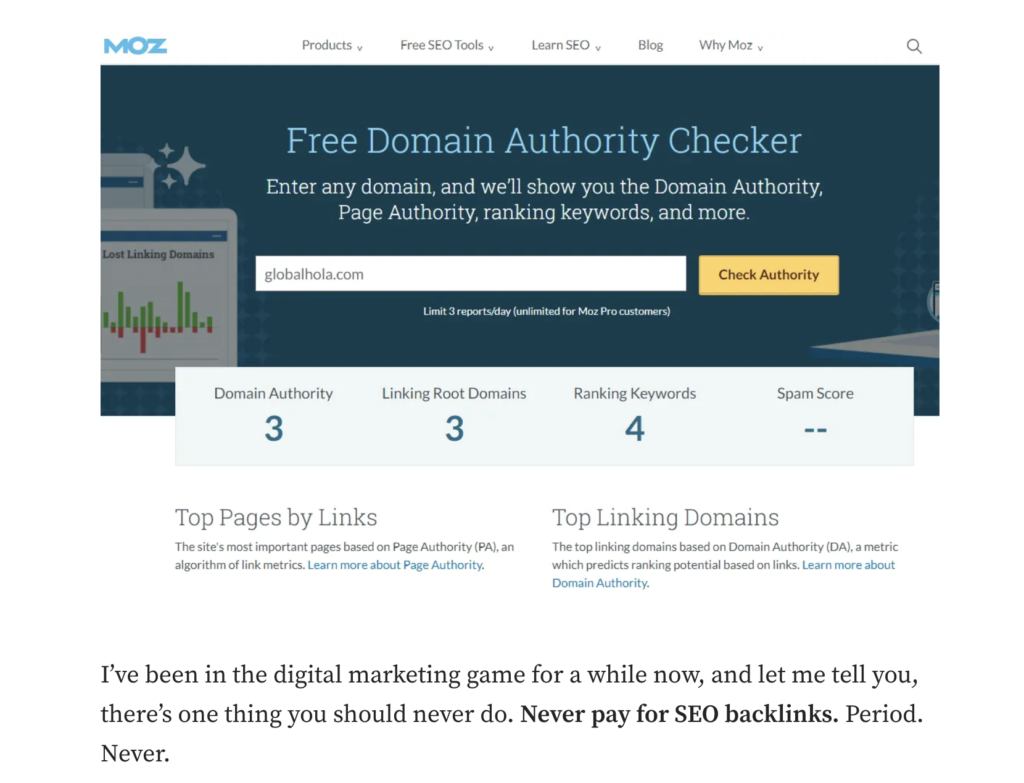
The 4 ranking keywords part is so ironic. It’s hysterical.
10 Black Hat Link Building Methods (When to Avoid And When to Use Them)
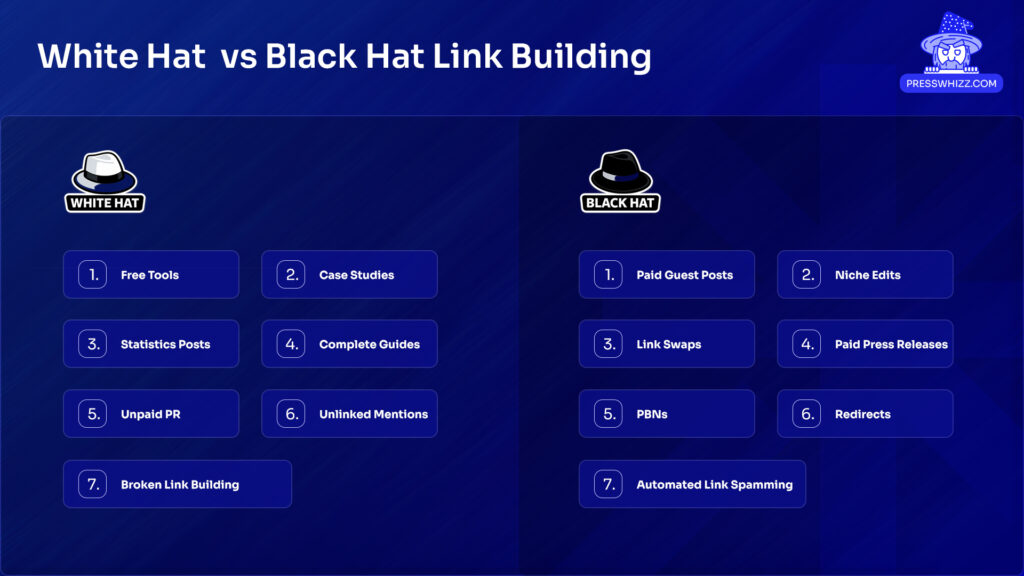
The 10 most common black hat link building techniques are link farms, PBNs, cloaking, niche edits, blog comment spam, parasite SEO, redirects, automated link spamming, hacked links, and press releases with dofollow links.
Let’s cover each link acquisition method one by one.
Link Farms
A link farm is a network of sites built solely to link to each other or a target site in order to boost each other up in the rankings.
You’ll often see site owners peddling links on their “high quality” niche sites. Be very wary. You won’t get penalized, but it’s a total waste of money.
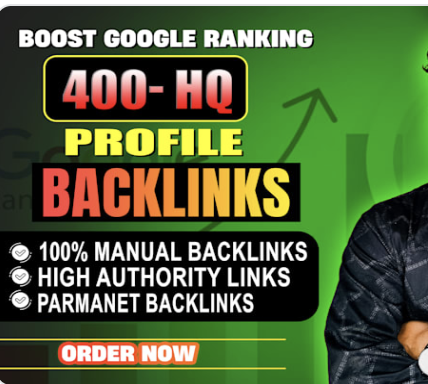
Link farms are similar to PBNs in that they’re networks of sites built for the sole purpose of linking to another site, but there’s a big difference: Link farms are built to publicly sell BS links whereas PBNs are proper “private” networks used for legit black hat purposes (funny seeing those two words together). I’ll cover those next.
Let’s get back to link farms.
Google has gotten so good at spotting low quality “farmed links” that they aren’t worth your time. You know those Fiverr links packages? The ones that are like 100 links for $100? Those are link farms.
I mentioned this before, but when a domain is pointing to hundreds of unrelated niches with no coherent linking history, the algorithm recognizes the pattern and nukes them. They do absolutely nothing for your site.
Verdict: Avoid.
PBNs
Private blog networks, or PBNs, are a network of private sites you or another entity control created for the sole purpose of boosting another site’s rankings in search engines like Google.
For example, say I owned a website “bestdietpills.com”, and I created a network of 10 health sites from expired domains for the sole purpose of linking to my diet pills site and boosting its rankings. That would be a PBN. Again, a PBN is similar to a link farm, but the links aren’t sold publicly.
PBNs make Google propagandists on X and Linkedin foam at the mouth with anger.
White hat white knights even spout disinformation on major SEO news sites to protect Google’s honor:
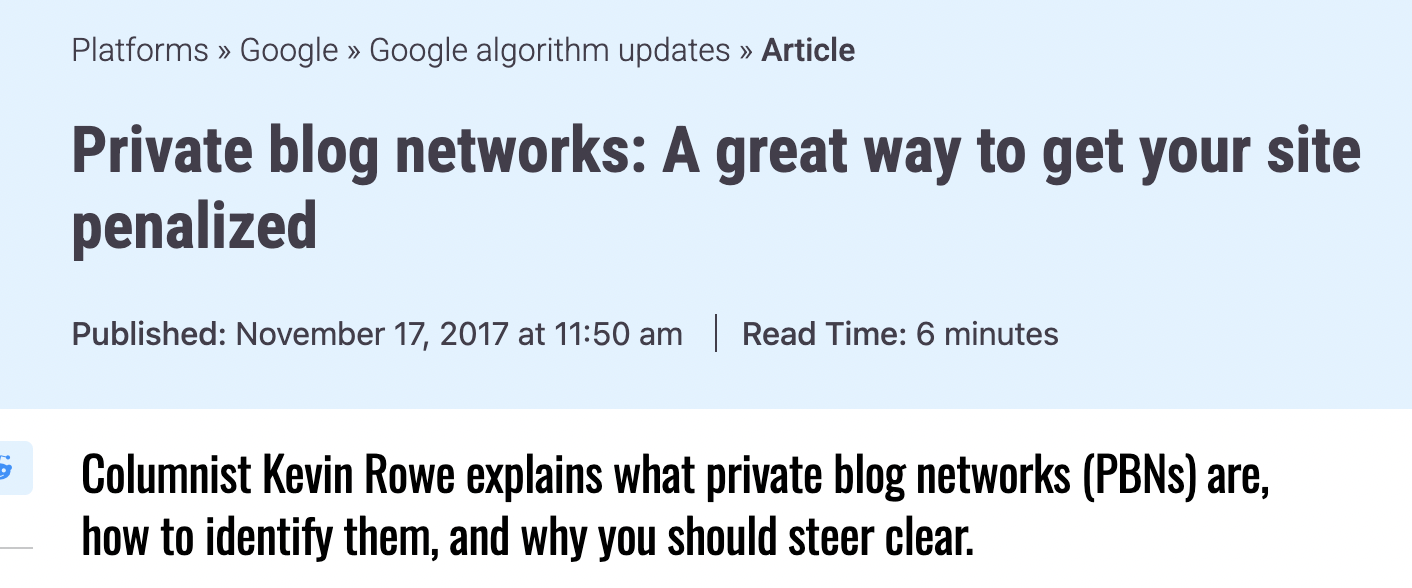
This is once again a question of high quality vs. low quality and not “PBN or not PBN”.
If the group of sites you’re using appear to be quality sites, it’s fine to use them, especially when you’re in competitive niches with overpriced links or you want to rank local clients without breaking their budget on manual outreach.
Let me break down my step-by-step methodology for building 100% safe, undetectable PBNs that pass major link juice:
- Select an aged domain: Start by looking for expired or auctioned domains with clean histories and natural backlink profiles. The more relevant it is to your money site, the better. Run the domain through the Wayback Machine to check for spam history, dig into the link profile to make sure it’s not propped up by garbage, and confirm the domain wasn’t previously penalized.
- Make it look like you don’t own all the sites: Don’t be lazy. If it looks like you own 10 sites that all point to another site you own, Google will know it’s a PBN and you won’t get any ranking juice. I swear, all the idiots complaining on social media that PBNs don’t work are the same people who host all their sites on the same server and track them all in the same Google Analytics dash. Use a different hosting provider and register the domains with different companies at the very least. And don’t use the same Google account for all the PBNs.
- Make the site look legit: Real websites don’t publish 100 pieces of AI slop in 3 days. PBNs do. Publish well prompted AI articles at a natural cadence of around 1 blog per day, and make sure to create real pages like an About Us and Contact page.
- Make your link profile look natural: If you immediately start blasting links at the same page from all your PBNs with the same exact match anchor text, Google will see that you’re trying to manipulate rankings with a PBN and prevent your target site from receiving any benefit from the links. You need to make your link profile look natural, and natural link profiles are a bit messy. And don’t build 100 links at once…again, make it look natural. My best tip here is to keep exact match anchor text to around 10% of your anchor text ratio, and to go with branded anchors much more often.
Verdict: Use PBNs but be smart about it. Check out my guide on PBNs to learn how to use them the right way and avoid penalties.
Blog Comment Spam
Blog comment spam is the practice of dropping links in the comment sections of other people’s posts, usually with a generic compliment and a link back to your site. You know those weird usernames like Empty_Soup_53z that say “Great post! Very insightful!”, then edit the comment an hour later and insert a link back to their dodgy libido enhancing products? That’s what I’m talking about here.
It used to be everywhere. I remember back in the day you could automate the whole thing with tools like Scrapebox and build hundreds of links overnight without much work at all.
I left God knows how many spammy link comments in my day (I may have ruined the internet).
But, thankfully, Google caught on, and now comment section links are almost universally nofollow (meaning they don’t pass link equity). To be fair, I don’t blame Google. It’s just way too easy to game the system that way.
However, I do want to say that real blog commenting is still alive and well. And by real blog commenting, I mean using legit comments on relevant blogs as a tier 2 buffer. In case you don’t know what that means, tier 2 links are when you build links that point to your tier 1 links (guest posts, PBNs, etc.) that then point back to your money page. It’s too much to go into in this post, so I recommend you check out my tiered link building guide for more detail.
You’re much better off just buying links on legit blogs or doing digital PR than wasting time with blog comments like it’s 2014 Warrior Forum or something.
Verdict: Avoid.
Parasite SEO
Parasite SEO link building is thriving in 2026 no matter how much Google tries to rub its hands together and claim that they’ve solved the issue.
That is 100% a lie. I think they’re just embarrassed.
They put site authority on turbo blast over the past few years, and now any site with authority (Forbes, Healthline, etc.) can outrank a legit industry website for a relevant key term. Their algorithm is also in total freefall, and nobody within the company has any idea how to control the flood of AI slop other than making authority more important. This is a dream come true for black hat SEOs like myself.
I know because I personally use mega media sites like Reuters to post PR pieces that rank for high value key terms in as little as 24 hours. I won’t reveal my own projects, but here’s a great example of a company using a Reuters PR piece to rank for juicy terms like “new hair restoration” within 48 hours:
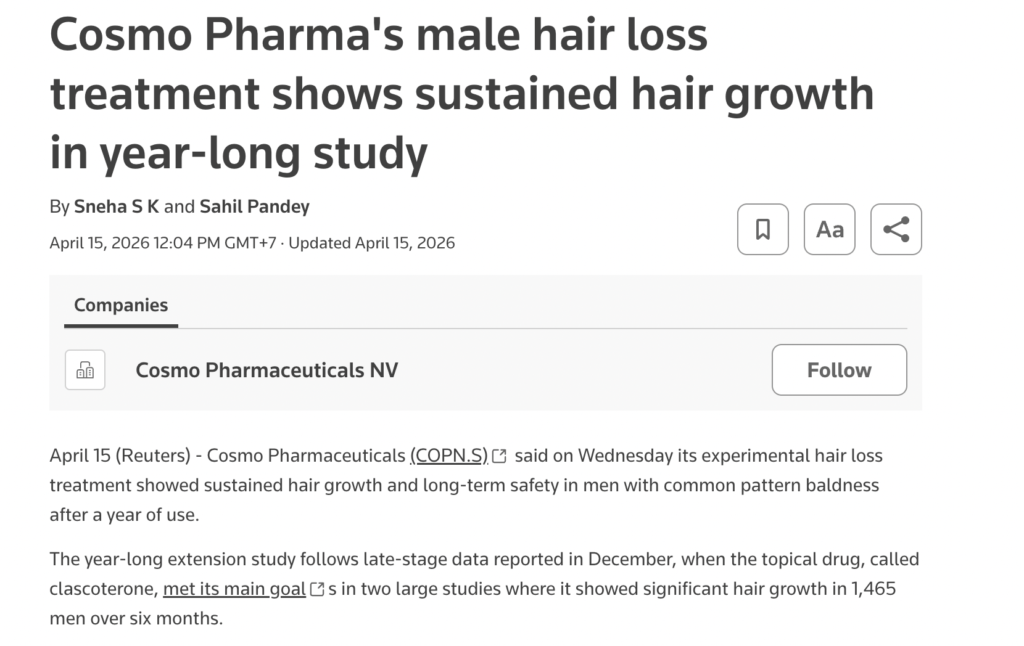
Imagine trying to outrank government websites, Men’s Health, and Healthline for this keyword on your own DR 4 Turkeyhairtransplant.co.uk site…keep dreaming. But a press release on Reuters? Google will quite literally rank it Page 1 instantly simply because it has 0 clue how to display quality results other than via site authority.
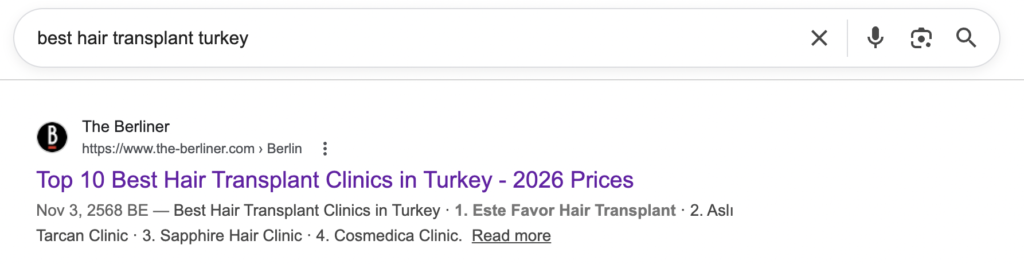
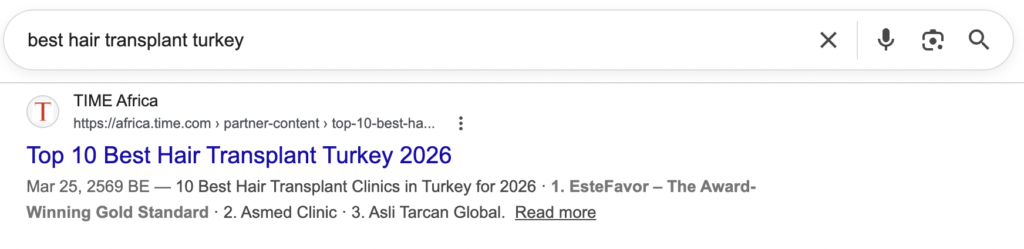
Here’s another great example of why parasite SEO is so effective these days, again using hair transplant keywords (Disclaimer: I have all of my hair). The following article is bringing in over 1,000 visits per month and ranking on Page 1 for “best hair transplant in Turkey”:
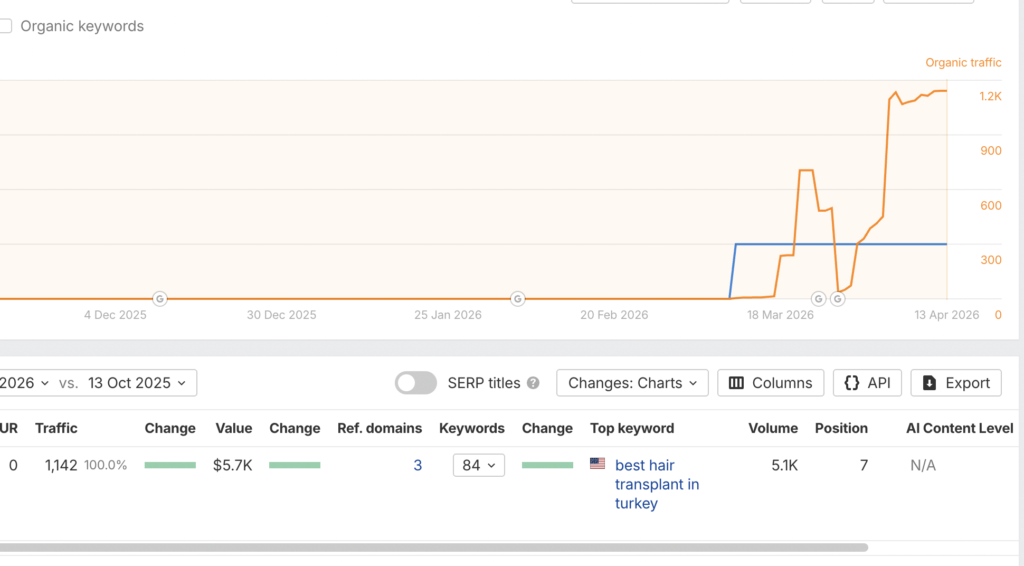
Is this a medical website? No. It’s the LA Times.
The SERP for this keyword is an affront to everything Google has ever said publicly about black hat SEO.
Look at the names on the SERP, like the Berliner:
And Time Magazine Africa:
I hope this section has convinced you to start using parasite SEO. Here are my best tips for choosing a parasite partner in 2026…
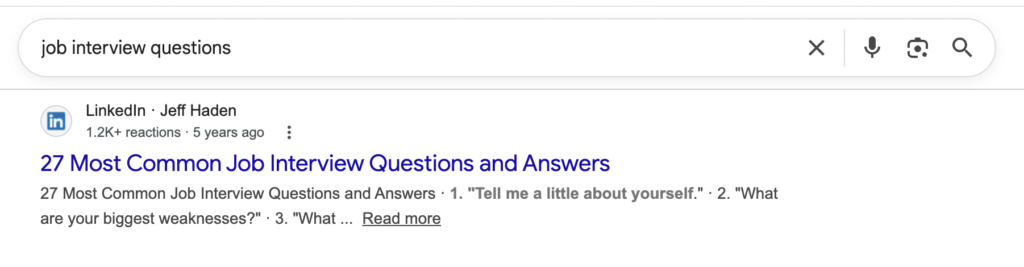
Start by finding a parasite candidate that has high authority for your specific niche. For example, LinkedIn tends to rank well for B2B or just general “work” related terms. Here’s a great example of a LinkedIn post outranking The Muse and a UK government site for “job interview questions”:
A good rule of thumb is to check if the site already ranks for key terms related to your niche at all.
Say you wanted to find a parasite SEO opportunity in the crypto space. In that case, I’d search for related keywords and see which media sites were already ranking. A quick search for “best crypto casinos” helped me discover a true authority in all things cryptocurrency and gambling: The City of Annapolis, Maryland…
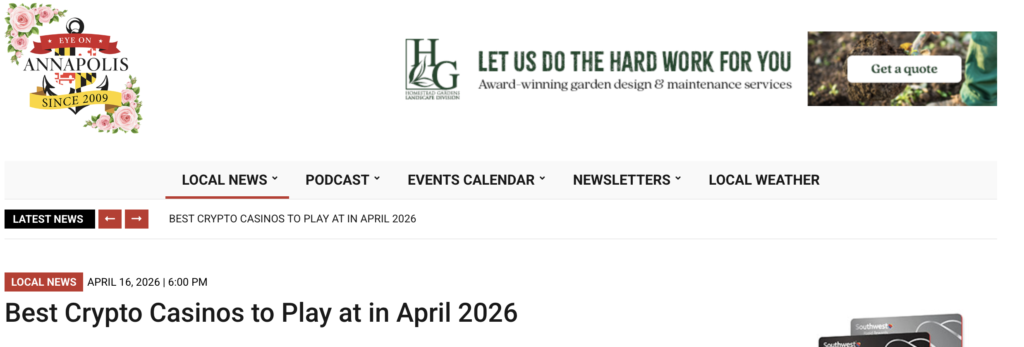
And, just as I suspected, black hat SEOs are mining every bit of parasite value out of this website:
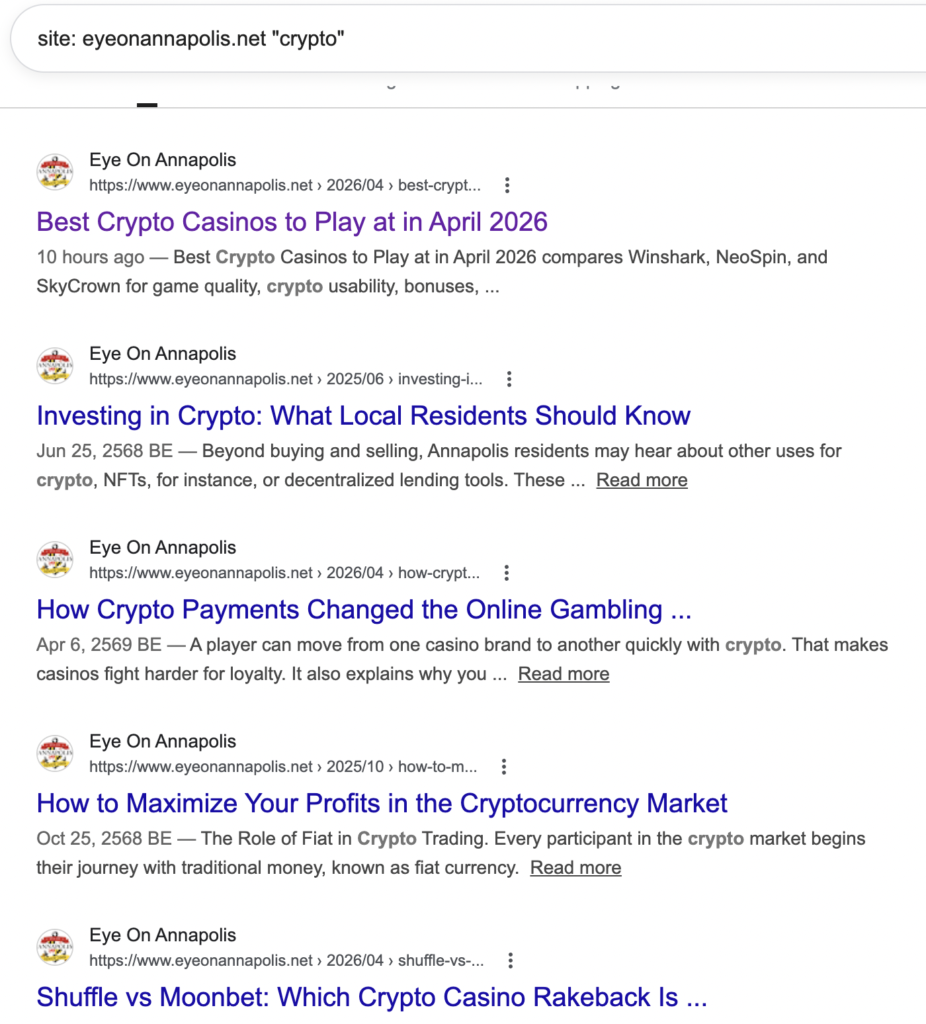
Pro Tip: Getting cited in LLMs via parasite hosts is the evolution of parasite SEO and is probably the #1 competitive advantage in AI SEO these days. While your competitors are busy spamming listicles, praying that Google doesn’t nuke their sites, you can build high authority citations on the sites that LLMs use to train their AI models (and sites that Google is practically in bed with). Again, let’s use the hair transplant in Turkey keyword. ChatGPT’s #1 response is NOT from a Turkish medical site…it’s from a PARASITE SEO partner site: Business Insider…
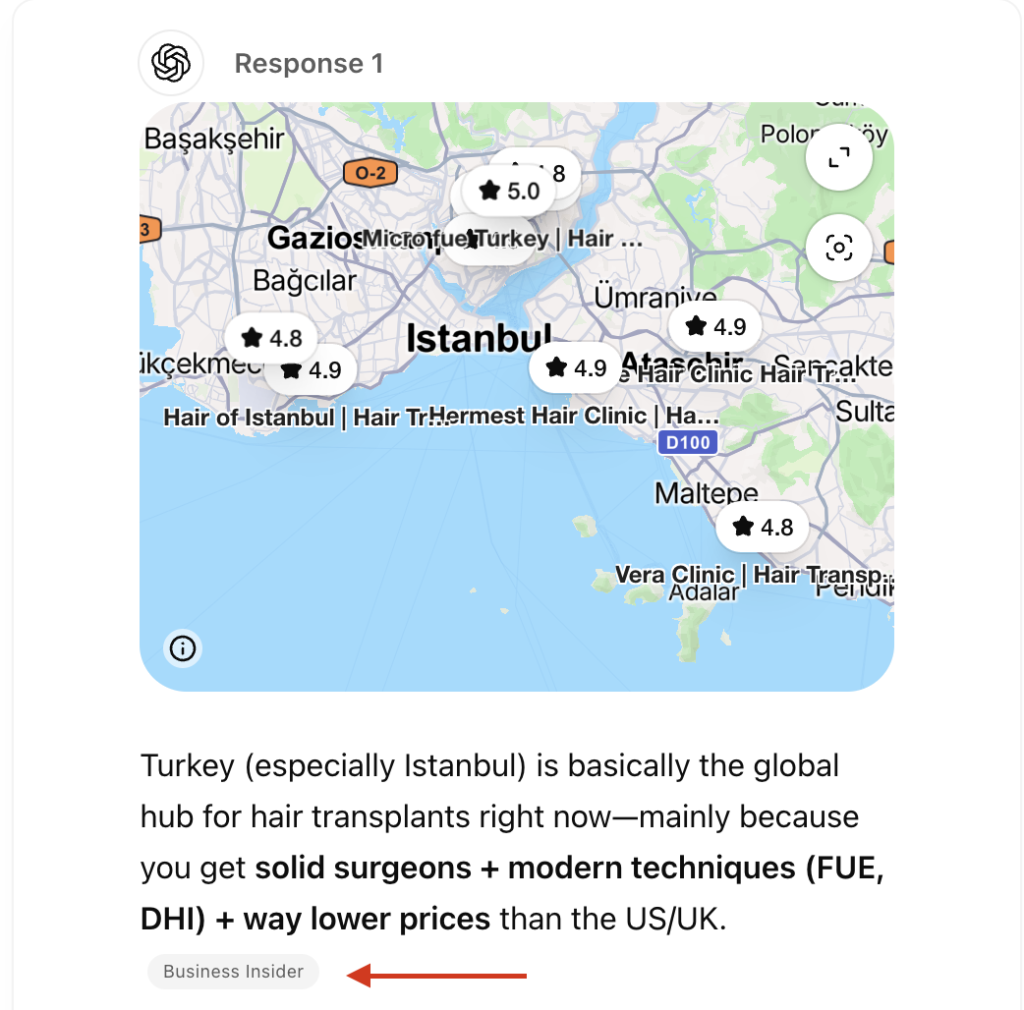
Verdict: Parasite SEO is one of the most effective SEO techniques in 2026. Use it.
Redirects (Including Canonical Redirects)
Redirecting is a manipulative black hat link building technique that can take a few different forms depending on how you approach the situation.
Link redirecting can refer to:
- Using canonical redirects
- Using redirect chains
- Using 301 or 302 redirects
Let me cover them each one by one.
Canonical tags are tags that show search engines which page is the true original. One next-level hack is to point the canonical tag to a different site you own, like this:

This allows you to spam the hell out of domain 1 so it powers up domain 2 without risking the main site.
Another technique is redirect chaining. A redirect chain is when there are multiple redirects between an initial URL and a destination URL. For example, URL A redirects to URL B, and URL B redirects to URL C and so on. This confuses Google and makes it difficult for it to detect what is spam or not.
I’ve seen up to 15 different churn and burn domains chained together. Just make sure to always have a buffer. In case this is a new concept to you, a buffer is when you put a real site with “real content” for Google to index in the chain between the initial URL and destination. Without that, it’s easy for Google to see you’re trying to manipulate the system, and it negates any of the SEO benefits you get from redirecting.
Last up, let’s cover 301 and 302 redirects:
- 301 (Permanent Redirect): 301 redirects tell browsers and search engines that a page has permanently moved to a new URL. 301s pass most of the original page’s link equity to the destination…hence why black hat nerds love it.
- 302 (Temporary Redirect): 302 redirects tell browsers and search engines that the move is temporary and the original URL will return. Google typically doesn’t pass link equity through 302s.
Pro Tip: The “expired domain 301 play” is one of the most effective black hat SEO moves in the whole game. Grab an expired domain with high authority links, 301 redirect it to your money site, and you’ll inherit a good chunk of that “link equity” instantly.
Verdict: Use redirects, but do so wisely.
Automated Link Spamming
Black hat SEOs love using tools like RankerX or GSA to mass generate backlinks from web 2.0 sites like Tumblr or Medium. These tools allow you to blast backlinks to your site at a very high success rate.
The problem is that most people do this the complete wrong way and just blast forum comment links like it’s 2013.
As with most SEO techniques, doing it the right way and focusing on quality will produce better results.
Here’s what I recommend:
- Tier 1: Build high quality tier 1 links (editorial links, guest posts, PBNs)
- Tier 2: Web 2.0s built with RankerX or GSA pointing at tier 1
- Tier 3: Mass automated links like blog comments pointing at Tier 2
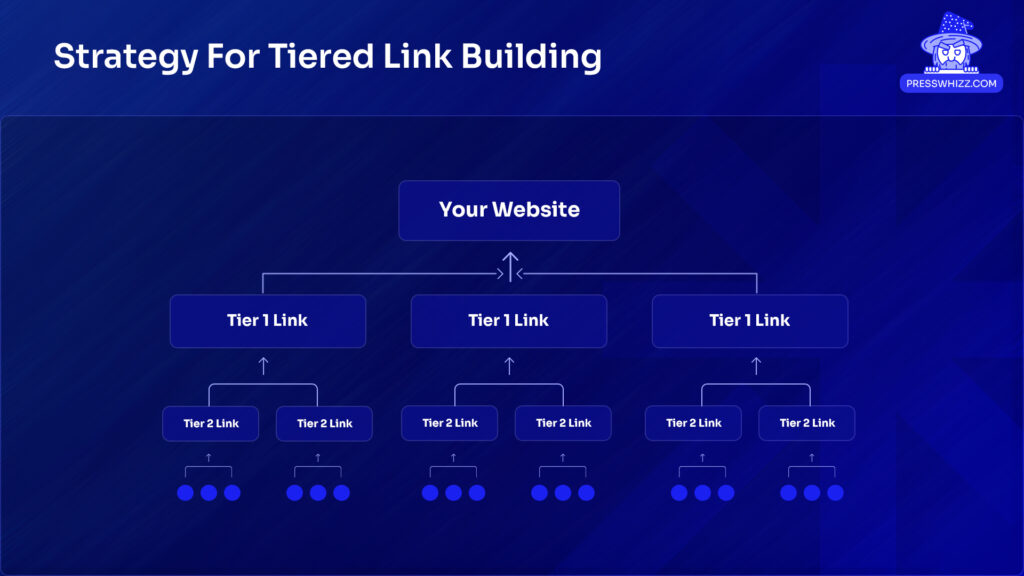
I still use web 2.0 properties to diversify link profiles and as tier 2 buffer linking. Done the right way, it works.
Verdict: Use automated links, but make sure you use the tiered system. If not, you’re wasting your time.
Cloaking
Cloaking is when the same URL serves completely different content depending on who’s requesting it. Google’s crawler hits the page and sees Version A. The real user hits the exact same URL and sees Version B.
This is a very black hat tactic aimed at circumventing Google spam guidelines or to otherwise manipulate search rankings.
To cloak a link, you need to run a script on your server that checks the identity of whoever is requesting the page. Google’s crawlers have known IP ranges, so the script detects them instantly and serves the “normal page” to them. But the human clicking the same URL gets something else entirely.
I think it’s clear why this is so effective…you show Google a keyword rich, optimized page that ranks high and this “ranking equity” is passed on to the other site that you actually want to display to users.
Imagine you had a payday loans affiliate site. Obviously, you probably wouldn’t want to show Google a lead gen form (and it probably wouldn’t rank, because it’s spammy and doesn’t match intent).
In this case, the script would detect Google’s crawler and serve a well structured article about responsible borrowing. But the moment a real user clicks through from the search results, the script catches them and redirects to a lead gen form.
The person who clicked expecting a helpful article lands straight in the affiliate funnel, and Google never sees any of it. That’s cloaking in a nutshell.
Verdict: Use it, but beware that it’s risky.
Link Swaps
Link swaps are exactly what they sound like: Two site owners agree to link to each other. You link to me. I link to you. We are all happy. Entire industries, like SaaS, run on link swaps and nobody gets hurt.
But Google is against exchanging links because this link building tactic is designed to inflate both sites’ backlink profiles without either party having to earn those links through content or reputation. Google is obviously against any small publisher stealing SERP real estate from Forbes or Times of India. Remember, Google actively wants to make their results worse, so they tell you to build links naturally in order to let sites that build backlinks at scale to destroy you in the rankings.
The truth is that swaps are super effective, and 99% of people never get penalized. The only high risk swap activity is direct A to B swaps at scale across entire networks of sites. Google can suss it out.
The solution here is to add a 3rd site and do a 3-way swap. Site A links to B, and B links to C, which then links back to site A. This interrupts the patterns and throws Google off your trail, since it doesn’t see a reciprocal exchange.
Any type of link exchange is against Google’s spam policies, which is laughable in my opinion. It’s one of the most effective link building techniques out there, especially for SaaS companies.
Verdict: Swap links.
Hacked Links
Hacked links involve gaining unauthorized access to a legitimate website and injecting backlinks that point back to your own site. The host site has no idea it is happening. From Google’s perspective, the link looks completely real because it comes from a regular domain, so it passes genuine link juice.
This is against the law, and I do not recommend it at all. It’s not even black hat. It’s just illegal.
Verdict: Don’t hack websites to put links inside the content, please.
Niche Edits
Niche edits, also known as link insertions, are when you pay to have a link to your site inserted into an existing article that already has traffic and ranks for related keywords.
Keeping with my Turkish hair replacement obsession, let’s say you have an affiliate site for hair transplant clinics. For niche edits, you’d find existing articles on relevant sites and get a link to one of the pages on your site inserted naturally into that site.
This is arguably the highest ROI play in all of SEO right now. Instead of waiting around hoping a guest post ranks, you get a live link on a page that already has everything you want: Traffic, keyword rankings, relevance, and authority.
This is also somehow against Google’s guidelines because it’s a paid placement designed to manipulate the algorithm. Don’t listen to the propaganda, though. It’s totally fine.
Verdict: Use niche edits. They are low risk and high ROI.
Press Releases With Dofollow Links
This one is a bit of a grey area, but allow me to explain.
Press releases intended to manipulate search engine rankings (oh no!) are technically against Google’s guidelines. And Google mouthpieces say that all press release links should be nofollow (which won’t pass any link juice). But in reality, they don’t care at all, so long as the press release is on a high authority site and you don’t blatantly abuse the system.
Let me translate what Google really means here…
Good Press Release: Dofollow link from a Reuters.com press release.
Bad Press Release: Dofollow link from any site that’s lower than DR 70.
Source: I use high authority, syndicated press releases on major media sites to rank for competitive keywords the very same day all the time, and it works perfectly fine.
Verdict: Use press releases on high authority sites and ignore anything Google says.
How to Spot Black Hat Links
I think you can tell by my opinion in the entirety of this article that black hat links are not necessarily a problem. The only issue is blatantly abusive link schemes that are obvious to Google.
So, with that in mind, I’ll give you a few tips for spotting low quality black hat links and let you know what to do about them. If you suspect your service provider is cutting corners or you are buying a site and want to evaluate the link profile, this section will help:
Manual Actions
Google will tell you directly via Search Console when your site has been hit with a manual action.
Unlike algorithmic penalties, a manual action means a human reviewer at Google has physically looked at your backlink profile and decided to whack your website. This is very rare these days, because Google doesn’t care about quality. They’d rather your site be terrible so people have to click ads instead.
But anyway, all you have to do is check Google Search Console and see if there’s been action taken against you. Just go to Manual Actions and look:
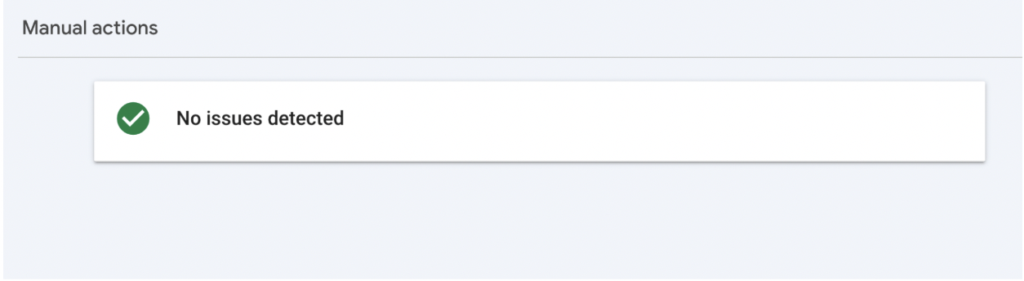
All good here.
Audit Your Link Profile Using Link Building Tools
You should be regularly monitoring your link profile anyway, but especially when you’re black hatting things.
Set up monitoring using Ahrefs and check your backlink profile. Look for spammy links and evaluate the quality of the links you have purchased.
Check out things such as:
- Top-level domains
- Anchor text
- Page traffic
- Relevance
- DR
If you notice that the majority of links are low quality, you’ve got problems. I implore you to learn backlink management before you start doing link building at scale. It’ll save you money and improve ROI.
Learn Black Hat Link Techniques
If you want to spot black hat links, learn how they are built. That’s what this entire article was about, so if you’ve read this far, you’ll be fine (and kudos to you).
Study how PBNs are structured, how SEOs chain redirects together, and how we choose which sites to buy links from. Then open Ahrefs, pull a backlink report, and you will start seeing things you never noticed before.
Final Thoughts
In closing, I just want to say that black hat SEO, and especially black hat link building, is alive and well in 2026, and I am living proof.
You have to ignore all of the noise and trust only what the SERPs actually show. It doesn’t matter what Google employees tweet, what you read on Search Engine Journal, or what white hat sycophants share on their LinkedIn.
You can only trust what your experience shows you actually works for ranking websites in 2026.
And what I see every day as the CMO and chairman of a link building marketplace with public aspirations (as well as a black hat SEO operator in charge of websites worth millions of dollars) is black hat tactics working when done within reason.
Buying links, link swaps, redirects, cloaking, press releases with dofollow links, parasite SEO…I use at least one of these techniques every single day and they work.
And since Google has given up on quality and weakened its algorithm, it’s easier than ever before to rank with black hat techniques and harder than ever to get a penalty.
I’ll leave you with three pieces of advice for SEO: Don’t listen to Google, do what works, and be careful.
Good luck.