I’ve been building links professionally for close to two decades now, and over those years I’ve built links across iGaming, crypto, eCommerce, legal, and just about every competitive vertical you can think of, in dozens and dozens of different languages and geos.
More recently, I’ve personally overseen tens of thousands of link placements through PressWhizz last year, and I’ve watched anchor text strategies either catapult sites to page one or trigger algorithmic filters that tanked them overnight.
Note: Whilst you CAN use anchors for OnPage link sculpting, this article (and the primary definition) is referring to the anchor texts used in link building/for backlinks.
So let’s talk about what anchor text actually is, why it matters more than most SEOs realize, and how to use it in a way that moves rankings without raising a bunch of red flags for Google to clap back down.
What is Anchor Text?
Anchor text is the visible, clickable text inside a hyperlink. When you see a blue (or purple if you’ve already clicked it before), underlined phrase in an article that takes you somewhere else when you click it, that’s anchor text.
In reality, your anchor text would look like this:
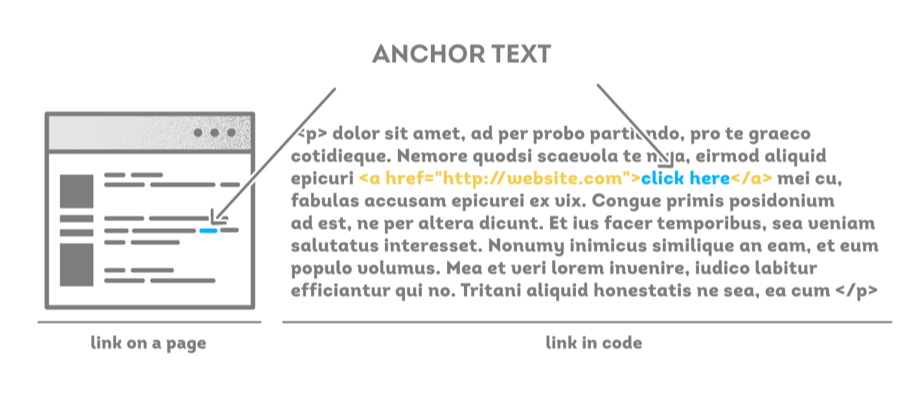
But in the raw HTML code behind the pages you are seeing on your screen, it looks like this:
<a href="https://presswhizz.com">link building marketplace</a>
In the above example, “link building marketplace” is the anchor text.
It tells both the reader and Google what the linked page is about.
And Google specifically uses them for a range of signals to help rank (or potentially derank) pages in its algorithm – Including direct relevancy signals, anti-spam systems and topicality.
Why Anchor Text Matters
Your anchor text is one of the few ranking signals you can directly control on external links, and it’s the primary way Google interprets the context of a backlink.
For internal links, anchor text helps Google understand your site architecture and which pages you consider most important for specific topics, which should be helping reinforce that topics cluster and your entire root authority. First Link Priority also matters here, Google only considers the anchor text of the first link it encounters to a given page on any given page, aka you can’t use multiple anchors to the same page from the same page.
For external links (backlinks), anchor text is one of the strongest relevance signals available. It’s also the signal most likely to trigger a penalty (algorithmically or less likely these days, manually) if overoptimized.
What Google says vs. what Google does: Google’s public documentation tells you to write “descriptive, reasonably concise” anchor text and to keep things natural, but the leaked internal documents and DOJ testimony have shown us that link signals, including anchor text, carry significantly more weight than Google publicly admits.
They’ve built entire systems (Penguin, SpamBrain) specifically to monitor anchor text patterns because they know how effective it is as a ranking lever. If anchor text didn’t matter, they wouldn’t dedicate that kind of engineering resource to policing it.
The Different Types of Anchor Text
If you’ve been in SEO long enough, you should know all of these, but sometimes it’s still good to jog your memory on what is available to you.
So here are all of the different types:
Exact Match
Exact anchor text is what it says on the tine – It matches the target keyword exactly. If you’re trying to rank for “online casino,” an exact match anchor would be literally “online casino”
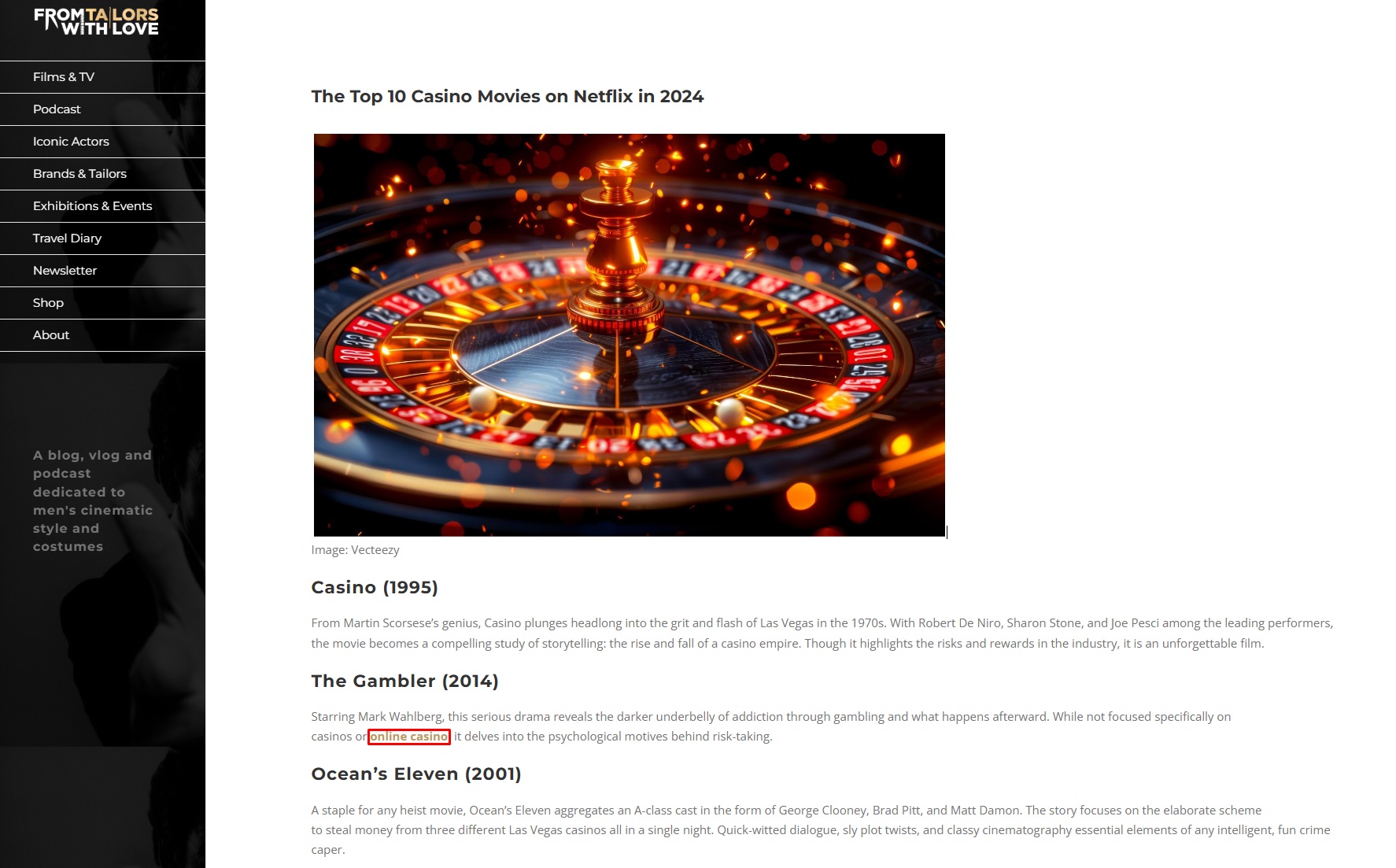
When to use it: Sparingly, and only on your highest authority placements. I limit exact match keyword anchors to under 5% of total monthly placements across campaigns. The higher the domain authority of the linking site, the more aggressive you can afford to be, but even then, restraint wins.
The risk: Over-indexing on exact match is the fastest way to trigger Penguin-style filters. It’s the most obvious footprint Google looks for.
Partial Match
Includes the target keyword but with additional words. An example would be “online casino in the UK” when targeting “online casino”
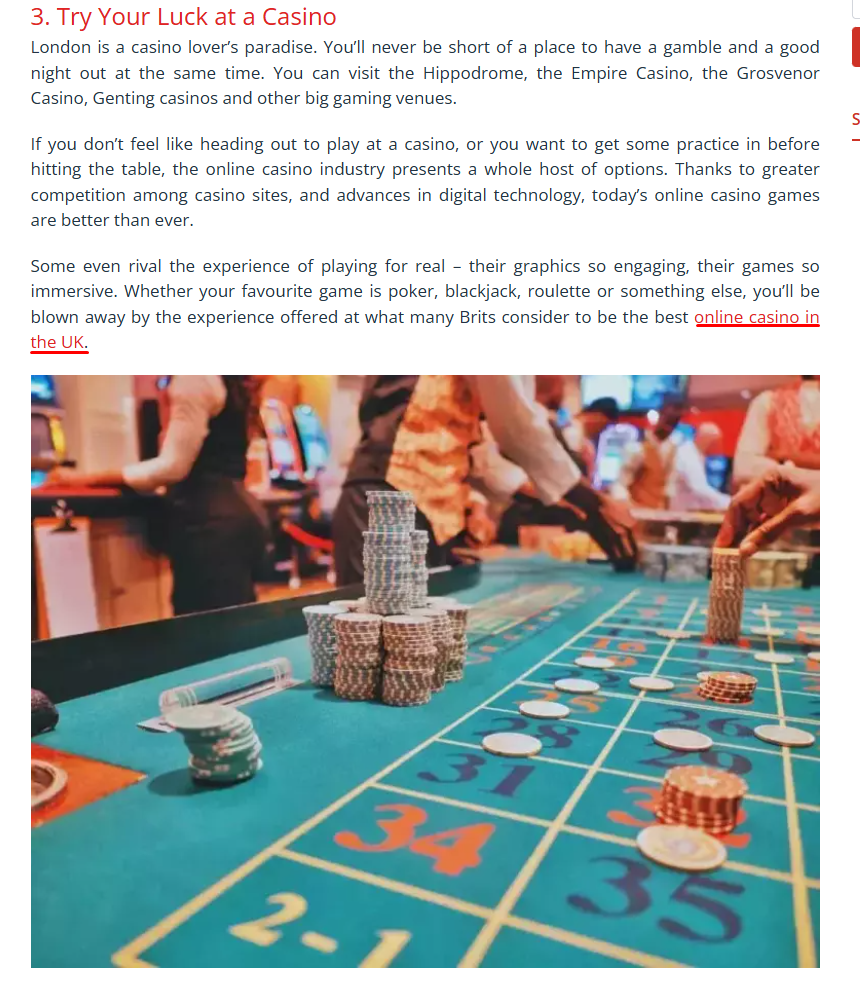
When to use it: This is your workhorse. Partial match anchors let you reinforce keyword relevance while keeping things natural. They should make up a significant chunk of your keyword-focused anchors.
Branded
The anchor text is just your brand/website/personal name. “PressWhizz” or “presswhizz.com”
When to use it: Constantly. Branded anchors are the safest and most natural anchor type. In most healthy link profiles, branded anchors (including compound branded) make up the largest percentage of total anchors – The more root authority you build, the more it gets distributed across your site and all your pages end up increasing in rank.
Compound (Brand + Keyword)
Combines brand with descriptive context. “PressWhizz link building marketplace” or “guest posting by PressWhizz”
When to use it: This is arguably the most underrated anchor type. You get brand reinforcement and keyword relevance without looking manipulative. I personally love using this format, it’s my go-to recommendation for clients building their first proper link profiles because you can build out so many variants.
Contextual/Semantic
Uses synonyms or topically related terms instead of the exact target keyword. Linking to a page about “schema markup” with the anchor “structured data.”
When to use it: Regularly. These anchors build topical relevance and entity associations without any exact match risk. Google’s NLP capabilities mean they understand the semantic relationship between related terms, so you’re still reinforcing relevance.
Naked URL
The anchor is the raw URL itself. “https://presswhizz.com”
When to use it: Naked URLs are natural in certain contexts, such as citations, resource lists, and directories. They provide minimal keyword relevance but contribute to a natural-looking link profile. Every site has some.
Generic
“Click here,” “read more,” “this article,” “visit website”
When to use it: These naturally occur in editorial content. A journalist linking to your site isn’t thinking about your keyword strategy, they’re writing “according to this report” and moving on. Having a healthy percentage of generic anchors actually signals a natural profile.
Image (Alt Text)
When an image is used as a link, Google uses the image’s alt text as the anchor text. As an example, we managed to secure a homepage image link from Ahrefs for a testimonial from our CEO, Dusan.
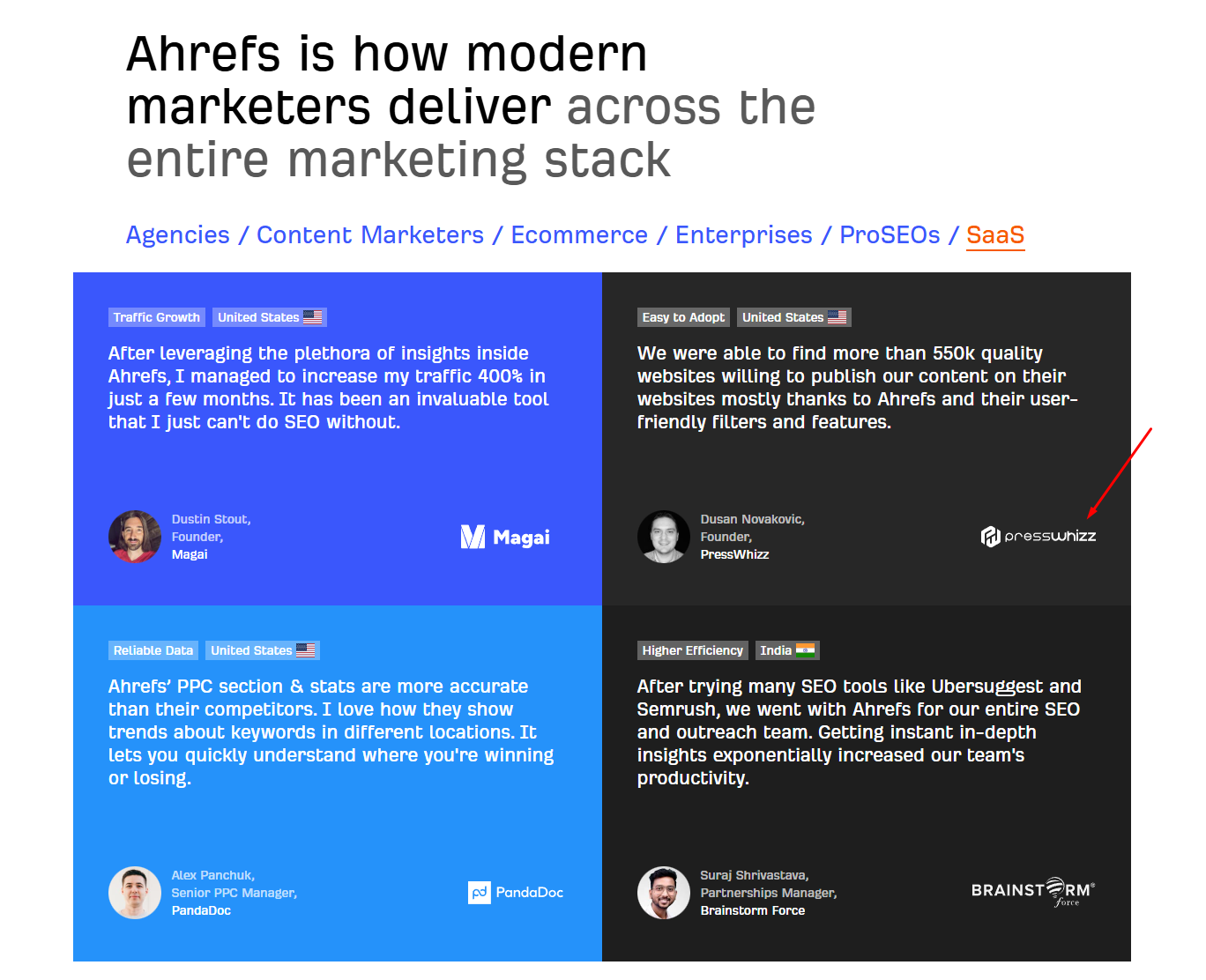
When to use it: Any time you’re linking via images, infographics, logos in guest posts, or featured images. Write descriptive, keyword-aware alt text. A well-rounded profile should include anywhere from 5-25% image-based anchors.
Article/Page Title
Using the exact title of the linked article as anchor text. “Anchor Text: The Practitioner’s Guide” linking to this very post.
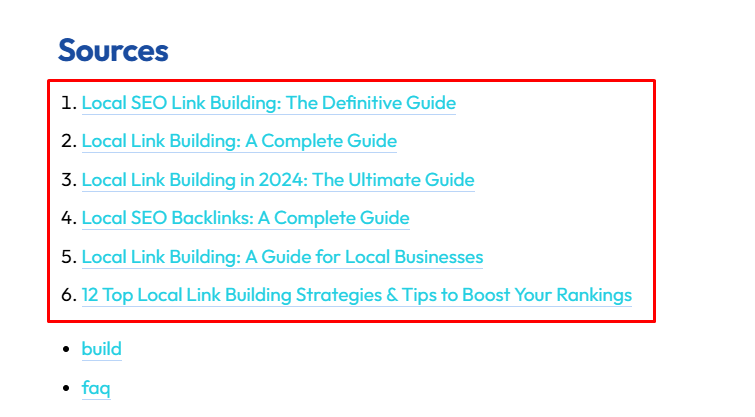
When to use it: Very natural for editorial links, citations, and supporting content strategies. This is one of my preferred approaches when linking via supporting blog content, use the article title or something contextual to the author/brand.
Pillow Anchors
These are anchors used to “pillow” out your link profile, and you often don’t necessarily get a choice in them because you’re building pillow links from sites like forum profiles or blog comments that don’t allow you to choose an anchor.
When to use it: When you need to make a link profile safer, or are recovering from a penalty.
Anchor Text Strategy
Most anchor text guides give you percentage breakdowns. “Use 5% exact match, 30% branded, 20% partial…” and so on. I’ve been saying for years that this is an approach that doesn’t reflect how Google actually evaluates link profiles today.
Anchor text is less of a science, more of an art.
What I mean by that: There is no universal “ideal ratio” because every niche and every SERP is different, and the more competitive you get the harder it gets.
There is no exact strategy, because what looks natural for a local plumber’s website is wildly different from what looks natural for a crypto exchange.
However, there is a framework, and it’s the one I actually use across client campaigns and our PressWhizz managed service:
1. Reverse Engineer Your SERP First
Before you build a single link, look at what the top 5-10 ranking pages for your target keyword have in their anchor text profiles.
Use Ahrefs to pull their backlink data and check the pages (or competitors entire sites if you are in small/local niches) distributions inside the “Anchors” tab.
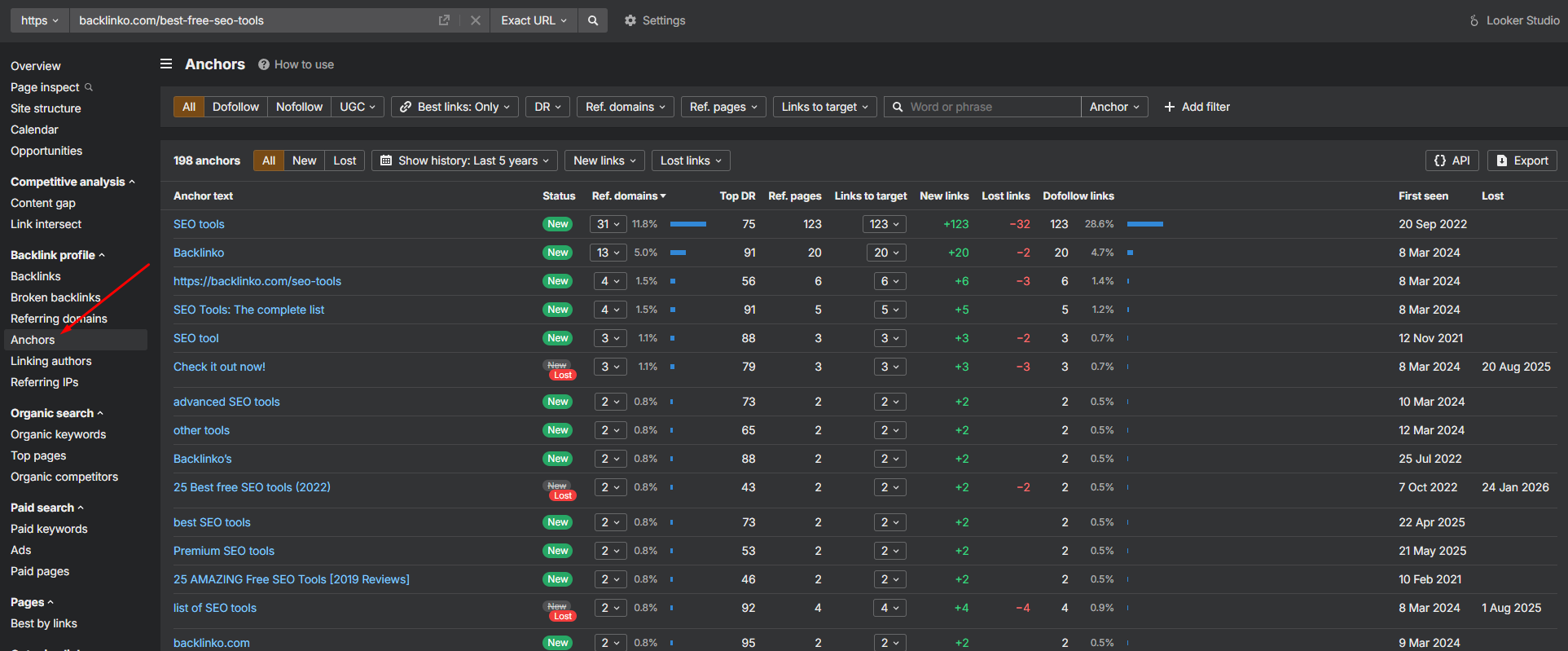
What you’re looking for is consensus. If the top ranking pages all have 60%+ branded anchors and barely any exact match, that tells you the SERP rewards conservative anchor profiles. If the top pages have a healthy mix of partial and exact match, the SERP tolerates more aggressive strategies.
This SERP analysis matters far more than any generic percentages.
2. Check Whether You Even Need Direct Links
A lot of the time, that consensus might mean you don’t want to build any at all – Start by checking your money page SERPs to see if you even need to build links directly to those pages.
In many eCommerce verticals, category pages rank primarily through internal link equity and site authority rather than direct external links. If that’s the case, you’re better off building links to supporting content (blog posts, guides) and funneling that authority internally through strategic anchor text on your internal links.
We prefer to link via supporting content where possible, using white hat anchor text like the article title or something related to the author/brand. Save your most aggressive anchors for your absolute best link opportunities, which, honestly, usually don’t exist in the way most people imagine.
3. The Authority-Aggression Scale
A principle I’ve operated by for years: The higher the authority of the linking domain, or the stronger relevancy/power of the page, the more aggressive you can be with anchor text.
A DR 85 editorial placement from a major publication can handle a partial or even exact match anchor far better than a DR 30 guest post on a random blog. The trust signals from the high authority domain essentially “protect” the more aggressive anchor choice.
Likewise, lower authority placements should almost always use branded, generic, or naked URL anchors. Aggressive anchors on low quality links is practically begging Google to flag your profile.
4. Avoid Footprints at All Costs
If you’re doing contextual link building, especially guest posts, a lot of anchor text selections have capitalized lettering where it shouldn’t be.
Ask yourself: if someone was naturally linking in an article, would the anchor text be capitalized? Or would it naturally flow inside the sentence without capitalization? Brands are fine capitalized, but try to keep the majority of your non-brand anchors in lowercase.
Surrounding text matters: Google doesn’t just look at the anchor text, they evaluate the sentences around it. The paragraph containing your link should be topically relevant to both the source page and the target page, a random anchor dropped into an unrelated paragraph is a red flag.
Repetition kills: If you’re building 50 links a month and 20 of them use the same anchor text, that’s a pattern. Rotate through semantic variations constantly, no two placements in the same month should use identical anchor text unless it’s branded.
Anchor Text Mistakes To Avoid
There are a ton of common mistakes that even some of the most experienced SEOs in the world still make, because link building is hard at scale.
Over-Optimized Exact Match Profiles
A lot of SEOs are building 30%+ exact match anchors and end up wondering why their rankings are volatile. If your Ahrefs anchor report looks like a keyword stuffing experiment, you’ve got a problem.
The fix: Dilute with branded, generic, and naked URL links.
You can’t undo existing anchors easily, but you can shift the ratio going forward. In extreme cases, building a wave of branded pillow links can buffer the profile, and you can work on “link rejuvenation” if you’ve been hit algorithmically.
Ignoring Anchor Diversity
Using the same three or four anchors across dozens of links. Google sees patterns. Humans are varied, real editorial links use wildly different anchor text, your link profile should reflect that.
The fix: Create an anchor text map for each target page before you start building. List 20-30 variations across all anchor types, rotate through them, and never use the same one twice in a single month.
Aggressive Anchors on Weak Domains
Low quality links with aggressive anchors are the exact combination that algorithmic spam detection is designed to catch.
The fix: Match anchor aggression to domain authority. The weaker the domain, the safer the anchor. If you’re placing on anything below DR 40, stick to branded, generic, or naked URL.
Neglecting Image Alt Text as Anchors
When your logo appears on a guest post or your infographic gets embedded somewhere, the alt text on that image is your anchor text. Empty alt tags mean you’re wasting a link signal entirely.
The fix: Always provide descriptive, keyword-aware alt text for any image that links back to your site. Keep it under 125 characters and include your target keyword naturally towards the beginning.
How to Audit Your Anchor Text Profile
Here’s the process I use when evaluating a site’s anchor health, whether it’s a new client audit or a monthly check-in on an active campaign:
Step 1: Pull Your Backlink Data:
Export your anchor text report from Ahrefs (Referring Domains > Anchors), sort by referring domains to see which anchors are most common across your profile –
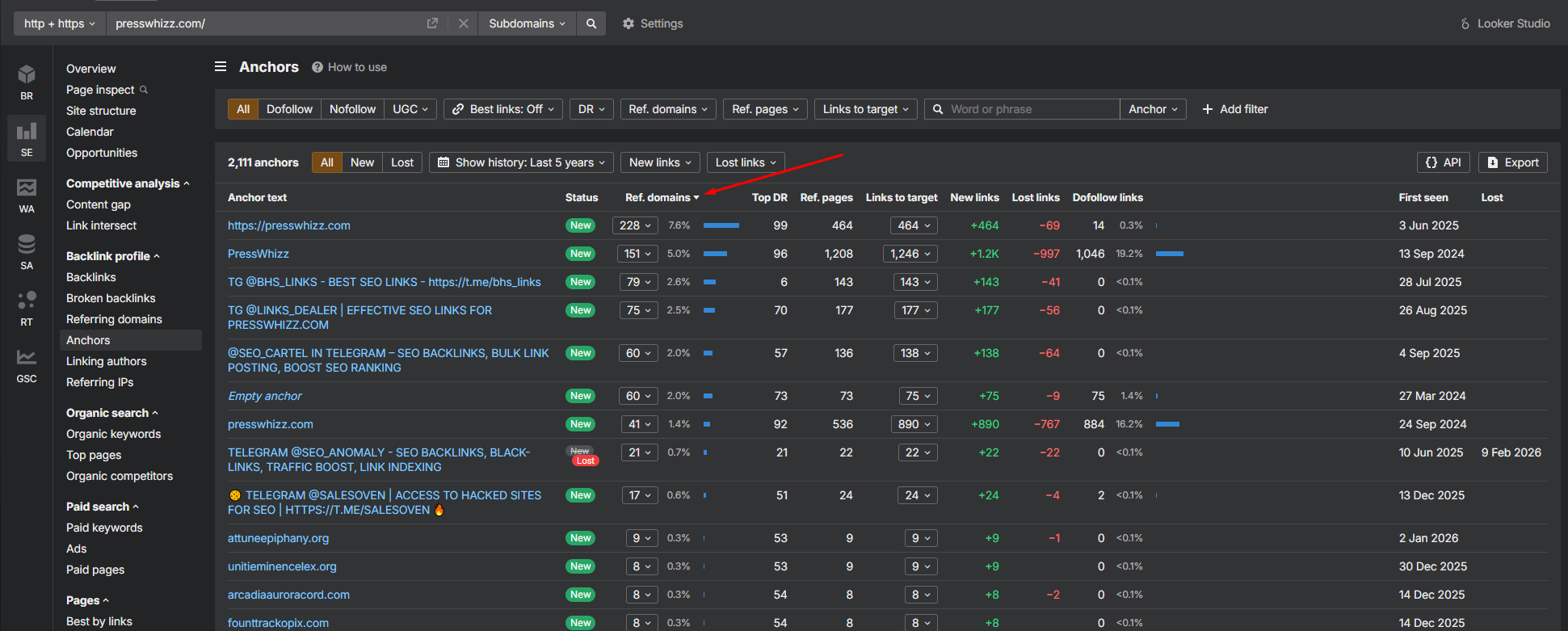
Don’t just look at total backlinks, a single domain with 500 links using the same anchor skews your data, referring domain count gives you the real picture.
Step 2: Categorize Your Anchors:
Group them into exact match, partial match, branded, compound branded, generic, naked URL, and image.
Calculate the rough percentage breakdown of each, you can do this in a simple spreadsheet, nothing fancy needed, or just get AI to do it for you.
Step 3: Compare Against SERP Competitors:
Pull the same data for your top 3-5 competitors.
Look for the consensus again. What does a “normal” anchor profile look like in your SERP? If the top three results all sit at 3% exact match and you’re at 15%, that’s your problem identified.
Step 4: Identify Red Flags:
Is your exact match percentage significantly higher than competitors? Do you have clusters of identical anchors built within short timeframes? Are aggressive anchors coming from low-authority domains? Are your anchors capitalised when they shouldn’t be? Do you see unnatural patterns like the same partial match variation appearing 20+ times?
Step 5: Create an Anchor Strategy Document:
Based on your analysis, define your target distribution going forward.
Document the specific anchor variations you’ll use for each priority page, and assign aggression levels based on the domain authority of upcoming placements.
This isn’t a one time exercise, you should be reviewing your anchor profile quarterly, especially if you’re actively building links.
Tiered Link Building Anchor Text
If you’re running tiered link building campaigns (and if you’re in any competitive vertical, you probably should be), your anchor text approach needs to differ at each tier.
Tier 1 (direct links to your site): This is where you’re most conservative, and where all of the above advice applies best. Branded, compound branded, and the occasional well placed partial match. These are the links Google directly associates with your domain, so footprint risk is highest here.
Tier 2 (links to your Tier 1 pages): Here you mostly just want to reinforce the tier 1 without triggering anti-spam filters, so I usually go for white hat anchor texts, especially article/page titles and branded anchors.
Tier 3 and beyond (links to Tier 2): A this level the anchor text matters less than the sheer link velocity and indexation signals. Generic, naked URL, or even auto-generated anchors are fine, the purpose is volume and authority flow, not keyword precision.
This tiered approach lets you reinforce keyword relevance through the link graph without concentrating exact match risk on your own domain. It’s one of the most effective ways to build aggressive anchor text signals while maintaining a clean Tier 1 profile.
Anchors, Entities & AI SEO
One more dimension worth covering, because it’s increasingly relevant in 2026: How anchor text plays into entity-based SEO.
Google’s understanding of entities, brands, people, places and concepts, has become significantly more sophisticated.
Instead of thinking purely in terms of keywords, think about the entity signals your anchors reinforce. When you use anchors like “PressWhizz link building” or “Charles Floate SEO,” you’re not just targeting keywords, you’re strengthening the association between your brand entity and the topics/documents Google connects you with.
Entity-driven anchor variations I recommend:
- Brand + Topic: “PressWhizz guest posting” or “PressWhizz link marketplace”
- Brand + Location: “PressWhizz UK” or “PressWhizz global link building”
- Brand + Modifier: “PressWhizz review” or “PressWhizz case study”
- Contextual Entity Reinforcement: “trusted link building platform” – No brand, but reinforces entity association through surrounding context.
This approach pushes semantic relevance and entity recognition rather than relying on overly aggressive exact match or partial targeted anchors.
It’s the direction the algorithm is heading, and the sites that adapt their anchor strategies to entity thinking now will have a meaningful advantage over the next 12-24 months.
But entity-driven anchor text is just one piece of a much bigger picture, and if you’re only thinking about this in terms of traditional Google rankings, you’re already behind.
Most SEOs still haven’t fully internalized: The way people discover brands is fragmenting fast, it’s no longer just Google. It’s ChatGPT, Gemini, Perplexity, Claude, Bing Copilot, Google’s own AI Overviews, and whatever comes next…
And every single one of these AI systems determines what to recommend based on one thing: The strength, consistency, and frequency of your entity signals across the documents they pull from.
The difference is that AI models are even more dependent on cooccurrence and document-level signals than traditional search. Google has PageRank, link graphs, click data, and hundreds of other ranking signals to work with. An LLM forming a response about “best link building tools” is primarily working from pattern recognition across its training corpus, which documents mention your brand, how frequently, in what context, and alongside which other trusted entities.
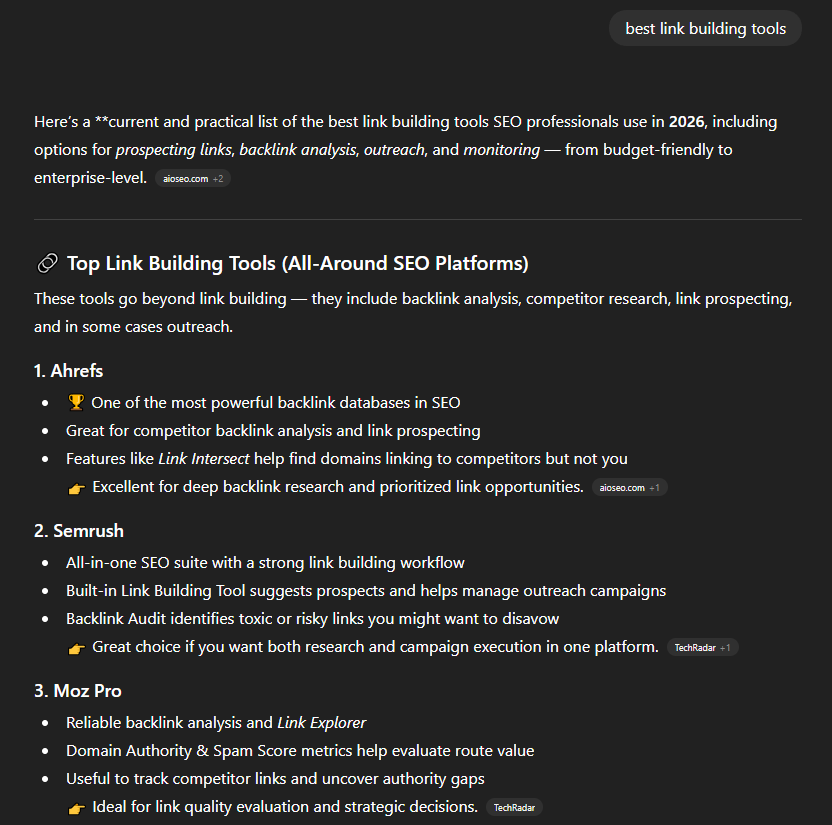
This means every branded anchor, every compound anchor, every entity-driven variation you build isn’t just helping your Google rankings anymore. It’s seeding the document layer that AI models pull from when deciding who to recommend.
In traditional SEO, links are votes. In AI search, cooccurrence is the vote.
If your brand name consistently appears in documents alongside terms like “link building,” “guest posts,” “editorial placements,” and “high authority backlinks,” AI models learn that association. They start including you in responses about those topics because the pattern is strong enough in their source data.
Your anchor text strategy feeds directly into this – Every time a link is built with the anchor “PressWhizz guest posting service” on a trusted publication, that’s not just a backlink with keyword relevance. That’s a document-level cooccurrence signal being created on a source that AI models are potentially going to reference, especially if you’ve done your homework and selected the right publishers.
This is why entity stacking, foundational link building, press distribution, and link bait should be done first and fast when launching any new brand or domain. You’re not just building a link profile, you’re building the AI-readable footprint of your entity before your competitors do.
The brands that understand this right now have a window. AI models are still forming their understanding of most niches, and the entity signals you build today will compound as these models retrain and update. Wait too long, and you’ll be trying to overwrite established associations rather than creating them from scratch.
Final Thoughts
The one thing I’d leave you with is something I tell every client and every student in my masterminds: You should know when to use specific SEO strategies and when not to, but the majority of the time you’ll be working on your own, long term site.
So your anchor text is a reflection of how your brand exists across the web. If it looks like a human being naturally referenced your site across dozens of different contexts, you’re golden. If it looks like someone sat in a spreadsheet and decided to blast “best online casino” 400 times.. Google already knows.